
Can Adobe Earnings, early AI revenue and a looming CEO change really justify today’s brutal valuation reset in one of tech’s former darlings?

Are Adobe Earnings enough to stop the sell‑off?
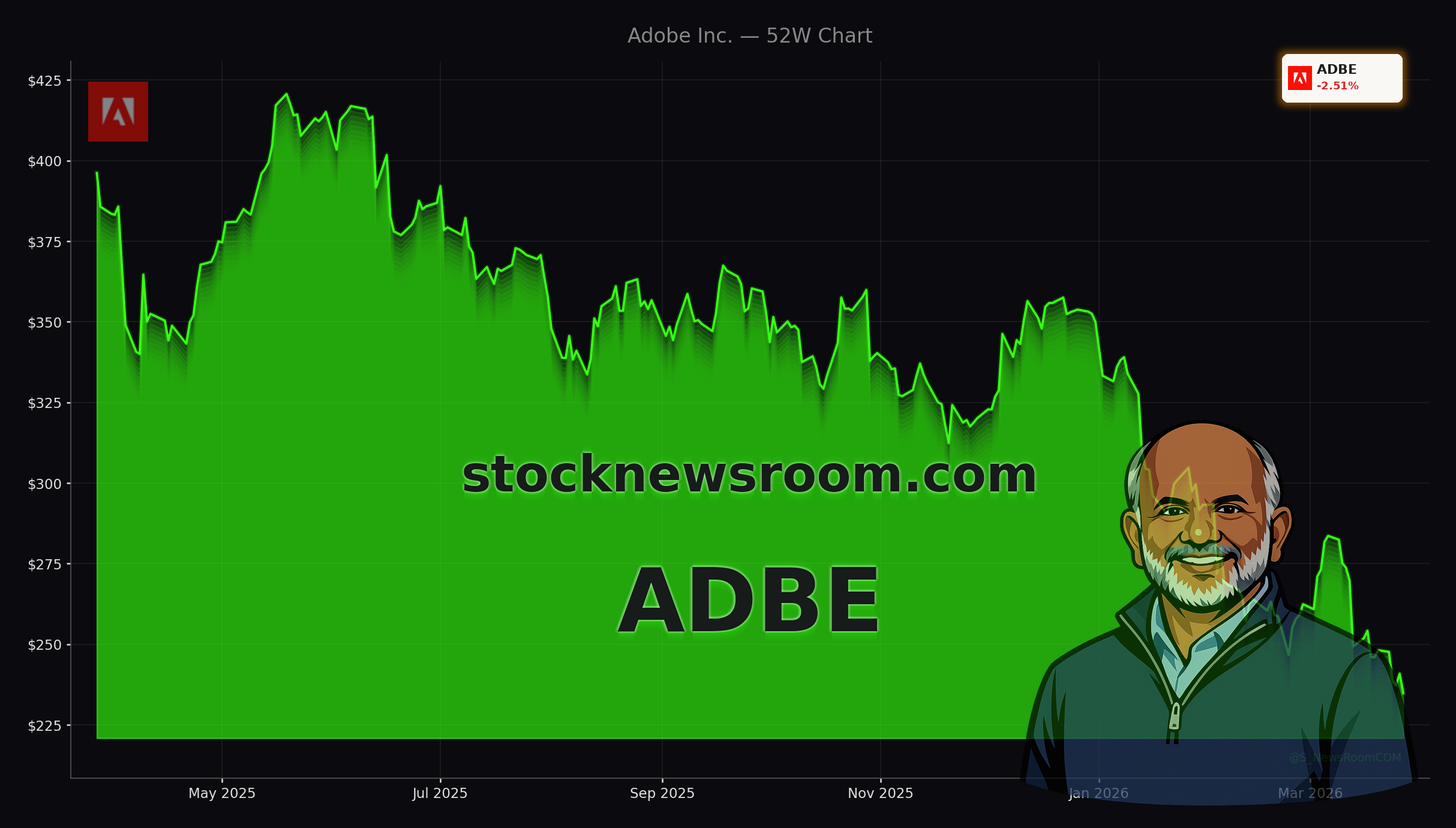
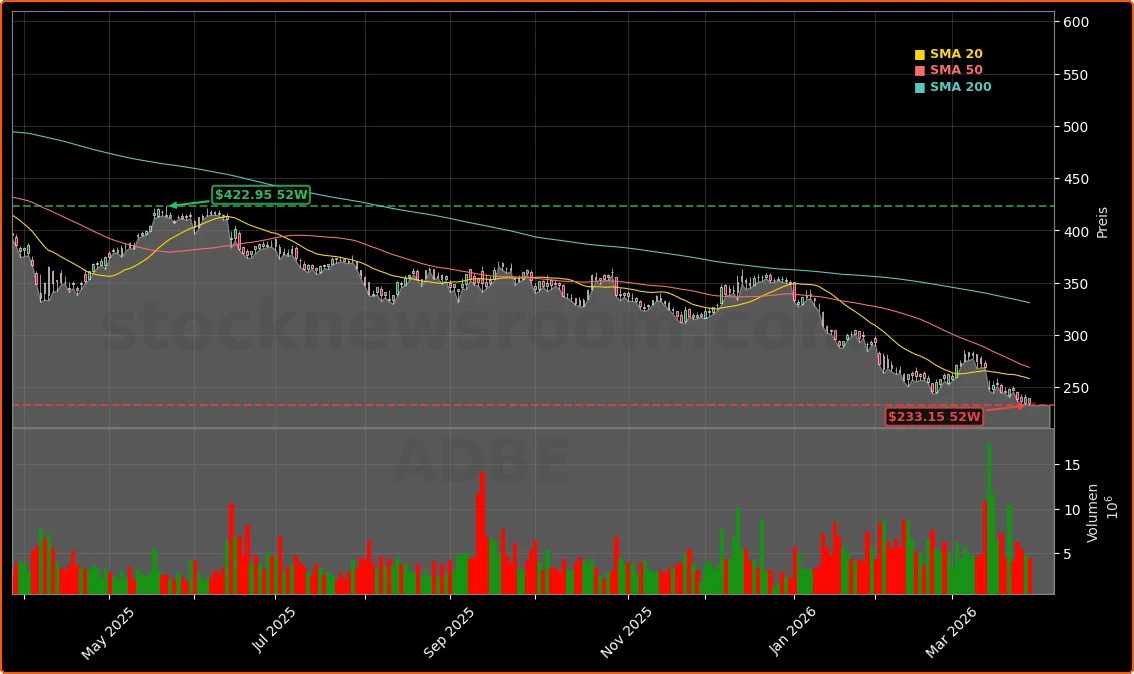
After hours, ADBE slipped further to $234.20, leaving the stock down around 28–37% year to date depending on the reference point and more than 60% below its 2021 peak. That puts Adobe Inc. among the weaker large‑cap tech names on the NASDAQ, even as peers like NVIDIA and Apple command premium AI valuations. Recent Adobe Earnings showed total ARR at roughly $26 billion and Q1 FY26 revenue and EPS ahead of expectations, yet the stock continues to trade near key technical support around $234, with multiple chart services flagging a strong bearish trend and no clear recovery signals.
At roughly 14x trailing earnings, ADBE is at its lowest valuation in a decade, despite generating about $10.5 billion in cash from operations over the last 12 months, with roughly 90% converting to free cash flow. For value‑oriented US investors, that combination of compressed multiples and robust cash generation looks tempting—but the growth narrative is clearly fraying.
How do AI and disclosure changes reshape Adobe Earnings?
The latest Adobe Earnings confirmed that AI is now a real, if still small, revenue stream. Management disclosed about $125 million in AI‑first ARR in Q1 across Creative Cloud, Express and related workflows—less than 1% of total ARR, but a visible starting point. Digital Media ARR has slowed from roughly 14% year‑over‑year growth to about 11–12% over the last eight quarters, and Adobe has now stopped breaking out Digital Media versus Digital Experience ARR, instead emphasizing Firefly ARR and monthly active users.
That shift reduces insight into the core creative business just as competition from Canva, Google’s Stitch redesign and AI‑native tools intensifies. Barclays cut its price target to $275 with an “Equal Weight” rating, while Goldman Sachs initiated coverage with a “Sell” rating, citing pressure on high‑end users and limited traction in lower‑priced tiers. Several firms including Citi, Jefferies and UBS have also trimmed targets as software multiples compress.
What does the CEO transition mean for US investors?
Another overhang from recent Adobe Earnings is leadership. Long‑time CEO Shantanu Narayen plans to step down after more than 18 years once a successor is named, remaining on the board. The transition comes as Adobe navigates generative AI, regulatory scrutiny and pricing pressure, raising questions about whether new leadership will prioritize aggressive AI investment or margin protection.
Institutional ownership remains high near 82%, but some funds are trimming exposure; for example, French asset manager Amiral Gestion reduced its stake by about 20% in Q4 while keeping ADBE as a top holding. On the positive side, full‑year FY26 guidance was raised, with revenue now seen around the mid‑$26 billion range and non‑GAAP EPS guided to the low‑$23 band, signaling confidence that AI investments can be funded without sacrificing profitability.
Related Coverage
For a deeper dive into how Narayen’s exit and record Q1 numbers are colliding with Wall Street’s AI skepticism, read Adobe CEO Transition: Q1 Record Numbers Shock Investors, which dissects post‑earnings trading and sentiment in detail. Investors tracking broader AI hardware and software cycles should also review Apple US Manufacturing -1.5%: AI Boom or Risk Warning?, which explores whether Apple’s US production shift can support the next AI upgrade wave and what that might imply for software demand at names like Adobe and Tesla.
Adobe Earnings currently sit at the crossroads of discounted valuation, slowing core growth, early but real AI ARR and an upcoming CEO handoff. For American portfolios, the stock looks less like a classic buy‑the‑dip and more like a high‑beta show‑me story ahead of the next quarter. The next set of Adobe Earnings will be critical in proving that AI can offset competitive pressure and restore confidence in this once‑dominant creative software leader.