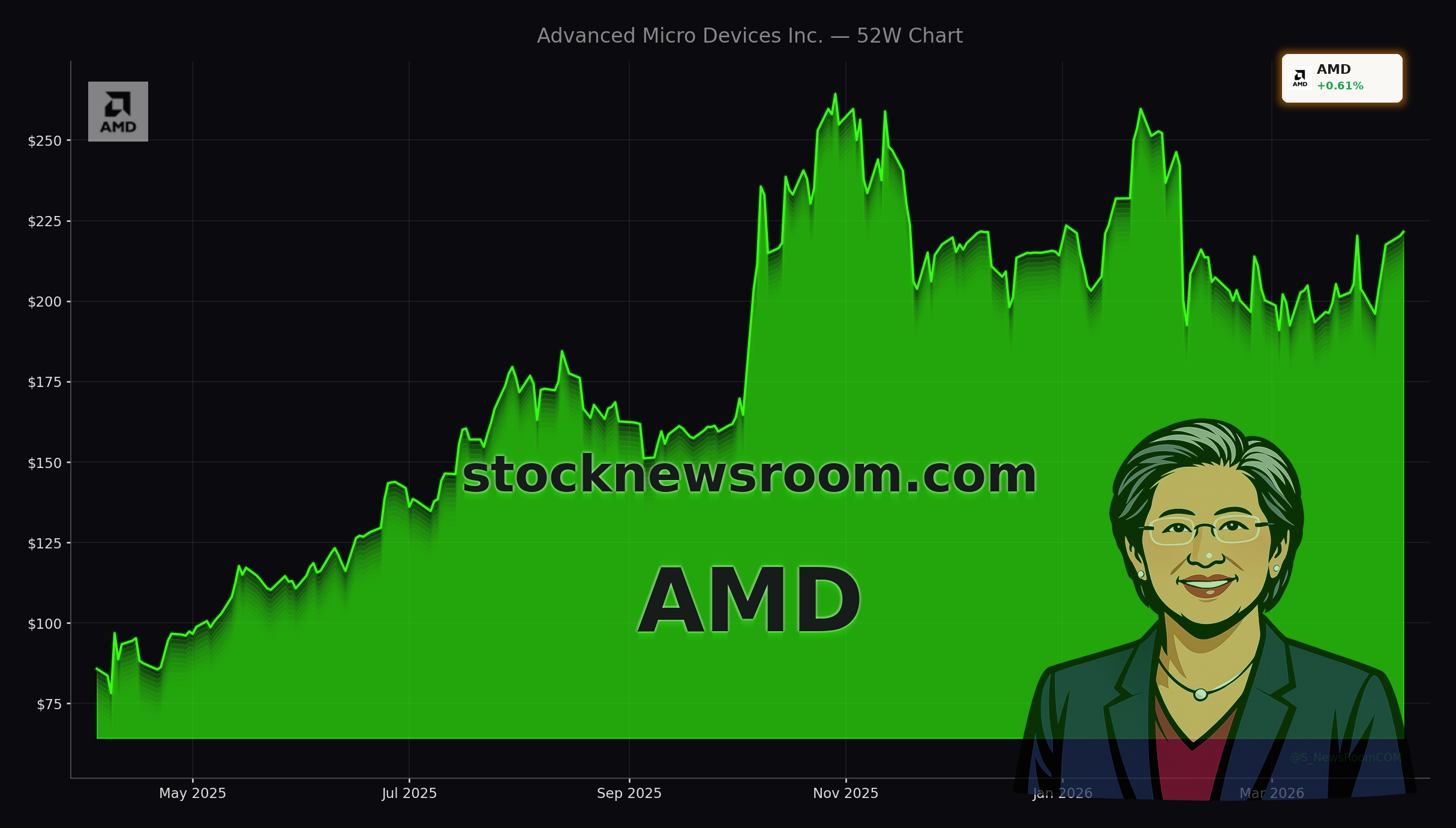
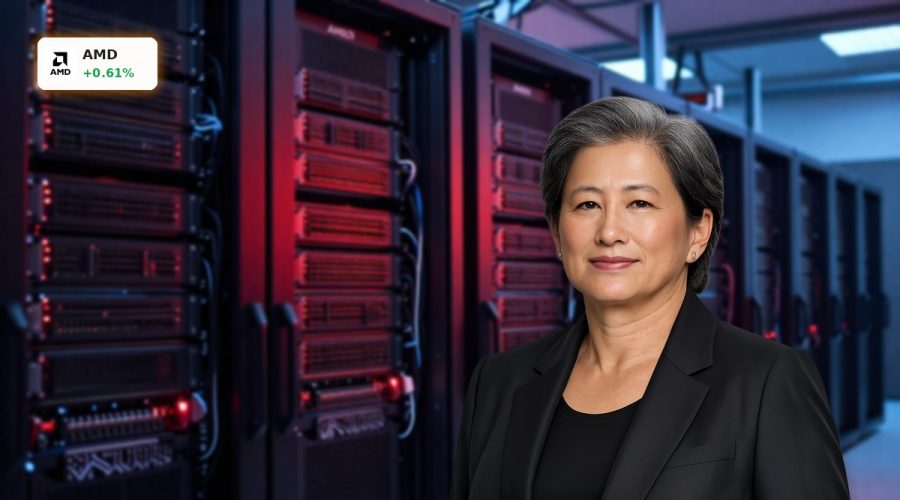
Can the Advanced Micro Devices AI Strategy really turn GPUs, CPUs and full racks into a tens-of-billions data center powerhouse?

Is AMD finally closing the AI infrastructure gap?
The Advanced Micro Devices AI Strategy has evolved rapidly from chasing share in GPUs to building a full-stack AI infrastructure offering aimed at hyperscalers. AMD’s Instinct accelerators are now in production at eight of the top 10 AI companies, and the company has locked in two landmark GPU partnerships with OpenAI and Meta Platforms. Each partner has committed to roughly 6 gigawatts of GPU capacity, in exchange for warrants that could represent up to 10% of AMD’s equity depending on deliveries and stock performance. These high-stakes deals force deep ROCm software integration and make AMD harder to rip out of core data-center workflows.
Crucially, the AI market mix is shifting. Training large language models still favors NVIDIA’s CUDA ecosystem, but inference workloads are growing faster and often run on newer open-source frameworks like Triton, vLLM or SGLang. AMD now reports that requests to port code from CUDA are rare, as most inference customers are already using non-proprietary stacks. With AMD GPUs priced below comparable Nvidia parts, total cost of ownership becomes a powerful lever, positioning the Advanced Micro Devices AI Strategy to pick up meaningful inference share if performance continues to converge.
How do MI450 and Helios change AMD’s AI math?
Wall Street’s next big catalyst for the Advanced Micro Devices AI Strategy is the MI450 accelerator and Helios rack-scale platform, which management has framed as an inflection starting in the second half of 2026 and stretching into 2027. Rather than just shipping standalone accelerators, Helios lets AMD sell integrated AI racks—combining Instinct GPUs, EPYC CPUs and networking into a turnkey system. That shifts AMD’s revenue opportunity from chips to platforms, bringing it closer to the system-level approach already pursued by rivals in the data center.
Analysts see this as critical to hitting management’s ambition of AI revenue in the “tens of billions” of dollars annually by 2027. Chip sales alone are unlikely to get there; platform-level deals with hyperscalers and large enterprises will have to do the heavy lifting. A recent analysis described AMD as a strong buy, arguing that despite a forward P/E near 50x, the company’s forward PEG ratio under 1.0 suggests underappreciated growth as data-center revenue is guided to compound above 60%. OEM collaborations, including work with server vendors like HPE, and a growing pipeline that prominently features OpenAI, are expected to feed early demand for MI450 and Helios.
Can CPUs and agentic AI give AMD an edge?
Beyond GPUs, the Advanced Micro Devices AI Strategy leans heavily on CPUs and so-called agentic AI. As AI systems move from content generation to action and reasoning, data centers will need more CPU capacity to orchestrate tools, workflows and multi-step decision trees—tasks that GPUs are not optimized for. AMD’s EPYC line is already gaining share in server CPUs, and the company is designing its next architectures with agentic workloads in mind.
The ratio of CPUs to GPUs in AI data centers is expected to narrow, creating a second growth engine alongside Instinct accelerators. AMD has also acquired ZT Systems, enabling it to deliver pre-configured racks tailored for agentic AI, and not just discrete components. This strengthens its competitive stance not only versus NVIDIA but also versus x86 rival Intel and ARM-based challengers. Recent reports highlight that EPYC and Instinct together drove a record $5.4 billion in Data Center revenue in Q4 2025, part of total quarterly sales of $10.3 billion, with guidance for $9.8 billion (plus or minus $300 million) in Q1 2026. A guided gross margin of 55% underscores that AI-driven mix is boosting profitability while underpinning a higher earnings floor.
What is Wall Street saying about AMD’s AI pivot?
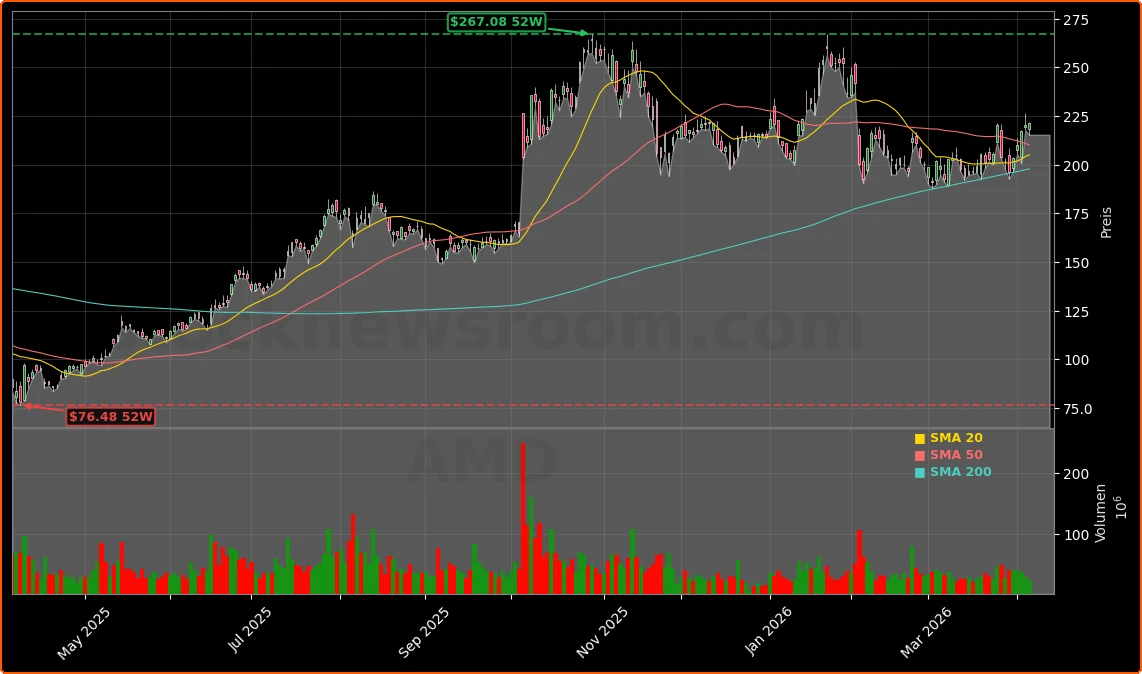
Analyst views on the Advanced Micro Devices AI Strategy are bullish overall but not without nuance. Wells Fargo recently reiterated an Overweight rating and a $345 price target, pointing to strong EPYC demand, upcoming MI450 shipments and the potential for more gigawatt-scale AI deals beyond OpenAI and Meta. UBS also maintained a Buy and a $310 target, citing confidence in AMD’s ability to grow AI-related revenue into 2027 and diversify across data center, client, gaming and embedded segments.
Citigroup has taken a more cautious stance at times, trimming its price target even while acknowledging AMD’s solid AI positioning. Another note from Erste Group upgraded AMD from Hold to Buy, referencing record 2025 revenue of $34.6 billion and expected demand for the MI450 series as support for a more constructive view. Meanwhile, some trading-focused research flags an unusually favorable risk-reward setup, with an overweight bias across time frames and market participants leaning into momentum ahead of further AI announcements.
Execution risk remains. AMD’s inventory has swelled to roughly $7.9 billion as it builds ahead of anticipated demand, and any delay in converting design wins into large rack-scale deployments could pressure margins. China AI revenue is another watch point after AMD booked about $390 million from MI308 in that region in a single quarter, leaving the company exposed to regulatory and export shifts.
Related Coverage
Investors who want a deeper dive into how AMD’s data-center roadmap underpins its premium valuation can read AMD AI Strategy Record: Can Data-Center Boom Last?, which examines whether OpenAI, Meta and Helios are enough to sustain the next AI cycle. For a broader sector view on agentic AI infrastructure, Cloudflare Agentic Web Partnership: Stock Soars +2.1% on AI Agent Push explores how another key player is trying to monetize AI agents at the network edge and what that could mean for cloud and semiconductor demand.
In sum, the Advanced Micro Devices AI Strategy has shifted from chasing GPU share to building a diversified AI platform spanning accelerators, CPUs and rack-scale systems. For U.S. investors, AMD now offers a credible AI earnings base today plus optionality from MI450, Helios and agentic AI workloads over the next two years. The next quarters will show whether those OpenAI and Meta megadeals translate into sustained, system-level wins that can keep AMD competitive with NVIDIA and mega-cap peers like Apple in the AI arms race.