Can Airbus turn a conflict‑exposed backlog and fragile supply chain into an advantage over Boeing, or is fresh downside risk building?

How exposed is Airbus to Middle East conflict?
The latest flare-up involving Iran lands at a sensitive moment for Airbus SE. The Gulf region is one of the company’s most important commercial strongholds: state carriers Emirates, Etihad and Qatar Airways together have hundreds of aircraft on order from both Airbus and Boeing. Emirates alone reportedly has more than 350 jets still waiting to be delivered between the two manufacturers, while Qatar Airways and Etihad add roughly another 420 outstanding orders.
That order book concentration cuts both ways. On the one hand, it anchors multi‑year revenue visibility for Airbus’ widebody programs such as the A350. On the other, carriers whose networks are directly affected by Iranian strikes may be forced to reduce capacity and reconsider the timing of new deliveries. Consultants following the sector warn that some Gulf airlines could push back handovers, which would hit short‑term cash conversion even if long‑term demand remains intact.
For U.S. and global investors, that dynamic introduces a new layer to the broader Airbus Supply Chain Risk narrative: execution risk on a backlog that is geographically concentrated in a conflict‑prone region, at the same time that production itself is facing material constraints.
Where does Airbus Supply Chain Risk bite the hardest?
Beyond demand timing, the more acute Airbus Supply Chain Risk sits in the physical flow of parts. Airbus already had to dial back some of its planned ramp‑up for the A320 and A220 programs earlier in 2026 because of engine shortages, illustrating how a single weak link can derail volume targets. The war now threatens another critical bottleneck: advanced composite materials.
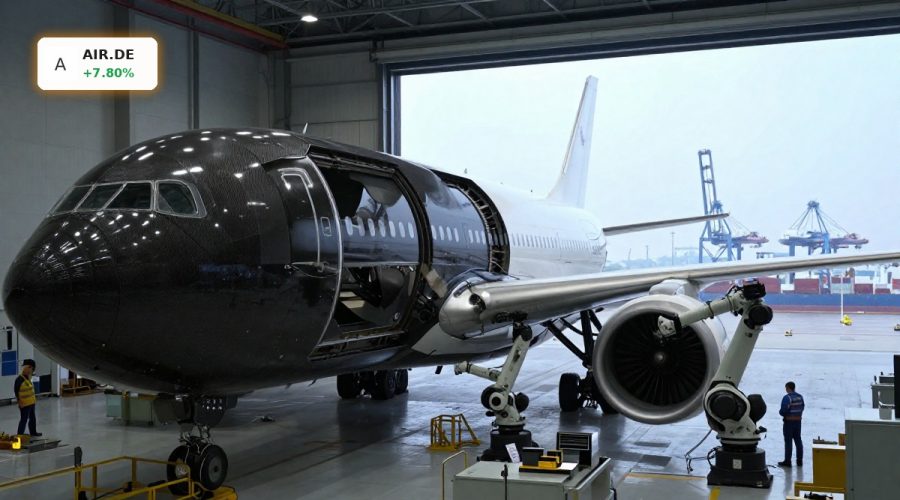
Modern long‑haul jets such as the Airbus A350 and the Boeing 787 rely heavily on carbon‑fiber reinforced plastics, with more than half of their structures made from these lightweight composites. Production of key intermediate products, including so‑called prepregs—semi‑finished carbon or glass fiber materials impregnated with resin—depends on a small number of specialized suppliers. Some of these facilities, particularly in the United Arab Emirates, lie within potential range of Iranian attacks and rely on regional ports such as Jebel Ali and Abu Dhabi for outbound logistics.
Industry experts note that shipments of finished composite parts can be shifted to air freight or routed overland via Saudi Arabia if sea lanes are disrupted, albeit at higher cost. However, inbound flows of precursor chemicals, resins and other inputs, many sourced from China and broader Asia by sea, are more vulnerable. While the actual volumes required for aerospace are small enough to be flown if necessary, this would further inflate an already rising logistics bill and compress margins unless offset by pricing power.
Is Airbus better positioned than Boeing?
Investors on Wall Street naturally compare Airbus SE with Boeing when assessing geopolitical and supply chain exposure. Both rely on composites based on oil‑derived feedstocks such as polyacrylonitrile (PAN), and both run highly energy‑intensive autoclave processes that leave them sensitive to swings in energy prices. But Airbus appears to have entered this crisis with somewhat more operational momentum and fewer self‑inflicted wounds than its U.S. rival.
Consultancies that have worked closely with the aerospace supply chain for years argue that Airbus and Boeing have learned from past stress episodes, including the post‑pandemic ramp‑up and earlier fears of a titanium shortage linked to Russia. Both OEMs have reportedly built inventory buffers and diversified some sourcing, yet the exclusivity and long certification cycles inherent to aerospace limit how quickly they can switch vendors for flight‑critical materials.
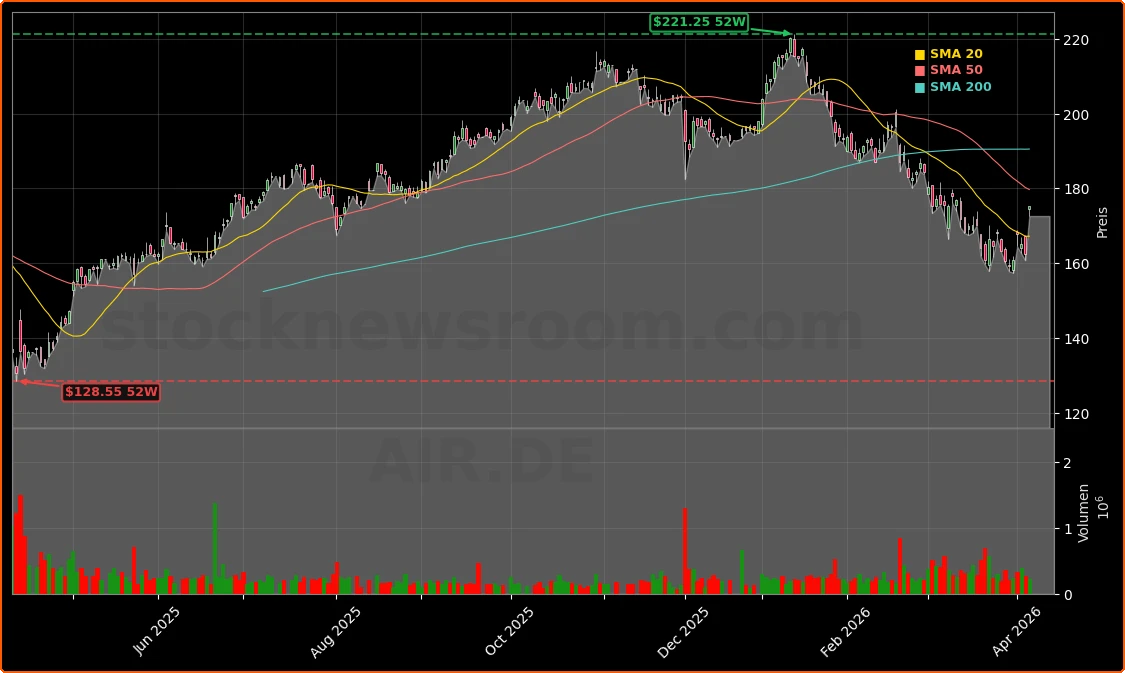
Airbus’ advantage today lies in relatively steadier execution on its narrow‑body programs and less severe quality‑control overhang than Boeing, which is still managing the fallout from multiple safety incidents. That relative strength has helped Airbus shares close part of what some European analysts saw as a technical undervaluation, with one target of around EUR 190 cited as fair value for the medium term. Short‑term, however, the same investor commentary warns that the stock could give back some gains over the summer if macro and supply‑chain headwinds intensify.
What does this mean for U.S. investors’ portfolios?
From a U.S. perspective, Airbus Supply Chain Risk has implications well beyond a single European stock. Airlines and leasing firms listed in New York that depend on Airbus deliveries may face capacity planning uncertainty, influencing traffic guidance and capex plans. Maintenance and parts suppliers like AAR Corp. (AIR) have already highlighted supply chain disruption as a key risk factor in their own outlooks, even while posting strong growth and winning new U.S. Air Force and Navy logistics contracts.
At a broader level, the aerospace supply crunch interacts with themes familiar to holders of NVIDIA, Tesla and Apple: concentrated, globally stretched supply networks, heavy reliance on Asia for critical materials and components, and long lead times to qualify alternative sources. The sector has embraced higher transport costs and inventory levels as the price of keeping production lines running, but that reduces operating leverage just as investors had hoped for margin expansion from the post‑pandemic recovery.
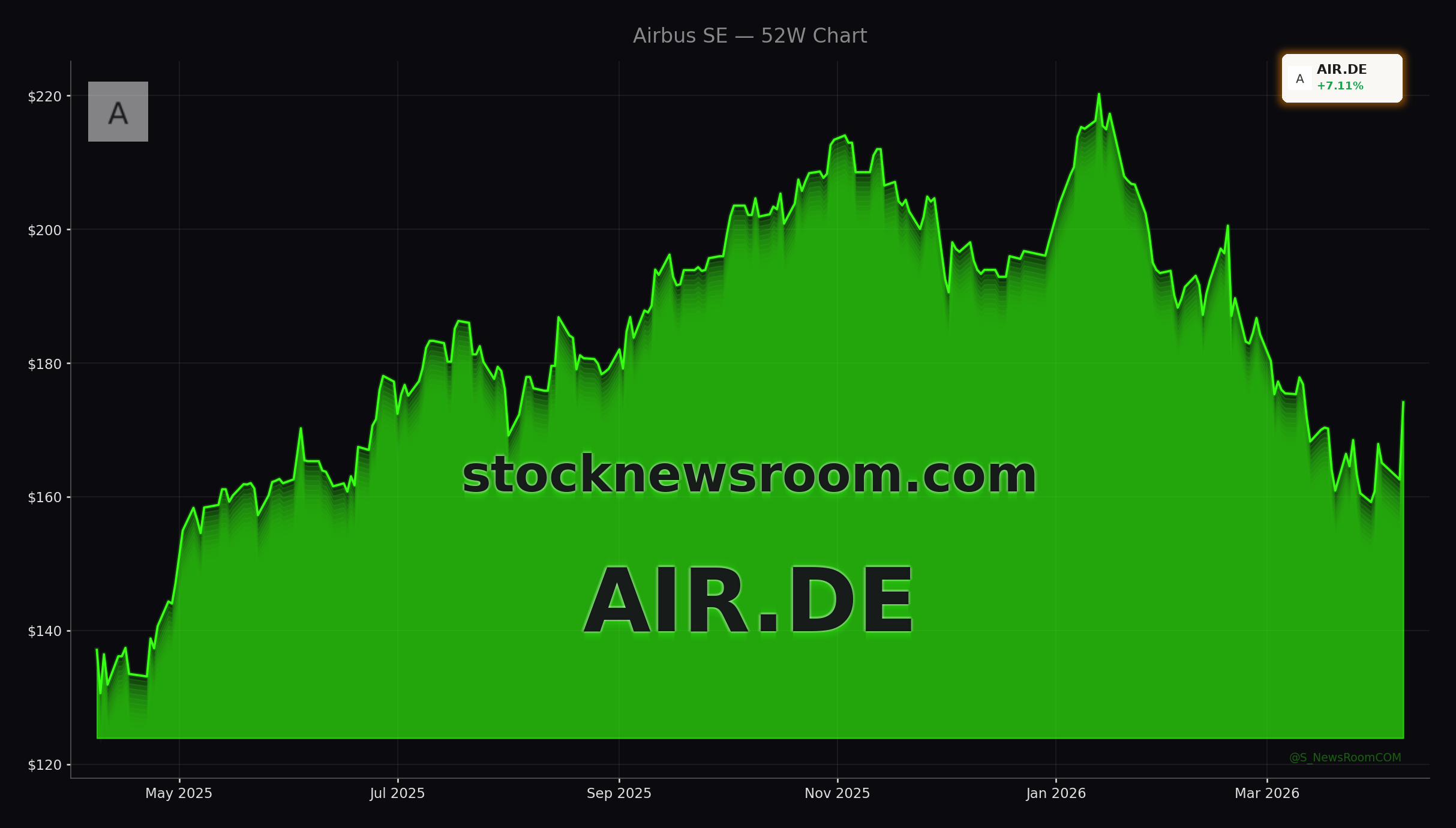
With Airbus SE up roughly 7.8% today and moving back toward what some see as its normal valuation range, the market is implicitly betting that these risks remain manageable. Yet any prolonged disruption in Gulf shipping lanes or escalation that targets composite plants could again reprice aerospace equities on both sides of the Atlantic.