Can Alibaba’s new Zhenwu-powered supercluster finally turn its AI infrastructure push into the rerating Wall Street has been waiting for?

How is Alibaba reshaping the AI race today?
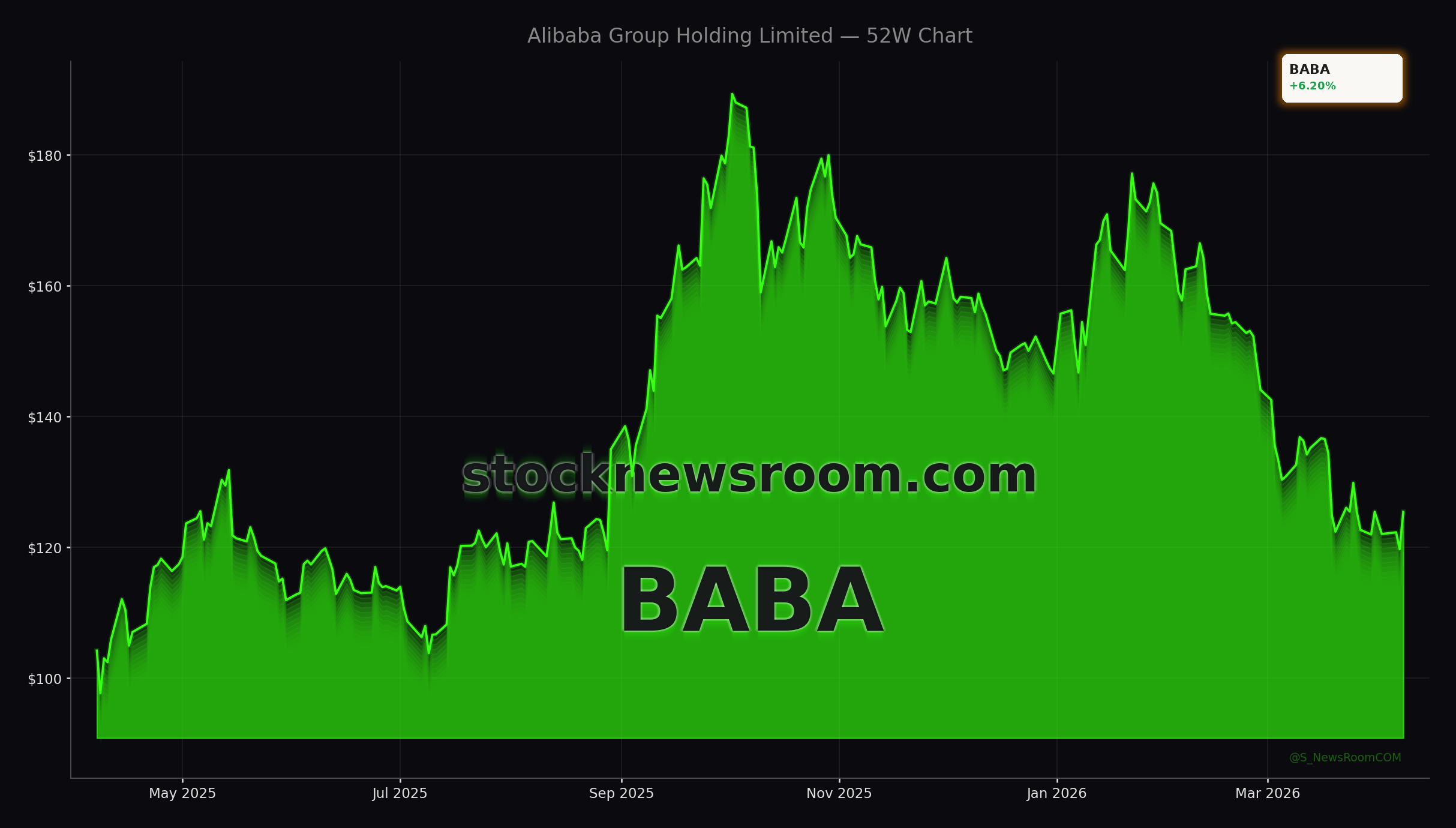
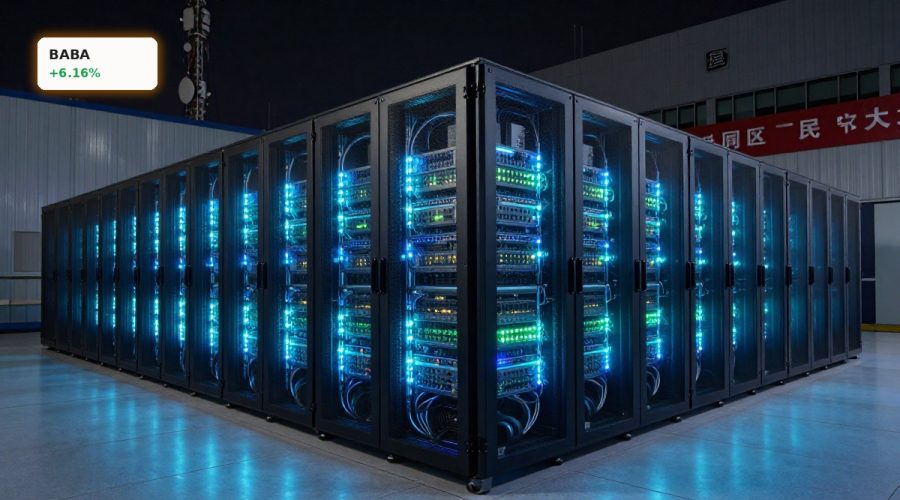
Alibaba Group Holding Limited (BABA) gained momentum on Wall Street, with the ADR climbing to about $127.10 in recent trading, up roughly 6% from the prior close of $124.38. The rally follows the company’s announcement of a large-scale intelligent computing cluster in Shaoguan, Guangdong, built around 10,000 Zhenwu AI accelerators and deployed jointly with China Telecom. The project positions Alibaba at the center of China’s effort to close the compute gap with U.S. hyperscalers like NVIDIA, Apple and other Big Tech players dominating generative AI infrastructure.
The new system is described as a fully domestic cluster, from the Zhenwu chips designed by Alibaba’s T-head unit to its integration in a Chinese-operated data center. It is engineered for both AI training and inference and aims to host some of the largest commercial models in China, potentially in the hundreds of billions of parameters range. For investors tracking Alibaba AI Infrastructure, this is a tangible sign that the company is moving beyond small-scale pilots into industrial deployment.
What makes the Alibaba AI Infrastructure move strategic?
The Shaoguan build-out matters for more than national tech pride. By vertically integrating chip design, data centers and AI models, Alibaba is following a playbook similar to U.S. leaders such as NVIDIA and cloud platforms that tightly marry hardware and software. With U.S. restrictions limiting China’s access to top-end foreign AI chips, Zhenwu becomes not just an option but a strategic necessity for sustaining growth in cloud-based AI services.
Alibaba and China Telecom plan to scale the facility further, targeting up to 100,000 Zhenwu chips over time. That would turn Shaoguan into one of the largest domestically powered AI clusters in the country, able to support workloads from healthcare imaging and drug discovery to financial modeling, autonomous systems and advanced materials research. In parallel, Alibaba has been rolling out higher-level AI services, including Qwen foundation models and the upgraded Wan2.7-Video model for end-to-end content generation workflows, which can leverage this expanding Alibaba AI Infrastructure footprint.
The strategy also dovetails with Beijing’s broader emphasis on data center build-outs using Chinese semiconductors, following other large clusters powered by Huawei’s Ascend 910C chips. While overall AI capex in China remains far below the estimated $700 billion spending spree expected from U.S. tech giants this year, the focus is on targeted deployments with clearer commercialization paths rather than blanket capacity expansion.
How does this affect Alibaba’s valuation on Wall Street?
Despite the recent jump, Alibaba’s ADRs still trade well below their 52-week high and remain framed as a value story by many on Wall Street. MarketBeat data shows institutional buyers like Rheos Capital Works and Genesis Financial Group adding positions in Q4, betting that the company’s AI and cloud strategies can drive a rerating over time. Analysts tracked by MarketBeat currently assign a consensus “Moderate Buy” rating with an average price target near $187.89, implying significant upside from current levels if execution on Alibaba AI Infrastructure and monetization plans continues.
Equity research platforms such as Simply Wall Street have highlighted Alibaba’s aggressive AI pivot, pointing to new Qwen models, bulk orders of domestic AI chips and an “AI-first” hiring stance with more than 80% of open roles tied to AI. Their valuation models suggest the stock trades at a steep discount to long-term intrinsic value, though that thesis depends heavily on converting heavy AI investment into profitable cloud, enterprise software and sector-specific solutions.
At the same time, short-term earnings have come under pressure. Recent quarterly results showed compressed net income and margin stress as capex and R&D for AI and cloud scaled up. That has kept some investors cautious, with volatility around results days as the market weighs near-term profitability against the longer-term payoff from the emerging Alibaba AI Infrastructure stack.
Can Alibaba monetize its AI infrastructure like U.S. peers?
Unlike consumer-heavy U.S. names such as Tesla that blur the lines between hardware, software and AI, Alibaba’s path to monetization runs primarily through its cloud platform and enterprise services. The company is shifting from open-sourcing many models to packaging proprietary offerings for paying corporate customers, including an agentic AI platform and tailored sector applications. The new Zhenwu-powered cluster provides the back-end horsepower to run these services at scale and potentially undercut foreign providers in cost-sensitive Asian markets.
Competition, however, is fierce. Domestic rivals like Huawei are also ramping AI chip production and cloud services, while U.S. hyperscalers continue to dominate globally. Alibaba’s edge will likely depend on how tightly it can integrate compute, models and business workflows, and how efficiently it runs its hardware compared with global leaders such as NVIDIA. If the Shaoguan build-out can demonstrate strong utilization rates and rising high-margin software revenue on top, investors could start treating Alibaba AI Infrastructure as a durable growth engine rather than a drag on earnings.
Related Coverage
For a deeper look at how heavy AI spending is hitting the bottom line, readers can explore Alibaba Earnings Shock: Profit Plunge as AI Spending Soars, which analyzes whether the current margin squeeze is a necessary step toward long-term AI dominance. Investors interested in broader fintech and trading-platform themes can also read Robinhood Trump Accounts Surge as ARK Makes $12.7M Bet, examining how shifting retail flows and bold institutional bets may reshape growth prospects at Robinhood.
In summary, the new Zhenwu supercluster marks a pivotal escalation of Alibaba AI Infrastructure, deepening its commitment to domestic compute power and vertically integrated AI services. For investors, the project reinforces the narrative of Alibaba as a key AI and cloud platform rather than just an e-commerce giant, albeit with higher near-term capex and earnings volatility. The next few quarters will show whether rising demand for AI models, video generation tools and enterprise solutions can translate this infrastructure bet into sustained revenue growth and a higher Wall Street valuation.