
Can Alibaba’s surprise dominance in AI video really justify a fresh rally in BABA despite rising capex and margin fears?

How is Alibaba’s AI video bet hitting the stock?
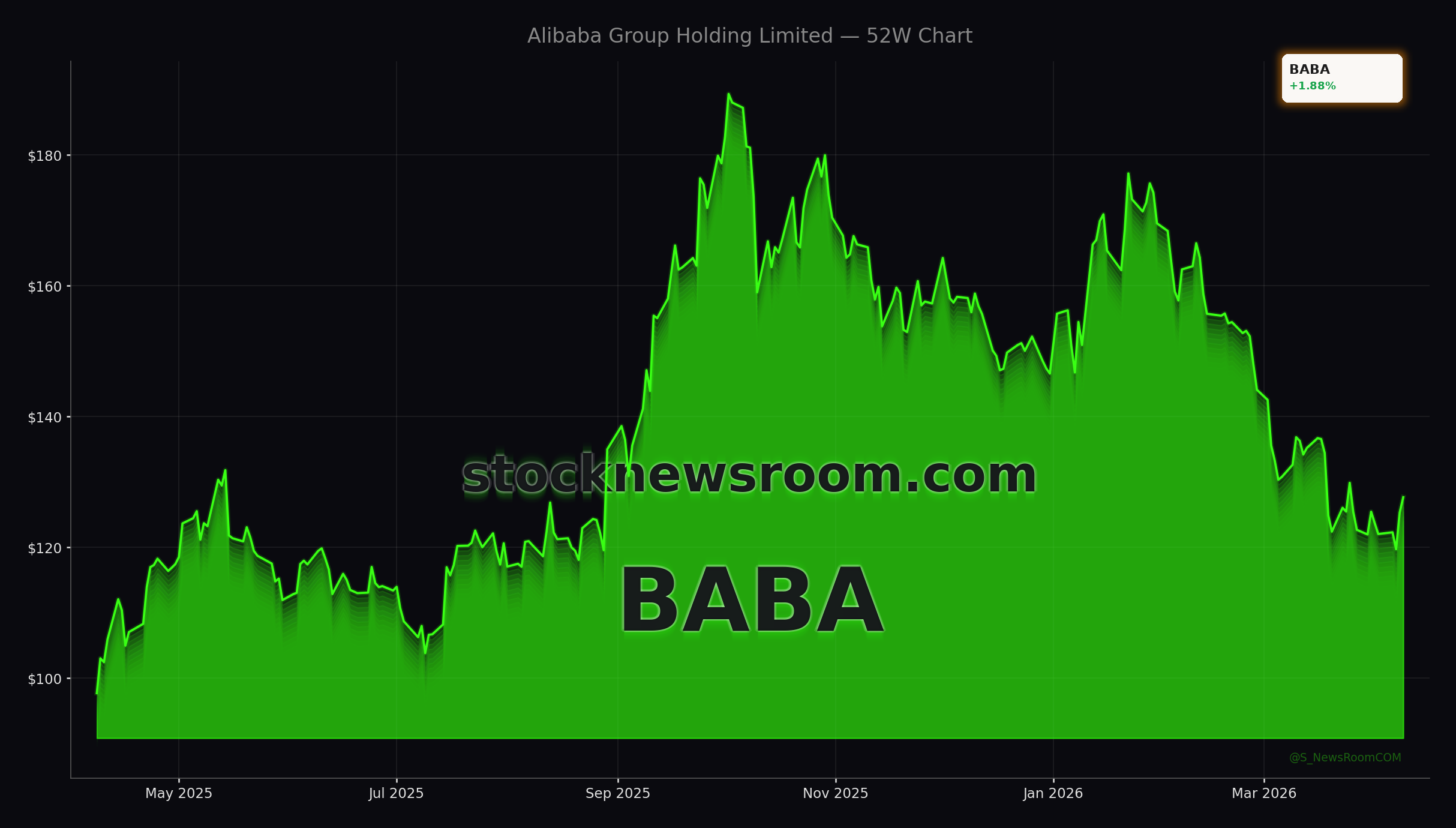
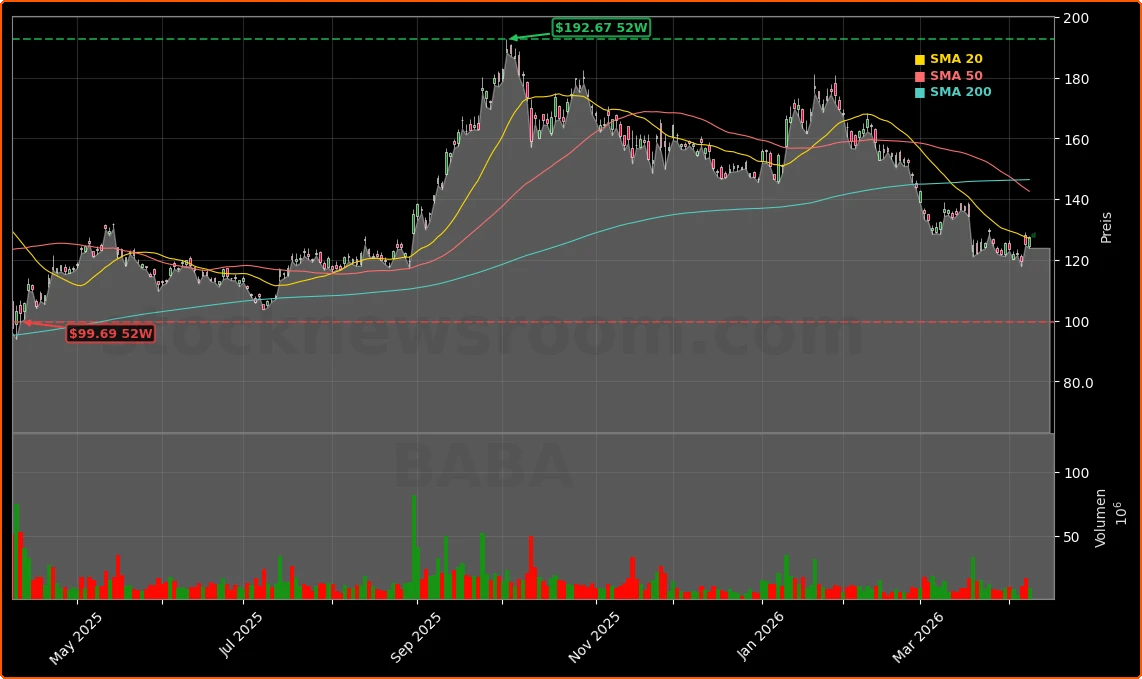
Alibaba Group Holding Limited (BABA) finished the last U.S. session at $127.68, gaining 1.88% and outperforming major benchmarks like the S&P 500 and NASDAQ. In Hong Kong, the stock added roughly 2.1% on Friday, helped by confirmation that the anonymous HappyHorse-1.0 model dominating AI video benchmarks belongs to Alibaba’s ATH AI Innovation Unit. Pre-market in New York shows BABA at about $128.93, up another 0.98%, signaling that the Alibaba AI Video story is resonating with investors even as questions over profitability linger.
The positive price action comes despite recent volatility tied to rising AI capex. Jefferies cut its price target on Alibaba from $212 to $185 this week while keeping a Buy rating, citing heavier spending on AI infrastructure and non-core losses. Macquarie has also trimmed its target over similar concerns about AI investment costs. Those moves briefly pulled the stock down nearly 3% in prior sessions, underscoring the tug-of-war between near-term margin compression and long-term AI upside that U.S. portfolio managers now have to price in.
What is HappyHorse-1.0 and why does it matter?
HappyHorse-1.0 appeared on the Artificial Analysis benchmarking platform around April 7 as an anonymous entrant and quickly climbed to the top of blind-test rankings for both text-to-video and image-to-video generation. Only later did its developers disclose via a new X account that it is an Alibaba project, a claim the company has confirmed. In just a few days, the model has generated more buzz than any of Alibaba’s prior video-generation efforts, which were embedded inside earlier Qwen model families but never topped global leaderboards.
From a strategic standpoint, HappyHorse-1.0 positions Alibaba AI Video capabilities in a market where Western rivals have recently stumbled. OpenAI has discontinued its Sora video app to refocus on coding tools, enterprise clients and broader AGI work amid elevated compute costs. ByteDance, another Chinese heavyweight, was forced to pause the rollout of its Seedance 2.0 video product due to copyright disputes with Hollywood studios and streaming platforms. With competitors distracted or constrained, HappyHorse-1.0 gives Alibaba a high-visibility entry point into premium AI video content for e-commerce, advertising and entertainment.
CEO Eddie Wu has already made AI the core strategic priority across the group’s sprawling ecosystem—from cloud and data centers to chip design and consumer-facing apps. HappyHorse-1.0 fits into that blueprint as a potential cross-platform engine: powering ad creatives for merchants, short-form clips across Alibaba’s marketplaces, and even enterprise video tools that could be sold through its cloud division. For U.S. investors used to how Apple and NVIDIA integrate foundational AI into hardware and software stacks, HappyHorse-1.0 could become Alibaba’s analog in the video domain.
How does Alibaba AI Video tie into chips and cloud?
The launch of HappyHorse-1.0 does not stand alone; it sits on top of a rapidly expanding AI infrastructure footprint. Alibaba recently activated a new data center with 10,000 in-house Zhenwu AI chips in partnership with China Telecom, a move designed to reduce dependence on U.S. semiconductors and to secure long-term compute supply for its Qwen and video models. The company has formed an internal technology council to fast-track decisions on AI infrastructure and prioritize capital allocation into cloud and chips.
Simultaneously, Alibaba Cloud has led a roughly $293 million funding round for Beijing-based ShengShu Technology, an AI video specialist focused on next‑generation generative video. That external bet complements HappyHorse-1.0 by giving Alibaba exposure to a broader Alibaba AI Video ecosystem, not unlike how Tesla invests in adjacent autonomy and AI software players to strengthen its own edge. Recent reports highlight triple-digit revenue growth in Alibaba Cloud’s AI products, supported by the new supercluster and demand from Chinese enterprises seeking domestic AI solutions in the wake of U.S. export controls.
The flip side is cost. Alibaba has poured an estimated 3 billion yuan (around $431 million) into marketing its Qwen-based AI assistant and other generative products, and more will be needed to scale video models, expand data centers and support developer ecosystems. For comparison, Amazon is committing tens of billions of dollars to AI and cloud, so Alibaba’s outlay is modest in global terms, but still material relative to its current earnings profile. That explains why firms like Jefferies and Macquarie are trimming price targets even while maintaining constructive ratings.
What should U.S. investors watch next?
For American investors, the central question is whether Alibaba can convert its AI leadership into durable cash flow without eroding profitability for years. Key signposts will include monetization of Qwen and HappyHorse-1.0 through cloud contracts, AI‑powered ad tools for merchants, and video solutions sold to media, gaming and enterprise clients. Institutional investors such as Weaver Capital Management and large global funds have been adding to BABA positions, betting that the combination of domestic chip supply, cloud growth and Alibaba AI Video functionality can eventually support a higher multiple.
On the risk side, regulatory scrutiny in China, ongoing competition from domestic peers and macro uncertainty remain in focus. Investors will also compare Alibaba’s trajectory with U.S. mega-cap AI leaders such as NVIDIA and Apple, and with Asian hardware names riding the AI wave, including TSMC, which is reporting record earnings thanks to surging AI chip demand. Against that competitive backdrop, execution on HappyHorse-1.0 and related video offerings could determine whether Alibaba is seen as an AI platform leader or just another high-spend challenger.
Related Coverage
For a deeper dive into Alibaba’s AI infrastructure push, including its new Zhenwu-powered supercluster and what that means for valuation, read “Alibaba AI Infrastructure +6.2% Surge as Zhenwu Supercluster Goes Live”. If you want to put Alibaba’s chip and compute strategy into the broader semiconductor context, the article “TSMC Earnings Record as AI Boom Powers Chip Surge” examines how record results at the world’s top foundry are reshaping expectations for the entire AI supply chain.
In sum, HappyHorse-1.0 turns Alibaba AI Video from a promise into a visible product, adding another pillar to the company’s broader generative AI and cloud strategy. For long-term investors, the key is whether these capabilities can offset rising capex and support sustained revenue growth from high-margin software and infrastructure services. The next few quarters of product launches and cloud bookings will show whether Alibaba’s AI video gambit becomes a lasting competitive advantage or just another costly experiment.