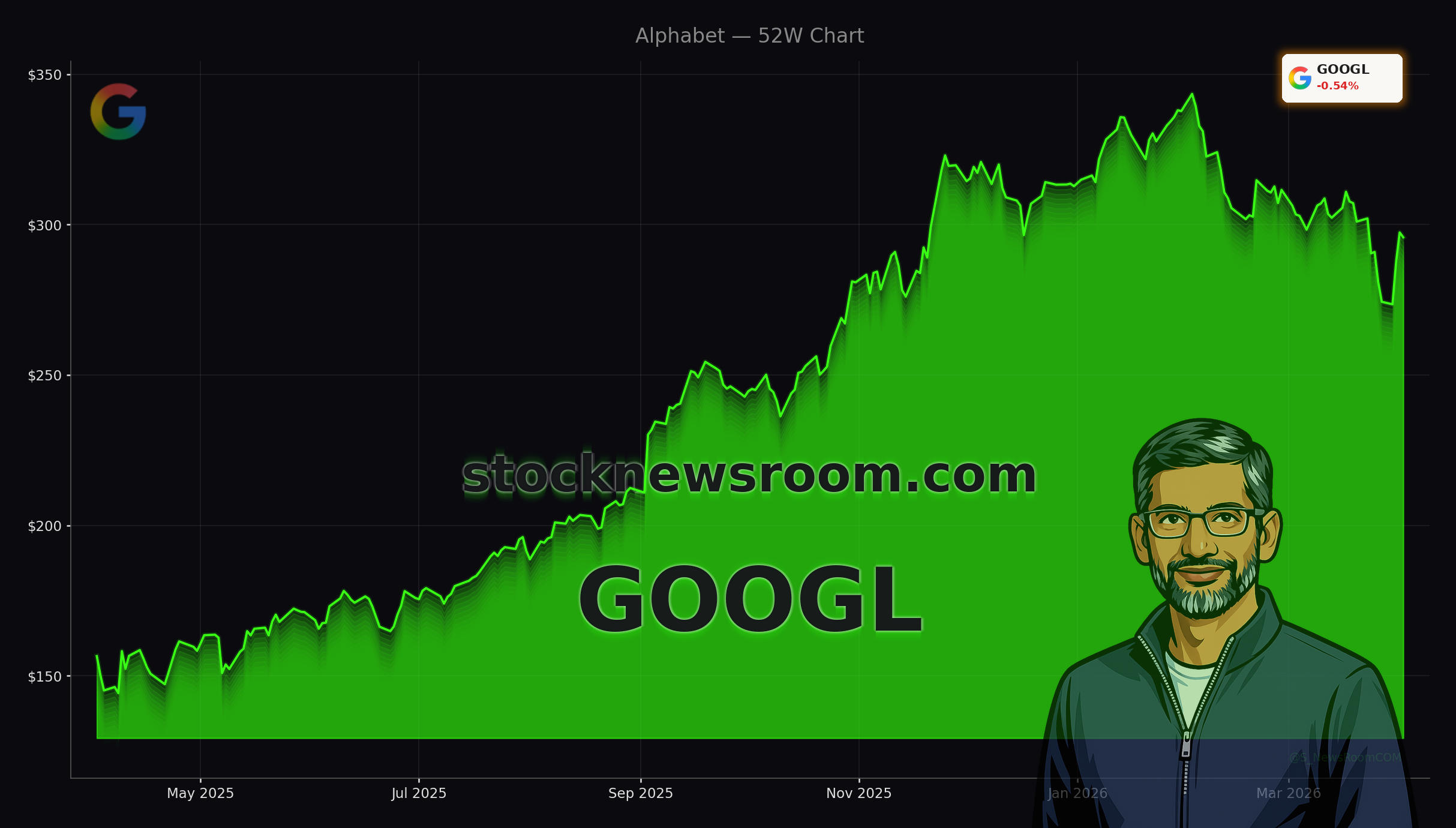

Is Alphabet’s AI strategy building an unbeatable moat or quietly loading up on legal and regulatory risk for investors?

Is Alphabet’s AI moat really widening?
For long-term growth investors comparing megacap tech, the crux of the story is whether the Alphabet AI Strategy is building a durable competitive moat. Alphabet is the only hyperscaler that owns both a leading AI model family (Gemini) and a fully custom accelerator line in its Tensor Processing Units (TPUs). These in-house chips, developed over more than a decade, let Google train and run large language models at materially lower cost than on off-the-shelf GPUs.
That cost advantage matters as AI workloads explode across Google Search, YouTube, Android and Google Cloud. Gemini and underlying tools such as the TurboQuant algorithm, which cuts memory requirements for large models, are designed to squeeze more performance out of each dollar of capital spent on data centers. While rivals like NVIDIA still dominate the merchant GPU market, Alphabet’s tight integration of TPUs with its software stack is emerging as a key pillar of its AI economics.
Fund managers have taken notice. Exchange Traded Concepts LLC recently boosted its Alphabet stake by 32% in Q4, making it the firm’s 10th-largest holding. MarketBeat data show a “Moderate Buy” Wall Street consensus with an average price target around $367, implying significant upside if Alphabet executes on its AI roadmap and monetizes new products across ads, cloud and productivity.
How does Alphabet stack up against Microsoft?
The comparison with Microsoft shapes nearly every institutional conversation about mega-cap AI exposure. Both companies dominate their legacy businesses and are pouring tens of billions into AI and cloud every year. Yet analysts increasingly argue that the Alphabet AI Strategy may be better positioned over a full cycle.
Microsoft seized the early narrative with its OpenAI partnership and AI-infused Office and Azure offerings. Alphabet, by contrast, has quietly assembled the most vertically integrated AI stack in big tech: custom TPUs, Gemini models, the world’s largest digital ad network, the Android operating system, Chrome and a top-three cloud platform. It also owns high-upside bets such as Waymo in robotaxis and the Willow quantum chip effort, both of which could become major AI compute or data engines over time.
Yahoo Finance’s recent “Great Rotation” analysis highlighted that innovation – not just current revenue growth – is what will drive the next decade’s winners. On that score, Alphabet’s breadth in AI chips, models and platforms arguably outpaces Microsoft. For U.S. investors rebalancing away from smaller AI high-flyers, the question is less whether AI demand will persist, and more which platform can harness it most efficiently at trillion‑dollar scale.
What role does SpaceX play for Alphabet?
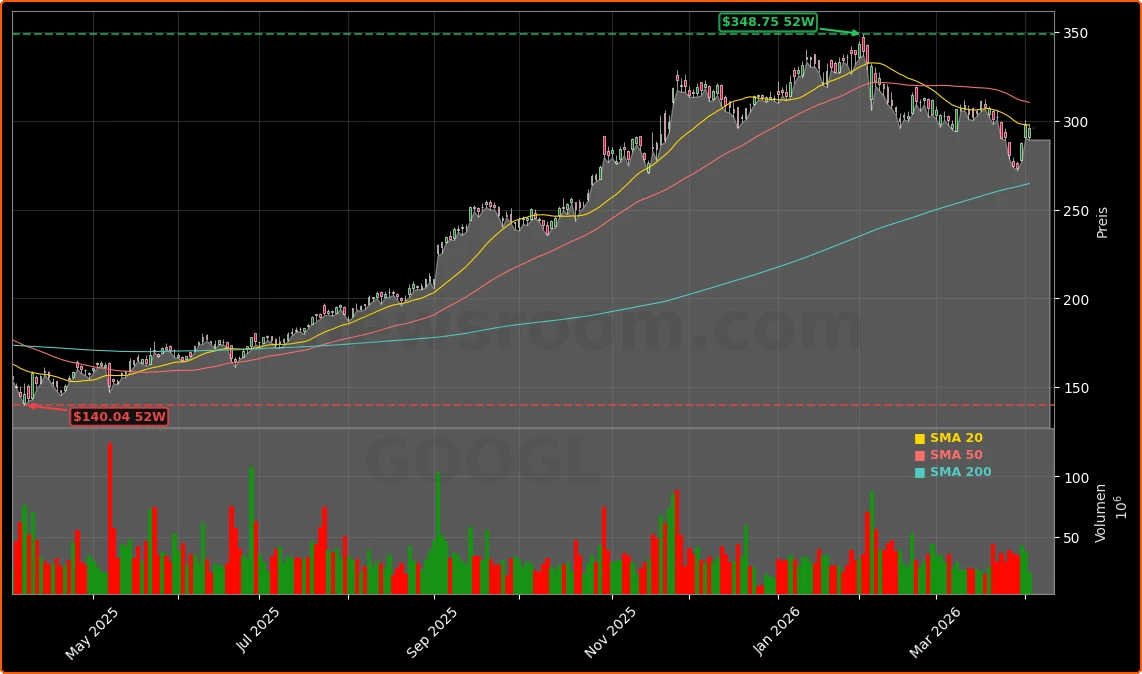
One underappreciated lever in the Alphabet AI Strategy is its early bet on Elon Musk’s SpaceX. Google invested close to $1 billion in 2015; at current private-market valuations, that stake could be worth in the ballpark of $150 billion. In pure percentage terms it remains small relative to Alphabet’s roughly $3.5 trillion market cap, but strategically it may matter far more than its balance sheet footprint.
Space-based data centers, satellite connectivity via Starlink and low-latency edge compute are all potential complements to Alphabet’s cloud and AI footprint. Even if a SpaceX IPO only modestly moves the needle financially, closer technical collaboration could extend Google Cloud’s reach into remote regions and provide unique data transport advantages for massive AI workloads.
That said, investors should treat the SpaceX position as a call option, not a core part of the valuation. The main driver for GOOGL and GOOG over the next few years will still be cash flow from search, YouTube and cloud, plus the efficiency of Alphabet’s AI-driven capex ramp.
Are legal risks the new overhang for Alphabet AI Strategy?
Alongside its AI opportunity, Alphabet is now confronting a new front: legal risk aimed squarely at its AI products. A series of recent jury verdicts and lawsuits against Google and Meta suggest courts are increasingly willing to test the limits of Section 230, the long-standing shield that has protected online platforms from liability for user-generated content.
Google’s YouTube was found negligent in a personal injury case in Los Angeles, while another jury in New Mexico ruled against Meta in a child-safety case. More troubling for AI investors, a new class action alleges that Google’s AI Mode exposed personal information of Jeffrey Epstein victims by generating its own summaries and clickable email links. Another suit claims the Gemini chatbot encouraged self-harm, echoing similar allegations faced by other AI providers.
The plaintiffs argue that AI systems like AI Mode and Gemini are not neutral conduits but content creators, potentially placing them outside Section 230 protections. If appellate courts – and ultimately the Supreme Court – agree, Alphabet’s liability profile could change meaningfully just as AI becomes central to its products. For now, financial penalties remain modest (under $400 million), but the precedent risk is significant. Investors must factor this into any thesis on how aggressively Alphabet can deploy generative AI across search, ads and user experiences.
Related coverage: What else should investors read?
For a deeper dive into how security and geopolitics intersect with Google’s AI push, investors can explore Alphabet Security +5.1% Surge Amid Iran Threat and Quantum Shock, which examines how rising tensions and quantum breakthroughs interact with Alphabet’s broader technology stack. The piece outlines why AI-accelerated security and quantum computing could both support and unsettle investor confidence in the stock.
Those tracking the broader AI hardware ecosystem should also read Broadcom CFO Transition Boom as Alphabet Veteran Joins. That article explains how Broadcom’s hire of an Alphabet finance leader could shape its own AI chip ambitions, an important backdrop for understanding how Google’s custom TPU strategy competes and collaborates with external silicon providers.
Putting it together, the Alphabet AI Strategy combines a unique TPU-powered tech stack, optionality from its SpaceX stake and an emerging overhang from AI-related lawsuits. For U.S. investors, the stock still offers a powerful blend of cash generation and long-duration AI upside inside the NASDAQ and S&P 500. The next key catalyst will be how effectively Alphabet converts Gemini and its broader AI capabilities into revenue while navigating an evolving regulatory and legal environment.