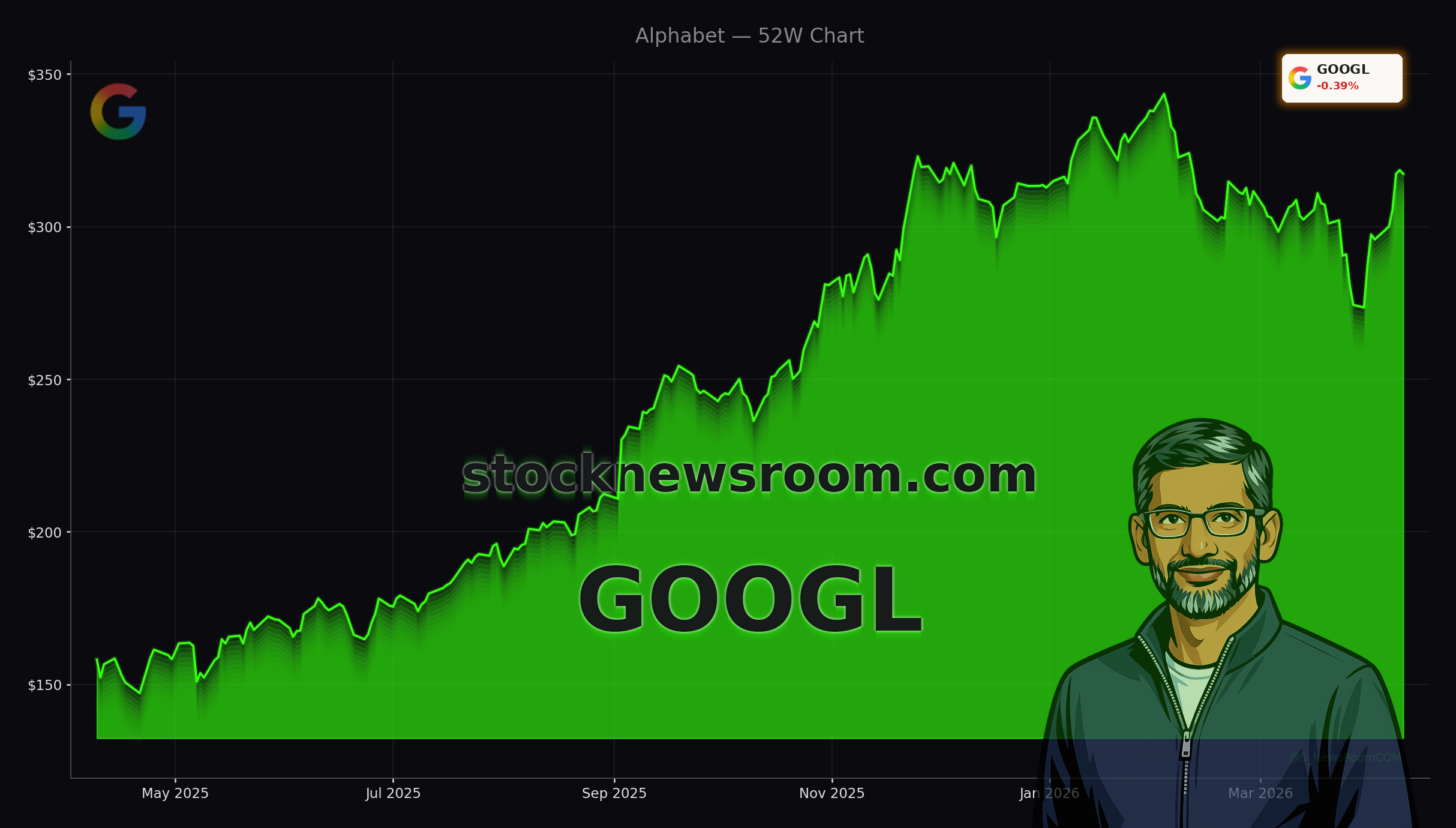

Is Alphabet’s massive AI capex spree a future profit engine or a looming drag on free cash flow and valuation?

How does AI capex shape the Alphabet Forecast?
Alphabet Inc. (Google) has made clear that the AI race is now the core capital-allocation priority. Management is steering more money directly from the balance sheet into large-scale AI bets rather than relying only on its traditional venture arms. Modern AI startups can easily absorb hundreds of millions or even billions of dollars, and Alphabet is matching rivals like Microsoft, Amazon, and NVIDIA with its own mega-checkbook.
The company’s investment in Anthropic is a prime example. Across several rounds, Alphabet has committed more than $3 billion and now holds roughly 14% of the AI lab, which most recently carried a private valuation near $380 billion. This is not just a passive stake: Anthropic’s Claude models are scaling on Google’s custom Tensor Processing Units (TPUs), linking potential equity gains with incremental Cloud and hardware revenue.
Executives are reportedly planning capital expenditures that could reach $175 billion to $185 billion in 2026, heavily skewed toward data centers, TPUs, and AI infrastructure. That sheer scale is central to any medium-term Alphabet Forecast, because it could either unlock a step-change in Cloud margins or weigh on free cash flow if monetization underdelivers.
What do Alphabet and SpaceX add for investors?
Beyond cloud and software, Alphabet’s venture portfolio is turning into a quiet profit engine. The early 2015 check into SpaceX — around $900 million at a $12 billion valuation — now looks like a potential jackpot. Following the merger with xAI, private-market estimates place SpaceX’s value near $1.25 trillion, with some chatter about an IPO that could push that closer to $1.75 trillion.
If Alphabet has largely maintained its stake, that initial outlay may have more than tenfold upside on paper. Coupled with earlier bets like Stripe, now valued around $159 billion, these holdings provide optionality on the balance sheet that many investors still treat as a footnote. For a long-term Alphabet Forecast, those embedded gains could support buybacks, fund further AI buildout, or absorb short-term capex pressure.
CEO Sundar Pichai has emphasized that discipline still matters, stressing that every spare dollar should go where returns are highest. He has also acknowledged missed opportunities, citing autonomous-driving unit Waymo as a business where Alphabet in hindsight would have preferred to invest more and earlier. The implication for investors is that management is now more willing to “go big” when conviction in AI returns is high.
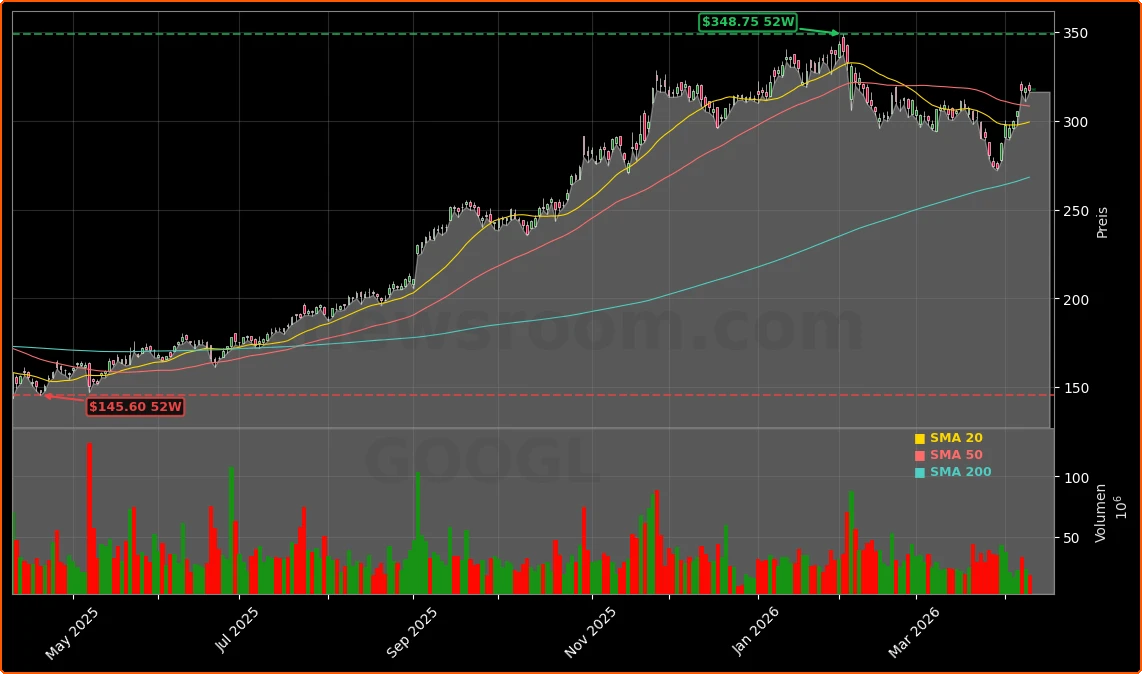
Alphabet Forecast: why are analysts so divided?
Wall Street’s split view shows up clearly in recent price-target moves. Mizuho’s Lloyd Walmsley lifted his Alphabet target to $420 from $410 and reiterated an Outperform rating, arguing that Google Cloud revenue could surge to roughly $149 billion by 2027, far ahead of consensus. He highlights the Anthropic deal, TPU monetization, and a rapidly expanding Cloud backlog as reasons to expect stronger growth and better margins than the market currently prices in.
By contrast, Wolfe Research trimmed its target to $360 from $390, even while keeping an Outperform stance. That cut reflects concern that, after a multi-year AI rally in big tech, near-term valuation headroom may be limited if execution around those colossal capex plans wobbles. Both houses agree that Alphabet’s fundamentals and AI positioning are strong, yet their diverging targets underscore how uncertain the medium-term Alphabet Forecast remains.
On the institutional side, MarketBeat data shows Earned Wealth Advisors ramping its stake by 45.1% in Q4, while Aberdeen Group modestly reduced its holding but still counts Alphabet as a top-five position. That combination of selective profit-taking and fresh accumulation mirrors the broader NASDAQ environment, where the index is off more than 5% in 2026 despite robust tech earnings.
How competitive is Alphabet in the AI stack?
Alphabet is positioning itself as a full-stack AI player, spanning the Gemini model family, Google Cloud, and custom TPUs that compete directly with NVIDIA GPUs. Gemini has reached more than 750 million monthly active users and already powers AI-enhanced search, YouTube recommendations, and advertiser tools. In enterprise AI, Gemini’s share has reportedly climbed from the single digits to above 20%, with a trajectory that could challenge OpenAI’s leadership.
On the infrastructure side, Google has recently deepened partnerships that expand this moat. A multiyear deal with Intel integrates next-generation Xeon processors and AI-focused IPUs into Google Cloud, aiming to offload networking and security workloads and boost efficiency in AI data centers. A separate arrangement ties Anthropic’s massive Claude training requirements to Google’s TPU roadmap, while chip designer Broadcom is a key co-builder of those TPUs. This ecosystem approach strengthens Alphabet’s bargaining power against both Apple on the device side and hyperscale peers in the cloud.
Fundamentally, Alphabet ended 2025 with $402.84 billion in revenue, up about 15% year over year, a net margin above 30%, and Google Cloud growing 48% with operating income more than doubling. With the stock trading around 26 times forward earnings and lagging some megacap peers like Tesla and NVIDIA in 2026 performance, many portfolio managers see a potential opportunity if the Alphabet Forecast on AI margins proves correct.
Related Coverage
For a deeper dive into how rising data-center spending might translate into long-term earnings, readers can explore Alphabet AI Strategy Boom: Can Cloud Upside Last?, which examines whether Google Cloud and Gemini can carry returns above Alphabet’s surging capex. Investors comparing AI leaders across the sector may also want to read NVIDIA AI Growth +2.6%: Is the AI Boom Still a Bargain?, a look at whether NVIDIA’s growth and valuation still stack up favorably in an AI-driven NASDAQ.
In the end, the Alphabet Forecast comes down to whether massive AI infrastructure bets can sustain double-digit revenue growth and expanding Cloud margins without crushing free cash flow. If Pichai’s push into Anthropic, SpaceX, and TPUs pays off, today’s subdued valuation could leave room for meaningful upside in long-term portfolios. The next few quarters of Cloud growth, Gemini adoption, and capex efficiency will show whether Alphabet can turn its AI ambition into durable shareholder returns.