
Is Amazon’s $200 billion AI capex wave a visionary masterstroke or the start of a painful margin squeeze for shareholders?

How is Amazon’s AI capex wave changing the story?
Amazon.com, Inc. has laid out one of the most aggressive spending plans in big tech, guiding toward roughly $200 billion in capital expenditures for 2026, about 51% above last year and well above the ~$150 billion many on Wall Street expected. Much of this budget is earmarked for AI infrastructure: data centers, high‑end chips, and custom silicon such as Trainium and Inferentia. The Amazon AI Strategy is clearly prioritizing long‑term compute capacity over near‑term margins.
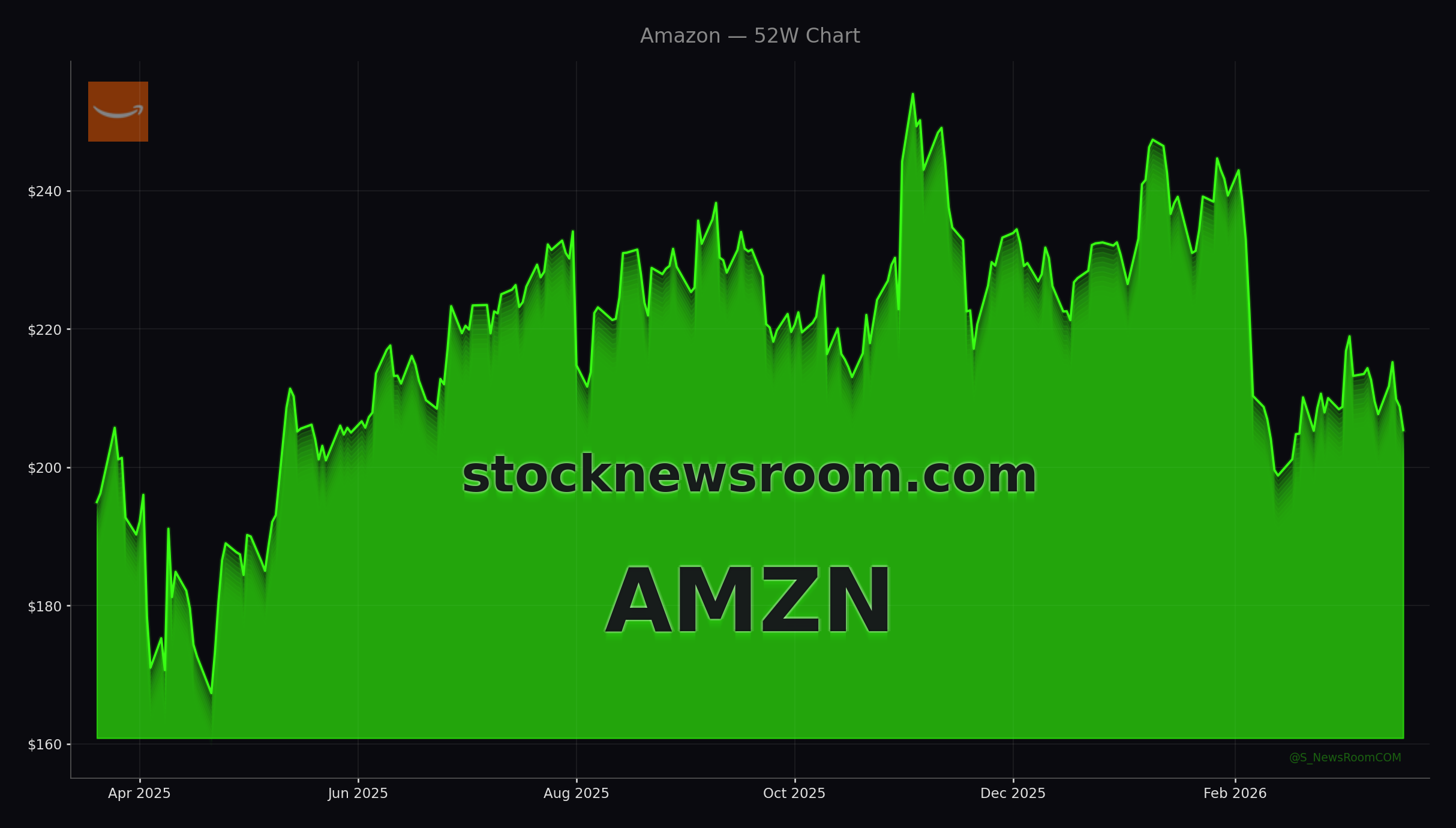
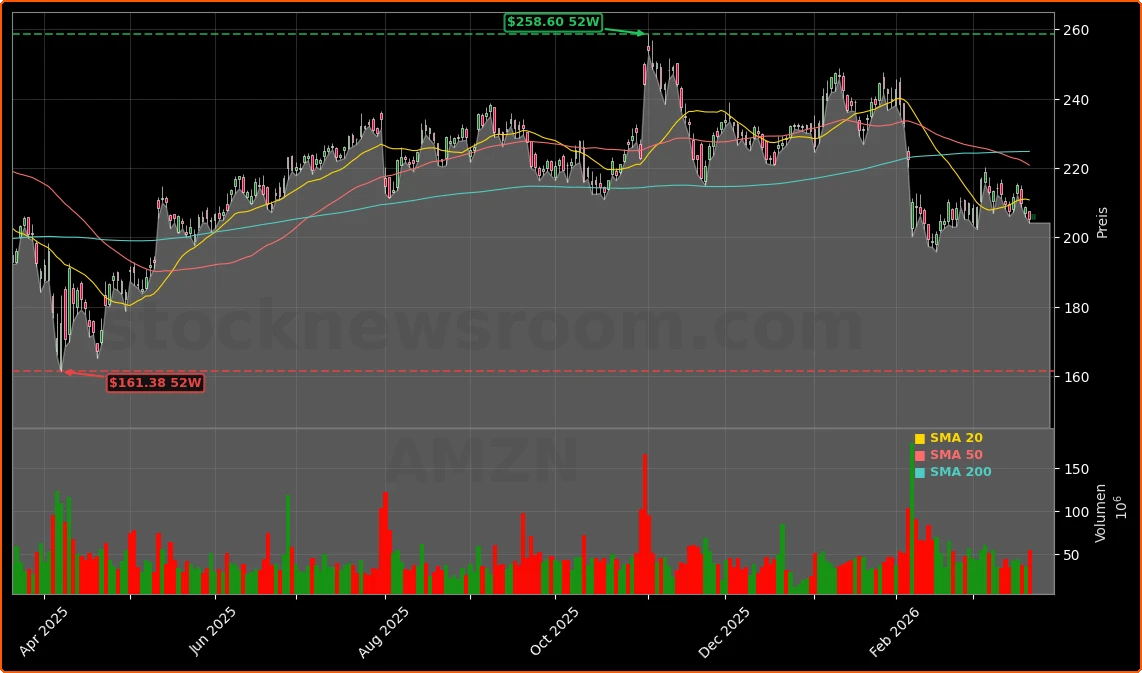
This capex surge already hit the financials. Trailing 12‑month free cash flow in Q4 2025 fell about 71%, primarily because of higher infrastructure spend. That drop has contributed to the stock’s 8% year‑to‑date decline in 2026, even as AWS just posted its strongest growth in nearly three years. Despite the sell‑off, Amazon still commands a market cap around $2.2 trillion and trades at roughly 29 times earnings, near its cheapest valuation in a year but still at a premium to many e‑commerce peers.
Institutional investors like Ironvine Capital Partners emphasize that Amazon’s dual infrastructure moats in e‑commerce and cloud give it unusual reinvestment avenues. For long‑term shareholders, the bet is that today’s AI‑driven buildout lays the groundwork for higher‑margin services layered on top of that infrastructure in the next decade.
Why the Nvidia GPU deal matters for AWS
One cornerstone of the Amazon AI Strategy is a newly confirmed deal with NVIDIA to acquire one million GPUs through 2027. Deliveries begin this year and include not only GPUs but also Spectrum networking chips and Groq‑based accelerators that NVIDIA licenses. AWS plans to deploy at least seven different Nvidia chip types plus Groq chips to optimize inference workloads – the production side of AI where models answer live user queries.
For investors, the scale and diversity of this chip stack highlight two things. First, AWS is intent on remaining a first‑tier AI training and inference platform alongside Microsoft Azure and Google Cloud. Second, Amazon is hedging between third‑party silicon and its own chips like Trainium, rather than betting on a single architecture. That makes the Amazon AI Strategy more resilient but also capital intensive, reinforcing why capex is soaring.
At the index level, this deepened partnership also tightens the feedback loop between the Magnificent Seven: Amazon, NVIDIA, Apple, Microsoft, Alphabet, Meta and Tesla now drive an outsized share of both the NASDAQ‑100’s earnings power and its AI infrastructure cycle. Funds tracking the NASDAQ 100 and concentrated AI ETFs are effectively leveraged to whether this GPU‑heavy spending produces durable returns.
What does the exclusive OpenAI contract mean?
Another underappreciated pillar of the Amazon AI Strategy is its relationship with OpenAI. In late February, OpenAI signed a roughly $50 billion agreement granting Amazon Web Services exclusive hosting rights for Frontier, its AI agent platform. That deal positions AWS as the backbone for one of the most closely watched emerging AI ecosystems, even as Microsoft remains deeply tied to OpenAI’s core models.
Layered on top of AWS’s existing partnership with Anthropic, this exclusive hosting role signals Amazon’s push toward a vertically integrated AI stack: from chips and data centers to foundation models, agent platforms and enterprise applications. If enterprises standardize on OpenAI- and Anthropic-based services inside AWS, utilization of Amazon’s massive new AI infrastructure could climb rapidly, improving returns on today’s $200 billion spending plan.
At the same time, Amazon faces new risk vectors. AWS data centers in the Middle East have already been targeted in the Iran conflict, with zones in the UAE temporarily impaired. Higher energy prices and geopolitical tensions could raise operating costs and cap demand for some AI workloads, adding volatility to what is already a capex‑heavy strategy.
How do devices and logistics fit into Amazon AI Strategy?
Beyond the cloud, Amazon is extending its AI ambitions into consumer hardware and logistics. Multiple reports indicate the company is working on a new Alexa‑centric smartphone, codenamed “Transformer,” designed as an AI‑forward personalization device that keeps customers inside the Amazon ecosystem throughout the day. The phone would act as a mobile control center for shopping, media and smart‑home interactions, potentially breathing new life into Alexa and Amazon’s devices unit more than a decade after the Fire Phone flop.
In parallel, Amazon is pulling back from the U.S. Postal Service, planning to cut USPS parcel volume by at least two‑thirds by the end of the current contract this fall. That shift underscores how much of Amazon’s logistics stack – from route planning to warehouse robotics and humanoid helpers – is being rebuilt around AI. Greater in‑house control should improve delivery speed and margins over time, while also generating proprietary data to refine AI models in areas like demand forecasting and last‑mile optimization.
How are analysts and investors reacting?
Wall Street is divided on the near‑term trade‑off embedded in the Amazon AI Strategy. Several large firms, including Goldman Sachs and Morgan Stanley, remain positive on the stock’s long‑term AI optionality, while cautioning that capex will keep free cash flow under pressure. Recent commentary collected by Investors Business Daily shows that, despite a softer share price this week, many analysts still frame Amazon as one of the highest‑quality AI platforms in large‑cap tech.
Sentiment among retail analysts is also constructive. LikeFolio’s Andy Swan told Schwab Network that Amazon “sees where trends are going” with AI and cloud, comparing today’s infrastructure buildout to the company’s bold inventory expansion in the 1990s. However, skeptics argue that with a market cap above $2 trillion, much of that upside is already priced in, and that alternatives in global e‑commerce like Alibaba, MercadoLibre or Sea trade at lower multiples with comparable growth.
For now, the stock remains sensitive to macro worries around inflation, energy costs and war‑related volatility, as investors rotate in and out of high‑growth AI names across the NASDAQ and S&P 500.
Related Coverage
For a deeper dive into how debt‑funded capex is reshaping Amazon’s balance sheet, readers can explore Amazon AI Investments Record: Is a $200B Capex Bet Worth It?, which examines whether this investment wave is the catalyst the stock has been missing. For broader sector context on hyperscaler spending and potential overheating in the cloud, Oracle Earnings -3.6% Shock: Is the AI Cloud Boom Overheating? looks at how rival enterprise vendors are navigating similar AI‑driven pressures.
Amazon sees where trends are going in AI and is building the infrastructure before the profits fully show up.— Andy Swan, LikeFolio (via Schwab Network)
In sum, the Amazon AI Strategy is transforming the company from a dominant e‑commerce and cloud leader into a full‑stack AI infrastructure, chips and devices powerhouse. The trade‑off is clear: elevated leverage and depressed free cash flow today in exchange for potential AI‑driven margin expansion across AWS, logistics and consumer hardware over the coming decade. For long‑term investors willing to stomach volatility, upcoming quarters will be crucial in showing whether rising AI workloads and new products like the Transformer phone can validate this ambitious bet.