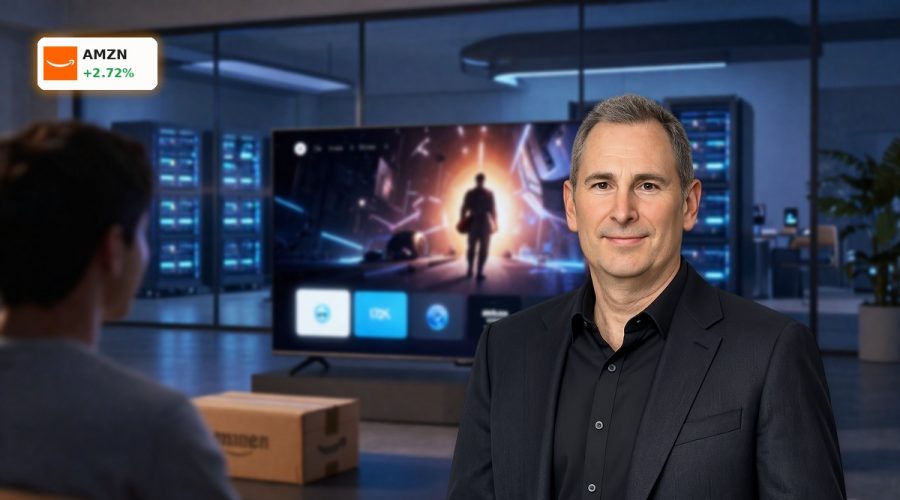
Can Amazon’s entertainment strategy really move the stock needle while it spends billions on AI and logistics expansion?

How does Amazon’s entertainment pivot hit the stock?
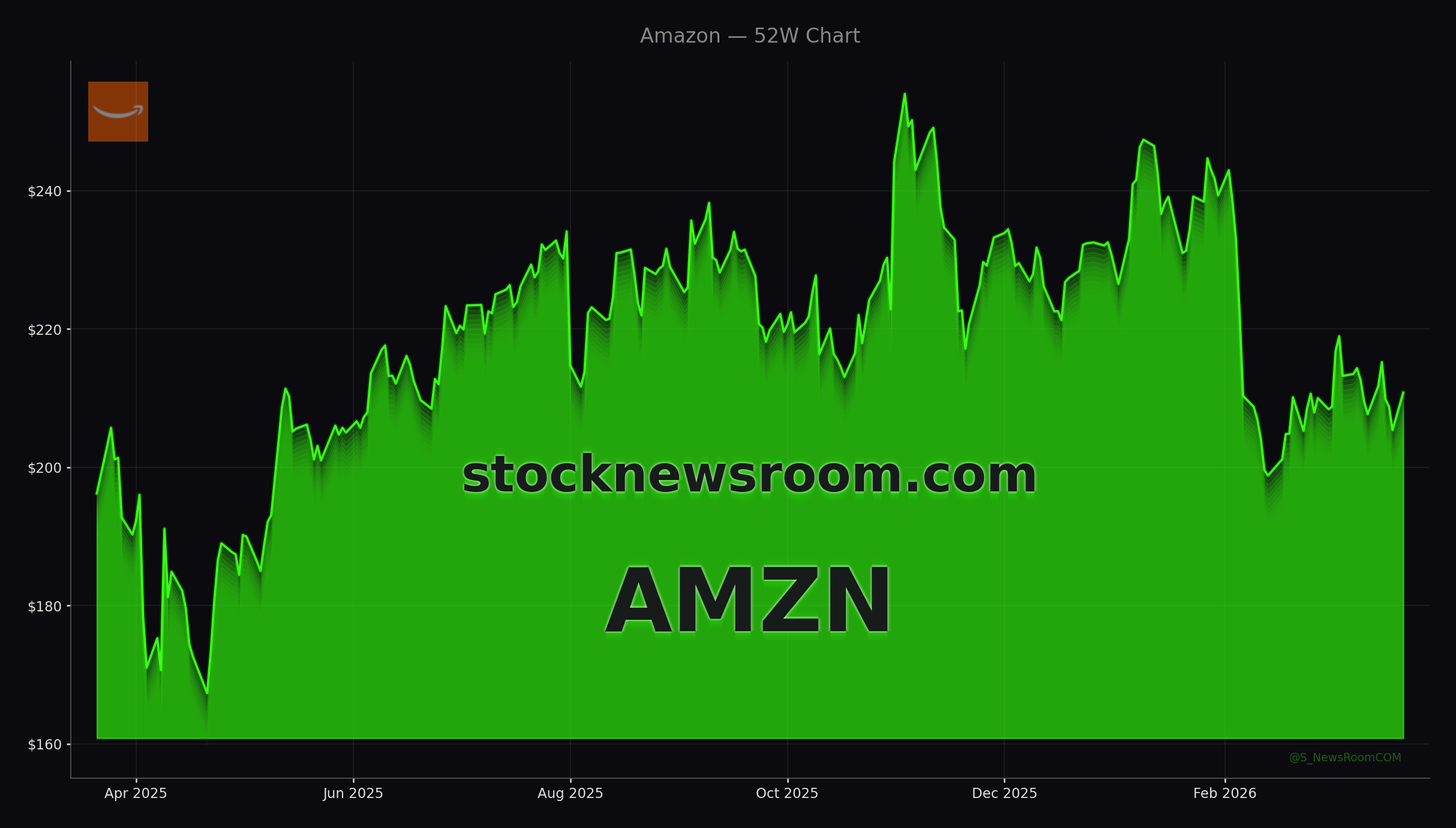
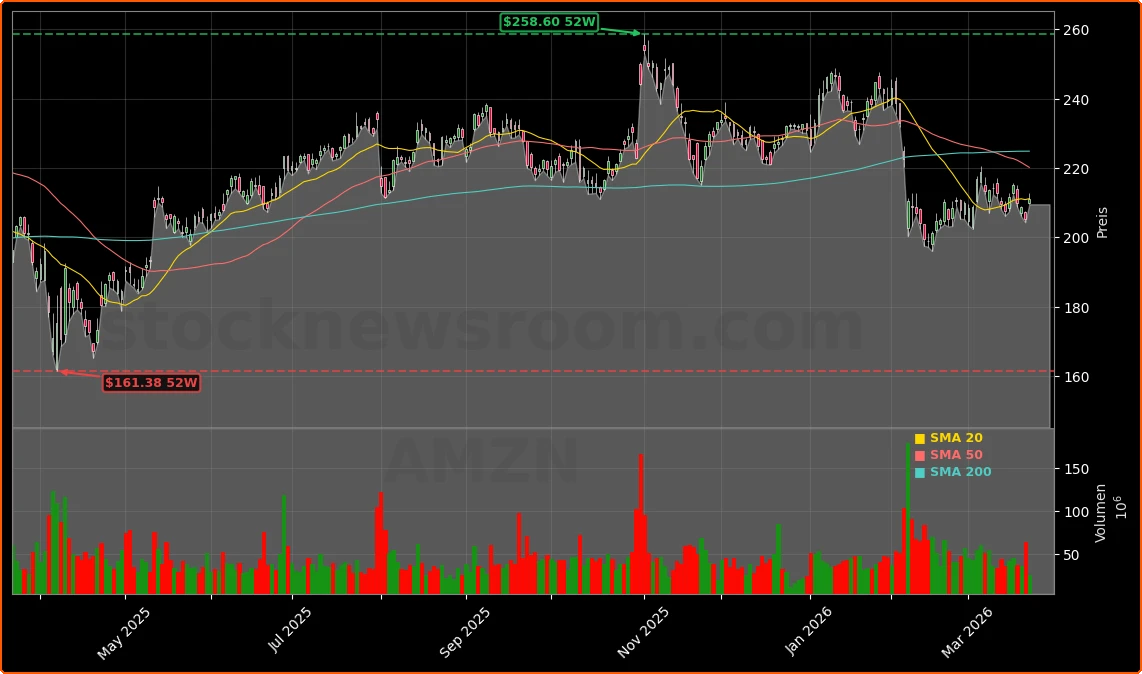
Amazon.com, Inc. shares are up about 2.72% today to roughly $210.92, leaving the stock well below its 52-week high near $258.60 and closer to its $161.38 low. Technically, Amazon is still trading below its 100-day simple moving average, but a neutral-to-bullish RSI around 40 and a MACD that has turned constructively suggest downside momentum is fading. Against that backdrop, the Amazon Entertainment Strategy has become a key narrative driver, with investors weighing new streaming monetization against heavy capital spending in AI infrastructure and logistics.
Analysts broadly remain bullish. Citigroup rates the stock a Buy with a $265 target, Needham also has a Buy at $265, and Wells Fargo calls it Overweight with a $304 target. Separate 2030-style models peg fair value nearer $338 if AWS and e‑commerce growth stay on track. The question now is whether Amazon’s mix of theatrical films, Prime Video price hikes and logistics investments can unlock that upside without compressing returns.
What does Project Hail Mary reveal about Amazon Entertainment Strategy?
The breakout performance of “Project Hail Mary” marks a turning point in the Amazon Entertainment Strategy. The sci‑fi adventure starring Ryan Gosling opened to about $80.5 million in the U.S. and Canada and $60.4 million internationally, Amazon’s biggest debut to date and the strongest non‑franchise Hollywood opening since 2023. With an estimated $200 million production budget, it is also one of the company’s boldest financial bets in film.
After years of experimenting with indie dramas, direct‑to‑streaming releases and, since 2022, the MGM acquisition, Amazon MGM Studios has settled on a more traditional slate of around 15 theatrical films per year. The strategic twist: theatrical box office is now seen as the first monetization layer for content that later becomes a retention and upsell driver on Prime Video. Management’s message is that if a movie is good enough to win in theaters, its lifetime value on streaming is much higher — a key pillar of the Amazon Entertainment Strategy.
Upcoming titles like “Masters of the Universe,” a reboot of “The Thomas Crown Affair” with Michael B. Jordan and a future James Bond installment directed by Denis Villeneuve aim to turn this year’s success into durable franchises. For investors, that raises Amazon’s long‑term content spend but also its ability to compete with Apple TV+, Netflix and Disney+ for premium subscribers.
How is Prime Video Ultra changing the revenue mix?
To better monetize that content pipeline, Amazon is reshaping Prime Video around a new premium tier. The ad‑free add‑on is being rebranded as “Prime Video Ultra,” with the monthly fee rising from $2.99 to $4.99 starting April 10. In return, subscribers get ad‑free viewing, 4K support, up to five concurrent devices and as many as 100 downloads. For Prime members who treat video as a core part of their subscription, the Amazon Entertainment Strategy is clearly pushing them toward higher ARPU.
This mirrors industry‑wide moves by Netflix, Disney+ and Paramount+ to raise prices and lean harder on ad‑supported tiers. For Amazon, which already generates $13 billion per quarter from subscriptions and is rapidly scaling its digital advertising business, Prime Video Ultra sits at the intersection of content, ads and membership economics. If uptake is strong, it could modestly expand margins in a segment that traditionally lags cloud and advertising in profitability.
Where do logistics and AI spending fit into the picture?
Beyond streaming, Amazon is plowing capital into both physical and digital infrastructure. On the ground, the company is rolling out a $4 billion rural delivery initiative, building roughly 40–50 new hubs a year to reach up to 13,000 ZIP codes in thinly populated regions. Sites like Missoula, Montana now support two‑day or even same‑day delivery thanks to new delivery stations and off‑road vehicles under “Project Ibex,” built on rugged Ford F‑250 platforms. That logistics push underpins Prime’s value proposition and indirectly supports the Amazon Entertainment Strategy by making memberships more sticky.
In parallel, Amazon is leaning heavily into AI. The company plans to finance about $10 billion of new debt to help fund a roughly $200 billion capex program focused on AI data centers and cloud infrastructure. AWS already delivers 35% operating margins and 57% of group operating income, and CEO Andy Jassy now believes annual AWS revenue can reach at least $600 billion over the next decade, double his earlier target. Massive GPU orders from partners like NVIDIA and OpenAI‑linked defense workloads highlight how critical AI has become to the broader investment case.
To improve efficiency, Amazon is also accelerating automation. Over one million robots now operate in its warehouses, bringing the worker‑to‑robot ratio close to 1:1 and allowing headcount to stay roughly flat at 1.6 million even as offline revenue grows high single digits. Recent cuts of about 16,000 corporate roles were framed as a “rebalancing” toward AI and automation, echoing workforce shifts at peers like Snowflake, Canva and Tesla as they deploy generative models at scale.
How does this compare within the Magnificent Seven?
Within the “Magnificent Seven” — NVIDIA, Apple, Alphabet, Microsoft, Amazon, Meta Platforms and Tesla — Amazon stands out for its blended model of consumer retail, cloud and media. While the group has lagged the S&P 500 in recent weeks as investors trim risk, Amazon’s roughly $2.2 trillion market cap and central role in both AI infrastructure and consumer spending keep it a core holding in major ETFs. Funds like First Trust Dow Jones Internet Index Fund and iShares Global Consumer Discretionary ETF have roughly 10% weightings, meaning flows into or out of these vehicles can accelerate moves in the share price.
Compared with pure‑play streamers, Amazon’s diversified cash flows give it more latitude to experiment with theatrical windows, price hikes and new formats like four‑legged delivery robots from Swiss startup Rivr, which it recently acquired. At the same time, the company’s crumbling USPS negotiations and ongoing capex surge mean execution risk remains high. For U.S. investors, the thesis now hinges on whether the Amazon Entertainment Strategy, AWS growth and logistics build‑out can collectively offset headwinds from higher interest costs and tougher delivery economics.
Related Coverage
For a deeper dive into Amazon’s record AI capex plans and the implications of using new debt to finance up to $200 billion in infrastructure, see “Amazon AI Investments Record: Is a $200B Capex Bet Worth It?”. The piece examines whether this investment wave could be the catalyst Amazon’s stock has been missing or a drag on returns if AI monetization disappoints.
Investors interested in how AI infrastructure demand is shaping the broader tech sector should also read “NVIDIA AI Factories Boom as $50B China Demand Returns”. That article explores whether NVIDIA’s AI factories and resurgent Chinese orders can justify its premium valuation, and how suppliers to Amazon’s cloud build‑out fit into the next leg of the AI trade.
Altogether, the Amazon Entertainment Strategy now spans blockbuster films, premium streaming, rural logistics and AI‑driven cloud expansion, making the stock a complex but compelling story for long‑term investors. If management executes, Amazon remains well positioned as a cornerstone holding in growth‑oriented portfolios, and the next few quarters should show whether this aggressive playbook is translating into sustained shareholder value.