Could the rumored Amazon Globalstar Acquisition turn Project Kuiper into a real Starlink rival while straining Amazon’s AI capex even further?

How would the Amazon Globalstar Acquisition hit markets?
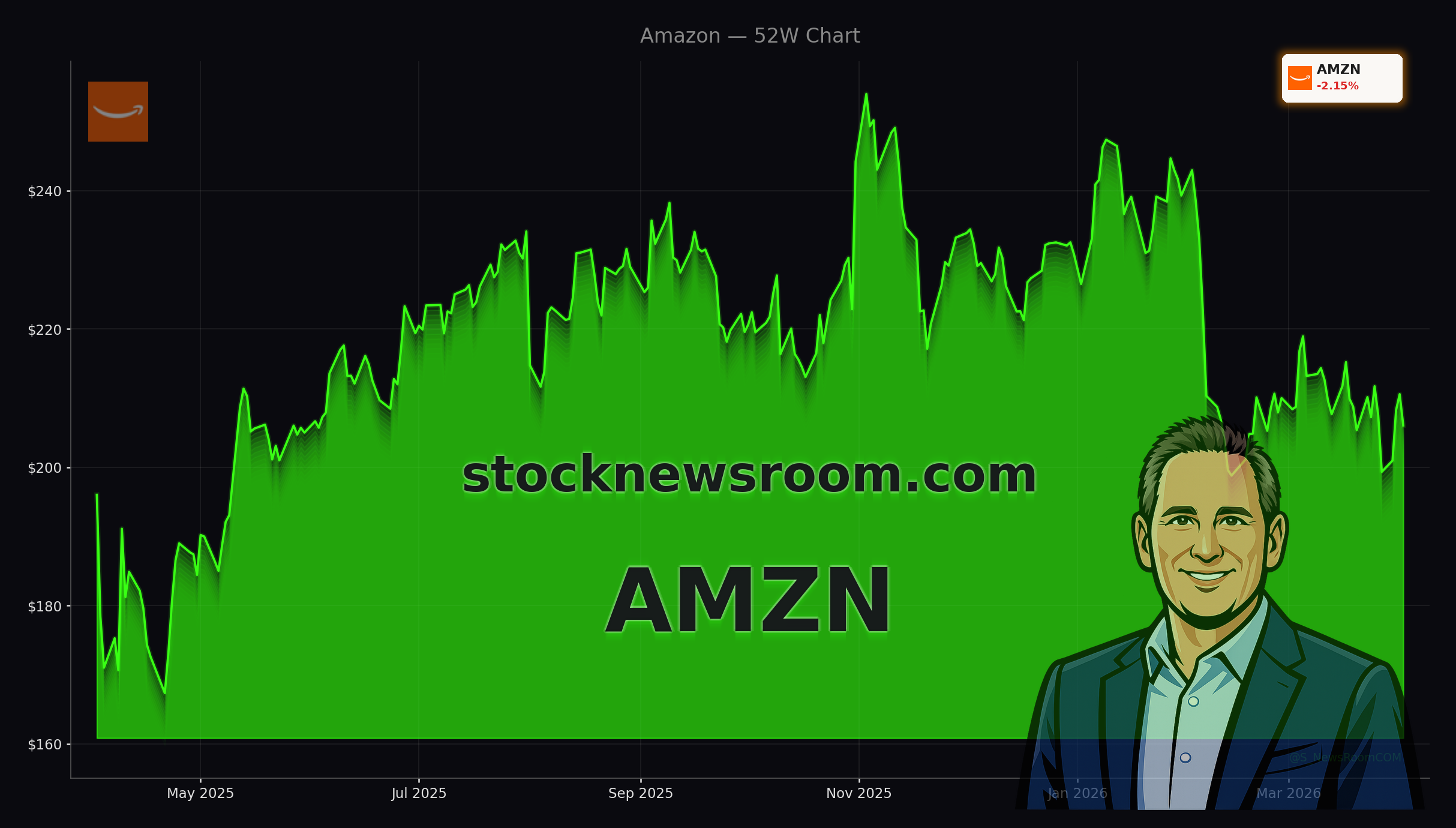
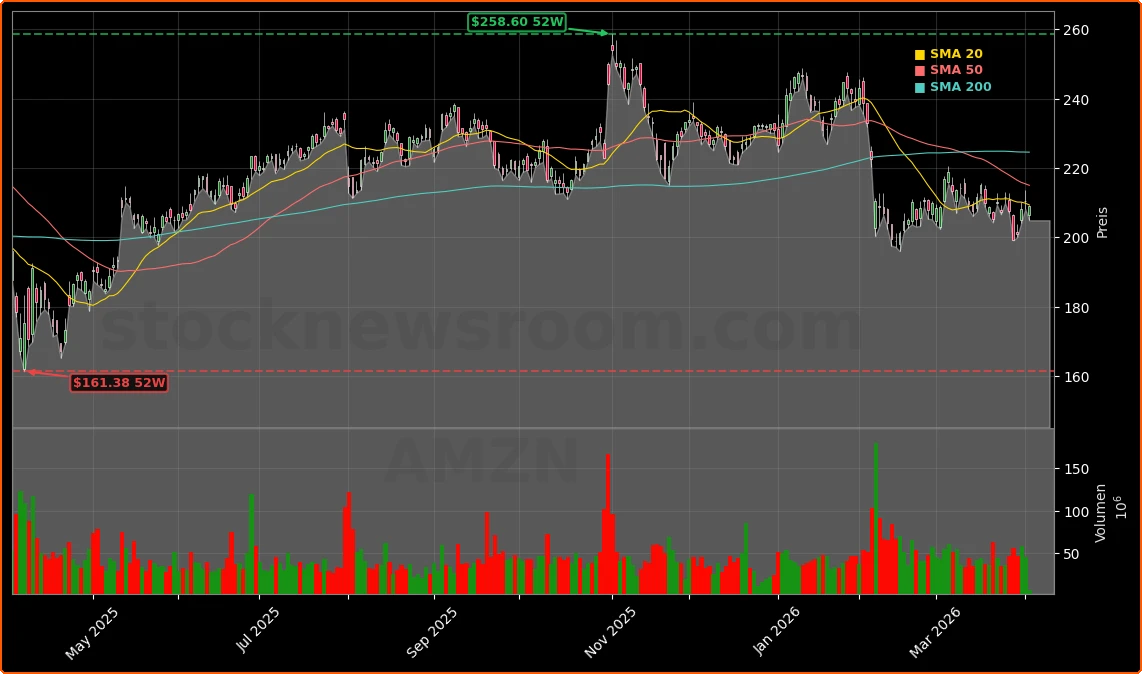
Amazon.com, Inc. (AMZN) traded at $209.07 in early Thursday action, slipping 0.71% from the prior close of $209.90 and extending a choppy sideways trend that has dominated since February. The stock remains well below its 52‑week high, so this is not a breakout move but rather a test of support around the key $212 area that technicians have been watching for months. A confirmed Amazon Globalstar Acquisition could become a fresh catalyst in a tape where investors are increasingly focused on capex discipline and AI monetization.
On the sell‑side, optimism remains robust. Wells Fargo recently reiterated an Overweight rating on Amazon and lifted its price target to $305, naming the company its top Internet pick for 2026, citing AWS strength and a powerful free‑cash‑flow recovery story. Other firms tracked by MarketBeat show a consensus “Moderate Buy” rating with an average target near $286, even as some institutional investors such as Riverbridge Partners have trimmed positions while others, including Ferguson Wellman and CPA Asset Management Group, have added exposure.
What exactly is Amazon buying with Globalstar?
Reports indicate Amazon is in advanced talks to acquire Globalstar for around $9 billion, though no binding agreement has been signed and negotiations could still fail. The core attraction is Globalstar’s existing LEO satellite constellation, ground infrastructure and valuable spectrum holdings, including globally harmonized Band 53/n53. Rather than building every layer from scratch, Amazon would gain an operational network that can be integrated into its Project Kuiper—internally also referred to as its Amazon Leo initiative—to deliver broadband internet from space.
Project Kuiper has already launched roughly 200 satellites but remains far behind SpaceX’s Starlink, which operates more than 9,500 satellites and serves over 9 million customers worldwide. Globalstar adds working assets, spectrum and operational know‑how, effectively compressing Amazon’s time‑to‑scale. Data Center Dynamics highlighted that Amazon has sought extensions on its deployment schedule due to launch constraints, underscoring why an acquisition shortcut has strategic appeal.
How does Apple complicate Amazon’s plan?
A major wrinkle in any Amazon Globalstar Acquisition is Apple. Apple holds roughly a 20% equity stake in Globalstar and has secured about 85% of the network’s capacity for its Emergency SOS via satellite feature on iPhone and Apple Watch. That arrangement has turned Globalstar into a quiet but critical part of Apple’s hardware ecosystem, and any change of control will likely require Apple’s consent or at least a significant renegotiation.
Bulls argue that Amazon could preserve and even deepen the Apple partnership, using the predictable cash flows from an anchor customer to finance network expansion. Bears counter that Apple may have contractual protections strong enough to delay, reshape or even block a deal, or insist on carve‑outs that limit Amazon’s operational freedom. MLQ.ai notes that regulatory reviews and Apple’s involvement could push any closing into late 2026, adding timing risk for investors betting on a rapid Kuiper scale‑up.
How does this fit Amazon’s $200B AI capex wave?
The Amazon Globalstar Acquisition sits squarely inside Amazon’s broader AI and infrastructure playbook. CEO Andy Jassy has guided for roughly $200 billion in capital expenditures across the company in 2026, up sharply from about $131.8 billion in 2025. That surge has crushed free cash flow—down nearly 66% year over year to about $11.2 billion in 2025—and helped pull the stock about 20% off its peak, even though AWS remains the profit engine of the business.
Wells Fargo, along with other bullish analysts, frames the current free‑cash‑flow pressure as a replay of Amazon’s historical strategy: invest aggressively in scale, then harvest high‑margin cash flows later. A LEO constellation that pairs Globalstar assets with Kuiper could become a backbone for AI workloads at the network edge, in aviation connectivity deals like Amazon’s Delta partnership for in‑flight LEO service, and in emerging use cases such as autonomous logistics and IoT. That would complement efforts by peers like NVIDIA on the chip side and enhance AWS’s position against cloud rivals.
What’s the competitive impact versus SpaceX and others?
For U.S. investors, the Amazon Globalstar Acquisition is primarily about narrowing the gap with SpaceX’s Starlink in the global satellite broadband race. SpaceX already launches Globalstar satellites via Falcon 9, creating the unusual prospect that Elon Musk’s launch customer could be absorbed by Amazon, its fiercest LEO rival. While SpaceX is privately held, Starlink’s rapid subscriber growth has heightened competitive pressure on public names like Amazon that are pushing AI‑heavy, cloud‑centric narratives.
Beyond SpaceX, the deal would also echo moves by other mega‑caps to vertically integrate infrastructure across devices, cloud and connectivity. Apple with Emergency SOS, Tesla with vehicle connectivity and energy networks, and hyperscalers like Amazon all aim to control critical data pipes. If Amazon can knit Globalstar and Kuiper into a seamless network, it could unlock new retail, advertising and smartphone initiatives, including the rumored AI‑centric “Transformer” phone designed to deepen user integration into the Amazon ecosystem.
Related coverage
Investors looking for a deeper dive into how this fits into Amazon’s broader spending plan should read Amazon AI Strategy -4%: $200B Capex Shock For AWS, which analyzes whether the current capex wave can translate into durable cash‑flow growth. For a sector‑wide view on AI infrastructure beneficiaries, the article NVIDIA AI Outlook Boom: $1 Trillion Supercycle Warning explores how chip leaders could ride, or potentially over‑shoot, an AI supercycle that directly intersects with Amazon’s cloud and satellite ambitions.
In summary, the rumored Amazon Globalstar Acquisition underscores how seriously Amazon is treating LEO satellites as a strategic pillar alongside AWS, e‑commerce and advertising. For long‑term investors, the key question is whether this $9 billion bet, layered on top of $200 billion in capex, can eventually reignite free cash flow and justify higher multiples. The next steps in negotiations with Globalstar and Apple—and any formal announcement from Amazon—will determine whether this remains a speculative headline or evolves into a transformative asset in the company’s AI and connectivity arsenal.