Is the new Amazon Logistics Deal with USPS just routine housekeeping or a quiet reset of Amazon’s delivery, fee and AI ambitions?

How does the Amazon Logistics Deal change USPS risk?
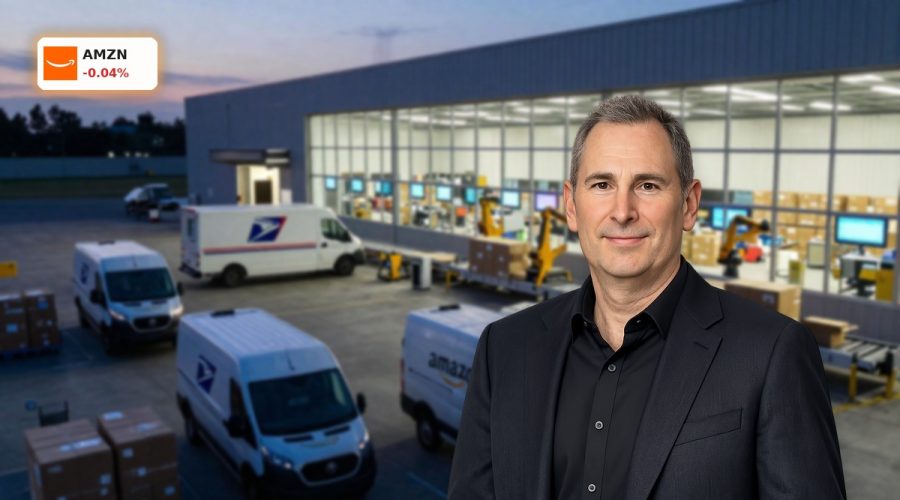
The newly struck Amazon Logistics Deal with the U.S. Postal Service marks a compromise that removes an immediate existential threat for USPS while letting Amazon.com, Inc. continue diversifying its delivery mix. USPS handled more than 1 billion Amazon packages last year, representing roughly 15% of its total U.S. parcel volume and about $6 billion in annual revenue. Early negotiations included the risk that Amazon could slash that volume by as much as two‑thirds; the final arrangement limits the cut to around 20%, securing roughly 80% of prior flows.
For investors, this means USPS remains a critical low‑density last‑mile partner in rural and hard‑to‑serve areas, even as Amazon builds out its own vans, sortation centers and regional hubs. The Amazon Logistics Deal therefore reduces tail‑risk around service disruptions or politically charged clashes over postal pricing, while preserving Amazon’s negotiating leverage and optionality across carriers like UPS and FedEx.
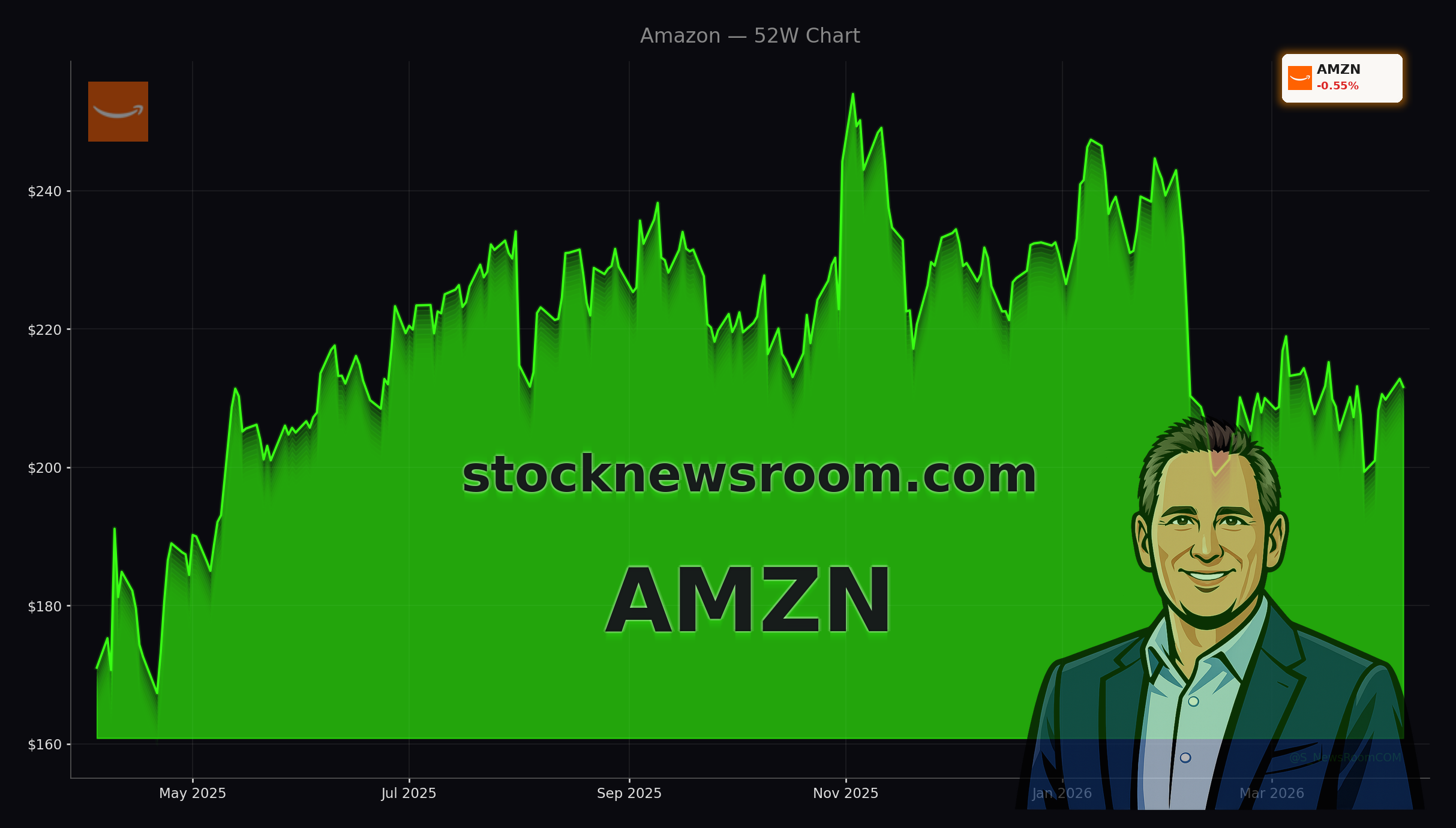
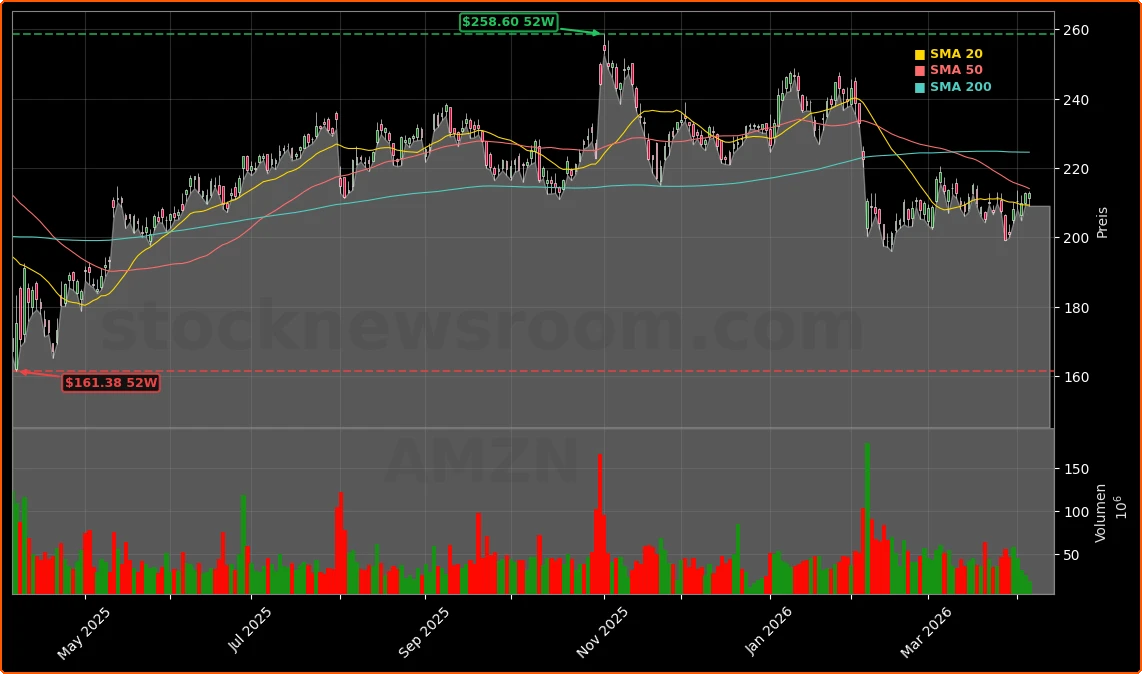
On the market side, Amazon shares slipped about 0.04% in regular trading despite the agreement, underperforming modestly against a choppy S&P 500 but avoiding any sharp rerating. With the stock still well below its 52‑week high, the deal is being interpreted more as strategic housekeeping than a thesis‑changing catalyst.
Why is Amazon raising logistics fees now?
The second major pillar surrounding the Amazon Logistics Deal is a new 3.5% fuel and logistics surcharge for third‑party merchants that rely on Fulfillment by Amazon (FBA). Management is effectively acknowledging what many retailers are facing: higher fuel costs, tighter labor markets and elevated capital spending for AI‑enabled logistics infrastructure. Passing part of that cost burden to merchants should support Amazon’s retail margins, but it risks friction with brands and sellers already squeezed by platform economics.
Recent reports indicate that Amazon has also been refusing wholesale requests from suppliers to raise the prices it pays for inventory, despite inflationary pressure from tariffs and energy. Some brands have responded by pulling products from the marketplace rather than accept lower profitability. This underscores the fine line Amazon must walk between maintaining its low‑price consumer value proposition and preserving a healthy seller ecosystem.
For comparison, brick‑and‑mortar rival Walmart is pushing deeper into higher‑margin categories like beauty and skincare, adding brands such as La Roche‑Posay in thousands of stores to defend share and offset cost pressures. Online, Amazon faces growing competition for discretionary spending from platforms ranging from TikTok Shop to specialty e‑commerce players.
How does the Amazon Logistics Deal fit AI and cloud strategy?
While logistics headlines dominate the day, the bigger narrative for long‑term shareholders remains Amazon Web Services and AI. Amazon is one of the hyperscale cloud providers planning to collectively spend hundreds of billions of dollars on AI‑related capex through 2026, drawing skepticism from investors worried about payback periods and margin dilution. Yet AWS already contributes more than half of Amazon’s operating income, and demand for its custom Trainium chips and AI infrastructure is growing at triple‑digit rates as customers look for cheaper alternatives to GPUs from NVIDIA.
Strategically, Amazon’s AI positioning is reinforced by its deep partnership and investment in Anthropic. Amazon and Apple are among the first companies testing Anthropic’s powerful Mythos model in a cybersecurity initiative that uses advanced AI to probe for vulnerabilities in products before mass deployment. At the same time, Uber is expanding its use of AWS Graviton and Trainium processors to speed ride‑matching, a real‑world validation of Amazon’s AI silicon roadmap, while companies from ITW’s Teks brand to large consumer apps continue to lean on the AWS ecosystem.
The Amazon Logistics Deal indirectly supports this AI agenda. A more efficient last‑mile network, coupled with predictable USPS capacity, underpins Prime delivery promises and data‑rich logistics operations that feed machine‑learning models. As AI‑enhanced routing, warehouse automation and demand forecasting scale, the upfront capex could translate into structurally lower unit delivery costs, even with a 3.5% surcharge offering near‑term relief.
What does Wall Street expect from Amazon now?
Despite a volatile start to 2026 for the broader “Magnificent Seven” cohort, Amazon remains a core holding for many hedge funds and long‑only managers. Billionaire investors such as Bill Ackman and Stanley Druckenmiller added to positions in late 2025, and some analysts argue today’s valuation—around 27x forward earnings—is reasonable given AWS growth and retail margin recovery. One high‑profile note from MarketWatch highlighted an analyst call that Amazon’s stock could rise as much as 50% as markets recalibrate their view on AI spending.
Options flow data on consumer discretionary names show active “whale” trading in Amazon contracts alongside peers like Tesla, signaling that sophisticated traders are positioning for larger swings. Meanwhile, macro strategists at major banks point out that the Magnificent Seven’s relative underperformance versus the S&P 500 in early 2026 has shaken the notion that mega‑cap tech is a one‑way safety trade, even for AI leaders like Amazon, NVIDIA and Apple.
In that context, the Amazon Logistics Deal is seen less as a dramatic growth lever and more as an incremental de‑risking step that stabilizes delivery costs and supply‑chain execution. The heavier swing factors for the share price remain AWS growth, AI monetization and any future big‑ticket moves, including potential satellite or connectivity deals that could further stretch the capex budget.
Related Coverage
For a deeper dive into how Amazon’s broader strategy could evolve, including in space and connectivity, readers can explore our analysis of the rumored Amazon Globalstar acquisition and its $9 billion Kuiper shock bet, which examines whether a satellite push might rival Starlink while tightening capital spending constraints. Investors interested in the wider AI hardware ecosystem can also read our latest coverage on Broadcom’s AI partnership with Google and Anthropic, which highlights how chip suppliers may benefit from the same cloud and AI tailwinds driving Amazon’s long‑term thesis.
In summary, the Amazon Logistics Deal with USPS, paired with a new 3.5% logistics surcharge for merchants, modestly strengthens Amazon’s cost position and last‑mile resilience without transforming the investment story. For U.S. and global investors, the core drivers remain AWS and AI, but a more predictable delivery backbone supports Prime loyalty and data‑driven efficiencies. The next few quarters will show whether AI capex and these logistics tweaks can translate into sustained margin expansion and renewed share‑price momentum.