
Can the Apple Foldable Forecast and an AI reboot really ignite the next multi‑year growth cycle for iPhone and AAPL?

How central is the Apple Foldable Forecast for AAPL?
The Apple Foldable Forecast has moved from rumor to central investment thesis after multiple Wall Street firms flagged a 2026 launch as a likely base case. Bank of America’s Wamsi Mohan, who maintains a Buy rating on Apple Inc., now sees the first foldable iPhone arriving in 2026 with an inner display around 7.7–7.8 inches, a sub‑10 mm folded profile, and Touch ID instead of Face ID. He models initial demand of 10–20 million units, far above competing foldable launches, and trimmed his price target only modestly from $325 to $320.
That bullish Apple Foldable Forecast is reinforced by survey data from Morgan Stanley analyst Erik Woodring, who highlights that 27% of global iPhone owners are “extremely interested” in a foldable iPhone, with nearly 40% in China showing that level of enthusiasm. For a single device line that already generates roughly 59% of company revenue, the prospect of a high‑priced foldable tier on top of existing Pro models could materially lift average selling prices and unit growth into 2026–2027.
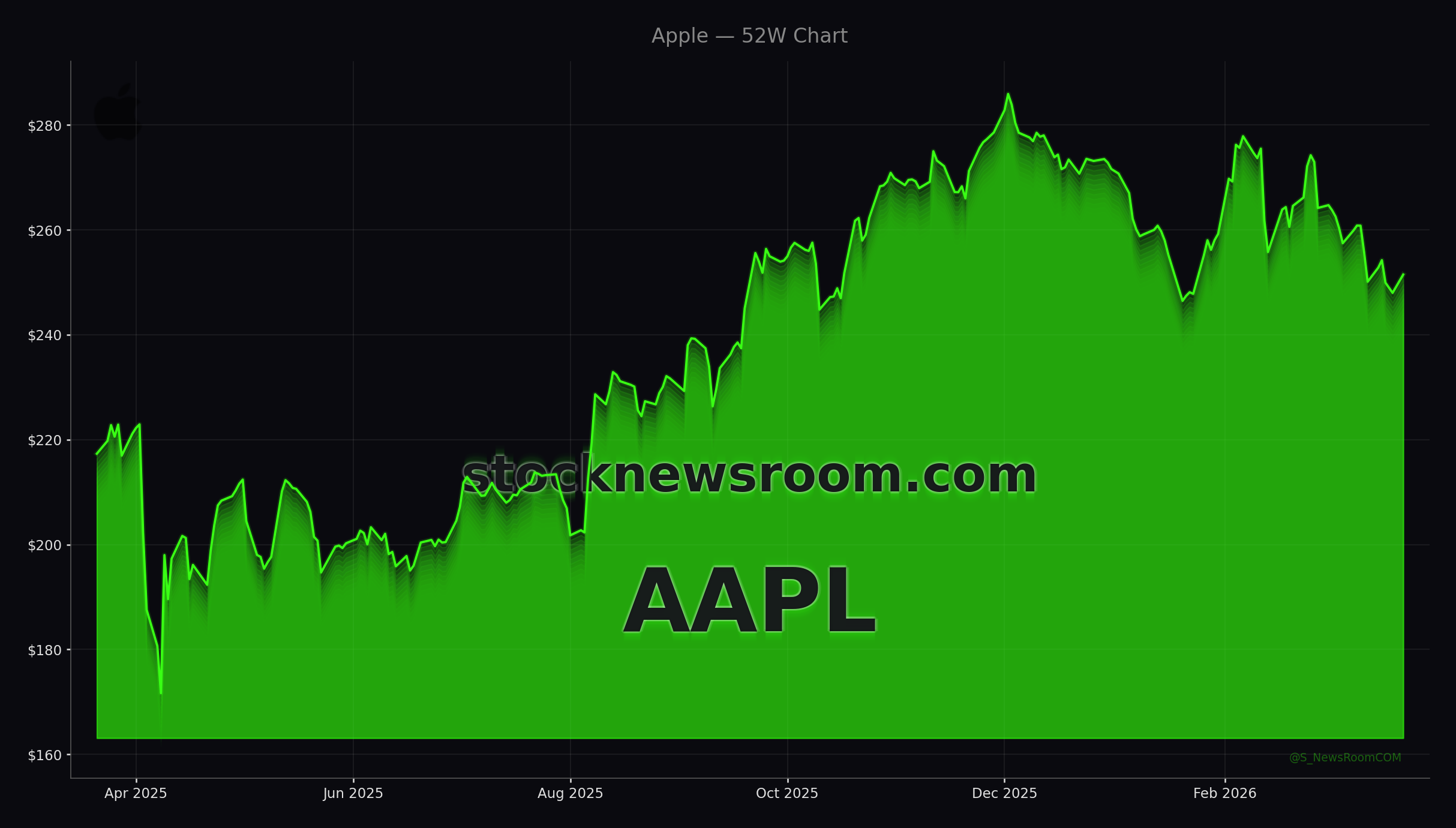
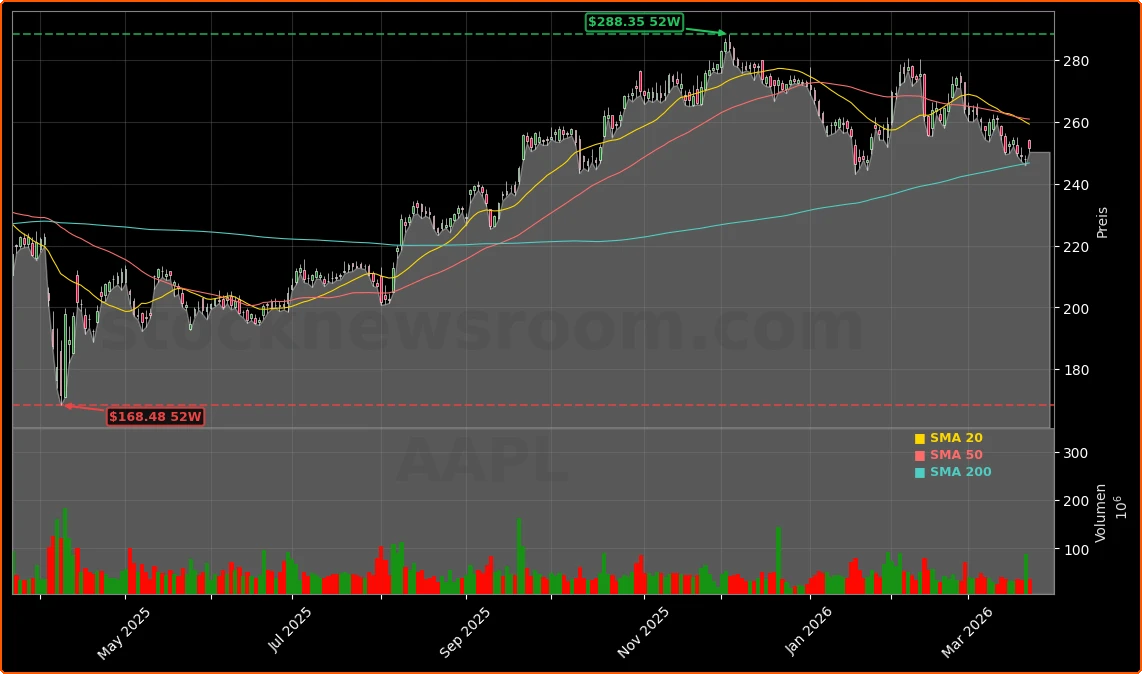
Technically, the stock is still digesting gains. Apple trades about 2.8% below its 20‑day simple moving average and 5.4% below its 100‑day SMA, with a neutral‑to‑bearish momentum profile (RSI near 35 and a negative MACD). Key resistance sits around $280.50 and support near $243.50, giving traders clear levels to watch as fundamental news builds.
Can Apple’s AI reboot change the narrative?
While investors debate hardware upside from the Apple Foldable Forecast, the next major narrative shift could come from software and AI. Apple Inc. has confirmed that its Worldwide Developers Conference (WWDC) will run June 8–12, 2026, with more than 100 sessions and an in‑person event at Apple Park. Management has already signaled that WWDC26 will spotlight AI advancements across iOS, iPadOS, macOS, watchOS and visionOS.
Industry expectations, echoed by several tech outlets, point to iOS 27 and “Apple Intelligence” as central themes, with WWDC potentially offering the first real glimpse of how a more capable Siri and on‑device AI will be integrated across over 2.5 billion active Apple devices. That device base is a powerful distribution moat relative to AI leaders like NVIDIA and cloud hyperscalers: even if Apple spends far less on data center capex, deeply integrated AI across iPhone, iPad and Mac could still drive significant monetization through services, upgrades and accessories.
At the same time, Apple is quietly expanding its services profit engine. Multiple reports indicate the company plans to introduce search advertising inside Apple Maps, mirroring the App Store’s sponsored placements and Google Maps’ model. With services revenue already above $100 billion annually, map ads could be an incremental tailwind just as hardware‑driven AI and foldable cycles ramp up.
How strong is iPhone demand, especially in China?
Another critical pillar supporting the Apple Foldable Forecast is the company’s apparent ability to outgrow a sluggish smartphone market. Recent data show iPhone sales in China jumping 23% in the first nine weeks of the year, while the overall Chinese smartphone market fell 4%. China accounted for nearly 18% of Apple’s revenue in the latest quarter, and unchanged iPhone 17 pricing has helped the company gain share as Android peers raise prices amid soaring memory costs.
Morgan Stanley’s internal survey found global iPhone upgrade intent at 37%, up two percentage points year over year, with China upgrade intentions at all‑time highs. Analysts expect fiscal 2026 iPhone revenue of about $243 billion, up 16% from 2025, helped by stable pricing, share gains, and the prospect of a foldable tier. For investors, this combination of cyclical recovery and structural product expansion is one reason the stock still carries a consensus Buy rating with an average target around $304.
Fundamentally, Apple remains a profit machine. The shares trade around 31.4x earnings, a premium to most hardware peers but supported by a 52% return on equity, roughly $54 billion in EBITDA, and gross profit of about $69 billion, far outpacing sector averages. Revenue growth of 15.7% trails some high‑growth hardware names such as Super Micro Computer, but also reflects Apple’s scale and maturing product base.
Is leadership and strategy aligned with the Apple Foldable Forecast?
Leadership stability is another factor for long‑term investors watching the Apple Foldable Forecast. While CEO Tim Cook has no imminent retirement plans, hardware chief John Ternus is increasingly viewed as the likely successor. Ternus oversees devices responsible for roughly 80% of revenue and has been pushed to the forefront at recent launch events, including the MacBook Neo introduction in early March.
Under his leadership, Apple has tightened hardware‑software integration and recovered from past missteps like the Butterfly keyboard. The board’s eventual decision will likely be between continuity via an internal candidate like Ternus or a more radical, AI‑centric outsider. For now, the company appears committed to evolving as a hardware‑anchored, services‑rich ecosystem rather than chasing pure cloud AI at any cost, a stance some commentators argue positions Apple well for the eventual commoditization of core AI infrastructure.
Related Coverage
For a deeper dive into how Apple’s AI spending strategy is being received on Wall Street, including why shares recently slipped despite new AI plans, see this analysis of Apple’s AI strategy and stock reaction. If you want broader context on how chip suppliers are reacting to AI demand swings that also affect Apple’s cost base, check out our coverage of Micron’s latest earnings and post‑report sell‑off.
We are proud to be part of China’s extraordinary technological progress, and we’re committed to working alongside our supplier partners to push it even further.— Tim Cook, CEO of Apple Inc.
In sum, the Apple Foldable Forecast, a high‑stakes AI reboot at WWDC, and resurgent China iPhone demand are converging into a powerful medium‑term story for Apple Inc.. For U.S. investors, the stock’s premium valuation reflects both risks around execution and upside from new form factors, services ads, and edge AI. The next milestones will be the late‑April earnings report and June’s WWDC, which should clarify whether Apple is ready to turn these narratives into sustained growth that keeps it at the core of the S&P 500 and the wider “Magnificent Seven” trade.