
Can the long-awaited Apple Foldable and a late AI pivot really power the next growth wave for $AAPL at today’s valuation?

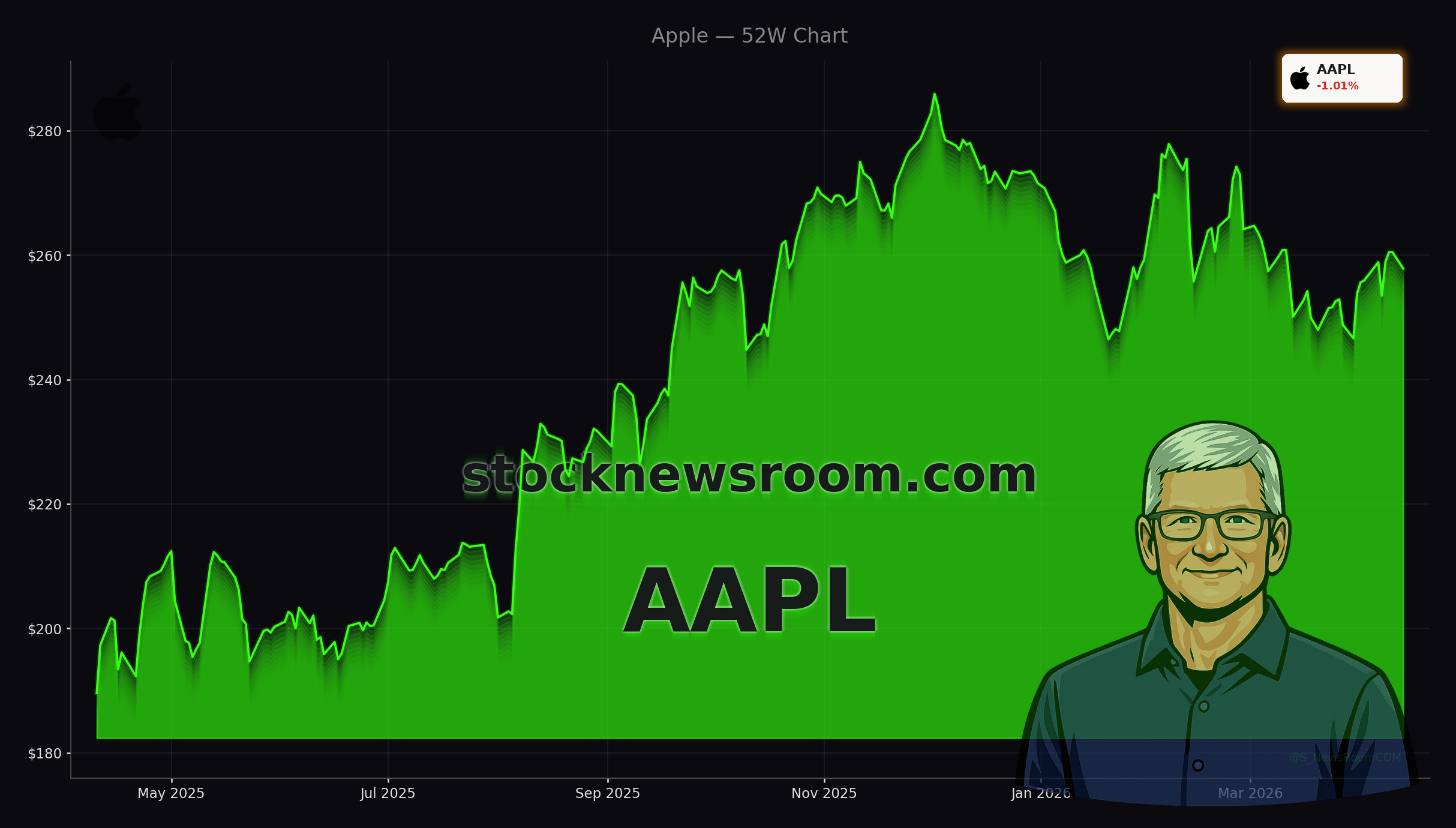
Is Apple still a core tech holding at $257?
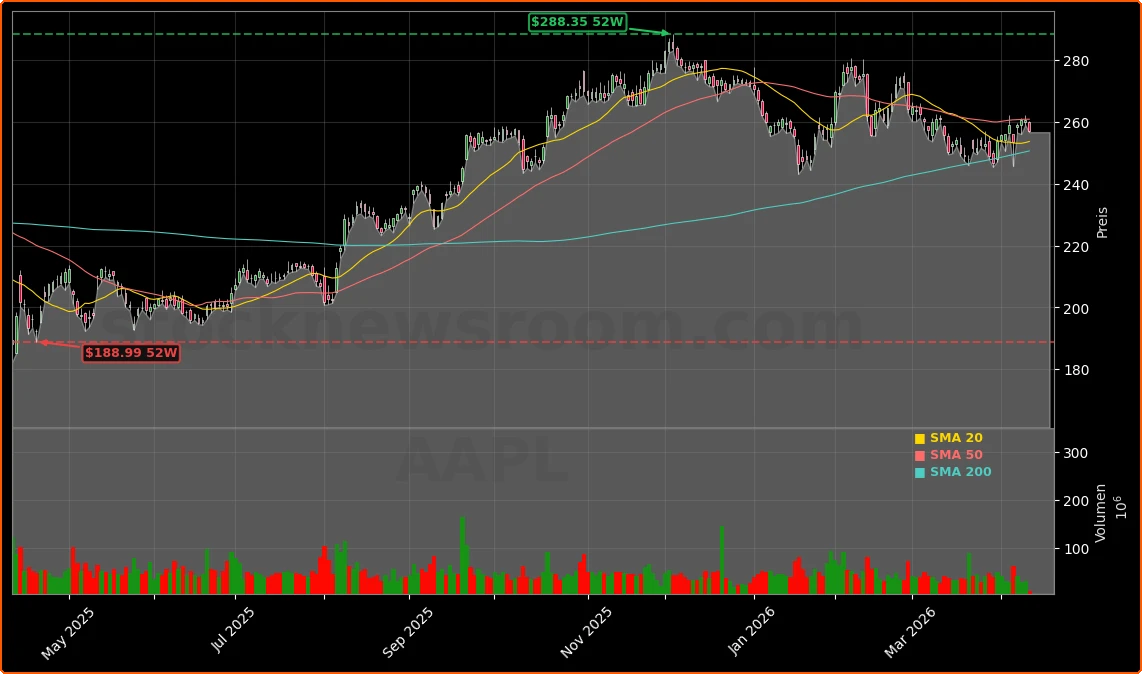
Apple Inc. opened Monday’s session near $260 and recently changed hands around $257.18, off about 1.3% from the prior close of $261. The stock is up roughly 4% over the past month but remains below Wall Street’s average 12‑month target near $300, implying double‑digit upside if management can reignite growth. Institutional ownership stands near 68%, with firms like Westmount Partners and My Personal CFO LLC having boosted positions in late 2025, even as Berkshire Hathaway trimmed its massive stake to under 19% of its portfolio.
That backdrop matters because tech valuations have broadly reset. Forward P/E multiples for the S&P 500 Information Technology sector have compressed back toward pre‑AI‑boom levels, putting pressure on megacaps to show a credible path to the next leg of earnings growth. For Apple, that narrative increasingly circles around three pillars: the first Apple Foldable iPhone, a more aggressive AI strategy across devices, and the ability to defend premium hardware margins while expanding higher‑margin services.
Apple Foldable iPhone: delay risk or quality moat?
Reports out of Asia suggest Apple’s upcoming foldable iPhone prototypes are hitting engineering snags, with hinge durability, crease visibility, and overall chassis reliability among the sticking points. A launch had been widely expected around 2026, but suppliers now caution that the Apple Foldable timeline could slip, especially if the company refuses to compromise on build quality. Unlike early foldables from Samsung and Motorola that tolerated visible creases and occasional panel failures, Apple’s brand equity is tightly linked to reliability.
Investor sentiment is split. The bull case argues that Apple’s enormous loyal customer base, tight ecosystem integration, and willingness to pay for premium devices give the Apple Foldable a long runway once it finally ships. Even if foldables are not a new concept, an iPhone‑class execution could unlock a new replacement wave, particularly at the high end of the market and among content consumers who want tablet‑like screens in a pocketable form factor. The bear case points to consumer surveys in the U.S. showing limited enthusiasm for foldables, with a majority of respondents either not interested or undecided and only a tiny fraction actively preferring a foldable iPhone.
With foldable devices from Samsung already on store shelves and often discounted, bears argue that the category may remain niche and margin‑sensitive, making it risky to hinge the next leg of Apple’s growth on an ultra‑premium Apple Foldable skewed to early adopters.
How central is AI to Apple’s next product wave?
Behind the foldable narrative sits an even more important strategic shift: AI‑first devices and interfaces. While critics say Apple has lagged leaders like NVIDIA and Microsoft in the AI arms race, the company is moving toward a multi‑agent approach that mixes its own on‑device models with cloud partners such as Google Gemini and OpenAI. A more capable, conversational Siri is widely expected to headline upcoming software events, with AI features focusing on privacy‑preserving, background assistance instead of the splashy copilots pushed by Microsoft and Google.
Hardware is tracking that shift. Beyond the Apple Foldable iPhone, the company is reportedly testing multiple designs for AI‑enhanced smart glasses as a rival to Meta’s Ray‑Ban line. Earlier experiments like Vision Pro struggled to reach mass adoption, but lightweight AI glasses could dovetail with spatial computing and voice‑first interfaces, especially if paired with iPhone‑class silicon built by TSMC. For investors, the central question is whether these AI‑centric devices can create a fresh platform effect reminiscent of the original iPhone and App Store, or whether they remain accessories that nudge revenue but don’t transform the P&L.
What does Wall Street think of Apple’s upside?
On Wall Street, consensus remains cautiously optimistic. Across major brokers, Apple holds a broad “Moderate Buy” profile, with an average price target around $301. Citigroup and Morgan Stanley have highlighted the resilience of Apple’s services business and its dominant global smartphone share, even as iPhone unit growth slows. RBC Capital Markets has emphasized the importance of capital returns, where Apple continues to lead the S&P 500 in absolute buyback dollars while maintaining a modest dividend that could grow as earnings stabilize.
There are dissenting voices. Some portfolio managers point to slowing innovation and increased competitive pressure from Android OEMs, particularly in China, as reasons to stay underweight relative to high‑growth AI names like Tesla and leading chipmakers. Others highlight insider sales by CEO Tim Cook and senior retail executive Deirdre O’Brien under Rule 10b5‑1 plans as a signal that management is managing expectations for the next few quarters, even though those plans are pre‑scheduled and not necessarily a bearish tell.
How does ESG and the supply chain factor in?
Investors focused on long‑term risk are also watching Apple’s manufacturing ecosystem. Key partners such as Jabil and TSMC are investing heavily in decarbonization, AI‑enabled robotics, and more efficient fabrication to cut emissions and improve yields. Those efforts matter because they help preserve Apple’s premium pricing and brand positioning with environmentally conscious consumers and large institutional funds that now integrate ESG scores into allocation decisions. A successful Apple Foldable launch would likely require even more sophisticated materials and assembly processes, making resilient, low‑carbon supply chains a competitive edge.
Related Coverage
Apple’s broader hardware roadmap goes well beyond phones. For a deeper dive into how its laptop strategy could drive growth, read Apple MacBook Neo Strategy Boom in Budget Laptops, which looks at whether more affordable MacBooks can expand the company’s reach without sacrificing margins. For investors tracking the wider innovation landscape in emerging compute, Rigetti Quantum Strategy Warning: 108‑Qubit Valuation Bet examines the risk‑reward profile of a smaller quantum player trying to convert technology gains into sustainable profits.
In the end, the Apple Foldable story is less about a single product and more about whether Apple can marry new form factors with a credible AI‑first experience that keeps users locked into its ecosystem. With the stock still below consensus targets and tech valuations reset, long‑term investors may see current levels as an opportunity if they believe the next generation of devices will spark another upgrade cycle. The next milestones – from a clearer Apple Foldable launch window to AI‑enhanced Siri and potential AI glasses – will determine whether Apple can reclaim a leadership multiple on Wall Street.