Can Apple’s latest product launch and aggressive pricing reset growth expectations for a stock that just slipped more than 2%?
How does this Apple Product Launch reshape pricing?
At the center of the new Apple Product Launch is the MacBook Neo, a $599 laptop powered by Apple’s A18 Pro processor, the same chip used in the iPhone 16 Pro line. With 256GB of storage and a classic headphone jack, the device is clearly positioned for education and budget-conscious buyers, particularly classrooms that still rely on wired audio. The Neo undercuts traditional MacBook pricing and gives Apple Inc. a more aggressive answer to low-cost Windows and Chromebook devices in the U.S. and international markets.
Above the Neo, the refreshed 15‑inch MacBook Air now runs on Apple’s latest in-house M5 chip, starting at $1,099 and offering up to 18 hours of battery life. That keeps the Air as the mainstream workhorse for consumers and students who want portability and long battery life without paying MacBook Pro prices. For power users, the new MacBook Pro lineup starts at $1,699 and features M5 Pro and M5 Max processors aimed at tasks such as software development, code compilation and heavy video editing—segments where Apple still commands strong loyalty among creators.
On the iPhone side, the company introduced the iPhone 17e at $599. It is pitched as an affordable way into the iPhone ecosystem, sacrificing a second camera and the Dynamic Island cutout to keep costs down. This mirrors Apple’s long-running playbook of widening its price ladder to capture more users, then monetizing them via services such as iCloud, Apple TV+, and the App Store.
What does it mean for Apple in the S&P 500?
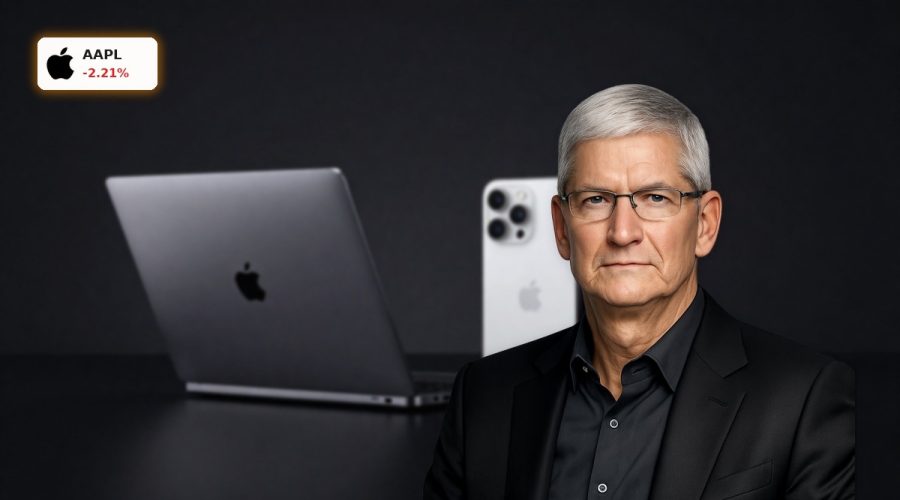
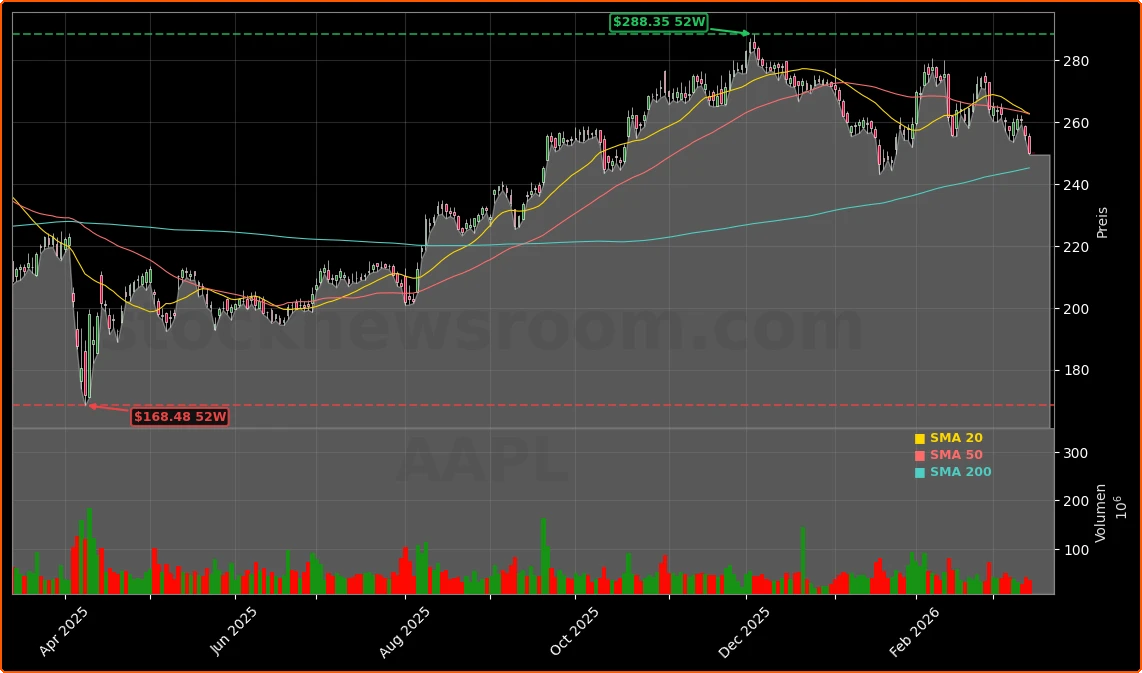
Shares of Apple closed around $250.12 on Friday, down about 2.21% from the prior close and roughly flat in after-hours trading. The stock remains well below its 52-week highs, so this pullback is a consolidation rather than a new peak. Even so, Apple is still one of the two largest weights in the S&P 500 alongside NVIDIA, making any Apple Product Launch relevant not only for Apple-focused investors but also for anyone holding broad-market ETFs and leveraged S&P 500 products.
Apple is a core holding in a wide range of funds, from dividend strategies like FDVV to tech sector vehicles such as VGT and XLK, where Apple sits alongside mega-cap peers Microsoft and NVIDIA. Leveraged S&P 500 products such as SPXL and SSO also list Apple as a top position, meaning volatility in AAPL can translate into magnified moves for those instruments. With a market capitalization near $3.7 trillion, Apple remains a blue-chip anchor in many U.S. portfolios, often treated by some managers almost like a “tech Treasury bill”—a relatively defensive way to stay exposed to the sector.
Despite the recent share price softness, Apple’s long-term track record continues to attract large institutional holders. Berkshire Hathaway still owns roughly 228 million Apple shares, and even after trimming its stake from about half to under a fifth of its equity portfolio, the position generates hundreds of millions of dollars in annual dividends on a relatively low cost basis.
How do regulatory moves in China fit the picture?
Alongside the Apple Product Launch, Apple is quietly adjusting its business model in key markets. The company is reducing its standard App Store commission in China from 30% to 25% for paid apps and in-app purchases, and cutting fees on certain auto-renewing subscriptions to 12% after the first year. This follows discussions with Chinese regulators and contrasts with Apple’s more confrontational stance toward new rules in the European Union.
For investors, the China fee cut is a double-edged sword. Near term it may trim high-margin services revenue from that market, but it also helps Apple protect its iOS ecosystem in a country that remains central to both its manufacturing base and growth agenda. The move could blunt regulatory risk and make the platform more attractive to local developers, partially offsetting the impact on margins through higher engagement and app volume.
Legal and ESG-related risks also remain on the radar. A recent class action in California over alleged misstatements about the carbon neutrality of Apple Watch models was dismissed by a federal judge for lack of sufficient expert backing, though plaintiffs have been allowed to refile. The case highlights how Apple’s high-profile sustainability claims are increasingly scrutinized, even when the company relies on established carbon credit standards.
How does this compare to other tech strategies?
Apple’s focus on a broad price ladder and tight hardware–software integration sets it apart from many large-cap tech peers. While some competitors chase near-term unit growth with aggressive discounting or ad-heavy models, Apple continues to build value through ecosystem lock-in: lower-cost entry devices like the MacBook Neo and iPhone 17e funnel new users into recurring revenue streams. That strategy could prove especially valuable at a time when memory and storage prices are rising due to AI data center demand; Apple can capture more margin by tightly controlling component choices and storage tiers across its lineup.
On the media side, Apple is also leaning into premium content. Early numbers for its Formula 1 coverage point to encouraging engagement, raising questions about whether investors are underestimating the long-term value of those sports rights. At the same time, broader Big Tech faces scrutiny over free cash flow as stock-based compensation and AI spending surge, a theme that analysts at firms such as Goldman Sachs and Morgan Stanley have flagged for the sector overall. While some banks have become more cautious on richly valued mega-cap tech, Apple’s comparatively disciplined capital returns and massive buyback program keep it in favor for many long-term investors.
Apple is increasingly treated as the ‘Treasury bill’ of tech portfolios: not the fastest mover, but the core position investors are reluctant to give up.
— Portfolio manager at a U.S.-based technology fund
Conclusion
Several Wall Street analysts continue to see Apple as a core holding rather than a high-beta AI trade. Where firms such as Citigroup or RBC Capital Markets have adjusted targets across Big Tech baskets, Apple is often framed as the defensive pillar within the group, despite a still-demanding price-to-earnings multiple around 30 that some value-oriented investors would prefer to see lower before adding.
Further Reading
- Apple Inc. (AAPL) on Yahoo Finance (Yahoo Finance)
- Apple drops App Store commission rates in China (TechCrunch)
- Apple Watch carbon neutrality class action dismissed (Class Action Lawsuits)
- Memory inflation and Apple’s opportunity in devices (24/7 Wall Street)