
Can Apple’s massive US manufacturing and AI build-out turn geopolitical risk into long-term upside for one of tech’s biggest cash machines?

How big is the new Apple US manufacturing push?
On Thursday, Apple added Bosch, Cirrus Logic, TDK and Qnity Electronics to its American Manufacturing Program (AMP), pledging to spend an additional $400 million with these partners through 2030. The expansion sits inside a far larger pledge: a roughly $600 billion, four‑year commitment to U.S. manufacturing and innovation that spans semiconductors, packaging, glass, and AI infrastructure.
AMP has quickly become a central pillar of the Apple US manufacturing narrative. The company has already sourced more than 20 billion U.S.-made chips from 24 factories across 12 states and is on track this year to buy well over 100 million advanced chips from Taiwan Semiconductor Manufacturing’s Arizona fabs. It is also ramping domestic production of the Mac mini at its Houston facility, which is doubling its footprint as it builds AI servers and Macs under one roof.
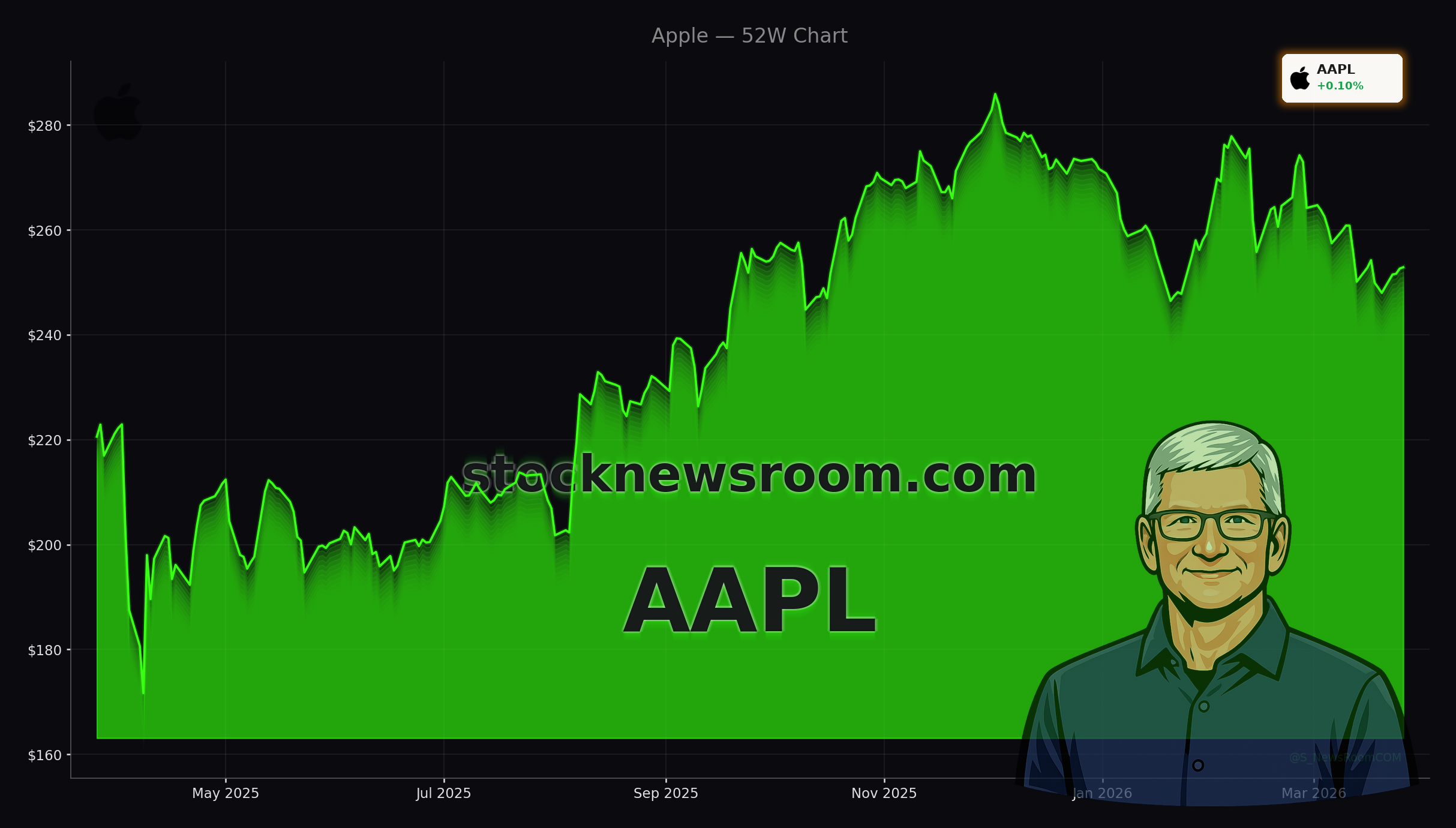
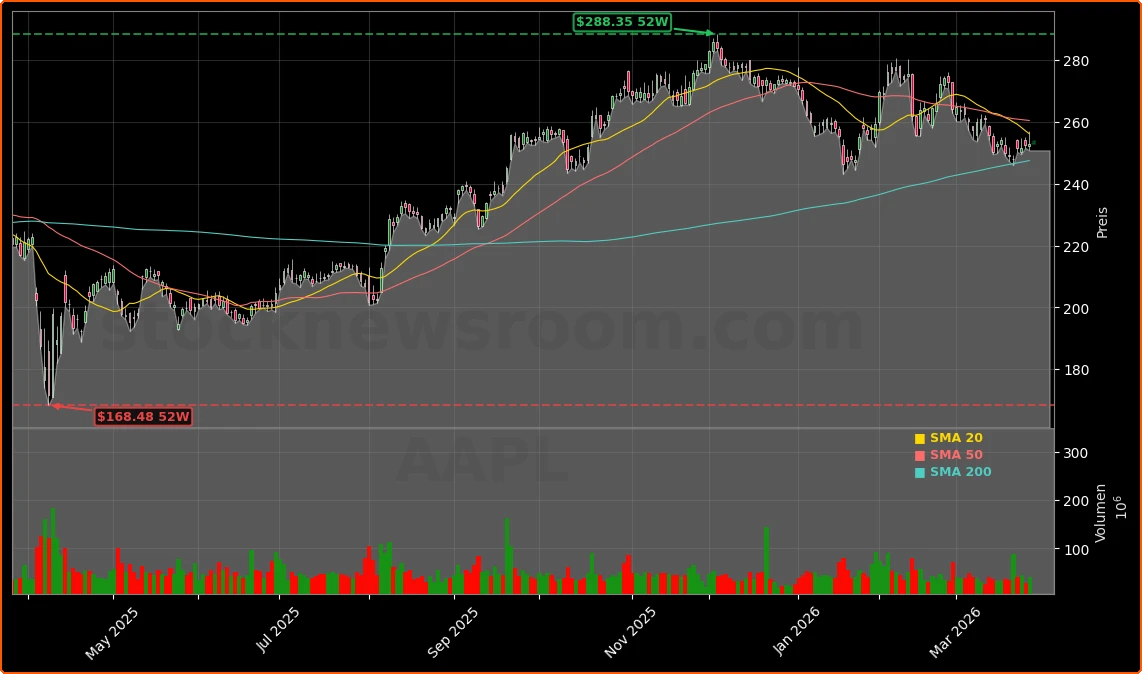
For investors, the numbers matter. Apple shares closed at $252.89 on Thursday, up 0.11%, with after‑hours trading nudging the stock to $253.90. The stock is up about 16% over the past 12 months but remains meaningfully below its all‑time high near $289 set in late 2025, leaving room for upside if the onshoring strategy drives resilience without eroding margins.
What do new partners mean for iPhone and AI hardware?
The latest AMP additions go directly into iPhone and broader device functionality. TDK will manufacture tunnel magnetoresistance (TMR) sensors in the U.S. for the first time, supporting camera stabilization and other motion‑sensitive features. Bosch will work with TSMC at its Camas, Washington facility on integrated circuits for crash detection, activity tracking and elevation sensing across Apple devices.
Cirrus Logic, whose stock jumped after the announcement, will partner with GlobalFoundries in Malta, New York, to develop new mixed‑signal semiconductors, including advanced integrated circuits to power Face ID systems. Analysts see this as a sign that Cirrus is winning incremental content inside future iPhones, potentially from 2028 onward, supporting both its own growth and the depth of Apple US manufacturing.
Qnity Electronics and HD MicroSystems will supply materials and technologies for advanced semiconductor manufacturing and high‑performance computing. That ties the AMP program directly into Apple’s AI ambitions, as the company ramps “Apple Intelligence” and server‑side AI capabilities that require cutting‑edge, power‑efficient silicon manufactured on U.S. soil.
How does Apple US manufacturing affect risk and margins?
Strategically, the domestic build‑out addresses two major investor concerns: geopolitical risk and supply‑chain resilience. Apple has absorbed an estimated $3.3 billion in tariff costs in recent years, choosing to eat much of the impact rather than squeeze consumers. With the U.S. Supreme Court rolling back pieces of the prior tariff regime, and more of the bill of materials shifting onshore, Apple gains optionality to protect margins and pricing power.
However, U.S. fabs and advanced packaging are not cheap. Near term, Apple US manufacturing is more about risk mitigation and long‑term control than about cost savings. The company is betting that scale — it already supports over 450,000 jobs across all 50 states and plans to add 20,000 more in R&D, silicon, AI and software — will eventually offset higher unit costs. For S&P 500 and NASDAQ investors, this positions Apple as one of the clearest beneficiaries of U.S. industrial policy, right alongside chip leaders like NVIDIA.
At the ETF level, Apple’s heavy weight in technology and broad‑market funds means any rerating tied to its onshoring strategy will ripple across portfolios. Funds such as VGT, XLK, SCHB and VTI all list Apple as a top‑three position, often alongside NVIDIA and Microsoft, so large inflows into U.S. tech and total‑market products effectively become indirect bets on Apple US manufacturing.
Are analysts buying the story despite recent stock weakness?
Despite a soft start to 2026 — the stock is down about 7% year‑to‑date — Wall Street remains broadly constructive. Morgan Stanley’s Erik Woodring reiterates an Overweight rating with a $315 price target, seeing upside from new products and services layered on a loyal iPhone base. Bank of America keeps a Buy rating, trimming its target to $320 but still signaling confidence in long‑term growth.
Monness, Crespi, Hardt analyst Brian White also rates Apple a Buy with a $315 target, calling the new MacBook Neo — starting at $599 — a potential catalyst to expand the Mac user base in a PC market where rivals like HP and Dell are raising prices as memory costs rise. UBS, by contrast, maintains a Neutral rating with a $280 target, but its latest survey of 4,000 iPhone users shows rising upgrade intent and strengthening ecosystem stickiness, especially in China.
Technically, the stock is hovering just above its 200‑day moving average around $247, while trading below its 50‑day and 100‑day averages. RSI in the low‑40s and a negative MACD signal mixed, but stabilizing, momentum. With consensus calling for April 30 earnings of $1.93 per share on $109 billion in revenue, investors will soon see whether early wins in China, new Mac pricing, and the AMP expansion can re‑accelerate growth.
Related Coverage
Apple’s domestic build‑out comes as its high‑margin services segment gains new growth drivers. A recent analysis on StockNewsroom asks whether Apple Maps ads can become the next multi‑billion‑dollar engine for Services; the piece, titled “Apple Maps Advertising Record Boom as Services Surge”, explores how new AI‑driven ad formats could complement hardware‑driven initiatives like AMP. For investors comparing AI exposure across tech names, another article, “Palantir Bain Partnership -4.6%: AI Boom or Valuation Crash Warning”, looks at how Palantir’s consulting‑heavy AI strategy stacks up against platform players and what that means for richly valued growth stocks.
In combination, these developments suggest Apple is trying to balance cyclical hardware risk with recurring services revenue and AI infrastructure — a mix that could make its manufacturing investments more palatable to long‑term shareholders.
Apple’s expanded AMP underscores how central Apple US manufacturing has become to its strategy, linking iPhone innovation, AI hardware and political risk management. For investors, the program reinforces Apple’s role as a core U.S. tech holding, even as debates over valuation and near‑term growth continue. The next earnings report and further AMP milestones will show whether this massive domestic bet can translate into sustainable upside for the stock.