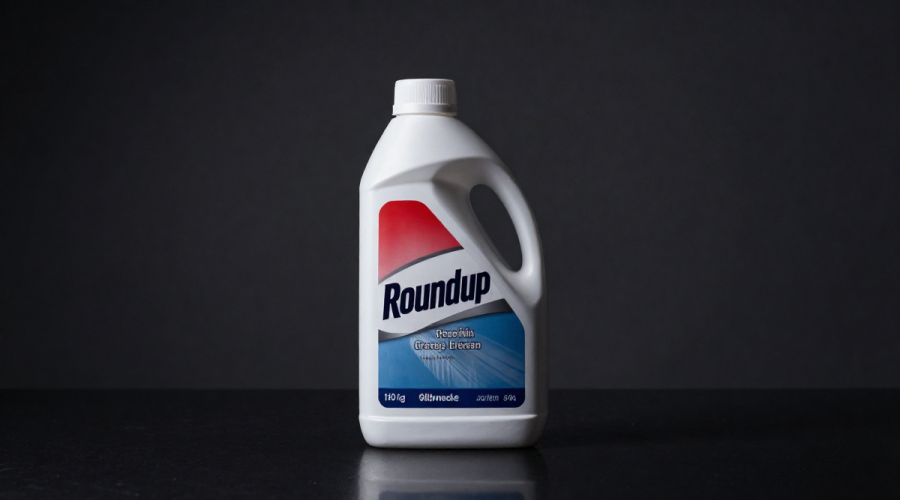
Can the massive Bayer Glyphosate Settlement finally clear the legal overhang, or will it just deepen the cash flow and valuation pain?
Bayer AG: Market reaction and why Wall Street is skeptical
Bayer shares have been volatile as investors reassess the risk‑reward profile after the latest legal developments. The stock briefly approached EUR 50 in February on initial euphoria around the Bayer Glyphosate Settlement, but has since pulled back sharply and recently traded in the high‑30s, after intraday losses of more than 7% on the day of the full‑year release. Despite this correction, the stock is still up roughly a third from the lows seen in November, when positive data for the anticoagulant candidate Asundexian reignited hopes for the pharma pipeline.
The market’s reaction underlines two key points for U.S. investors. First, the glyphosate and PCB litigation remains the dominant driver of equity sentiment, dwarfing the incremental movements in the operating business. Second, even though the headline terms of the Bayer Glyphosate Settlement are now better understood, the cash flow profile for 2026 is materially worse than many Wall Street analysts had anticipated, limiting near‑term upside and keeping the valuation in value‑trap territory for now.
Context also matters at the index level. While the S&P 500 has been hitting new highs on the back of mega‑cap tech and AI optimism, European cyclicals and chemicals have lagged. Bayer is not in the S&P 500, but U.S. diversified and international funds benchmarked to global indices must decide whether this legal overhang justifies Bayer’s discount versus U.S. pharma peers that carry cleaner balance sheets and less litigation risk.
Bayer AG: What exactly is in the Bayer Glyphosate Settlement?
The new Bayer Glyphosate Settlement announced in mid‑February is designed to mop up both current and a large share of potential future cases around Roundup and its active ingredient glyphosate. The company has agreed to pay up to $7.25 billion over a period of up to 21 years. Around 67,000 existing lawsuits in the United States are targeted, alongside future claims alleging non‑Hodgkin lymphoma and related cancers.
A Circuit Court judge in St. Louis, Missouri, has now granted preliminary approval. This is a significant milestone because a previous large‑scale Roundup settlement effort in 2020 famously failed when a federal judge declined to approve the structure. Since then, Bayer has spent years renegotiating terms with plaintiff firms and refining the mechanism to withstand judicial scrutiny. Under the current framework, plaintiffs have roughly 90 days from notification to opt out or file objections, after which the court will hold a fairness hearing and decide on final approval. Appeals are still possible, so legal closure is not guaranteed even at that stage.
Financially, the deal has already left deep marks on Bayer’s balance sheet. Provisions and legal liabilities have risen to about EUR 11.8 billion, with the majority tied to glyphosate. The company had to increase provisions by roughly EUR 4 billion at year‑end, tipping the 2025 bottom line into a net loss of about EUR 3.6 billion, versus a loss of EUR 2.55 billion the previous year. Management expects that, if the settlement is finalized and implemented, 2026 will be the year when a large chunk of associated cash outflows hits the accounts.
Bayer AG: Earnings, cash flow and leverage under pressure
Operationally, Bayer remains profitable, but the headline results are overshadowed by legal charges. Group sales in 2025 declined by 2.2% to around EUR 45.58 billion, hurt by adverse currency movements, particularly in the U.S. agriculture business. On a currency‑ and portfolio‑adjusted basis, revenue actually increased by about 1.1%. The adjusted EBITDA before special items fell by 4.5% to EUR 9.67 billion, which still slightly exceeded the mid‑range of analysts’ expectations.
The problem lies below the operating line. Massive provisions for glyphosate and PCB cases pushed the net loss to about EUR 3.62 billion. That deterioration, plus non‑cash effects, translated into strained cash generation. Management now guides for 2026 free cash flow in a range of negative EUR 1.5 billion to negative EUR 2.5 billion, explicitly including around EUR 5 billion of cash outflows tied to legal cases. This implies that even a solid operating business will not prevent equity value from being diluted indirectly through higher leverage.
Net financial debt, which had finally dropped below EUR 30 billion in 2025 to about EUR 29.8 billion, is expected to rise again to EUR 32–33 billion by the end of 2026. In other words, the company is effectively re‑leveraging to fund the Bayer Glyphosate Settlement and other legal matters. For a group still digesting the expensive Monsanto acquisition and operating in cyclical end‑markets like crop protection, that is an uncomfortable direction of travel.
On guidance, Bayer forecasts 2026 revenue of EUR 44–46 billion on current exchange rates, with adjusted EBITDA before special items of EUR 9.1–9.6 billion, both slightly below consensus. On a constant‑currency basis, the company sees revenue at EUR 45–47 billion and adjusted EBITDA at EUR 9.6–10.1 billion, suggesting a flattish to modestly growing underlying business but no immediate margin breakthrough. For many institutional investors, that is not enough to compensate for the balance sheet and legal risks.
Bayer AG: How does litigation risk compare to U.S. peers?
From a U.S. portfolio perspective, Bayer sits in a difficult niche: it is a hybrid of Big Pharma and crop‑science, but its risk profile currently looks more like a special situation dominated by a single legal theme. While American investors are used to litigation risk in healthcare—think of opioid settlements at Johnson & Johnson or talc cases at other blue chips—the scale and duration of the Roundup saga sets Bayer apart.
Since acquiring Monsanto in 2018, Bayer has already spent more than EUR 10 billion on glyphosate‑related settlements and verdicts. Even with the new framework in place, uncertainty remains. The U.S. Supreme Court is reviewing a key pre‑emption case, Durnell, which will determine whether federal labeling rules, as interpreted by the Environmental Protection Agency, pre‑empt state‑level failure‑to‑warn claims. A favorable ruling could significantly curtail new lawsuits and strengthen Bayer’s defense, reinforcing the economic logic of the Bayer Glyphosate Settlement. An unfavorable or ambiguous ruling, expected in June 2026, could instead embolden remaining plaintiffs or complicate participation rates in the settlement.
By contrast, many S&P 500 pharma names now offer cleaner legal profiles. Large U.S. drugmakers face patent cliffs and pricing pressure, but generally not a multi‑decade litigation cloud of this intensity. Crop‑science competitors also present mixed but often clearer stories. Corteva, for instance, has its own product liability and environmental issues but is not carrying a Roundup‑scale legacy in the same way. For global sector allocators choosing between such names, Bayer’s discount may appear deserved until legal visibility improves.
Bayer AG: Analyst perspectives and valuation debate
Equity analysts on both sides of the Atlantic have reacted cautiously to the new guidance. At least two major investment banks—JPMorgan and Barclays—have highlighted that 2026 consensus estimates likely need to come down by up to 3%, largely due to currency headwinds and the soft EBITDA guidance. Richard Vosser at JPMorgan described the 2025 results as solid but flagged the weaker‑than‑hoped outlook and the ongoing litigation drag as constraints on a re‑rating. Charles Pitman‑King at Barclays also pointed to the need for estimate adjustments as investors digest the projected cash outflows.
While individual price targets vary, the pattern is similar: some banks maintain constructive stances on the long‑term restructuring story but lower near‑term earnings forecasts and stress that execution on the Bayer Glyphosate Settlement and the cost‑cutting plan is critical. The company has launched a program targeting EUR 2 billion in cost savings, but those benefits will phase in over time and do not fully offset the immediate legal cash burden.
Valuation screens indicate that Bayer trades at a notable discount to both U.S. pharma majors and diversified chemicals on forward earnings and EV/EBITDA multiples. However, the denominator—earnings visibility—is unusually uncertain. That makes it difficult for value investors to argue that the discount is truly compensating for risk, especially when free cash flow is projected to be negative in the near term and dividend capacity is therefore constrained. The symbolic dividend of just EUR 0.11 per share, far below historic levels, underlines management’s focus on balance sheet protection over shareholder payouts.
Bayer AG: Operational restructuring and pipeline – enough to offset legal drag?
Beyond the courtroom, Bayer’s management under CEO Bill Anderson is pushing a broad restructuring effort across all divisions. Anderson argues that the company is making tangible progress but is “nowhere near the finish line,” emphasizing that 2026 will be another year of heavy legal and financial headwinds. The crop‑science segment continues to rely heavily on North American markets, leaving it exposed to both foreign‑exchange swings and agricultural cycles. At the same time, competition from generics and biosimilars is intensifying in the pharma segment.
On the positive side, recent clinical data for Asundexian, an oral factor XIa inhibitor, have revived hopes that Bayer can rebuild a more innovation‑driven pharma portfolio. The market reaction in November, when the stock began its sharp recovery, showed that investors are willing to reward credible pipeline progress. However, pipeline upside is long‑dated and carries its own execution risks, and it cannot immediately neutralize the near‑term hit from the Bayer Glyphosate Settlement or other U.S. legal exposures, including PCB‑related cases in states such as Illinois and West Virginia.
To stabilize the franchise, Bayer has also been settling remaining PCB judgments, for example at the Sky Valley Education Center in Washington state, where plaintiffs alleged health damage from historic PCB contamination. These moves are intended to limit tail risks and prevent another wave of large verdicts, but they also contribute to the EUR 11.8 billion legal provision and the projected EUR 5 billion cash outflow in 2026. For now, the operating business looks resilient enough to absorb shocks, yet not strong enough to restore a conservative balance sheet quickly.
For U.S. investors used to cleaner stories, Bayer may therefore remain a tactical rather than a core holding: attractive as a high‑beta, event‑driven exposure around Supreme Court milestones and settlement approvals, but not yet a steady compounder comparable to best‑in‑class U.S. pharma or ag names.
Conclusion
The bottom line is that the Bayer Glyphosate Settlement is a necessary but not sufficient condition for a sustainable re‑rating. The deal has the potential to cap the worst‑case legal outcomes and provide a long‑term framework for payouts, but it also front‑loads significant cash drain into the next few years and leaves residual uncertainty tied to court decisions and plaintiff behavior. Combined with a rising net‑debt trajectory and modest operational growth, that keeps the risk profile elevated for the time being. Long‑term investors considering Bayer will need to decide whether the current valuation discount adequately reflects these moving parts or whether patience is warranted until after the Supreme Court decision and final settlement approval clarify the true cost of closing the glyphosate chapter.
Further Reading
- Bayer wins preliminary approval for $7.25 billion Roundup settlement in St. Louis court (Reuters)
- Bayer forecasts weaker 2026 earnings as litigation costs weigh on cash flow (Bloomberg)
- Bayer hit by rising glyphosate and PCB litigation costs, net loss widens (dpa)
- Bayer AG bei Yahoo Finance (Yahoo Finance)