
Is Bitcoin’s latest sideways grind hiding a bigger shift in macro risk, regulation and even quantum security for digital assets?

How fragile is Bitcoin’s macro backdrop now?
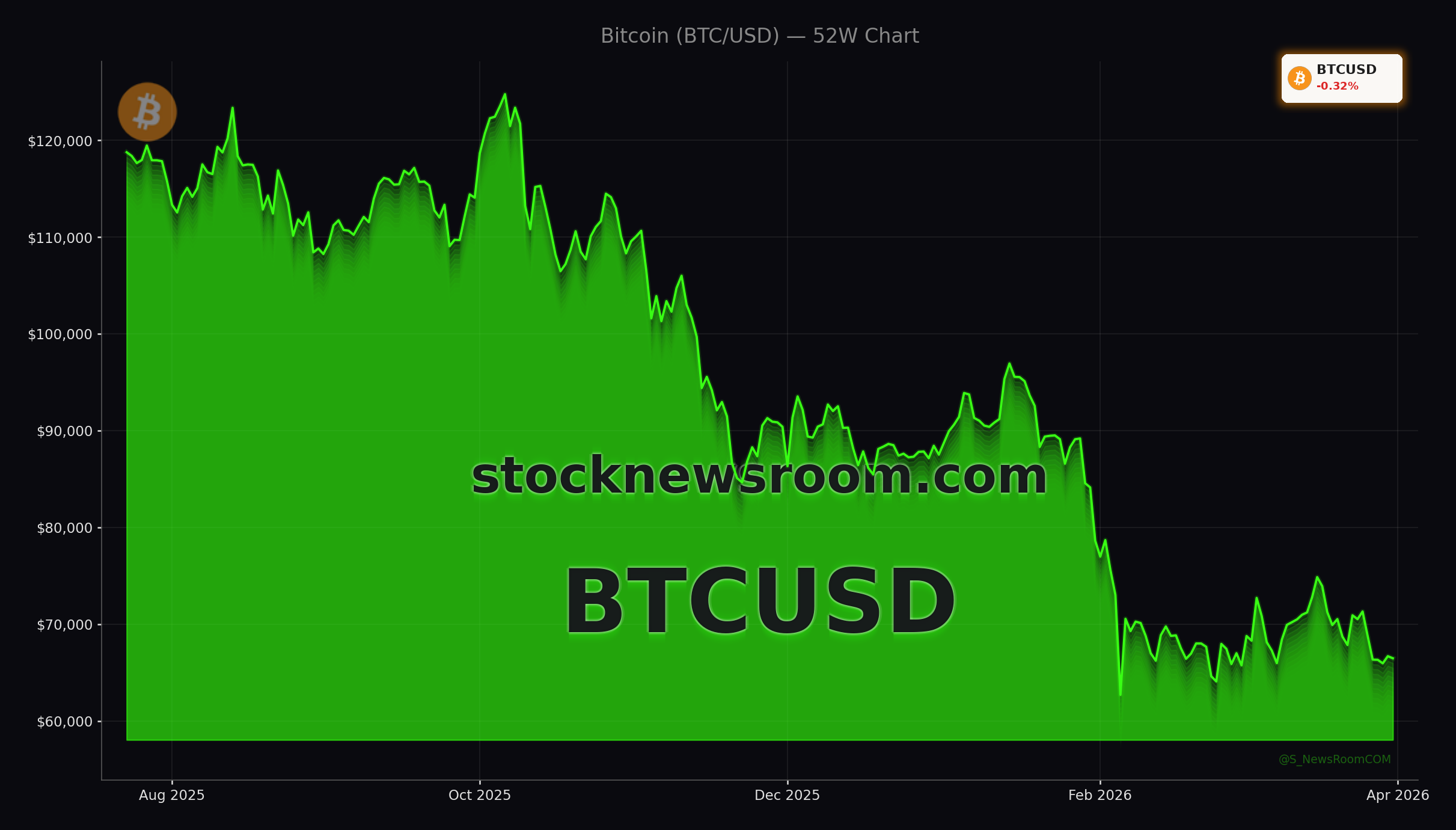
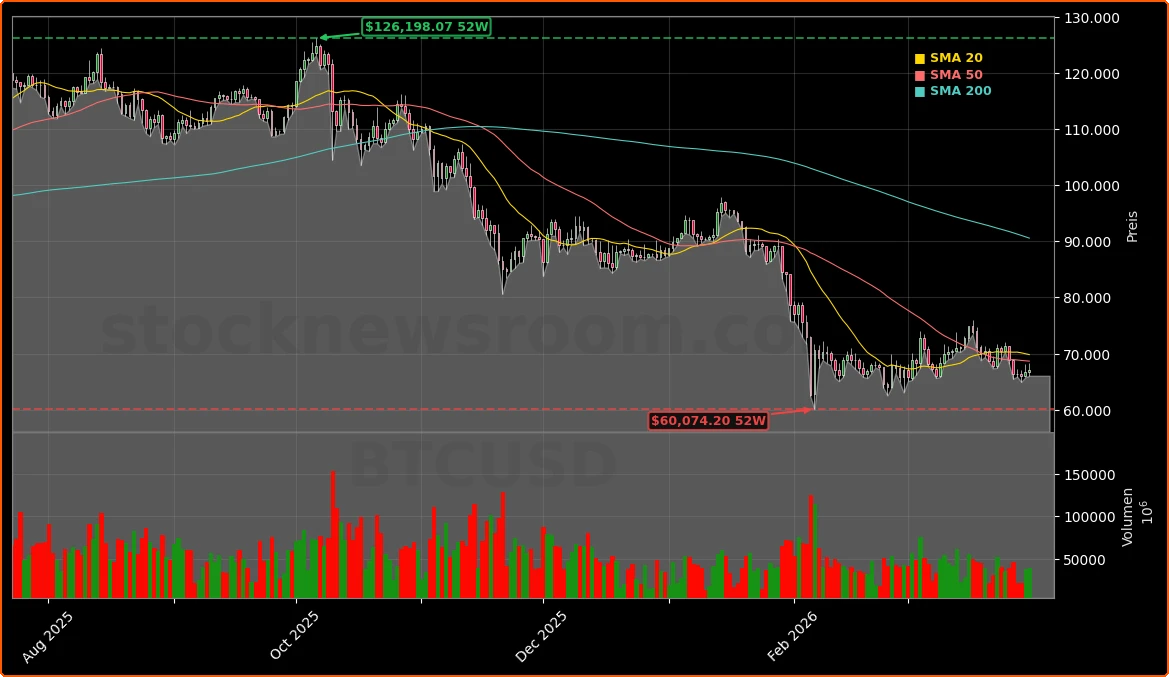
Bitcoin is hovering just above $67,000, modestly higher on the day but still well below its October peak above $126,000. The coin has been locked in a two‑month range, with clear support near $60,000. A break of that floor could open the door toward the mid‑$50,000s, while a successful defense would reinforce the view that February’s low at roughly $60,100 marked a cyclical bottom. On a relative basis, Bitcoin has quietly outperformed traditional havens and benchmarks, edging higher over the past month while gold and the S&P 500 have struggled amid the Iran conflict and surging oil prices.
Macro conditions remain tense. Oil is up nearly 50% since the start of the war, stoking inflation worries and keeping the Federal Reserve on hold, with futures markets pricing a roughly 97% chance of unchanged rates at the next FOMC meeting in late April. Risk assets have whipsawed as Washington signals a pivot toward an eventual exit from the Iran campaign. Analysts argue that a rapid de‑escalation could ignite a broader risk‑on rally, potentially allowing Bitcoin to revisit the $90,000 area, but only if institutional inflows resume and regulatory visibility improves.
From a cyclical lens, several crypto strategists see the current drawdown of more than 40% from the all‑time high as consistent with prior four‑year Bitcoin halving cycles. They expect a choppy sideways band between $60,000 and $90,000 over the next 6–12 months, with long‑term upside intact but short‑term momentum weak. On‑chain metrics show Bitcoin still trading roughly $10,000 above its realized price near $54,000, suggesting the market has not yet fully reset into a classic deep-value accumulation phase.
Are Morgan Stanley and ETFs changing the game?
On the institutional side, the ETF story is quietly becoming the central pillar of any serious Bitcoin Market Analysis. Morgan Stanley has launched a U.S. Bitcoin ETF with a fee of just 0.14%, undercutting rivals and signaling that the fee war on Wall Street is moving into digital assets. That ultra‑low pricing underscores persistent institutional demand for compliant, exchange‑traded Bitcoin exposure and suggests major banks expect spot products to remain a primary entry point for pensions, RIAs and family offices.
Flows, however, have turned more selective. After a $300 million outflow from spot Bitcoin ETFs last week, the market saw a modest $69 million inflow yesterday, highlighting how fragile sentiment remains. Bernstein has argued that disappointing Q1 earnings for pure‑play crypto firms such as Coinbase, Robinhood and Figure could mark a tradable bottom for crypto equities. The firm cut price targets but kept Outperform ratings, pointing to the structural tailwinds from the stablecoin boom and tokenization. Critics on Wall Street counter that Bitcoin and related stocks remain high‑beta risk assets that will not be immune if the U.S. economy slows.
Correlation patterns matter for diversified U.S. portfolios. Bitcoin’s performance has tracked tech benchmarks like the NASDAQ more closely in recent weeks, reinforcing its role as a speculative macro asset rather than a pure safe haven. Yet since February, it has still outpaced both gold and major equity indices, a key reason some multi‑asset managers are keeping small allocations despite the drawdown. For investors debating whether to add exposure, the message from ETF flows is clear: institutional participation has not disappeared, but it is now highly price‑ and headline‑sensitive.
Will the Clarity Act reshape Bitcoin Market Analysis?
Regulation is the other major variable investors must incorporate into any serious Bitcoin Market Analysis. In Washington, the so‑called Clarity Act — a compromise framework for stablecoins and their interest‑bearing features — is moving slowly through Congress. A core controversy is who keeps the yield on fiat reserves backing stablecoins. Some drafts would effectively ban or sharply limit yield‑bearing structures that pass interest directly to consumers, preserving most of the spread for issuers and banks.
Major U.S. platforms have raised concerns that an overly restrictive version of the Clarity Act could drive innovation offshore and crimp liquidity in dollar‑linked tokens that underpin much of the crypto trading ecosystem. Markets worry that if the final bill is perceived as hostile to Bitcoin and broader digital assets, it could trigger another leg lower, especially in an environment already dominated by geopolitical stress and thin risk appetite. Conversely, a clear, crypto‑friendly framework could unlock fresh institutional capital by giving compliance departments the guardrails they need.
Beyond stablecoins, new use cases are slowly broadening Bitcoin’s role in traditional finance. Fannie Mae’s move to accept Bitcoin as collateral for mortgage down payments, alongside emerging securitizations of Bitcoin‑backed lending, points toward the asset’s evolution into productive collateral rather than purely a speculative token. Payment players like Block, through its Square platform, have begun offering U.S. merchants automatic Bitcoin acceptance with instant conversion to cash and zero processing fees through 2026, lowering friction for real‑world usage.
How real is the quantum computing threat?
Amid these macro and regulatory cross‑currents, a new narrative has entered Bitcoin Market Analysis: quantum computing risk. A recent research update from Google’s quantum team has revived discussion about whether sufficiently powerful quantum computers could crack the cryptographic schemes that protect private keys in Bitcoin wallets sometime in the next decade, potentially as early as 2029.
Experts stress that the core Bitcoin protocol can be upgraded to quantum‑resistant cryptography over time, much like the broader internet is preparing to transition to post‑quantum standards. The more immediate vulnerability lies in older or inactive wallets that may never be updated. The largest of these is widely believed to belong to Bitcoin’s pseudonymous creator, Satoshi Nakamoto, holding roughly 1 million coins. If a future quantum attack were able to compromise such a stash and push it onto the market, the resulting supply shock could unleash extreme downside volatility.
For now, that scenario remains theoretical. Developers and security researchers are already exploring quantum‑safe wallet designs, and major institutional custodians are expected to migrate to such schemes well before large‑scale quantum machines become practical. Still, the debate is reshaping the long‑term risk profile that institutional allocators must consider, adding another layer to due diligence alongside regulatory, counterparty and market‑structure concerns. In a market where the Crypto Fear & Greed Index has recently dipped into Extreme Fear territory, any technology scare can amplify existing nerves.
For diversified investors — from retail traders using platforms like Robinhood to institutions benchmarking against the S&P 500 and NASDAQ — Bitcoin now sits at the crossroads of macro policy, regulatory architecture, hardware innovation and digital‑asset infrastructure. That makes it less of a simple speculative bet and more of a multi‑factor macro instrument. As AI‑driven “agentic economy” themes develop, where autonomous agents transact value on-chain using tokens, Bitcoin’s role as base collateral could intersect with broader tech exposures in names like NVIDIA, Tesla and Apple.
Bitcoin is moving through a late‑stage correction where macro headlines, regulation and even quantum technology matter as much as traditional chart patterns.— Sean Bill, CIO, Bitcoin Standard Treasury Company
In summary, today’s Bitcoin Market Analysis suggests a structurally bullish but tactically fragile setup: macro volatility, regulatory uncertainty and nascent quantum risks argue for caution, while resilient institutional demand, new collateral use cases and historically elevated fear readings hint at longer‑term opportunity. The next few months — especially the fate of the Clarity Act and the path of the Iran conflict — will likely determine whether Bitcoin’s current range resolves toward $90,000 or tests deeper support closer to its on‑chain cost basis.