Is Bitcoin’s latest pullback just noise in a bigger crypto shift driven by tokenization, stablecoins and tightening regulation?

How fragile is the current Bitcoin Market Analysis?
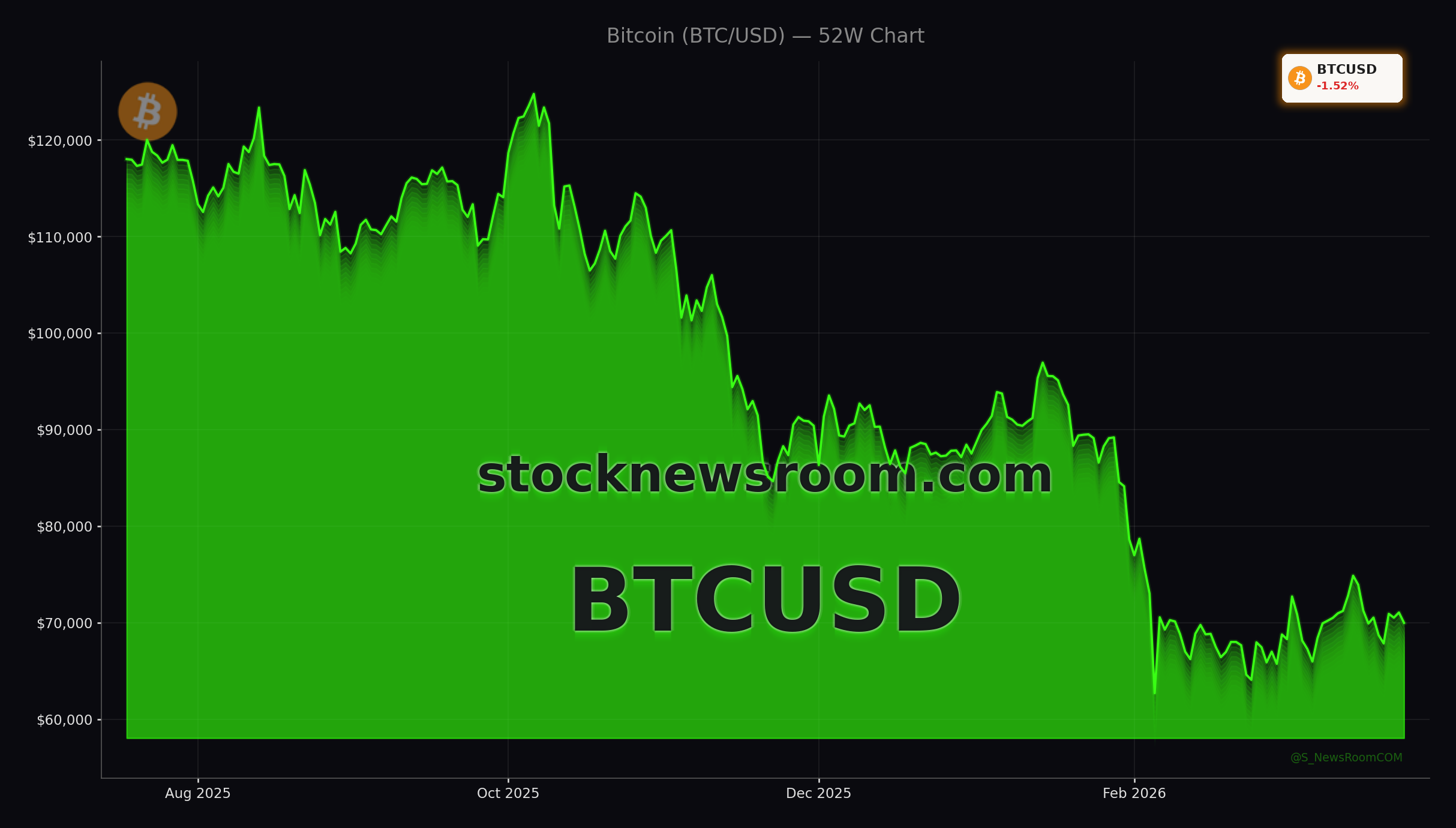
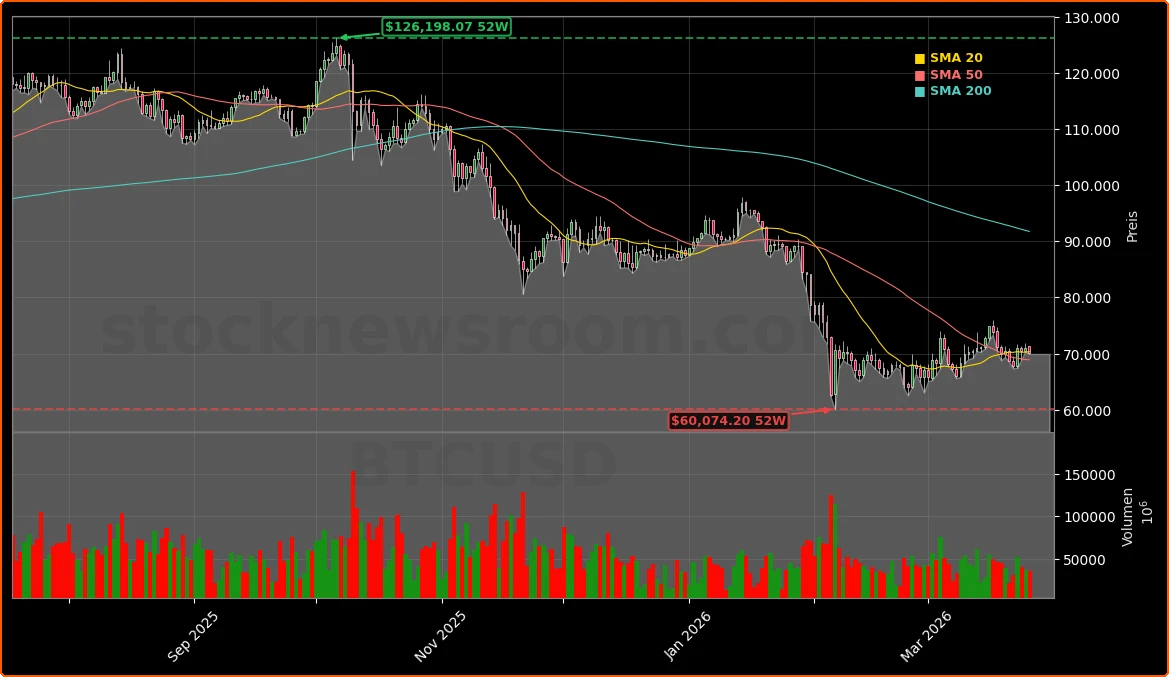
Bitcoin’s latest pullback of about 1.55% would be a meaningful move in equities, but in Kryptowaehrungen it remains modest noise within a larger bullish structure. BTCUSD is consolidating after a strong multi-month advance, with traders watching a key resistance zone near $81,000. A clean break above that area could open room for another leg higher, while a drop below Monday’s low would start to challenge the current uptrend and invite deeper corrective pressure.
From a positioning perspective, U.S. investors increasingly treat Bitcoin as a high-volatility macro asset that responds to liquidity conditions, real yields and risk appetite across the S&P 500 and NASDAQ. Correlations have risen during stress episodes, reinforcing the view that BTC is not yet a true safe haven but rather a leveraged expression of risk sentiment. In this context, any Bitcoin Market Analysis has to factor in the broader backdrop of Federal Reserve policy expectations and equity-market volatility on Wall Street.
Longer term, institutionalization via listed products and integration into brokerage platforms continues to blur the line between BTCUSD and traditional risk assets. That makes risk management, position sizing and diversification within multi-asset portfolios even more critical, particularly for U.S. retail investors accessing Bitcoin through mainstream channels.
What does the New York Stock Exchange tokenization push mean?
The New York Stock Exchange is partnering with Securitize to build a platform for trading tokenized securities, a move that could be pivotal for the next phase of digital assets. The initiative aims to tokenize real-world assets such as private company equity, funds or debt instruments and make them tradable on blockchain rails while maintaining regulatory oversight. For U.S. investors, this represents the first serious attempt by a core Wall Street institution to integrate crypto-native infrastructure with existing capital markets.
Tokenization promises smaller minimum investment sizes, faster settlement and the potential for 24/7 markets, all of which could broaden access to asset classes previously reserved for institutions or ultra-high-net-worth clients. Stablecoins pegged to fiat currencies are likely to serve as the main settlement and liquidity layer for these markets, functioning as on-chain “cash” that bridges traditional finance and crypto ecosystems.
For now, the NYSE’s move does not change Bitcoin’s monetary policy or scarcity profile, but it does strengthen the overall digital asset narrative: blockchain-based assets are moving from speculative instruments to core market infrastructure. In that sense, tokenization complements Bitcoin rather than competes with it, making it easier for institutions that already hold tokenized bonds or funds to justify BTC allocations alongside tokenized equities or alternative strategies.
How do stablecoins and regulation reshape the crypto landscape?
The stablecoin market, led by issuers such as Circle (USDC) and Tether (USDT), stands at roughly $400 billion and is projected by some industry estimates to grow nearly tenfold to about $4 trillion over the next five to six years. That growth trajectory rivals some of the fastest adoption curves in modern finance and would put stablecoins in the same conversation as major money-market funds in terms of scale.
For Bitcoin Market Analysis, the significance of this stablecoin expansion is twofold. First, stablecoins are the primary liquidity vehicle denominated in dollars within crypto markets, providing a tight link between BTCUSD and the broader dollar funding system. Second, stablecoin reserves—primarily short-term Treasuries and cash—represent a massive source of demand in traditional markets, creating feedback loops between crypto liquidity and U.S. sovereign debt.
Regulatory efforts such as a proposed “Clarity Act” targeting interest income and the core business model of stablecoin issuers could formalize this role. By setting standards for reserve quality, disclosures and custody, regulation may reduce counterparty risk and encourage more conservative investors—family offices, RIAs and smaller institutions—to use stablecoins as working capital within tokenized ecosystems. Circle, alongside major exchanges like Coinbase and large-cap tech names such as Apple and NVIDIA that are exploring blockchain use cases, could become central pillars of a regulated digital dollar environment.
Where do scandals and misinformation fit into Bitcoin risk?
The collapse of former billionaire Sam Bankman-Fried, once hailed as a leading crypto visionary, continues to cast a long shadow over perceptions of the sector. His prosecution on fraud charges, which he denies, underscores how personality cults and the “genius” narrative can mask fundamental business risks. For U.S. investors, the lesson is to separate technological promise from opaque governance structures and concentrate exposure in assets and platforms with transparent risk frameworks.
Alongside governance failures, the rise of deepfakes and AI-driven misinformation has introduced a new class of market risk. A recent incident in which a fake image of a Pentagon explosion briefly erased roughly half a trillion dollars in U.S. equity value in minutes highlights the vulnerability of algorithmic trading systems and social-media-driven sentiment. Bitcoin and other Kryptowaehrungen—which trade around the clock and are heavily influenced by online narratives—are particularly exposed to such shocks.
For diversified investors holding everything from BTCUSD to high-profile growth stocks like Tesla and mega-cap platforms such as NVIDIA, risk controls now have to account for information integrity as much as for price volatility. Exchanges, regulators and large-cap tech players are investing in authentication tools and content watermarking to combat manipulation, a trend that will likely accelerate as tokenized markets expand.
Ultimately, the current Bitcoin Market Analysis points to a maturing asset embedded in a rapidly evolving market structure: institutional tokenization on the NYSE, explosive stablecoin growth and stricter oversight are gradually aligning crypto with traditional finance. For investors, that means Bitcoin is becoming less of an isolated speculative play and more of a high-beta component within a broader digital-asset and tokenized-securities allocation.