
Can Block’s radical AI restructuring and 40% headcount cut really turn Cash App and lending into a durable profit machine?

Is Block’s stock move justified after earnings?
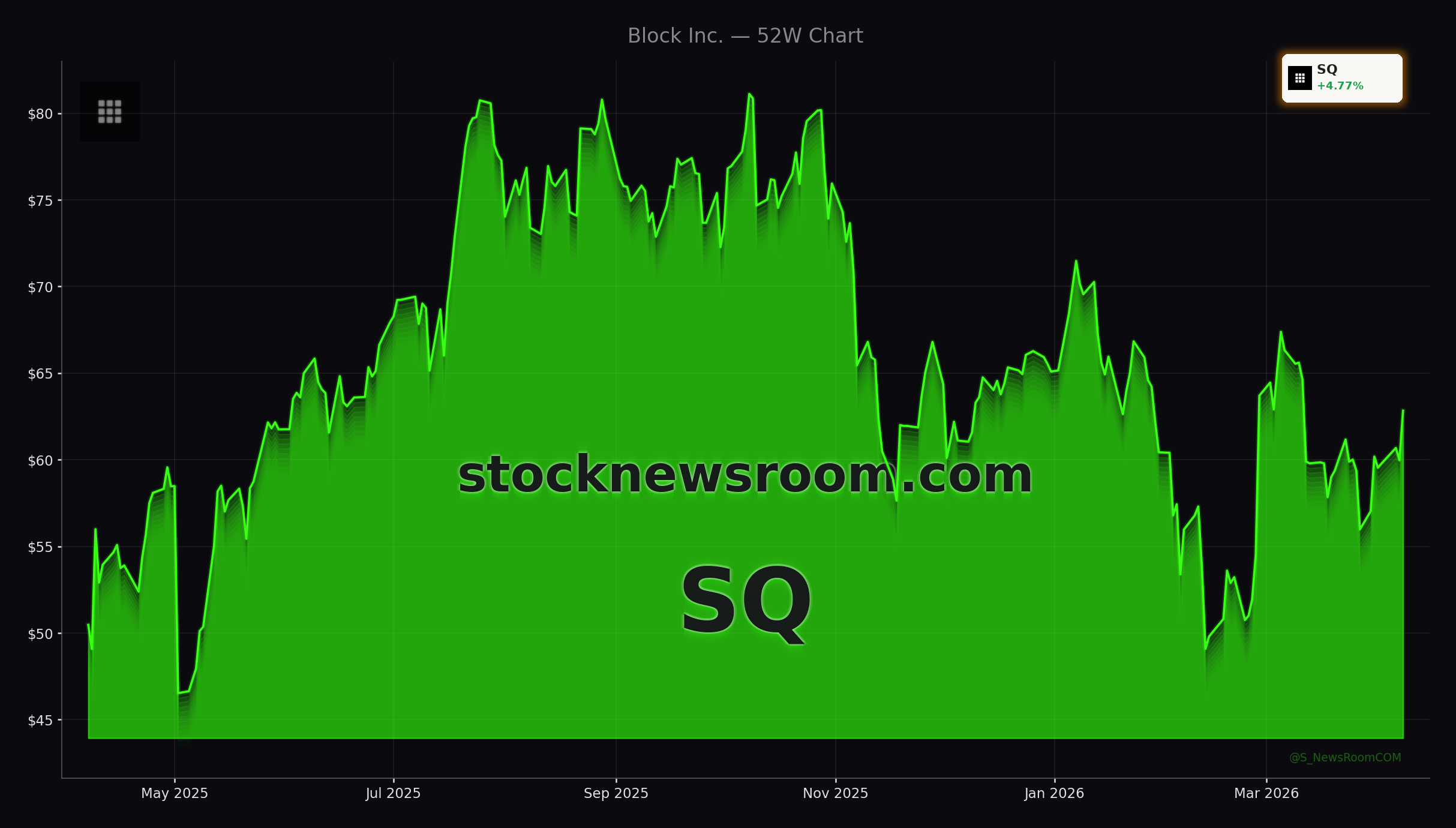
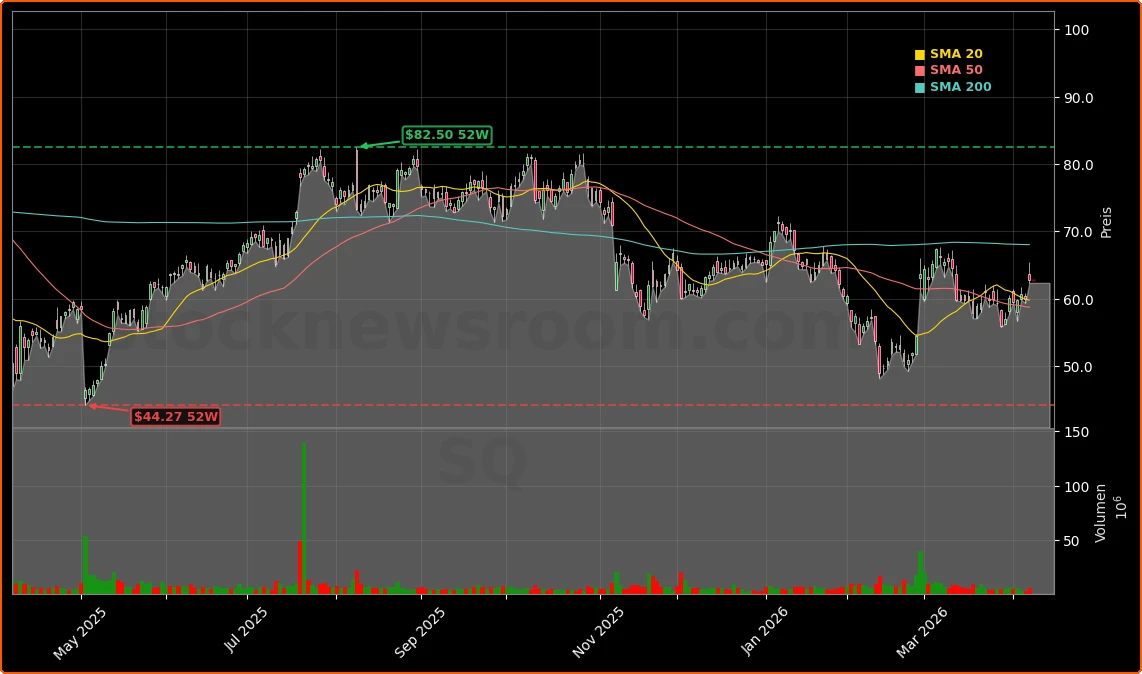
Block (SQ) rallied on Wednesday, ending the regular session at $62.83 versus a prior close of $62.00, before easing slightly to $62.71 after hours. The jump follows Q4 2025 numbers that showed real operating momentum: adjusted EPS came in at $0.65, modestly ahead of consensus around $0.64, while revenue reached $6.25 billion, up 3.6% year over year despite a small top‑line miss. The more important metric for many institutional investors was gross profit, which climbed 26.1% year over year to $2.87 billion, signaling a healthier mix and improving unit economics.
Gross profit growth was powered by Cash App, Block’s consumer ecosystem that competes with PayPal’s Venmo and, to some extent, the financial services ambitions of Apple and NVIDIA’s AI‑driven fintech partners. Cash App gross profit advanced 33% year over year, while free cash flow swung sharply higher to $580 million in the quarter, helping strengthen the balance sheet even as management leans into lending and AI tooling.
How radical is Block’s AI-driven headcount cut?
The centerpiece of the Block AI Restructuring strategy is a sweeping reduction in staff. CEO Jack Dorsey is cutting the workforce from more than 10,000 employees to just under 6,000, implying that over 4,000 jobs are being eliminated – a reduction of more than 40%. Dorsey has framed the move as a proactive redesign of how Block, Inc. (Afterpay / Cash App) should operate in an era of powerful AI tools, not as a distress‑driven downsizing.
Dorsey argues that modern intelligence tools fundamentally change how products are built and supported, enabling a smaller team to ship features faster and manage risk more efficiently. Under the Block AI Restructuring, management expects cost savings to phase in through 2026, with a more visible impact on adjusted operating income beginning in Q2 2026 and reaching full run‑rate benefits in the second half of the year. For U.S. investors used to job cuts at Big Tech names like Apple or Tesla, the scale here is even more aggressive and clearly tied to an AI‑native operating model.
What does guidance say about profitability?
Alongside the restructuring, Block issued confident full‑year 2026 guidance that underpins the bull case. Management is targeting $3.20 billion in adjusted operating income and adjusted diluted EPS of $3.66. Based on recent pricing, that implies a forward P/E of roughly the mid‑teens, well below many high‑growth fintech or AI beneficiaries on the NASDAQ and even modest versus some S&P 500 tech constituents.
On a trailing 12‑month basis, Block reports revenue of about $24.2 billion and trades at a price‑to‑sales ratio near 1.5x. For a business projecting roughly 54% year‑over‑year growth in adjusted EPS, that valuation looks undemanding to many institutions, especially if the Block AI Restructuring succeeds in hard‑wiring margin expansion. Still, one red flag remains: levered free cash flow over the last 12 months is approximately ‑$1.03 billion, underscoring that the cash profile must improve sustainably, not just in a single quarter.
Are Cash App and lending becoming growth engines?
Cash App continues to evolve from a peer‑to‑peer payment tool into a multi‑product financial super app. The lending business is scaling quickly: Cash App Borrow origination volume jumped 223% year over year, while broader consumer lending originations climbed 69% to $18.5 billion. That is turning lending into a core revenue and profit engine, but it also introduces more credit and regulatory risk.
Transaction, loan and consumer receivable losses have risen 108% year over year, driven primarily by the lending ramp. Investors comparing Block with more asset‑light payment peers such as PayPal or platform players leveraged to AI like NVIDIA need to factor in the higher risk profile of this model. If the underwriting models that underpin the Block AI Restructuring deliver better risk scoring at scale, the payoff could be substantial; if they misfire in a downturn, losses could pressure margins just as the new cost base takes hold.
What is Wall Street saying about Block?
Analyst sentiment remains broadly constructive. Morgan Stanley continues to rate Block as a Buy, while Truist Securities has upgraded the stock to Buy and raised its price target from $72 to $77. Raymond James also moved to a more positive stance following the Q4 print. Across the Street, the average price target stands around $86.40, implying notable upside from current levels if Block executes on guidance.
TD Cowen analyst Bryan Bergin reiterated a Buy rating with a $95 target after meetings with European investors that focused on the workforce reset and AI adoption. Morgan Stanley’s James Faucette recently maintained a Buy rating and set a $93 price objective, signaling confidence that the earnings power unlocked by the restructuring is not fully reflected in today’s share price. For portfolio managers benchmarking against the S&P 500 or NASDAQ, SQ now screens as a reasonably priced growth name rather than an expensive fintech story.
Related Coverage
For a deeper dive into how the AI‑driven workforce reset began, readers can review our earlier analysis in Block AI-Stellenabbau: SQ +18% Surge on Radical AI Pivot, which breaks down the initial investor reaction to the first wave of job cuts and AI investments. Investors interested in how AI and automation themes ripple across mobility and fintech should also read Uber Forecast Boom: Can 71% Upside Really Materialize?, which looks at whether robotaxi and AV narratives can justify lofty upside projections for Uber and peers.
Intelligence tools have changed what it means to build and run a company. A significantly smaller team, using the tools we’re building, can do more and do it better.— Jack Dorsey, CEO of Block
In summary, Block AI Restructuring combines one of the most aggressive headcount reductions in fintech with a clear push toward higher margins and AI‑enabled efficiency, all against the backdrop of strong gross profit growth. For U.S. investors, Block, Inc. (Afterpay / Cash App) now offers a blend of accelerating earnings power and execution risk, especially around lending and credit losses. The upcoming Q1 2026 report and subsequent quarters will be crucial tests of whether this restructuring truly unlocks durable value and justifies Wall Street’s bullish stance.