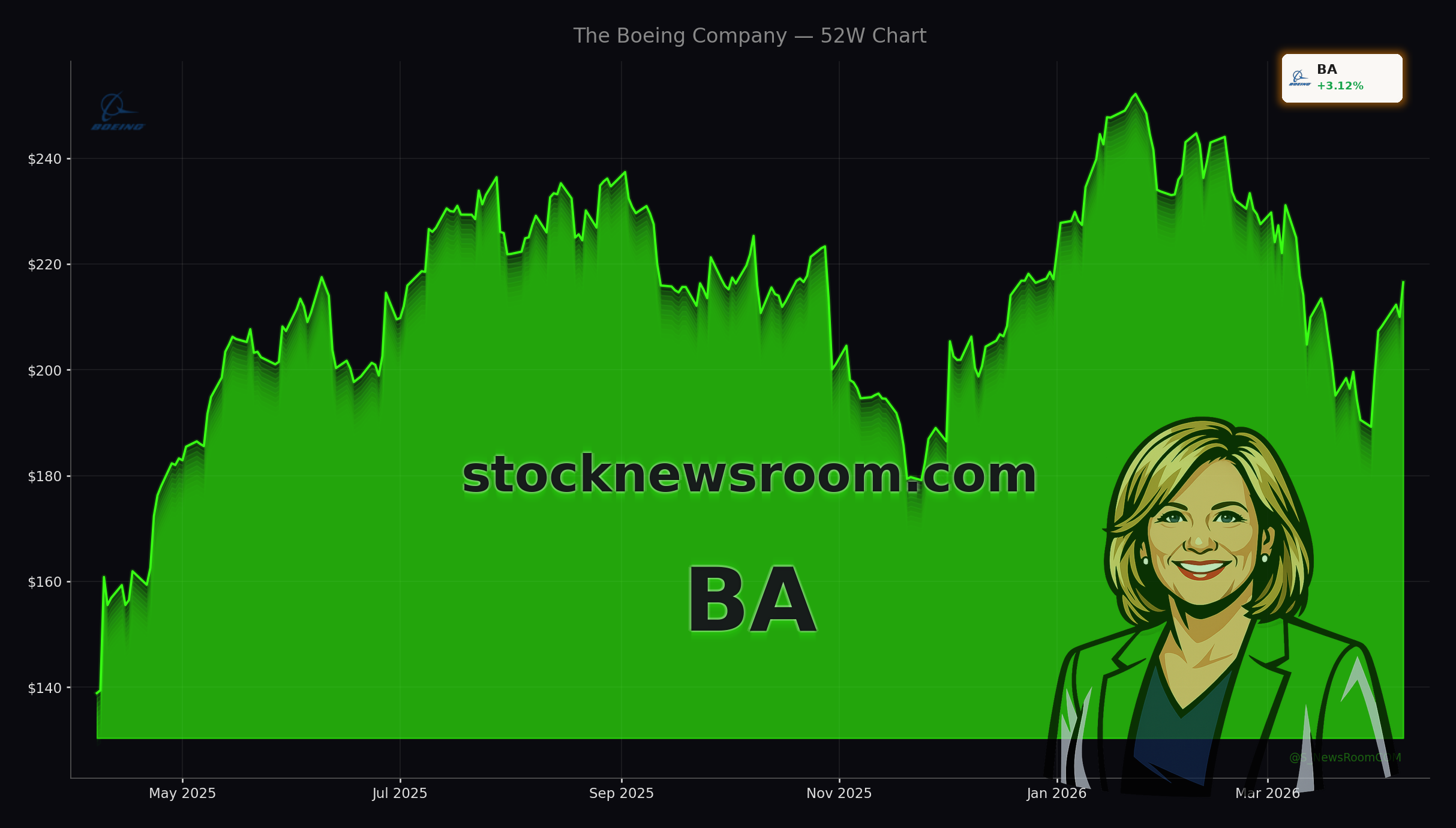

Can Boeing’s fragile supply chain withstand rising Middle East tensions just as its long-delayed recovery finally gains momentum?

How exposed is Boeing to Middle East disruption?
The latest escalation between Iran and regional rivals is more than a headline risk for The Boeing Company. It strikes directly at the heart of Boeing Supply Chain Risk because several critical production inputs and logistics routes are tied to the Gulf region. Flagship widebodies like the 787 Dreamliner and upcoming 777X rely heavily on advanced carbon‑fiber composites, a technology Boeing industrialized earlier than Airbus and which now accounts for more than half the structure on these models. Some of the key pre‑impregnated composite semi‑finished products (so‑called prepregs) for the 777X are sourced from a joint venture in the United Arab Emirates, making production facilities and ports in Abu Dhabi and Jebel Ali potential choke points if the conflict worsens.
So far, operations at these plants are reported to be continuing and aerospace suppliers emphasize that high‑value composite parts can be re‑routed by air freight or via land corridors through Saudi Arabia if sea lanes are disrupted. Still, investors remember how quickly titanium supplies from Russia and engine bottlenecks upended production plans in recent years. With 787 and 777X output central to Boeing’s long‑term cash generation, any hit to composite availability would immediately sharpen Boeing Supply Chain Risk and could force a fresh reset of delivery schedules.
What does this mean for demand from Gulf carriers?
The demand side of the equation is also in flux. State‑backed airlines Emirates, Qatar Airways and Etihad are among the most important customers for both Boeing and Airbus, together holding hundreds of outstanding widebody orders. Missile and drone strikes in the region have constrained flight operations, raising the possibility that these carriers could push back planned deliveries if traffic or route networks remain disrupted for an extended period. A delay in accepting new jets would weigh on near‑term cash inflows just as Boeing is trying to stabilize its balance sheet after years of 737 MAX grounding, pandemic shocks and delivery pauses.
At the same time, global air travel demand remains robust. Delta Air Lines just reported record March‑quarter revenue of $14.2 billion and more than 40% year‑over‑year earnings growth, even as fuel costs climb, underscoring that long‑haul travel appetite is intact. For Boeing, the bigger risk is not outright cancellations but a timing shift in deliveries from key Middle East customers that could widen quarterly cash flow volatility. That matters for a company still carrying elevated net debt and whose 737 MAX cash shortfall has already complicated plans for funding a clean‑sheet narrow‑body program.
How does Boeing Supply Chain Risk intersect with costs?
Boeing Supply Chain Risk is not confined to physical logistics. It also extends upstream to raw material and energy costs. The carbon‑fiber composites that underpin Boeing’s lightweight airframes are deeply tied to oil and gas markets. The precursor material polyacrylonitrile (PAN) relies on petroleum, natural gas and coal inputs, while the epoxy resins that bind composite layers are derived from oil‑based chemicals. Forming these components in high‑pressure autoclaves is extremely energy‑intensive. Any sustained spike in oil prices stemming from Middle East turmoil therefore pushes up the cost base for both Boeing and suppliers.
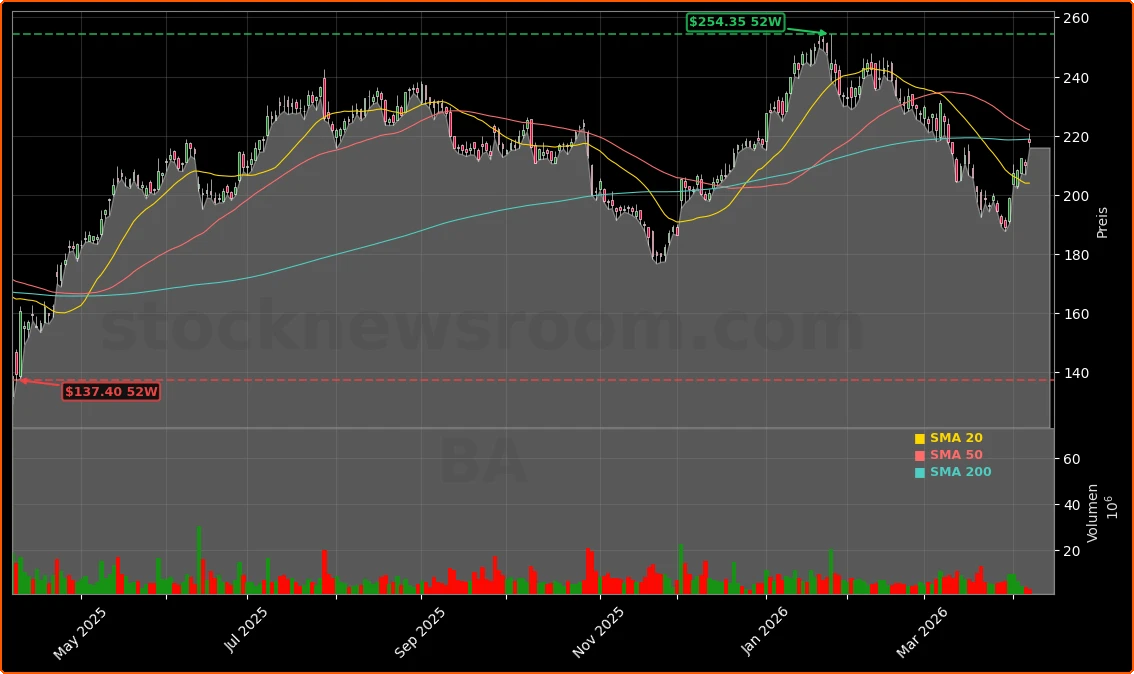
Inbound shipments of composite intermediates, specialty chemicals and resins from Asia are another vulnerability. These flows typically move by sea through contested routes. While aerospace volumes are relatively small and can be switched to air freight at higher cost, margin pressure could increase just as Boeing tries to restore profitability. For now, Wall Street remains constructive: TD Cowen recently cut its price target on Boeing from $270 to $250 but kept a Buy rating, while Jefferies and Wells Fargo likewise rate the stock a Buy/Overweight, citing an expected rebound in free cash flow as production normalizes.
Can defense and new tech offset commercial risk?
One reason analysts from Citigroup and others continue to see upside is that Boeing is no longer just a commercial jet story. The company has secured significant defense work, including a seven‑year framework to triple PAC‑3 seeker production for air and missile defense, highlighting its role in high‑priority Pentagon programs. A recent analysis of Boeing’s positioning argued that fresh defense deals could help shift the narrative from crisis headlines toward more stable government cash flows, a theme many portfolio managers welcome when commercial aerospace is volatile.
On the innovation front, Boeing’s Aurora Flight Sciences unit played a central role in the first flight of Wisk’s Generation 6 autonomous electric air taxi, the first candidate for FAA‑certified commercial self‑flying passenger service. The test validated core flight and guidance systems and showcased Boeing’s engineering depth in next‑generation mobility. While still early‑stage and immaterial to near‑term earnings, such projects offer investors an option on long‑dated growth that competitors like Tesla in ground transport and NVIDIA in AI chips have used to command premium valuations.
How does Boeing compare to Airbus for investors?
The Boeing Supply Chain Risk discussion naturally invites a comparison with Airbus. The European rival faces many of the same composite and engine bottlenecks and has already dialed back some planned production increases on its A320 and A220 lines due to missing engines. Airbus also leans heavily on composites for its A350 widebody and shares exposure to oil‑linked feedstocks and Middle East logistics. For U.S. investors, the choice is less about avoiding risk entirely and more about which manufacturer is better positioned to manage disruption while converting massive order backlogs into cash.
Boeing’s latest quarter showed it can still surprise to the upside, with fourth‑quarter earnings per share and revenue beating consensus and institutional buyers like Ervin Investment Management sharply increasing their positions. Yet the balance sheet remains stretched, and the costly 737 MAX saga continues to constrain flexibility for a new $50 billion narrow‑body program. Against that backdrop, any renewed supply shock could force more debt or equity issuance. Meanwhile, mega‑cap peers such as Apple and other S&P 500 stalwarts offer cleaner balance sheets and fewer geopolitical choke points, a trade‑off diversified portfolios must weigh carefully.
Related Coverage
For a closer look at how defense work could reframe the Boeing story, investors may want to read an in‑depth analysis of Boeing’s new Pentagon framework agreement and the resulting 4.6% share price surge, which argues that recurring military cash flows could offset cyclical swings in commercial aviation. To understand how Boeing’s main rival is navigating similar turmoil, see a detailed examination of Airbus’ supply chain risk warning as conflict in the region escalates, highlighting where the European manufacturer may be better or worse positioned than its U.S. competitor.
In the end, Boeing Supply Chain Risk is now a central variable in the BA investment case, sitting alongside demand strength and balance sheet repair. For investors, the stock remains a leveraged play on a tight but growing global aviation cycle, with defense and advanced projects providing secondary support. The next legs of the Iran conflict and Boeing’s ability to keep composite and oil‑linked inputs flowing will determine whether today’s optimism translates into sustained upside or another round of volatility for one of the S&P 500’s most closely watched industrial names.