Can the Broadcom AI Partnership with Google and Anthropic turn today’s AVGO bounce into a multi‑year AI revenue machine?

Why does the Broadcom AI Partnership matter for Wall Street?
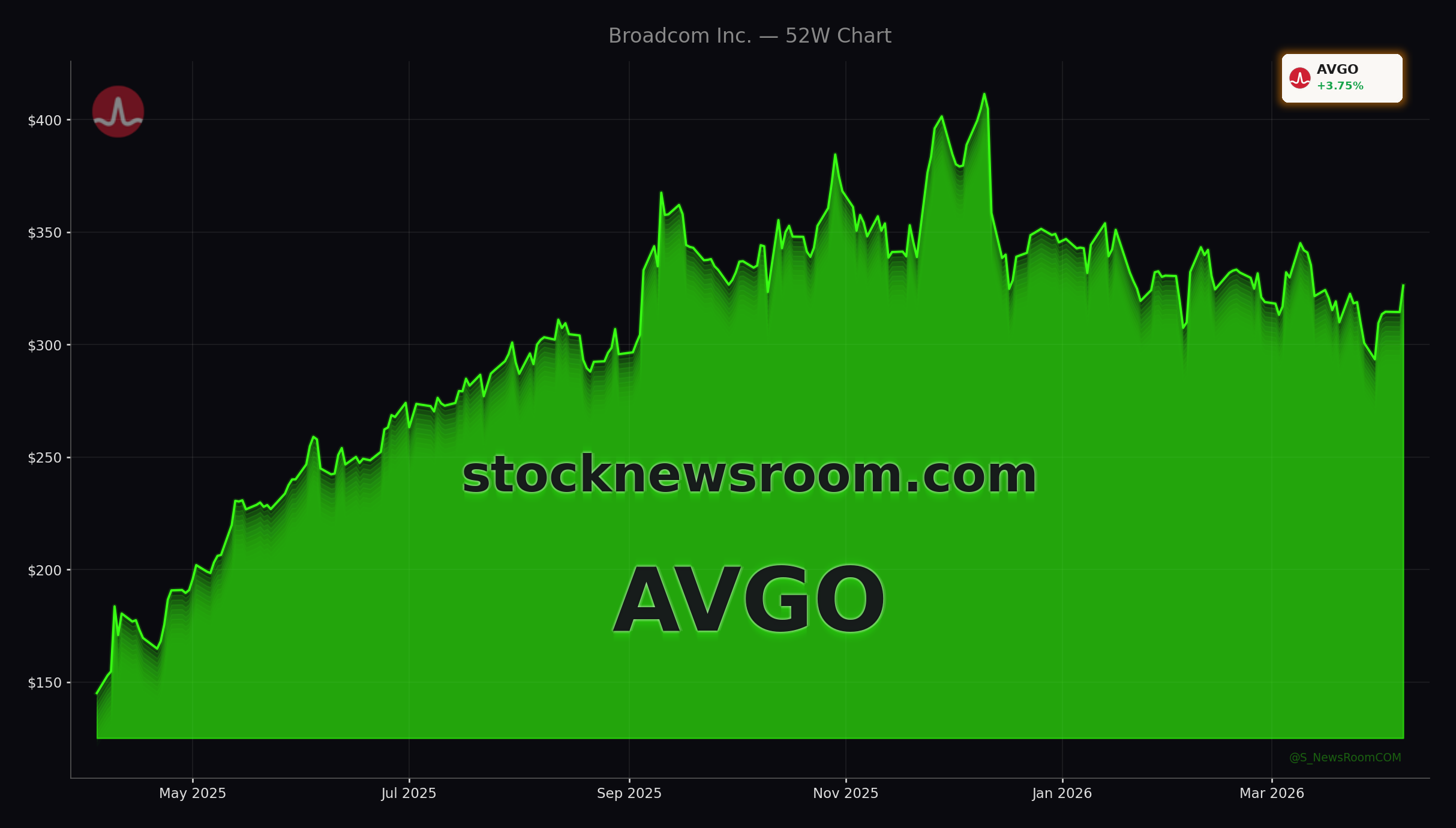
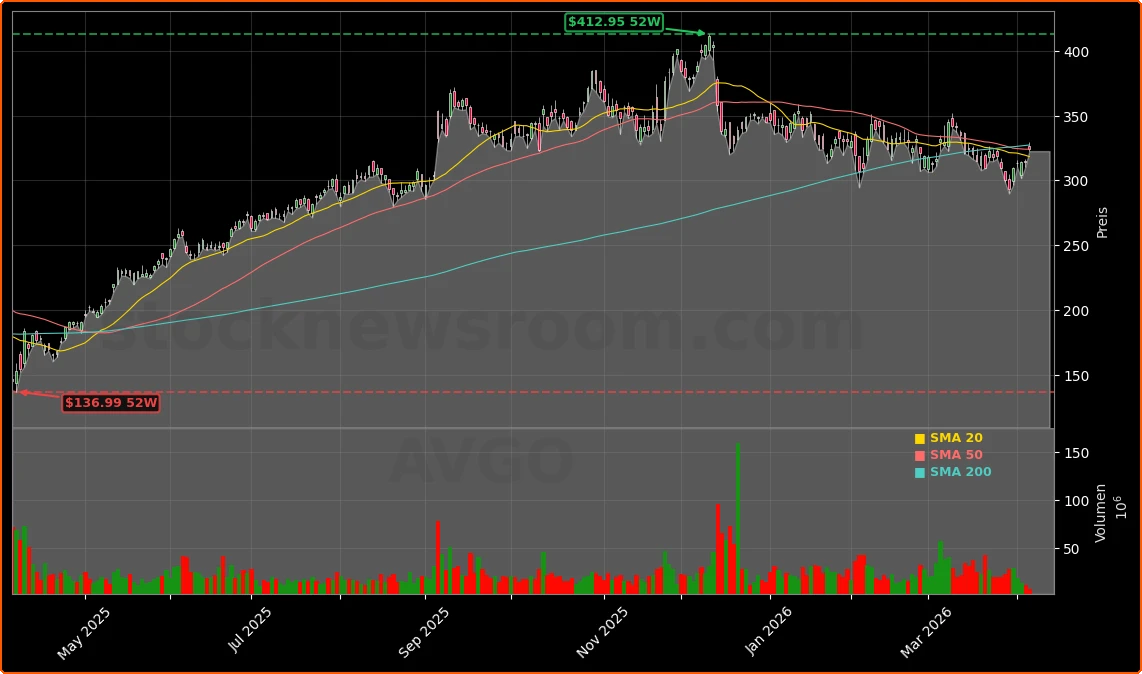
AVGO shares traded around $324.11 in early Tuesday trading, up roughly 3% from Monday’s close of $322.06, as investors digested the latest Broadcom AI Partnership headlines. The stock remains well below its all-time high near $413 and is still down high single digits year to date, even after today’s move, which leaves room for upside if the new contracts translate into sustained earnings growth.
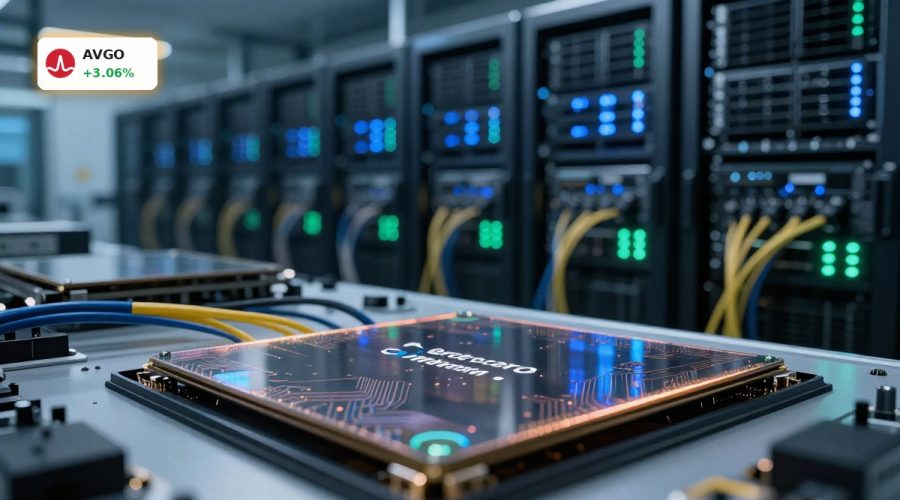
The centerpiece is a long-term agreement with Google to design and supply future generations of custom tensor processing units (TPUs) and related networking components for next‑generation AI server racks. Crucially for investors, the deal includes supply assurance through 2031, effectively locking in a base level of hyperscaler AI demand for Broadcom’s custom silicon over the rest of the decade. That visibility stands out in a market where many AI stories still rely on short upgrade cycles and limited contract disclosure.
In parallel, Broadcom deepened its collaboration with Anthropic, one of the fastest-growing frontier model developers. Starting in 2027, Anthropic will tap roughly 3.5 gigawatts of TPU-based compute capacity built on Google’s infrastructure, where Broadcom is a key design and manufacturing partner. With Anthropic’s annualized revenue run rate now above $30 billion and its large enterprise customer base doubling in just months, the compute commitment underscores how central Broadcom has become to the AI stack behind leading models.
How do Google and Anthropic reshape Broadcom’s AI pipeline?
On Broadcom’s recent Q1 FY2026 earnings call, CEO Hock Tan laid out the scale of the Anthropic opportunity, noting that Broadcom will deliver around 1 gigawatt of Google TPU compute for Anthropic in 2026 before ramping to more than 3 gigawatts in 2027. Separate Mizuho analysis projects that Anthropic alone could generate about $21 billion of revenue for Broadcom in 2026 and up to $42 billion in 2027 as deployments scale.
Those figures would sit on top of an already accelerating AI franchise. In Q1 FY2026, Broadcom reported record revenue of $19.3 billion, up 29% year over year, with AI semiconductors the main driver. Management guided for approximately $22 billion in Q2 revenue, implying 47% year‑over‑year growth, and expects AI semiconductor revenue to jump roughly 140% versus the prior year in that quarter. The broader infrastructure software business, though slower, is still set to grow around 9% year over year.
Jefferies has highlighted that the Google agreement should ease investor concerns about Broadcom’s pivot to a model where hyperscalers co‑design chips, arguing that the long‑dated contract validates the strategy and anchors demand. Erste Group, by contrast, recently downgraded Broadcom from “Buy” to “Hold,” citing structurally slower software growth and the drag from goodwill amortization on earnings. For investors, that divergence underscores a key debate: can explosive AI hardware growth more than offset a more modest software trajectory?
Can Broadcom’s AI strategy rival NVIDIA and other giants?
In the data center, Broadcom is positioning its custom AI accelerators and TPUs as a complementary – and in some workloads competitive – alternative to GPUs from NVIDIA. Hyperscalers like Google, Microsoft and Amazon are all pushing custom silicon to reduce dependence on third‑party GPU supply and improve total cost of ownership. The Broadcom AI Partnership with Google therefore does more than secure orders; it deepens Broadcom’s integration into Google’s cloud economics and roadmap.
Broadcom is also working with OpenAI on tailored chips, expanding its footprint across multiple leading AI labs. Management has floated an ambitious outlook that custom AI chips could generate around $100 billion in revenue by the end of 2027, a target that, if reached, would put Broadcom in the same conversation as the largest AI infrastructure vendors on the planet. That prospect has led some strategists to group Broadcom with other core AI dividend names like Taiwan Semiconductor and Microsoft, even if Broadcom’s current yield of roughly 0.8% is modest.
Technically, the stock has clawed back above key moving averages and reclaimed its 50‑day line near current levels, but it is still trading in a broad sideways range with resistance around $356 and support near $300–$308. For now, fundamentals are improving faster than the share price, a setup some U.S. portfolio managers view as an opportunity to accumulate quality AI exposure on weakness rather than chasing higher‑beta names like Tesla or more consumer‑centric plays such as Apple.
How should U.S. investors position around the Broadcom AI Partnership?
For American investors navigating an AI‑driven NASDAQ and S&P 500, the Broadcom AI Partnership offers an unusual mix of visibility, scale and diversification. Custom silicon wins with Google and Anthropic are contractually long‑dated, AI revenue growth is outpacing even bullish expectations, and the company still derives a meaningful portion of cash flow from infrastructure software and networking – providing ballast if AI spending ever normalizes.
Risks remain. Competition from NVIDIA and other chip designers is intense, hyperscaler customers hold significant bargaining power, and any slowdown in cloud capex or shift in AI architectures could affect Broadcom’s roadmap. Additionally, some investors remain cautious around valuation after the stock’s huge multi‑year run, even if multiples have compressed during the recent pullback.
Still, with AVGO down roughly 9–10% year to date and now bouncing on tangible contract wins rather than hype, many wealth managers argue it is “hard to see a world where you’re not investing in AI” through at least a few core names. Broadcom’s blend of recurring, long‑term hyperscaler contracts and growing dividends makes it an increasingly popular candidate for that role in diversified U.S. portfolios.
Related coverage: where does this fit in the AI capex wave?
Investors who want to dive deeper into Broadcom’s long‑term chip ambitions can read “Broadcom AI Forecast: $100B Boom Warning for 2027”, which scrutinizes whether management’s $100 billion custom AI chip target is achievable or overly optimistic. For a broader look at how hyperscaler spending is reshaping the enterprise landscape, “Oracle CFO Change Warning as $50B AI Capex Bet Builds” explores how another major tech player is reshuffling leadership to handle an aggressive AI investment cycle that could pressure free cash flow for years.
In the end, the Broadcom AI Partnership with Google and Anthropic confirms that Broadcom is now a core utility of the global AI infrastructure build‑out. For long‑term investors focused on U.S. markets, that combination of multi‑year contracts, rapid AI revenue growth and an established S&P 500 footprint makes AVGO one of the more tangible ways to participate in the next decade of computing. The next few quarters of AI chip ramp‑up and hyperscaler capex updates will show how quickly this thesis converts into earnings power – and whether the stock finally breaks out of its sideways range.