Can the Broadcom TPU partnership with Google and Anthropic turn today’s stock surge into a durable edge in the AI chip race?

How is the Broadcom TPU partnership moving markets?
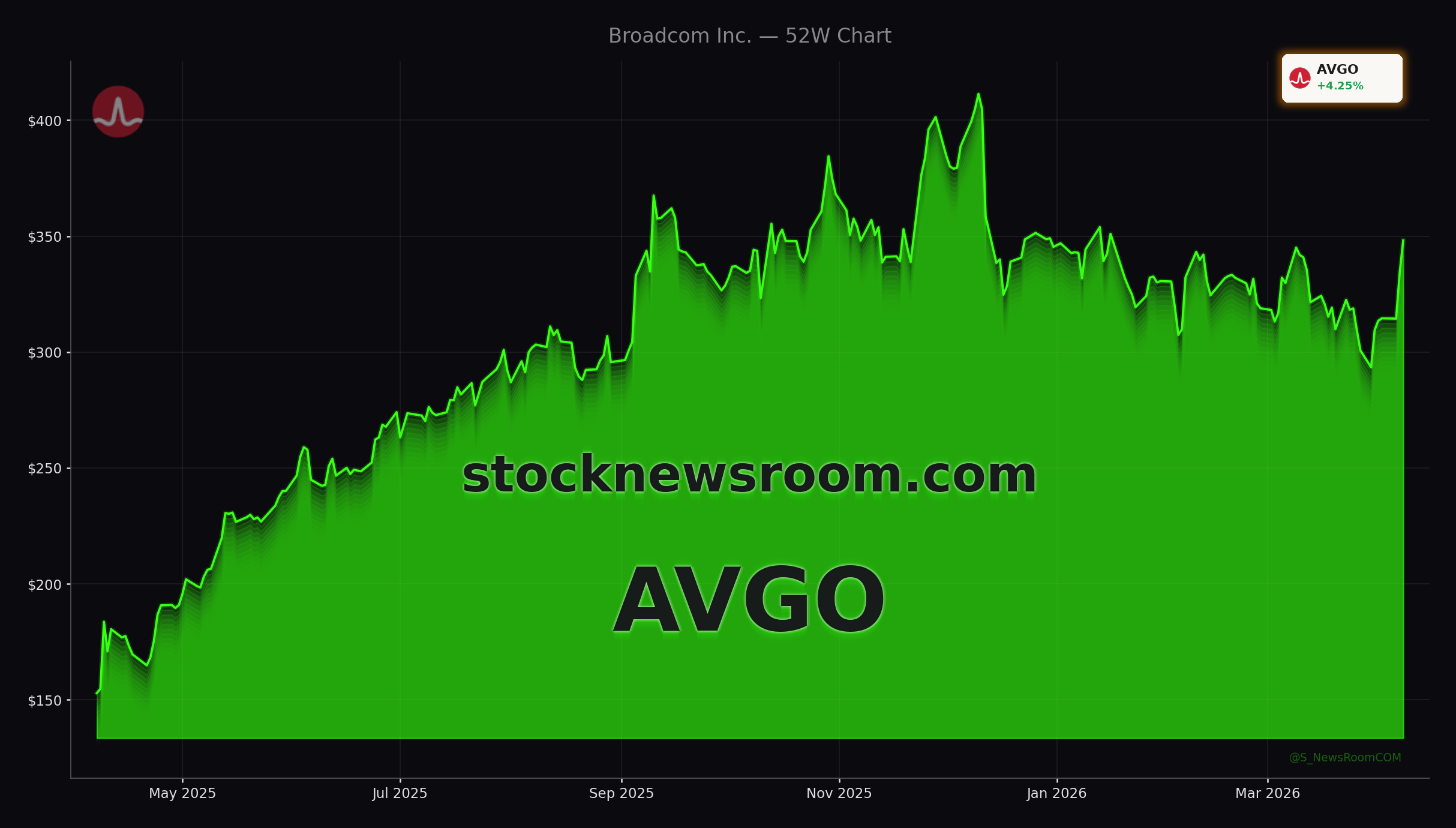
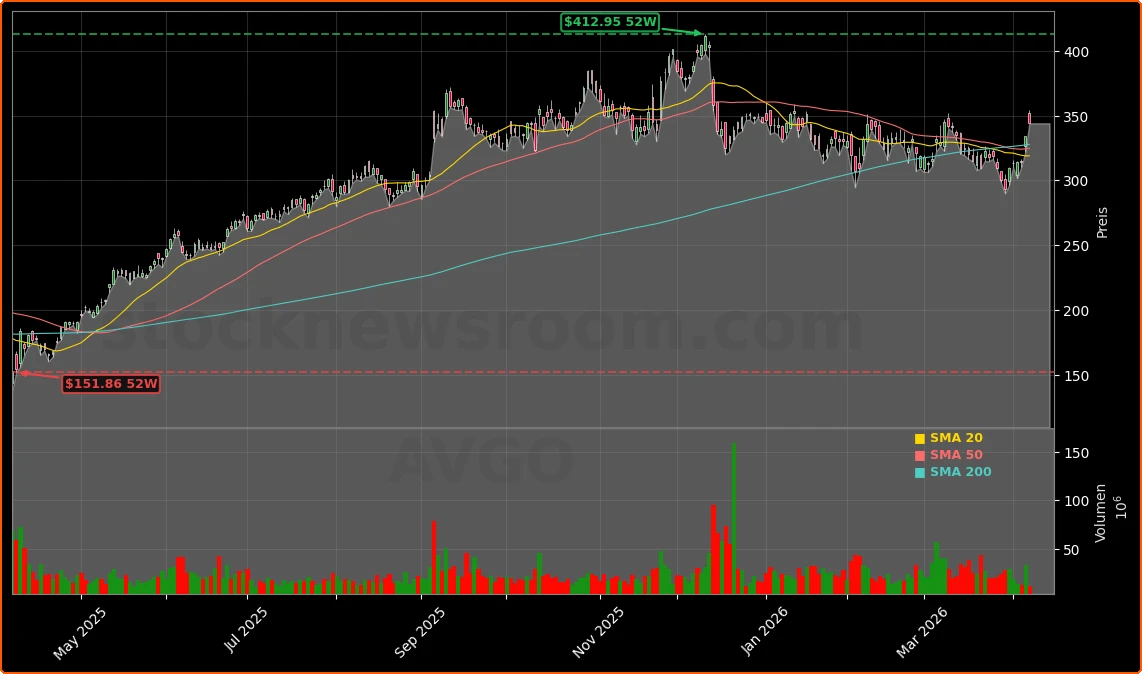
Broadcom stock has reversed recent weakness and is outperforming major chip peers on the latest session, with the move adding to a broader rebound in mega‑cap tech that is nudging the NASDAQ closer to its record highs. AVGO is now up about 3.05% versus the previous close at $346.50, as traders digest the long‑term visibility coming from the new Broadcom TPU partnership with Google and Anthropic. The stock had been under pressure earlier this year, but the new contracts are easing fears that Google might internalize more of its AI silicon roadmap.
Bank of America analyst Vivek Arya welcomed the announcement, arguing that the clarified TPU roadmap removes a share overhang and reinforces Broadcom’s status as a strategic design partner for Alphabet’s custom accelerators. At the same time, the deal lands against a cautious backdrop: Seaport Research Partners just downgraded Broadcom, warning that the company is running up against “the limits” of the semiconductor and AI industry after a historic run. That tension between long‑term AI demand and cyclical risk is now front and center for AVGO holders.
What exactly did Google agree with Broadcom?
Under the expanded agreement, Broadcom will remain the primary designer and manufacturer of Google’s custom Tensor Processing Units through at least 2031. The roadmap includes development of seventh‑ and eighth‑generation TPUs and dedicated networking components for Google’s future AI racks, effectively locking Broadcom into the heart of Alphabet’s next‑gen AI infrastructure. This extends a partnership that has already seen Broadcom co‑develop multiple TPU generations used across Google Cloud and internal workloads.
For Google’s parent Alphabet, the structure allows it to keep tight control over its AI chip architecture while avoiding the heavy capital burden of building out advanced manufacturing itself. For Broadcom, it is a multi‑billion‑dollar pipeline that management and several Wall Street commentators see as a cornerstone of a potential $100 billion‑plus AI revenue opportunity by 2027. The agreement also underscores how large cloud providers are increasingly pursuing custom silicon strategies — a trend that benefits Broadcom alongside rivals like NVIDIA and Advanced Micro Devices.
How does Anthropic benefit from Google and Broadcom?
Anthropic, the AI startup behind the Claude family of models, is another key winner in the Broadcom TPU partnership. Starting in 2027, Anthropic is slated to gain access to roughly 3.5 gigawatts of TPU‑based compute capacity from Google, with the underlying chips and networking systems supplied by Broadcom. That scale is designed to support Anthropic’s rapidly growing enterprise customer base, with its annual revenue run rate already reported above $30 billion.
The arrangement deepens Anthropic’s ties to Google Cloud while embedding Broadcom silicon at the core of its training and inference stack. It also highlights how demand from frontier‑model developers is straining physical capacity across the AI supply chain, from accelerators to power and data center space. For investors, Anthropic’s decision to double down on TPUs manufactured by Broadcom is another datapoint suggesting that the AI accelerator market will not be a one‑vendor story, even if NVIDIA still dominates GPU shipments today.
How does Broadcom stack up against U.S. AI chip rivals?
On Wall Street, Broadcom is increasingly discussed in the same breath as NVIDIA, Apple, Microsoft and other AI beneficiaries that drive the S&P 500 and NASDAQ. While NVIDIA remains the clear leader in general‑purpose AI GPUs, Broadcom is carving out a lucrative niche in custom accelerators, ASICs and high‑speed networking. The company benefits from larger AI cluster sizes, which translate into more demand for its networking portfolio, and from hyperscalers that want alternatives to off‑the‑shelf GPUs.
Yet the stock is not without controversy. Seaport Research’s downgrade reflects worries that AI infrastructure spending could normalize faster than the market expects, leaving high‑flyers like Broadcom exposed to a cyclical downdraft. Others highlight that Broadcom has historically been a cyclical hardware name, not a pure‑play software compounder, and that in down years it has given up significant gains. For U.S. portfolio managers, the key question is whether the Broadcom TPU partnership and other AI wins are enough to smooth out those cycles and justify premium multiples over the long term.
Related Coverage
Investors looking for a deeper dive into how today’s contracts might translate into multi‑year cash flows for AVGO can read Broadcom AI Partnership +3.1%: Rally Warning for AVGO, which analyzes whether the Google and Anthropic deals can turn a single‑day bounce into a sustained AI revenue machine. For a broader sector view, Alibaba AI Infrastructure +6.2% Surge as Zhenwu Supercluster Goes Live looks at how another tech giant is scaling its AI infrastructure, offering a useful comparison for investors weighing global AI data center plays.
Overall, the Broadcom TPU partnership with Google and Anthropic cements AVGO as a central player in the next wave of AI infrastructure build‑out. For U.S. investors, the long‑dated TPU and networking contracts provide rare revenue visibility in a notoriously cyclical industry and reinforce Broadcom’s standing alongside other mega‑cap AI leaders. The next few quarters of capex trends at the hyperscalers will show whether this momentum can continue, but for now the partnership keeps Broadcom firmly on the radar of growth‑oriented portfolios.