
Is the C3.ai AI Strategy quietly setting up a comeback while Wall Street rotates out of high‑multiple AI names?

Is C3.ai losing the AI trade on Wall Street?
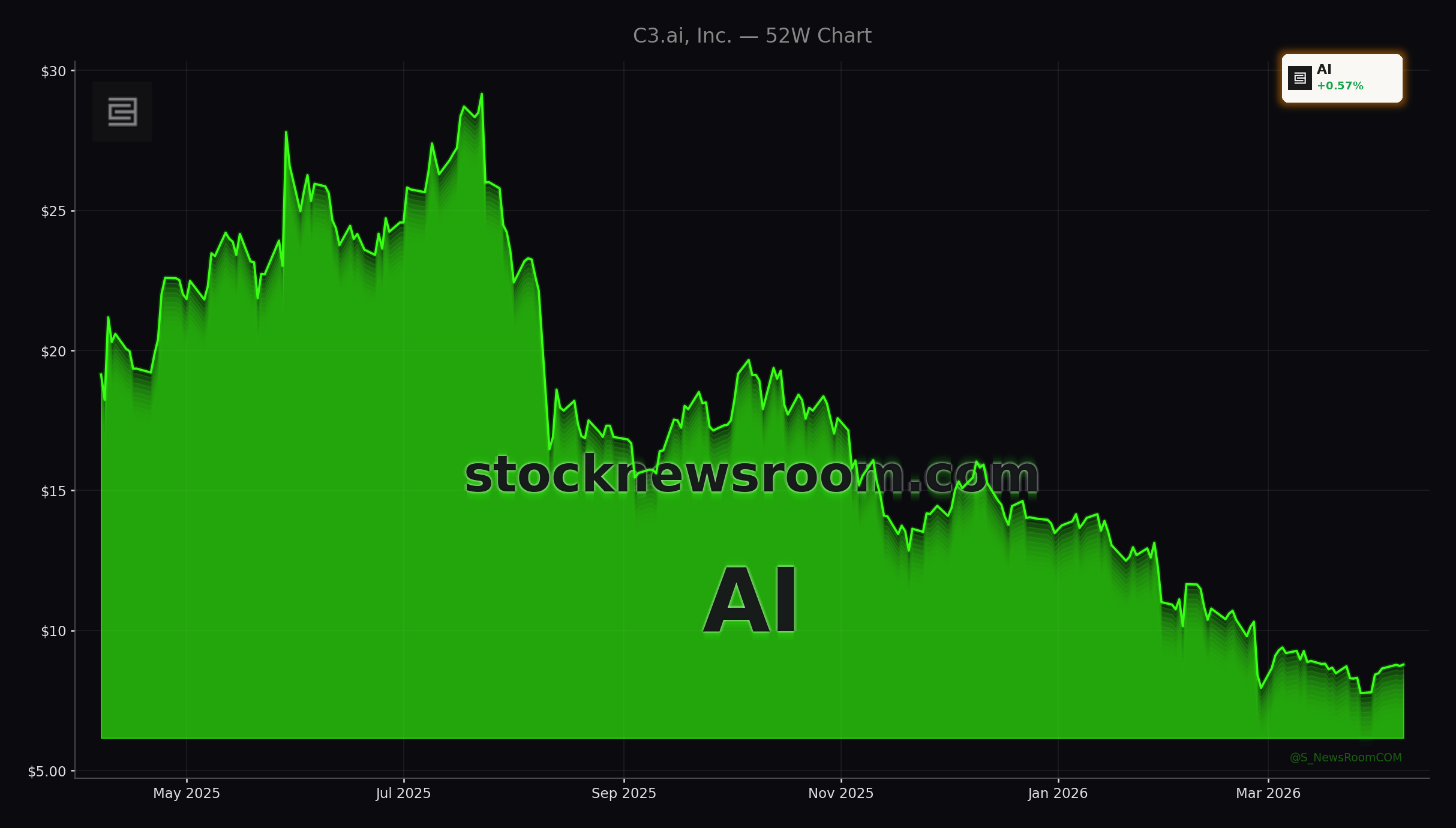
C3.ai, Inc. (NYSE: AI) ended regular trading at about $8.78 on Wednesday, up modestly on the day but still hovering near its recent lows after a sharp re‑rating in early 2026. The move comes as investors rotate out of high‑multiple growth and AI names toward value and defensives, especially after geopolitical tensions and worries about peak AI infrastructure spending hit the broader tech complex.
Unlike hardware leaders such as NVIDIA or platform giants like Apple, C3.ai operates in a more volatile niche: enterprise AI application software. Its revenue deceleration, a recent miss on fiscal Q3 2026 expectations, and cautious commentary from several analysts have weighed heavily on the shares. Yet the core C3.ai AI Strategy — selling configurable AI applications and a platform that can be deployed across energy, manufacturing, government, and financial services — has not fundamentally changed.
For U.S. investors comparing AI exposure across the NASDAQ and NYSE, the question is less whether AI demand is real and more whether C3.ai can capture enough of it to justify a recovery from these compressed levels.
How solid is C3.ai’s business model today?
C3.ai’s model centers on pre‑built enterprise AI applications and a platform that lets large customers deploy predictive maintenance, fraud detection, supply chain, and other data‑driven use cases more quickly than building from scratch. That positions the company differently from hyperscalers and from consumer‑AI stories like Tesla’s autonomous driving push, as it targets mission‑critical but narrower enterprise workflows.
Recent financial performance, however, has raised concerns. The company missed Wall Street expectations for fiscal Q3 2026, and revenue trends have been under pressure. Some analysts have responded with lower price targets and more neutral or cautious ratings, arguing that management must demonstrate a clear path back to sustainable growth and operating leverage before the stock can re‑rate higher.
At the same time, C3.ai has taken steps to de‑risk its balance sheet and streamline operations, while continuing to invest in product. The C3.ai AI Strategy emphasizes standardized, repeatable AI solutions rather than bespoke consulting projects, aiming to expand margins over time. If the company can reignite top‑line growth while holding the line on costs, the current share price could embed overly pessimistic assumptions about its long‑term relevance in enterprise AI.
What do insider moves say about C3.ai AI Strategy?
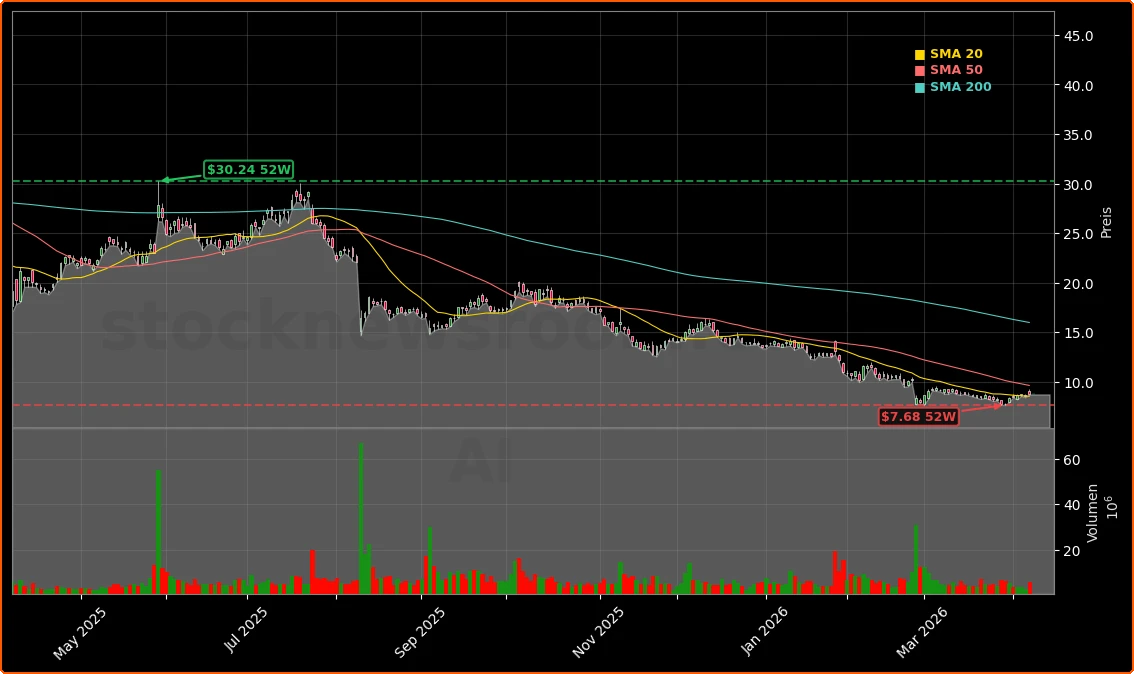
Insider activity has been in focus as the stock slid. In March, Executive Chairman Thomas Siebel sold roughly 501,000 shares for about $4.4 million under a Rule 10b5‑1 trading plan adopted in 2024, trimming but not eliminating a substantial position. More recently, new CEO Stephen Bradley Ehikian received over 32,000 fully vested restricted stock units and sold about 52,000 shares to cover taxes, while other directors reported gifts and offsetting buys and sells around the $8 level.
For U.S. investors, these transactions send a mixed signal. On one hand, planned sales tied to options exercises and tax obligations are common at tech companies and do not automatically imply a negative view of the C3.ai AI Strategy. On the other, the perception of heavy selling near 52‑week lows, combined with weak earnings momentum, reinforces the narrative that leadership must prove the model before new institutional money steps in aggressively.
The partial legal overhang has also eased. A federal court recently dismissed three of five causes of action in an ongoing securities class action, leaving narrower claims related to a single revenue‑recognition disclosure from the 2020 IPO. While any remaining litigation is a distraction, the reduction in scope removes some tail‑risk for shareholders.
How does C3.ai compare with other AI names?
In the 2025 AI rally, investors rewarded nearly everything tied to machine learning, from chipmakers like NVIDIA to software platforms and even speculative small caps. In 2026, the market has become more selective. Profitable, scale players with clear monetization — think hyperscalers, or mature software businesses integrated into the S&P 500 — have generally held up better than earlier‑stage, cash‑burning AI stories.
C3.ai falls squarely in the latter camp: a recognized brand in enterprise AI, but still working toward durable profitability and consistent growth. That makes the stock more sensitive to risk‑off phases and to any disappointment on guidance. For diversified U.S. portfolios already heavy in mega‑cap tech, C3.ai offers a higher‑risk, potentially higher‑reward satellite position rather than a core holding.
From a rotational trading perspective, some quantitative desks now see a favorable risk‑reward skew for short‑term strategies, highlighting a setup where downside from current levels appears limited relative to upside in a rebound scenario. Long‑only investors, however, will be more focused on whether the underlying C3.ai AI Strategy can translate into sustainable customer wins and margin improvement over the next several quarters.
Ultimately, the 2026 pullback reflects skepticism, not the disappearance of enterprise AI demand. If management can stabilize revenue and restore confidence in execution, today’s price could look like a reset rather than a terminal decline.