
Can Cardano Midnight’s new privacy chain turn lofty valuations into real on-chain usage before investors lose patience with ADA?

Is Cardano’s valuation outpacing real usage?
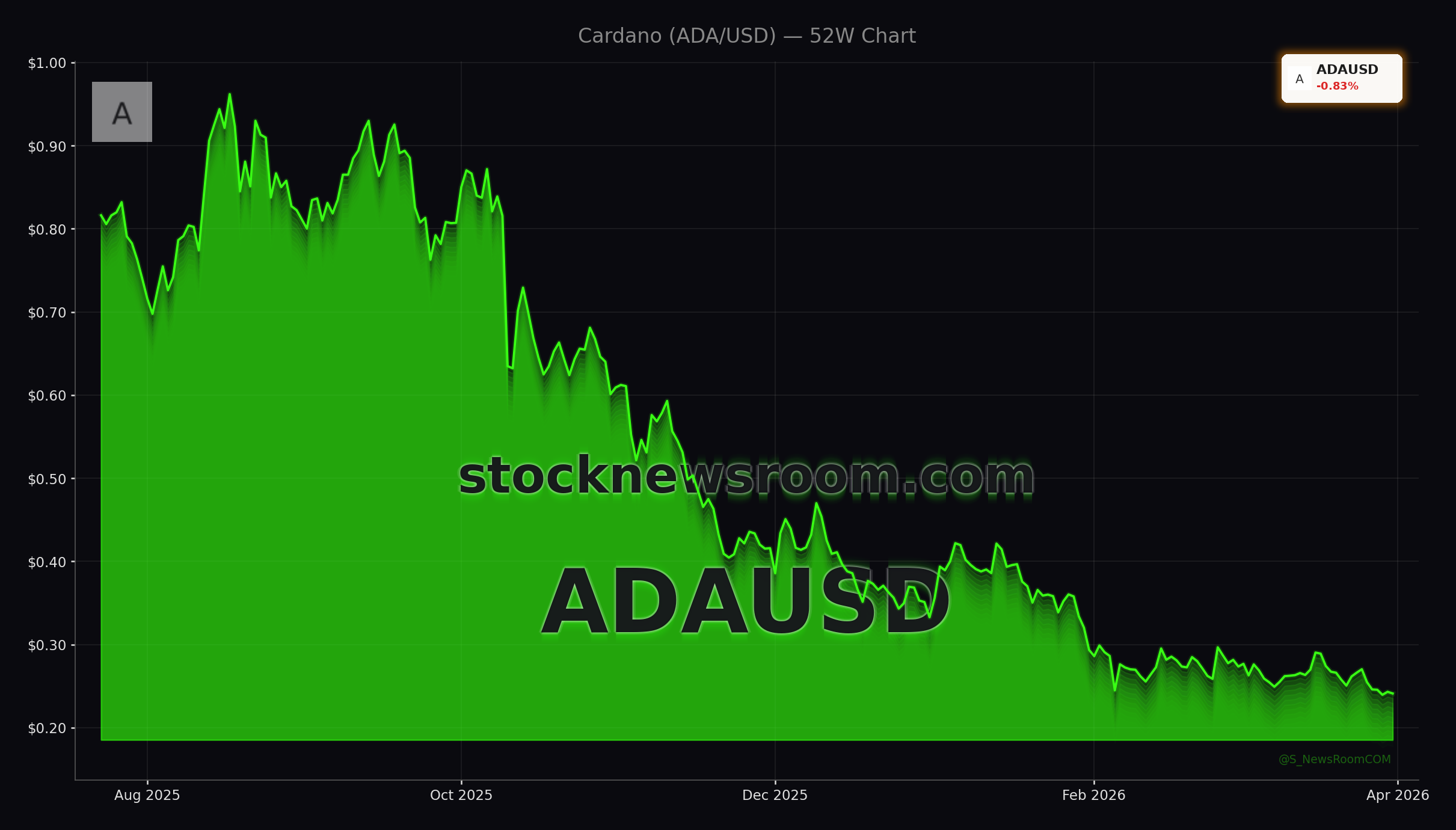
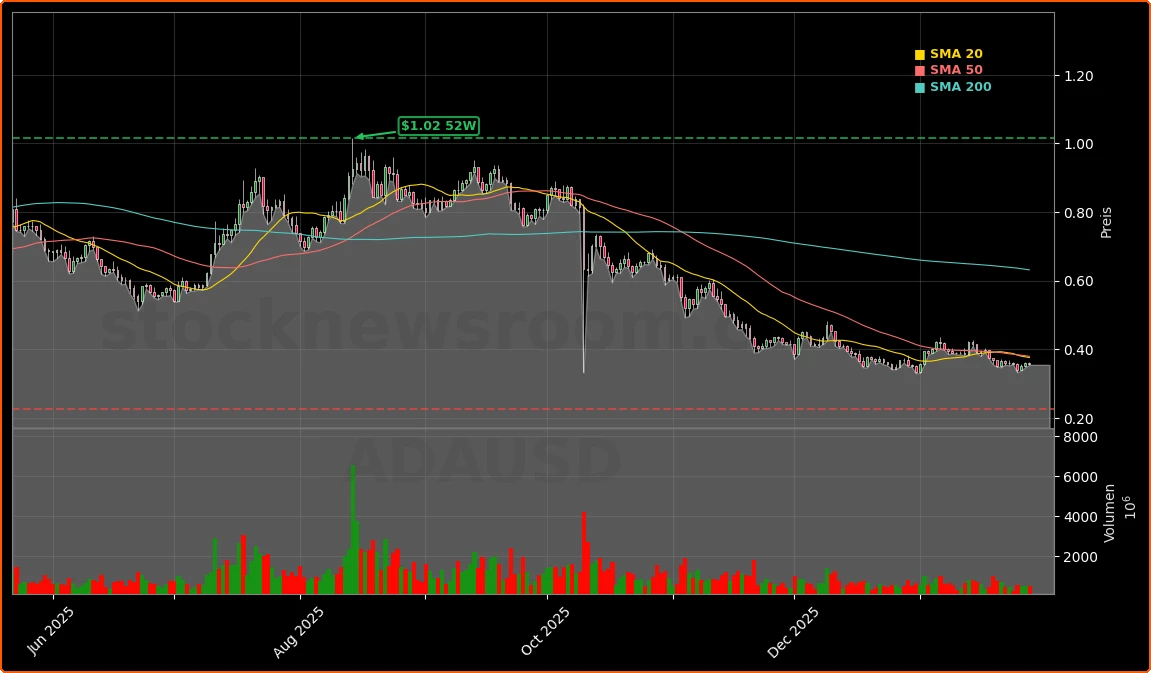
Cardano’s native token ADAUSD trades near $0.36, leaving the network valued at over $9.1 billion. Yet DeFi and fee metrics remain modest compared with similarly capitalized projects competing for investor capital on NASDAQ and beyond. Roughly $134 million in total value is locked in Cardano DeFi, with about $47 million in stablecoins and less than $2,000 in daily chain fees. Those figures highlight a persistent disconnect between expectations embedded in ADA’s market cap and the economic activity actually settling on-chain.
That disconnect matters for US investors assessing risk-reward relative to large-cap crypto names held by listed firms like Tesla, NVIDIA or Apple on their balance sheets. Unlike Bitcoin or Ethereum, Cardano’s narrative has leaned heavily on long-term governance, interoperability, and formal verification, but those strengths have not yet translated into broad DeFi or enterprise adoption. Cardano Midnight is explicitly designed as the missing piece, aiming to unlock privacy-sensitive, compliant applications that the base layer was never optimized to handle.
What makes Cardano Midnight different?
The Midnight Foundation brought the network online on March 29, with its genesis block dated March 17, positioning the chain as a privacy-first layer connected to Cardano’s existing infrastructure. Hoskinson frames the evolution as generational: Bitcoin delivered sound money, Ethereum added programmability, Cardano focused on governance and interoperability, and Cardano Midnight brings identity and privacy back into the stack. The pitch is that regulated institutions need a way to prove solvency, compliance, and ownership without exposing sensitive positions on a fully transparent ledger.
Architecture is built around shielded and unshielded assets plus private proofs, allowing selective disclosure rather than full transparency. A TypeScript-influenced smart contract language called Compact targets enterprise developers who already build in mainstream web stacks, lowering the friction compared with learning Solidity or Rust. For risk managers at US banks or payments firms that answer to the SEC and other regulators, the bigger draw may be Cardano Midnight’s dual-token model: NIGHT for governance and security, and DUST for fees, designed so that end users can be abstracted away from direct crypto exposure—an important feature for compliance teams.
How does it stack up against Aztec, Namada and Aleo?
Cardano Midnight is entering a crowded category of privacy-plus-compliance networks that all aim to attract the same institutional capital. Aztec combines public and private smart contract states with client-side proving, while Namada emphasizes privacy with viewing keys to enable selective disclosure. Aleo has pushed a privacy-by-default approach and recently announced the USAD stablecoin to explicitly target institutional settlement gaps.
Midnight’s main differentiator is its tight coupling with Cardano’s existing validator and staking ecosystem. Block production at launch runs on a federated operator model that includes names such as Google Cloud, Blockdaemon, MoneyGram, Pairpoint by Vodafone, eToro, Worldpay and Bullish. Those operators bring both regulatory experience and an installed base of customers already subject to KYC/AML rules. For Wall Street investors, that alignment with recognizable corporate brands may make Cardano Midnight appear more institutionally credible than pure-play privacy chains that lack similar partnerships.
Can Cardano Midnight attract regulated DeFi flows?
The broader macro backdrop supports the idea that private rails could matter. Institutional stablecoin volume has reached around $1.22 trillion, yet only a tiny fraction—roughly 0.0013%—currently settles on privacy-preserving infrastructure. At the same time, tokenized real-world assets tracked by RWA-focused platforms have grown to about $26.67 billion, with consulting firms like McKinsey projecting tokenized financial assets could scale toward $2 trillion by 2030. At that size, public ledgers that expose counterparties and positions can become incompatible with regulatory and competitive constraints.
Cardano Midnight is engineered to sit directly in that gap: it seeks to give asset managers, payment companies and banks a way to participate in on-chain markets without broadcasting their entire portfolio structure. If it succeeds, ADAUSD’s relatively low-fee environment could shift from a red flag to a latent opportunity, with new transaction flows eventually feeding back into Cardano’s main chain. For now, however, major US brokerages and banks have not publicly attached formal ratings or price targets to ADAUSD in the way Citigroup or Goldman Sachs routinely do for listed crypto proxies like Coinbase, leaving sentiment to be driven mainly by crypto-native traders and venture funds.
What’s the risk-reward for ADAUSD investors now?
From a portfolio perspective, ADAUSD remains a speculative bet compared with S&P 500 constituents or even crypto-exposed equities on the NYSE and NASDAQ. The network boasts roughly 672 active developers, signaling a meaningful builder base, but investors have yet to see that translate into robust fee revenue or blue-chip DeFi protocols. Cardano Midnight could change that trajectory if it manages to capture even a small share of institutional stablecoin or tokenized asset flows that currently favor more established chains.
Traders looking at ADAUSD around $0.36 have to weigh the optionality of this new privacy-chain against execution risk. If enterprise adoption of Cardano Midnight stalls, Cardano could remain a high-valuation network with light usage, vulnerable in risk-off phases. If, however, Google Cloud, Worldpay and other operators onboard real clients, the network could begin to justify its valuation and potentially re-rate, even without the kind of Wall Street analyst coverage that blue-chip crypto plays enjoy.
Related Coverage
Regulatory momentum around Cardano is another key factor for US investors. A recent analysis titled “Cardano Regulation Boom: Is ADA Entering a Capitulation Zone?” examines how a landmark regulatory win in Washington might offset heavy on-chain losses and extreme short positioning in ADA, adding context to today’s launch narrative. For a broader look at how traditional market infrastructure is converging with digital assets, the article “Coinbase AI Strategy: COIN’s 8.6% Rally and Agentic Bet” explores how Coinbase is using AI to build an edge in the emerging agentic economy, underscoring how listed US firms are positioning around crypto and blockchain technology.
In the end, Cardano Midnight represents a high-stakes attempt to close the gap between Cardano’s valuation and its real-world usage by making privacy and compliance first-class features. For ADAUSD holders and crypto-focused US investors, the chain’s early traction with institutional operators could decide whether Cardano evolves into a credible home for regulated DeFi or remains a promising but underutilized platform. The next phase will hinge on whether developers and enterprises actually deploy live applications on Cardano Midnight at scale.