Can a landmark Cardano Regulation win in Washington offset brutal on-chain losses and extreme short positioning in ADA?

Is Washington’s move on Cardano Regulation a game changer?
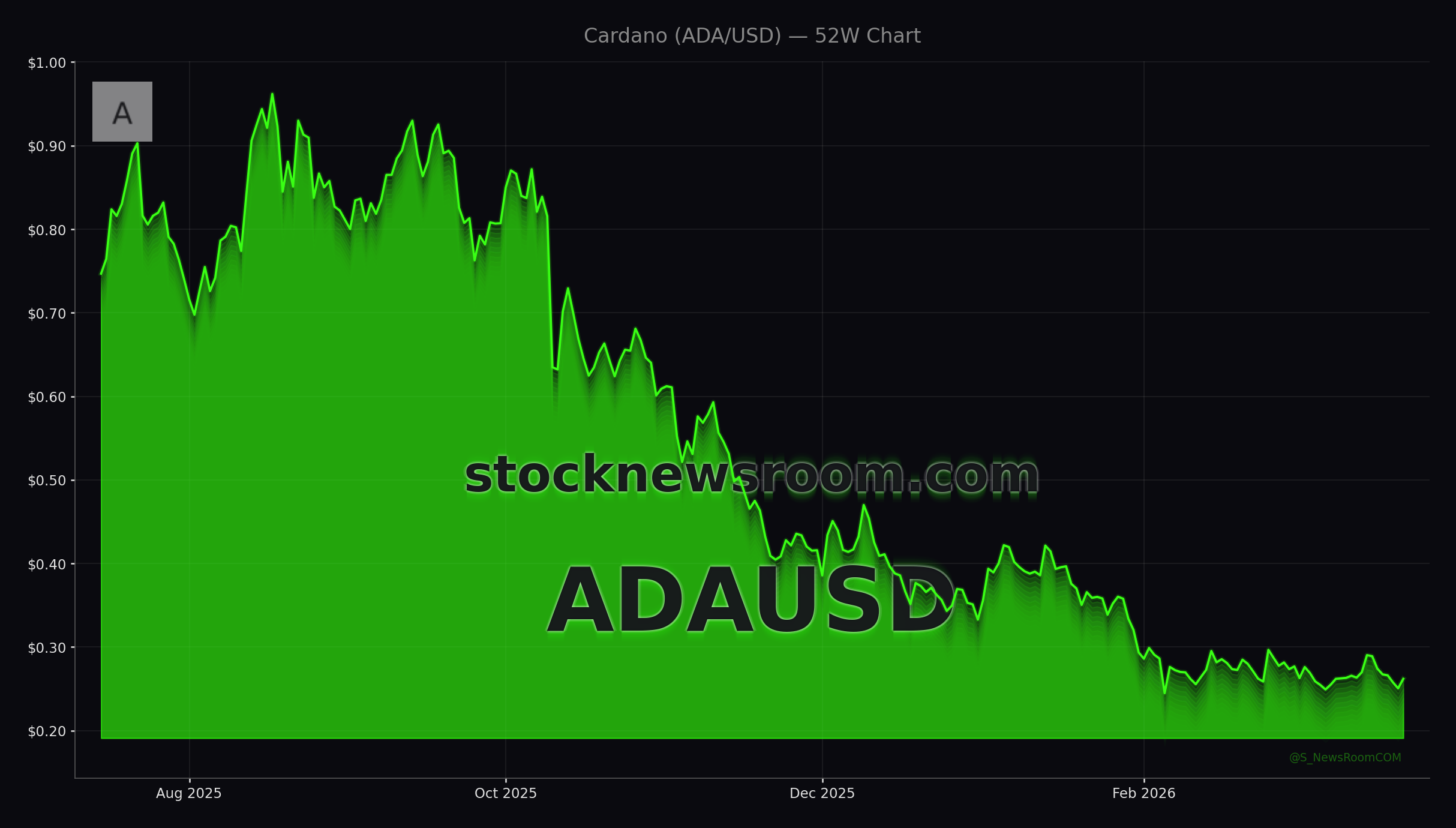
The SEC’s March 17 decision to treat Cardano’s native token ADA as a digital commodity rather than a security is one of the clearest regulatory signals yet for a major smart‑contract blockchain outside Bitcoin and Ethereum. In practical terms, this Cardano Regulation milestone removes a key overhang for U.S. investors worried about potential enforcement actions and listing risks on American platforms. While the token currently trades around $0.36 against the dollar (ADAUSD), the ruling could make it easier for U.S. brokerages, custodians and fintech apps to justify supporting ADA under existing commodity and derivatives frameworks.
For portfolio managers running diversified digital‑asset sleeves alongside S&P 500 or NASDAQ holdings, Cardano Regulation clarity narrows the perceived regulatory gap between ADA and larger networks like Ethereum. However, the absence of an immediate price reaction underscores how structurally important but slow‑burning such regulatory shifts can be. Many investors are still prioritizing liquidity, developer traction and ecosystem revenues over legal status alone.
Why is Cardano so deep in the red?
Despite the positive Cardano Regulation backdrop, on‑chain data highlight just how painful the last year has been for ADA holders. Analytics from Santiment show that wallets active over the past 12 months are sitting on an average return of around -43%. That extreme negative Market Value to Realized Value (MVRV) means most recent participants are underwater, which often coincides with washed‑out sentiment and so‑called “capitulation zones.”
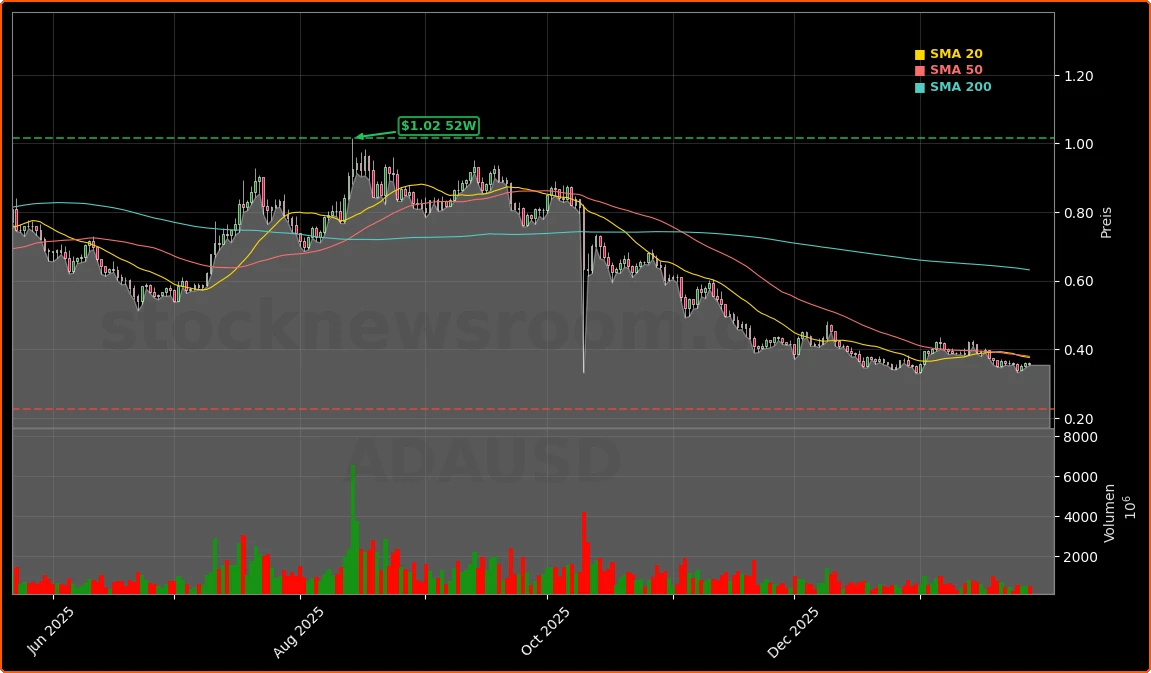
In MVRV terms, crypto assets tend to mean‑revert toward 0% average returns across timeframes, making deeply negative prints historically associated with improved risk‑reward for long‑term buyers. ADA itself has dropped roughly 71% from levels seen in September, even after the SEC’s commodity designation. For U.S. investors who bought during 2023 optimism around smart‑contract platforms, the combination of drawdowns and high opportunity costs versus large‑cap tech stocks like NVIDIA or Apple has been stark.
Still, the same metrics that reflect heavy losses are being interpreted by some institutional desks as a contrarian signal. In a zero‑sum market structure, deeply negative realized returns can suggest that most weak hands have already sold, leaving marginal selling pressure lower just as regulation and fundamentals stabilize.
Are shorts signaling a bottom for Cardano?
Derivatives positioning adds another layer to the picture. Cardano’s perpetual futures funding rate on Binance currently shows the highest ratio of short positions to longs since June 2023, signaling that traders are aggressively positioning for further downside. Historically in crypto, extreme one‑sided positioning has often coincided with local bottoms, as any positive catalyst can trigger a short squeeze.
For U.S.-based speculators trading on offshore venues as well as regulated products, this backdrop means risk is skewed: further negative headlines or macro shocks could accelerate declines, but any upside surprise—such as stronger DeFi traction, a major partnership or broader crypto rotation back into layer‑1s—could force shorts to cover quickly. Unlike mega‑cap NASDAQ constituents such as Tesla, Cardano does not yet have a deep options market, which can make directional futures positioning more volatile and disorderly when sentiment flips.
How strong is Cardano’s DeFi and ecosystem growth?
Under the surface, network usage data look more resilient than the price chart suggests. Total Value Locked (TVL) across Cardano DeFi protocols stands near 518.6 million ADA, representing roughly 35.7% growth over the past six months, even as the broader crypto market has faced risk‑off phases. That expansion indicates developers and users continue to deploy capital into Cardano’s ecosystem, building out lending, decentralized exchanges and staking strategies.
For multi‑asset managers who already hold Ethereum and Solana exposure, this DeFi growth is key to evaluating whether ADA belongs in the same bucket of scalable smart‑contract plays. While Cardano lacks the sheer transaction volume of Ethereum and the brand awareness of Meta-linked metaverse narratives, steady TVL increases suggest a base of committed users that could benefit disproportionately if risk appetite returns to altcoins.
Long‑term forecasts remain conservative but constructive. CoinCodex modeling suggests ADA could trade near $0.39 by the end of 2026, implying roughly 50% upside from current levels, with modest additional gains projected into 2030 and 2040. These projections are far from the parabolic targets often seen during crypto bull markets, but they align with a scenario in which regulatory clarity, gradual ecosystem growth and normalized MVRV drive a more measured recovery.
For now there is little evidence of a decisive Wall Street call on ADA comparable to high‑profile ratings from Goldman Sachs or Citigroup on equities or Bitcoin proxies. Most traditional research desks remain focused on listed crypto miners and exchange stocks instead of individual layer‑1 tokens.
This extreme negative MVRV value is generally an indicator of ADA being in an ‘opportunity’ or ‘buy’ zone.— Santiment on-chain analytics team
In conclusion, Cardano Regulation progress in the U.S. has arrived just as sentiment and returns hit some of their bleakest levels, creating a stark disconnect between legal clarity and market pricing. For investors, that mix of negative MVRV, crowded shorts and rising DeFi TVL may point to a higher‑risk but potentially asymmetric setup. The coming quarters will show whether Cardano Regulation and on‑chain adoption are enough to shift ADA from a laggard into a credible recovery story in diversified crypto and multi‑asset portfolios.