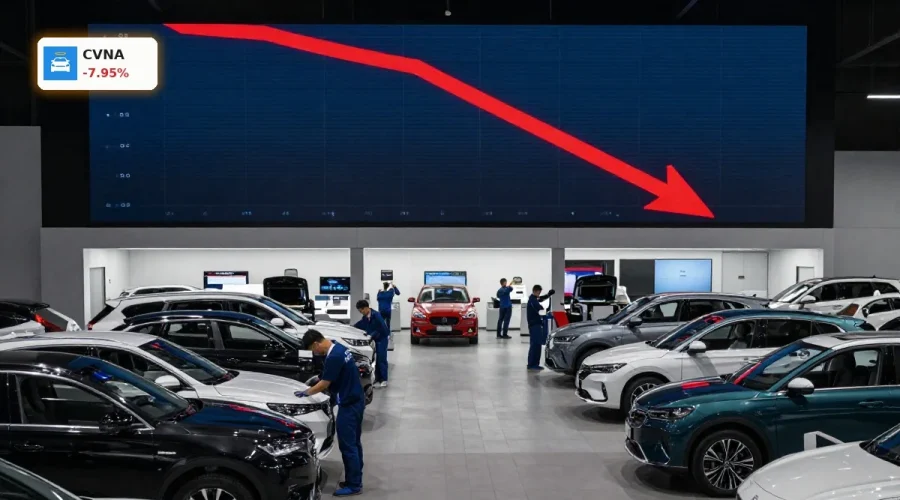
Is the margin shock in the current Carvana quarter just a blip – or the beginning of a risky growth bet?
Carvana Quarter: How Strong Was the Growth?
In the latest Carvana quarter, Carvana Co. impressively continued its growth story. Revenue surged in the fourth quarter to approximately $5.6 billion, representing a jump of about 58% year-over-year and clearly exceeding market expectations. Retail sales also saw a significant increase: retail sales reached 163,000 to 163,522 vehicles, substantially above the expected roughly 157,000 units. This corresponds to an increase of about 43% to nearly 60% compared to the previous year, underscoring the strong demand for the online model in used car purchases.
At the same time, the average selling price per vehicle rose to over $25,000, further fueling revenue. As a result, Carvana Co. continues to gain market share in the fragmented U.S. used car market. In the entire year of 2025, the company already sold approximately 597,000 retail vehicles – an increase of over 43%.
Carvana: Where Does the Margin Pressure Come From?
The downside of strong growth was evident in the same Carvana quarter regarding profitability. Adjusted EBITDA amounted to $511 million, significantly below the analyst expectations of $535 to $536 million. The adjusted EBITDA margin only reached around 9.1% to 10.1%, also missing forecasts of over 10%.
In particular, the costs for inspection, repair, and reconditioning of vehicles rose significantly. The gross profit per unit fell to about $6,562, remaining below the consensus of $6,823. CEO Ernie Garcia attributed the development to higher reconditioning costs in newly integrated locations, lower efficiency in centers with inexperienced management, and additional write-downs on aggressively built inventory. Additionally, advertising expenses in the quarter increased by more than 60% to further drive demand growth.
Carvana Co.: How Are Investors and Analysts Reacting?
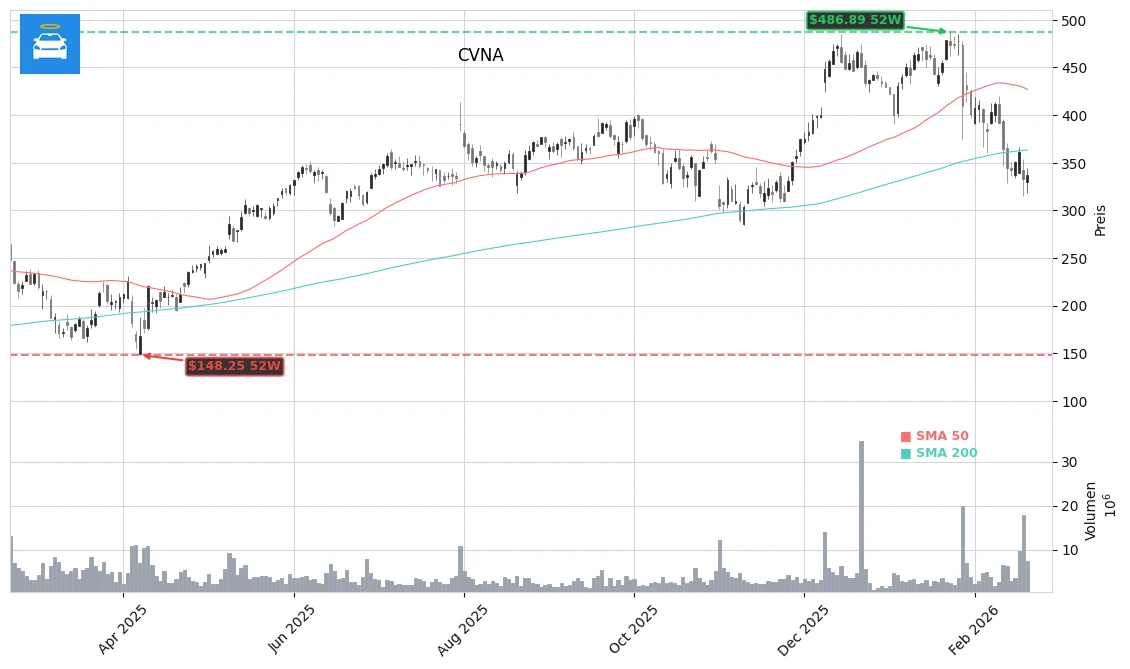
The margin decline in the Carvana quarter triggered a significant stock reaction. After temporary drops of up to 20% in after-hours trading, the stock is currently priced at $332.79, about 7.95% lower than the previous day. Over the month, Carvana has reportedly lost over 20% in value, having traded well above $470 at the end of January.
At the same time, the analyst community remains divided. Wedbush Securities maintains its “Outperform” rating but lowered the 12-month price target from $500 to $425, citing ongoing short-term margin pressure. BTIG analyst Marvin Fong also confirms his buy recommendation but reduces the price target from $535 to $455, emphasizing that investors need to price in Carvana’s willingness to sacrifice margins for market share gains.
Citigroup has also cut its price target to $465 and points to the recent high volatility of the stock. Meanwhile, some firms like Morgan Stanley still see an attractive risk-reward profile and highlight Carvana Co.‘s strong positioning as the fastest-growing and most profitable car dealer in the U.S. market.
Carvana Quarter: What Does the Outlook Say?
In the outlook, management was cautious with specific numbers in the Carvana quarter, which further increased pressure on the stock. For the first quarter of 2026, CEO Ernie Garcia does anticipate sequential growth in both units sold and adjusted EBITDA, but Carvana does not provide specific targets for Q1. The market had previously expected an EBITDA of around $671 million and nearly 175,500 vehicles sold.
Year-over-year, Carvana Co. expects “significant growth” in units and EBITDA. Analysts at Wedbush now project annual revenue of around $26.9 billion and an adjusted EBITDA of about $3 billion, which would correspond to a margin of around 11.2%. Long-term, Carvana remains committed to its ambitious goal of selling 3 million vehicles annually in retail and achieving an adjusted EBITDA margin of 13.5% between 2030 and 2035.
Additional uncertainty arises from legal and reputational risks. Short-seller allegations regarding the relationship with sister company DriveTime and an ongoing investigation by a law firm for potential securities violations create headwinds and fuel skepticism among market participants who have been critical of the stock’s rapid rise.
We are the fastest-growing and most profitable car dealer – the path to 3 million cars per year with a 13.5% EBITDA margin by 2030–2035 is clear.
— Ernie Garcia, CEO of Carvana Co.
Bottom Line
The current Carvana quarter combines strong growth with clearly visible growing pains, forcing investors to reassess the risk profile. For investors, it remains crucial whether management can quickly get a handle on the high reconditioning and marketing costs and whether the targeted margins are truly achievable. If profitability stabilizes, the current correction at Carvana Co. could mark a new entry opportunity in the long term.
Related Sources
- Carvana Co. (CVNA) on Yahoo Finance (Yahoo Finance)
- Carvana Q4 Earnings Beat on Higher-Than-Expected Vehicle Sales (Zacks Investment Research)
- Carvana: Bank trims target to $425 but keeps ‘outperform’ on long term margin case (Proactive Investors)
- What’s Happening With Carvana Stock? (Forbes)