Can the Chevron Energy Project turn a wartime oil windfall into a long-term AI power moat even as CVX slips -1.8%?

How is Chevron trading after oil’s pullback?
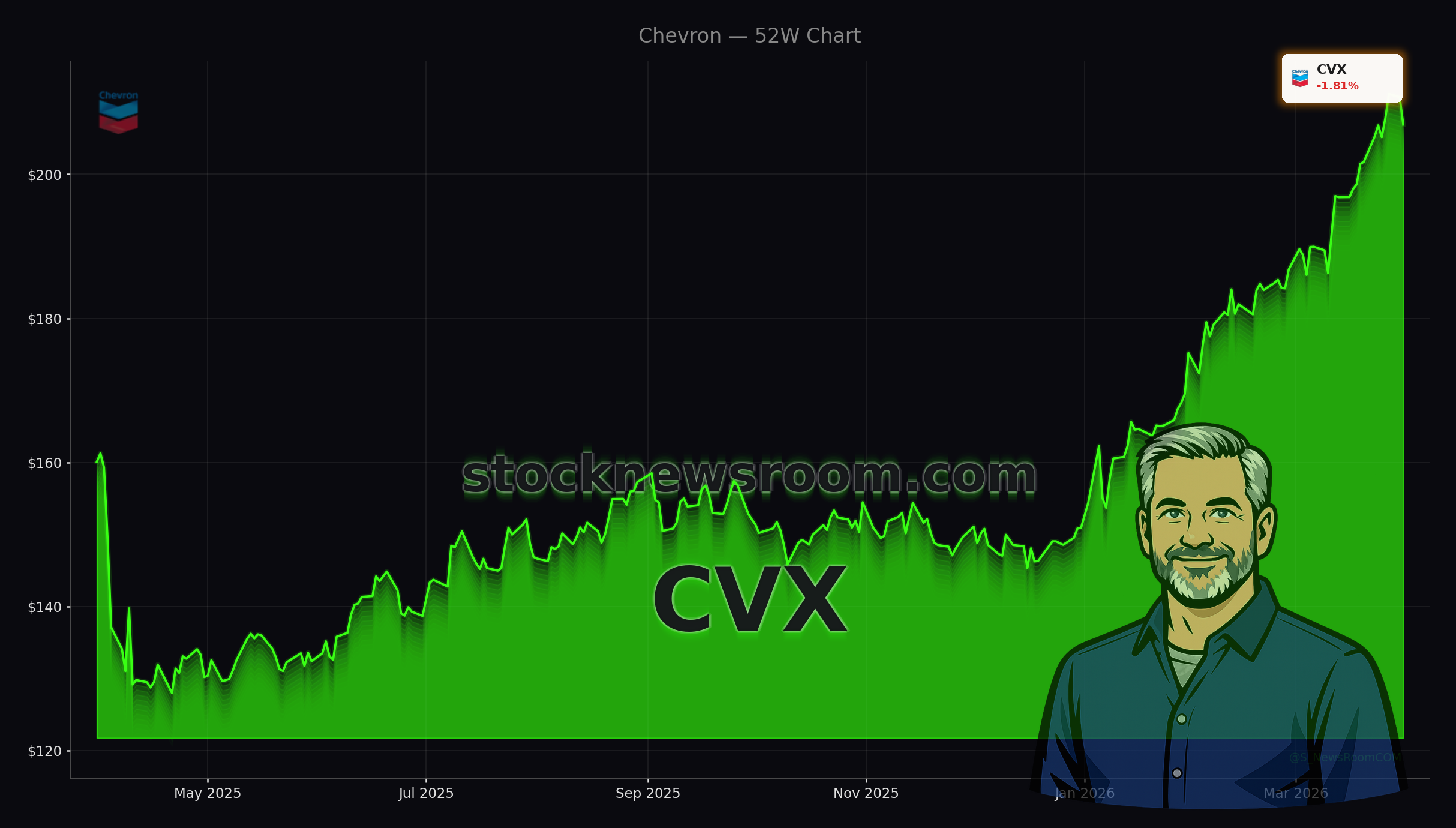
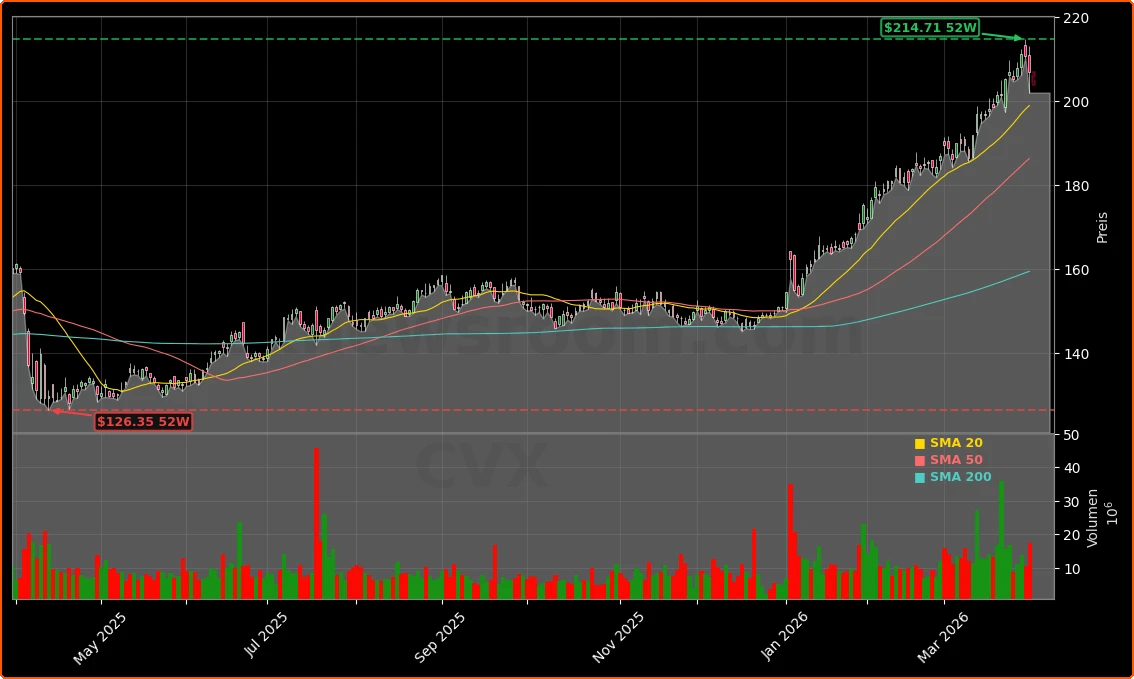
Chevron Corporation closed Tuesday at $206.90, down 1.81% on the day and lagging the S&P 500, after a sharp rally that pushed the stock to a record high in March. In early Wednesday pre-market action, shares are indicated about 1.5% lower around $203.70 as traders price in the possibility that the Iran conflict could ease in coming weeks and oil prices could retreat. Even after the pullback, Chevron is up roughly 36% year to date, boosted by a historic supply disruption and a powerful rotation out of expensive growth names into cash-generative energy stocks.
Benchmark crude prices spiked after U.S. and Israeli forces launched operations against Iran on Feb. 28, prompting Tehran to shut the Strait of Hormuz to most exports. Roughly 20% of the world’s seaborne liquid petroleum normally flows through that chokepoint, and the sudden disruption has driven a surge in profits for U.S. producers and refiners. Chevron’s upstream drilling segment is benefiting from higher realized prices, while its refining and chemicals units enjoy wide crack spreads as Asian refiners scramble for feedstock.
Why does the Chevron Energy Project matter for AI power?
At the same time, the Chevron Energy Project in West Texas is opening a new strategic front for the company: dispatchable power for hyperscale AI infrastructure. Chevron, Microsoft and activist investment firm Engine No. 1 have signed an exclusivity agreement for a natural gas-fired power plant expected to cost about $7 billion and deliver roughly 2,500 megawatts of electricity. That would make it one of the largest gas plants in the United States, aimed squarely at powering Microsoft’s next wave of AI data centers.
For Wall Street, the Chevron Energy Project is significant on several levels. It anchors long-dated demand for Chevron’s gas and midstream capacity, creates a recurring cash-flow stream from power sales, and ties the traditional oil major directly into the AI build-out that has driven stocks like NVIDIA and Apple to towering valuations. Unlike intermittent renewables, a large combined-cycle gas plant can run around the clock with high reliability, exactly what AI data centers require. The partnership also moderates Chevron’s carbon profile relative to coal-heavy grids, aligning with institutional ESG mandates without abandoning hydrocarbons.
How are Iran war risks reshaping Chevron’s outlook?
The Iran war and the closure of the Strait of Hormuz have been the dominant macro driver for Chevron and peers such as Exxon Mobil and Tesla’s energy competitors in recent weeks. With a significant slice of global exports offline, U.S.-based integrated majors are commanding higher margins and increased strategic importance for Western energy security. Chevron’s upstream portfolio, which spans shale, deepwater and LNG, is positioned to fill part of the supply gap, while its refineries and chemical plants help stabilize product markets.
However, this is a double-edged sword. President Trump’s recent comments that U.S. forces could begin withdrawing from Iran within two to three weeks triggered an immediate pullback in oil prices and in shares of Chevron and Exxon Mobil. The scenario analysis for investors is stark: a prolonged conflict could keep prices and profits elevated but raise geopolitical and regulatory risk, while a rapid détente could pressure margins even as demand remains resilient. The integrated model—combining production, transport and refining—gives Chevron a partial hedge, but volatility will likely stay high as long as the Gulf remains unstable.
What does Warren Buffett’s Chevron stake signal?
Amid this turmoil, Warren Buffett’s Berkshire Hathaway has quietly built Chevron into one of its largest holdings, recently adding about 8.1 million shares in the fourth quarter and lifting the position to nearly $20 billion. Buffett started increasing the stake well before the first shots were fired in Iran, underscoring that his thesis is less about short-term war profits and more about durable free cash flow, disciplined capital allocation and shareholder returns.
Chevron has raised its dividend for 39 consecutive years and aggressively repurchased stock, shrinking its share count by nearly 12% over time. With strong free cash flow at current oil prices, management has signaled it will keep leaning into buybacks and payouts, a profile that appeals to income-focused investors comparing CVX with broad energy ETFs or with individual names like NVIDIA on the growth side of a barbell portfolio. While major Wall Street banks such as Goldman Sachs and Morgan Stanley continue to highlight integrated oils as core inflation hedges, Chevron’s combination of dividend yield, balance sheet strength and the Chevron Energy Project gives it a differentiated story within the sector.
How does Chevron stack up against other energy plays?
For U.S. investors assessing sector exposure, Chevron and Exxon Mobil remain the flagship integrated choices, with both names benefiting from robust free cash flow and long dividend growth streaks. Analysts at Zacks Investment Research argue that holding Chevron and Exxon is still worthwhile thanks to their low-cost assets and advantaged positions in a tight market. Meanwhile, energy-focused ETFs such as Vanguard Energy are up nearly 40% this year, roughly matching Chevron’s performance but offering broader diversification across producers, refiners and midstream operators.
That comparison highlights a key question: is it better to own a basket of energy names or to concentrate in a high-quality operator like Chevron? Supporters of CVX point to its visible project pipeline, including the Chevron Energy Project, its disciplined capital spending and its ability to generate returns across the full commodity cycle. ETF buyers, by contrast, accept lower single-name risk in exchange for exposure to a wider range of outcomes, including smaller E&P companies that can outperform in a prolonged price spike but carry higher operational risk.
Related Coverage
Investors looking for a deeper dive into how Gulf chokepoint risk could shape cash flows through 2030 can review our detailed analysis in Chevron Energy Strategy +1.6% Rally Faces Risk Warning, which examines scenario outcomes around the Strait of Hormuz and Chevron’s long-term capital plans. The same article, available at Chevron Energy Strategy +1.6% Rally Faces Risk Warning, also explores how integrated majors might convert today’s volatility into more predictable shareholder returns.
Overall, the Chevron Energy Project, the shock from the Iran war and Buffett’s sizable bet combine to keep Chevron at the center of Wall Street’s energy debate. For U.S. portfolios, CVX remains a liquid, dividend-paying way to gain exposure to both traditional oil profits and the emerging AI power build-out. The next few quarters will show whether Chevron can turn this unique mix of geopolitical risk and structural demand into sustained value creation.