
Can the new Coinbase Australia License turn a Bitcoin‑linked exchange into a regulated “everything platform” for global crypto and equities?

How does the Coinbase Australia License change the story?
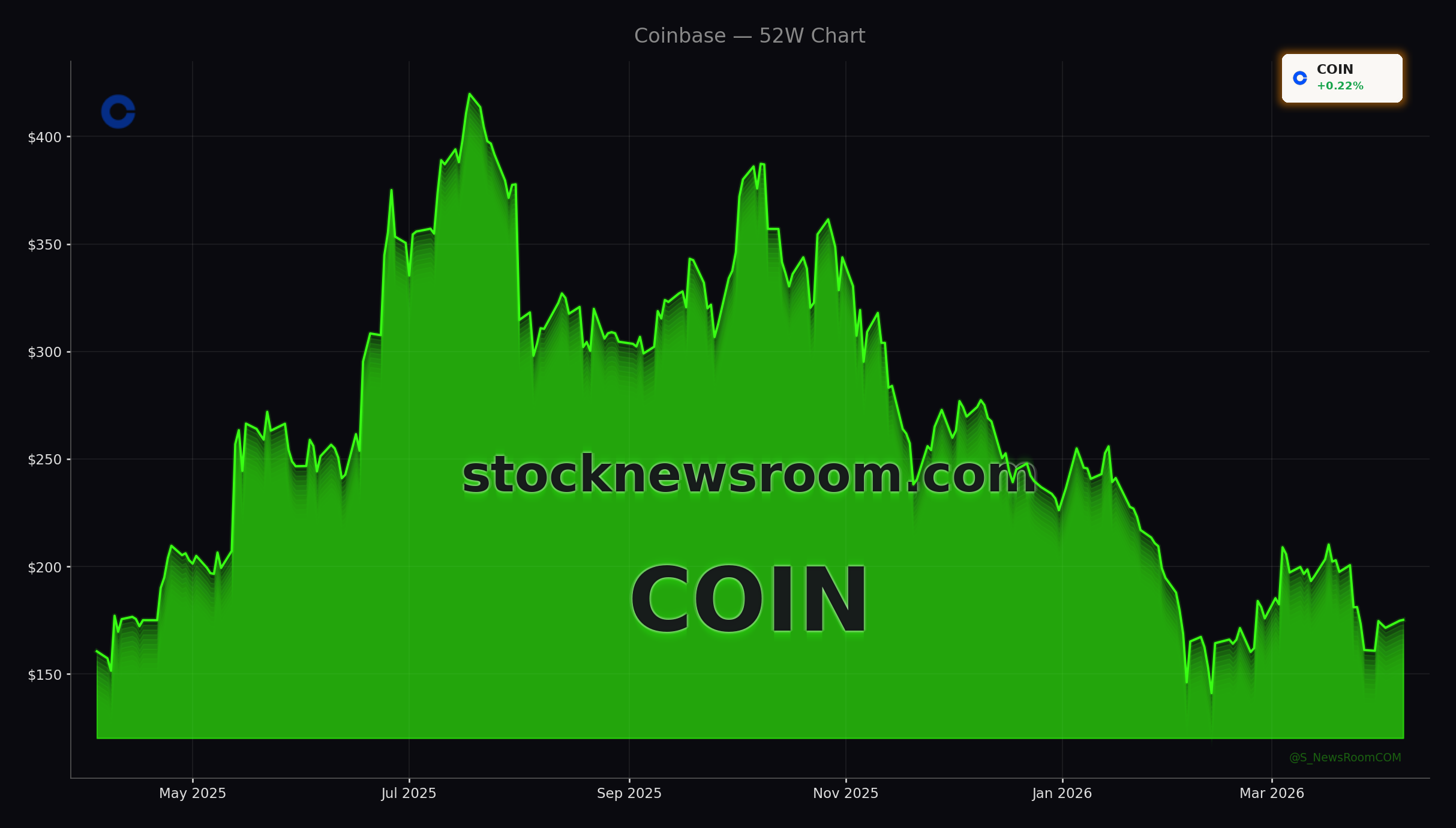
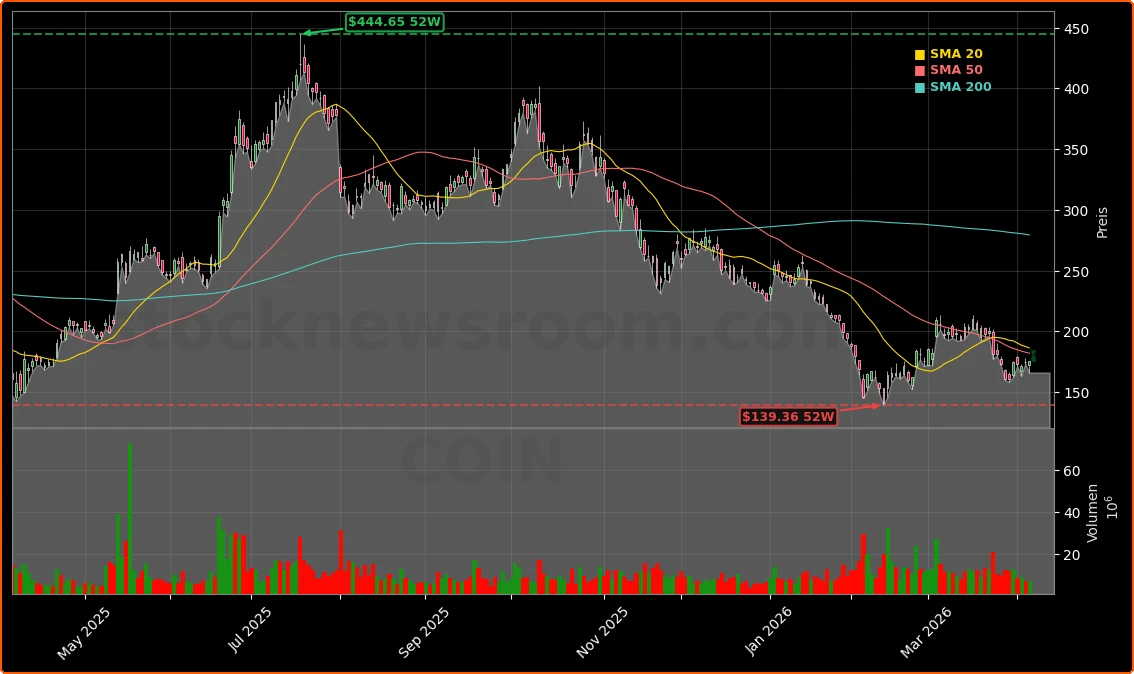
Coinbase shares trade around $175.18 in regular hours, with pre-market indications near $184, modestly above the previous close of $183.99. While the stock remains highly correlated with Bitcoin’s price cycles, the Coinbase Australia License introduces a new growth vector: regulated derivatives and equity-linked products in one of the world’s more mature retirement and payments markets. Australia has become a strategic test bed for blending digital assets with traditional securities, including 24/5 access to ETFs such as the Procure Space ETF (UFO), which can already be traded on Coinbase’s platform and has logged strong performance in recent years.
The AFSL, granted by the Australian Securities and Investments Commission, comes with retail derivatives authorization, making Coinbase the first major global crypto exchange to receive this approval directly from Australian regulators. Initially, the local platform will focus on crypto and equity perpetual swaps, but management has outlined a roadmap that includes a broader suite of futures, options and eventually stock trading and payment services.
What is Coinbase’s ‘everything exchange’ vision?
John O’Loghlen, regional managing director for APAC at Coinbase Global, Inc., described the goal as building an “everything exchange” that can compete head-to-head with traditional brokers and payment firms. The Coinbase Australia License is the regulatory backbone for this plan, subjecting the platform to the same conduct, disclosure, governance and consumer-protection standards as conventional financial institutions in the country. That alignment should reduce regulatory overhang risk for COIN shareholders and may support higher valuation multiples if execution follows.
Australia’s Corporations Amendment (Digital Assets Framework) Bill 2025, which passed Parliament and awaits royal assent, will require exchanges to operate under a license similar to the AFSL within 12 months of coming into force. Coinbase’s early-mover status positions it to capture market share as the regulatory bar rises, while smaller rivals could face higher compliance costs. The company is hiring across legal, compliance, marketing and operations locally, drawing talent from other regulated industries, which underscores the seriousness of the push.
How big is the Australian opportunity for Coinbase?
Independent data suggest roughly one-third of Australians already have some exposure to crypto, in a country where the population exceeds 27 million and total superannuation assets are around A$4.5 trillion. Coinbase and OKX have already tapped that pool by enabling self-managed superannuation funds to allocate to digital assets, effectively inserting crypto into the core of Australia’s retirement system. The Coinbase Australia License now allows the company to overlay derivatives and equity products on top of this base, tapping into both speculative trading and long-term portfolio construction.
At the same time, the broader digital asset ecosystem is converging with traditional payments. A recent report on stablecoins highlighted that dollar-pegged tokens processed about $33 trillion in transaction volume in 2025 and could exceed $50 trillion by 2026, with business-to-business payments leading adoption. As stablecoins migrate into mainstream settlement rails and institutions like Morgan Stanley roll out spot Bitcoin ETFs on NYSE Arca, the concept of a unified venue for crypto, stablecoins and securities trading becomes more tangible. Coinbase’s Australian build-out fits that macro trajectory.
How does this impact COIN versus competitors?
On Wall Street, Coinbase is often compared with mega-cap tech and fintech names such as Apple and NVIDIA, as well as crypto-adjacent innovators like Tesla, because all sit at the intersection of high-growth technology themes and regulatory scrutiny. However, unlike big tech platform stocks, Coinbase’s revenue mix is still dominated by trading fees in a volatile asset class. The Coinbase Australia License may help diversify that profile over time by adding regulated derivatives, equity products and payment revenue in a developed market.
From a competitive standpoint, Coinbase’s direct licensing differentiates it from global rivals that rely on local partners or more lightly regulated regimes. The AFSL’s retail derivatives authorization should help Coinbase attract more sophisticated traders who demand regulatory clarity when deploying leverage in products like perpetual futures. In the U.S., institutional interest continues to build, exemplified by Morgan Stanley’s pending spot Bitcoin ETF launch with a fee structure designed to undercut peers. As more capital flows into compliant channels, exchanges that have aligned with stronger regulatory frameworks may be favored counterparties.
What should investors watch next?
For U.S. investors, COIN remains a high-beta, crypto-levered stock listed on NASDAQ, but the Coinbase Australia License adds an element of geographic and product diversification. Key variables to watch include the pace at which Australian users adopt equity and crypto perpetuals, the regulatory rollout of the Digital Assets Framework Bill, and whether Coinbase can replicate the “everything exchange” template in other Asia-Pacific markets. The company’s participation in the Digital Economy Council of Australia and its investment in local teams suggest it is preparing for a long-term role in the region rather than a tactical experiment.
Analyst sentiment on COIN has reflected both the upside of these strategic moves and the downside of crypto market drawdowns, with large U.S. banks like Morgan Stanley and Citigroup highlighting that regulatory clarity could be a medium-term catalyst even as short-term price action tracks Bitcoin. For diversified portfolios that already hold large-cap tech and fintech names, Coinbase’s Australian expansion could offer incremental exposure to the ongoing convergence of digital assets, equities and payments.
Related Coverage
For a deeper dive into how regulation could transform Coinbase into a broader financial institution, see this analysis of Coinbase’s bank charter ambitions and the CLARITY Act, which examines whether a trust license can push COIN beyond a pure crypto exchange. Investors tracking sector-wide risk should also read our coverage of the $200 million Drift exploit on Solana DeFi, which highlights how security incidents can ripple across leveraged trading and sentiment in the broader digital asset market.
Thoughtful regulation is good for customers, good for the industry and good for Australia’s ambition to be a leading digital economy in the Asia-Pacific region.— John O’Loghlen, APAC Managing Director at Coinbase
The Coinbase Australia License ultimately underscores how regulation is becoming a competitive weapon rather than just a cost of doing business. For investors in COIN, the AFSL opens a path toward an “everything exchange” model that blends crypto, equities and payments under one regulated roof. The next chapters in Australia and beyond will show whether Coinbase can convert this regulatory head start into durable revenue growth and a more resilient, multi-asset franchise.