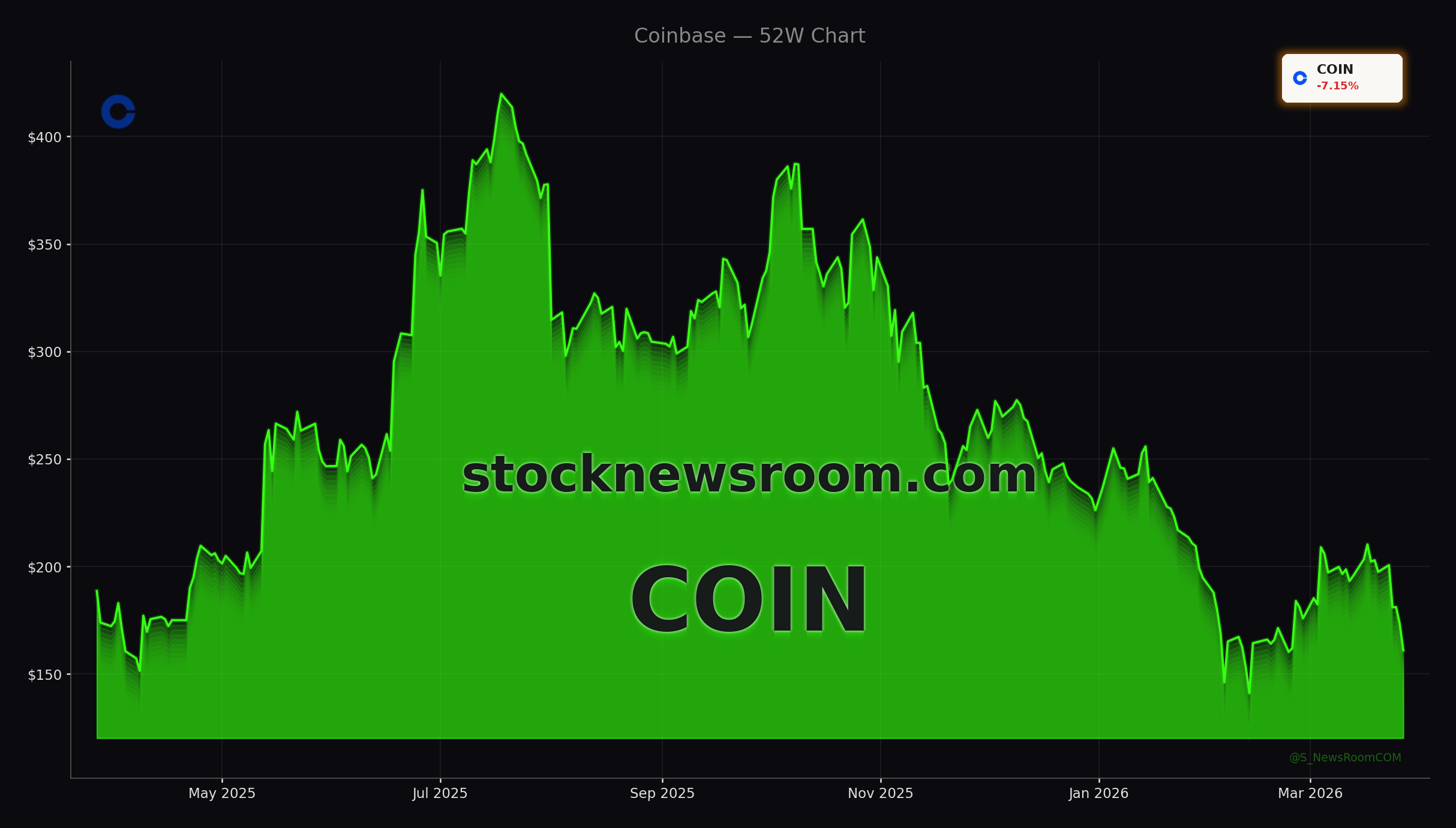

Can Coinbase Mortgages turn crypto volatility into a stable path onto the U.S. property ladder just as COIN drops sharply?

How do Coinbase Mortgages actually work?
The new Coinbase Mortgages structure, launched with Better Home & Finance, lets U.S. homebuyers use Bitcoin and USD Coin (USDC) held on Coinbase as collateral for their down payment instead of selling. Technically, borrowers take out two loans: a standard conforming mortgage that Fannie Mae can buy, and a separate overcollateralized crypto-backed loan funding the down payment. In a typical example, a buyer pledges $250,000 in BTC into Coinbase custody to unlock a $100,000 down payment loan on a $500,000 home, while the primary $400,000 mortgage looks like any other Fannie Mae–eligible loan.
Crucially, there are no margin calls if Bitcoin drops; terms stay fixed unless the borrower is 60 days delinquent, mirroring conventional mortgage rules. The crypto is returned once the down payment loan is repaid or refinanced. Rates on these token-backed structures run roughly 0.5 to 1.5 percentage points above a standard 30‑year mortgage, reflecting added complexity and risk.
What does this mean for Coinbase and competitors?
For Coinbase, the partnership extends its platform from trading into long‑dated credit relationships, potentially stabilizing fee income compared with pure volume‑driven exchange rivals like OKX. It also deepens relationships with institutional players such as Fannie Mae and Better, positioning the exchange as infrastructure for tokenized finance rather than just a spot‑trading venue. The move comes as corporate treasuries experiment with pledging Bitcoin for yield, illustrated by GameStop’s decision to hand thousands of BTC to Coinbase for a covered‑call strategy, giving the exchange more balance‑sheet optionality.
On Wall Street, COIN has become a lower‑beta proxy on the broader crypto complex, similar to how NVIDIA gives equity investors exposure to AI infrastructure. While no major bank has tied a fresh rating directly to Coinbase Mortgages yet, existing coverage from firms like Goldman Sachs and Morgan Stanley already frames Coinbase as a central beneficiary of increasing institutional crypto adoption, from spot Bitcoin ETFs to tokenized assets.
How does the stablecoin rewards fight affect Coinbase Mortgages?
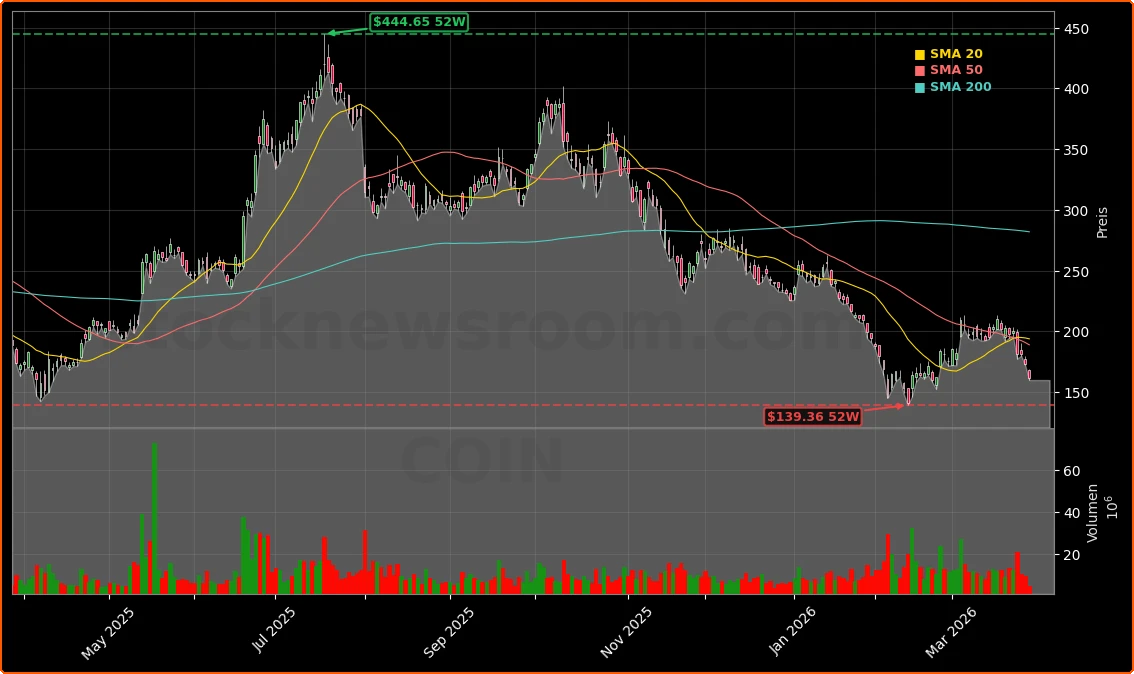
In Washington, the CLARITY Act dispute over passive stablecoin rewards remains a key overhang. Banks want to shut down yield on idle stablecoin balances, while exchanges argue that banning rewards is anti‑competitive and hurts user growth. Draft language that might restrict rewards knocked Coinbase stock by around 10% when it first surfaced, underscoring how sensitive COIN remains to regulatory headlines.
While the new Coinbase Mortgages product centers on Bitcoin and USDC as collateral rather than yield, any clampdown on stablecoin economics could indirectly reduce on‑platform balances that feed into lending and custody businesses. For growth‑oriented investors who already own crypto or high‑beta names like Tesla, the trade‑off is clear: long‑term upside from tokenized credit markets versus near‑term volatility tied to Capitol Hill negotiations.
Related Coverage
Investors tracking COIN’s broader risk profile may want to read how aggressive options strategies and regulatory leverage are reshaping the exchange’s earnings mix in “Coinbase Crypto Strategy -6.6%: Regulation and Options Shock”, which dives into derivatives flows, rehypothecation risk and the stock’s reaction to policy headlines. For a sector comparison within digital assets, “Ripple Market Analysis: Is the $10 XRP Dream or Crash Risk?” examines whether XRP’s post‑SEC pullback is a contrarian entry point or a warning sign for altcoin‑exposed portfolios.
In sum, Coinbase Mortgages mark a significant step in turning crypto wealth into conventional homeownership without forced selling. For U.S. investors, COIN now offers exposure not only to trading and custody but also to the long‑duration economics of the housing market. The next few quarters will show whether this product scales into a meaningful revenue stream and how it weathers the stablecoin standoff in Washington, making Coinbase a name to watch alongside mega‑caps like Apple in diversified growth portfolios.