
Can looming Coinbase Stablecoin Regulation turn today’s sharp sell-off into the start of a steadier, yield-driven business model?

Is Coinbase Stablecoin Regulation now the main catalyst?
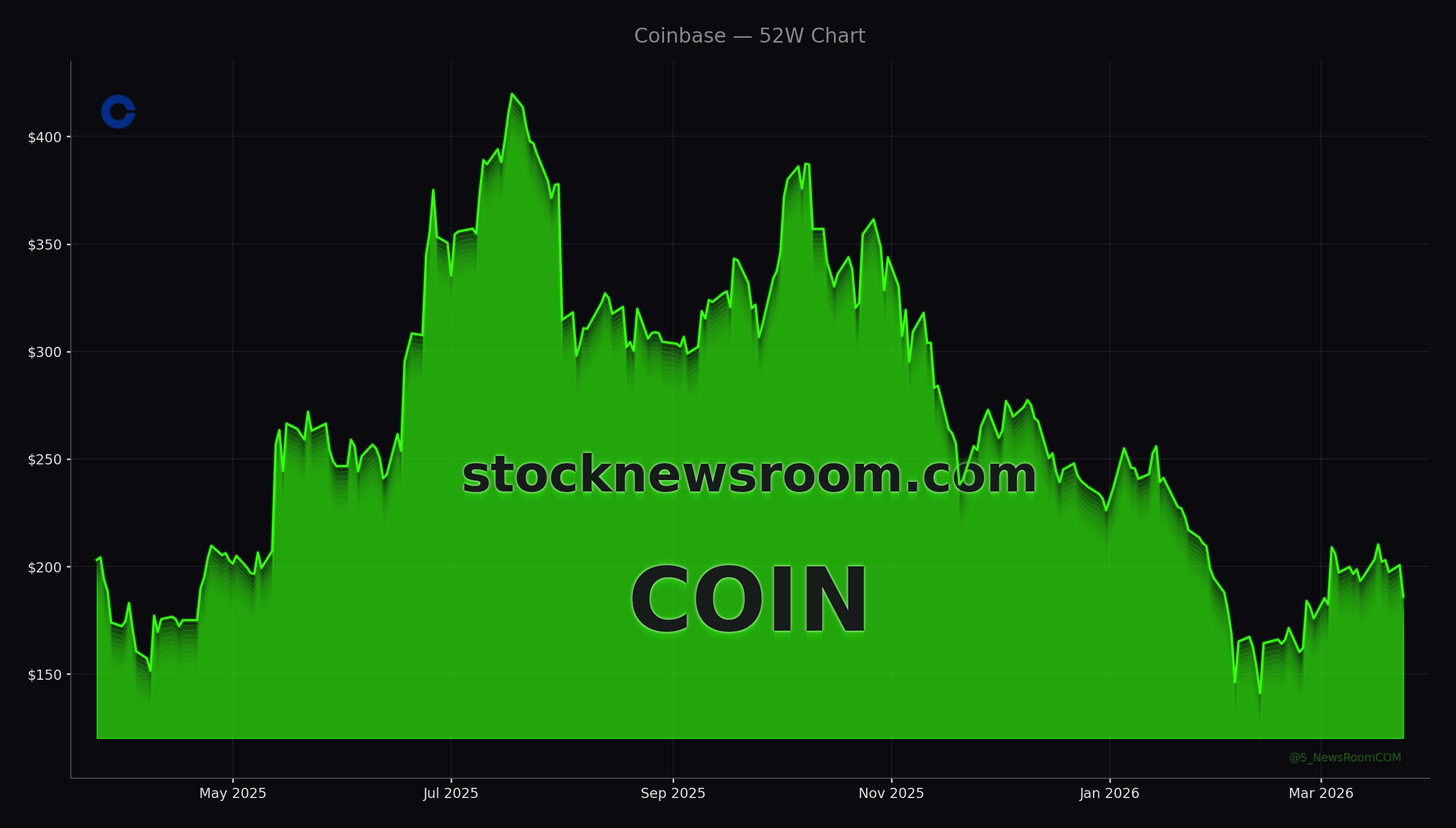
COIN trades around $186.04 on Tuesday afternoon, off about 7.25% from the prior close of $200.79, as crypto-linked equities track a softer digital-asset backdrop. Bitcoin and Ethereum have both logged steep double‑digit losses in EUR terms over the past 12 months, and smaller tokens have fared even worse, underscoring how exposed Coinbase Global, Inc. remains to cyclical crypto risk. Yet the emerging narrative on Wall Street is less about token prices and more about Coinbase Stablecoin Regulation and the Clarity Act in Washington.
The proposed Clarity Act aims to define how U.S.-regulated firms can issue and use stablecoins and, crucially for Coinbase, whether platforms may legally offer yield or “rewards” on those dollar-pegged assets. Coinbase currently promotes interest on select stablecoin balances, a feature that makes the app feel more like a fintech savings platform and less like a pure trading venue. Banks have pushed back, worried that those yields siphon deposits out of the traditional system. If regulators explicitly bless such rewards, it could cement a lucrative, recurring revenue stream for Coinbase that is less correlated with trading volumes.
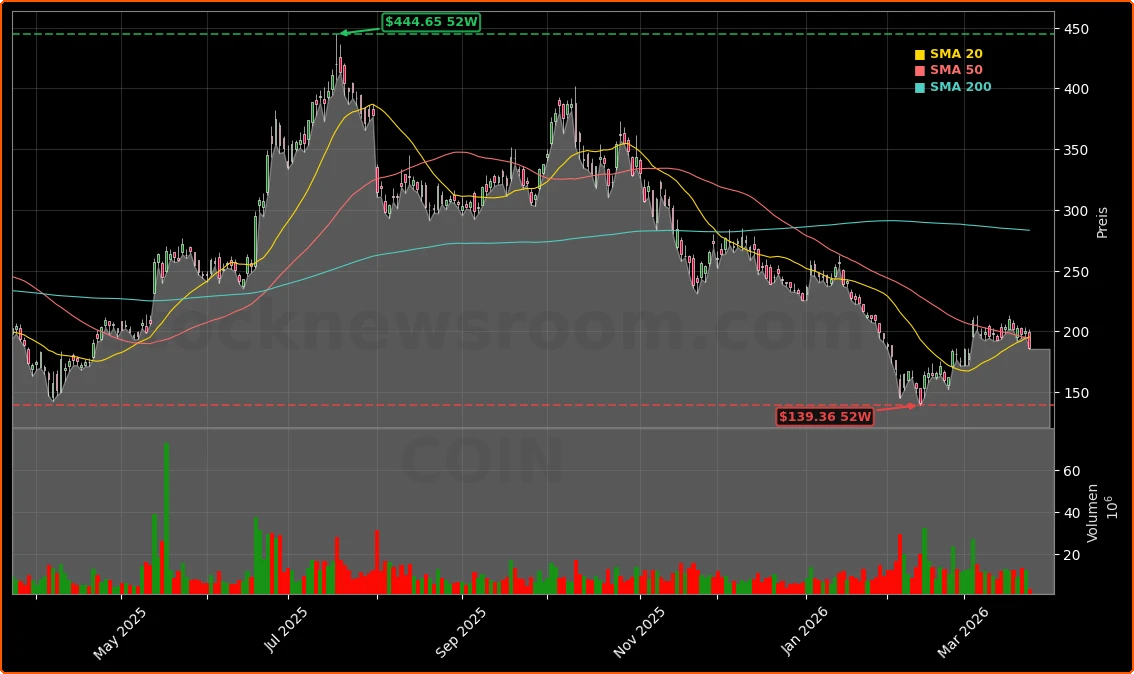
After recently testing key technical support in the $145–$146 range, COIN staged a more than 30% rebound back above $200 before today’s pullback. Many TradingView contributors highlight that move as a classic relief rally tied to oversold conditions in Bitcoin rather than a fundamental re-rating. The next major swing for the stock may depend less on charts and more on where Coinbase Stablecoin Regulation lands in the final Clarity Act language.
How big is the upside from stablecoin yields?
Investors are increasingly focused on yield-oriented crypto strategies, even as token prices slump. The NEOS Bitcoin High Income ETF, which uses covered calls to generate cash flow from Bitcoin exposure, has drawn fresh inflows despite BTC’s near‑20% slide in the last three months. That hunt for income suggests that if Coinbase can pay competitive rewards on stablecoins within a clear regulatory framework, it could capture users looking for a quasi‑cash product that still lives inside the crypto ecosystem.
Positive early signals from policymakers that interest on regulated stablecoins might be allowed have been read as an important tailwind for Coinbase. A stable, compliant yield product could diversify away from volatile spot trading and complement staking and subscription revenues. It would also position Coinbase as a gateway not just to speculative tokens but to tokenized cash and, eventually, tokenized real‑world assets competing with money‑market funds and bank deposits from firms like Apple’s Apple Card/Apple Cash ecosystem or fintech rivals modeled more on NVIDIA‑style platform monetization than on pure brokerage fees.
Not everyone is enthusiastic. Morningstar recently flagged COIN as a newly overvalued name, assigning a 2‑star rating after the sharp run-up and arguing that the stock price already discounts aggressive growth in non‑trading revenues. That view contrasts with more bullish commentary from Zacks, which lists Coinbase among the most‑searched stocks on its platform and highlights the exchange’s scale advantage and early moves around compliant stablecoin products. The split underscores how pivotal Coinbase Stablecoin Regulation has become to debates over COIN’s fair value.
Why are users comparing Coinbase to a sportsbook?
While regulators focus on stablecoins, Coinbase faces a very different reputational challenge at the app level. During March Madness, users reported receiving multiple push notifications a day urging them to make sports-related predictions, with a prominent banner on the app’s homepage. The campaign tapped into the booming market for “event” and prediction markets, where platforms like Kalshi and Polymarket blur the line between hedging, political speculation, and entertainment-style wagering.
For some Coinbase customers, the experience felt too close to sports gambling. Posts on social media criticized the notifications as off-brand for a crypto exchange that pitches itself as a regulated, trusted gateway to digital assets, not as a sportsbook rivaling DraftKings or FanDuel. Coinbase CEO Brian Armstrong publicly acknowledged the criticism as a “fair point” and promised more granular controls so users can opt out of such promos.
The pivot into prediction-style products also comes as competitors like Robinhood explore similar territory. Industry observers warn that if platforms migrate from simple crypto trading to de facto sports betting without the same licensing and consumer‑protection guardrails, they could invite scrutiny from state regulators and the CFTC. That risk sits alongside the ongoing policy debate over Coinbase Stablecoin Regulation, adding another layer of uncertainty for investors trying to gauge regulatory overhang.
Where does Coinbase fit in a shifting crypto landscape?
Beyond Coinbase, the digital-asset market is fragmenting. Traditional financial giants such as Morgan Stanley are exploring spot Bitcoin ETFs that could draw institutional assets at a scale several times larger than today’s leading products. Meanwhile, Grayscale is pushing into specialized altcoin ETFs, and new XRP spot ETFs are seeing steady inflows even on quiet trading days. For U.S. investors, that means more ways to access crypto without ever opening a Coinbase account, pressuring the company to differentiate on UX, asset breadth, and compliance.
At the same time, younger retail investors who once claimed that Bitcoin would replace gold as the ultimate safe haven are being tested by the recent 35%‑plus drawdowns in major coins. In multi‑asset portfolios, COIN is increasingly viewed alongside high‑beta tech names such as Tesla or platform leaders like Apple rather than as a defensive crypto proxy. If Coinbase Stablecoin Regulation delivers a durable, yield-centric product line, it could nudge the stock narrative closer to a diversified fintech platform than a pure-play crypto beta trade tied one‑for‑one to Bitcoin and Ethereum cycles.
Related Coverage
Security and trust remain recurring themes for Coinbase investors. A recent deep dive on seed‑phrase handling asks whether the latest controversy is a minor documentation error or a more serious warning sign about user risk controls; the full analysis is available at Coinbase Security Warning as Seed-Tool Sparks Backlash. For a broader view on how large financial institutions are repositioning, readers can also explore how Citi’s ongoing overhaul could reshape global banking profit pools in Citigroup Strategic Shift Warning as Global Focus Resets, a backdrop that matters as banks lobby on stablecoin and prediction‑market rules.
In the end, Coinbase Stablecoin Regulation sits at the center of COIN’s next chapter: a favorable Clarity Act with explicit approval for stablecoin rewards could underpin a more resilient, yield-driven business model, while overreach into prediction-style products risks distracting regulators and users alike. For U.S. investors building diversified portfolios around the S&P 500 and NASDAQ leaders, COIN remains a high‑beta satellite position whose fate is tightly bound to Washington’s rulebook. The next wave of regulatory decisions will show whether Coinbase can evolve into a stable, regulated fintech platform or remain a leveraged play on the boom‑and‑bust cycles of crypto speculation.