Is Costco’s double‑digit March sales surge a one‑off gold rush or the start of a new growth phase for COST shareholders?

How strong was Costco’s March performance?
In March, Costco Wholesale Corporation delivered net sales of $28.41 billion, up 11.3% from $25.51 billion a year earlier, despite having one fewer shopping day due to the Easter calendar shift. Management estimates the lost day reduced both total and comparable sales by roughly 1.5 percentage points, implying underlying momentum even stronger than the headline Costco Sales Update suggests.
Comparable sales for the five-week period climbed 9.4% companywide. The U.S. business rose 8.7%, Canada 10.7%, and other international markets 11.9%. Stripping out gasoline price effects and foreign exchange, total company comparable sales still advanced a healthy 6.2%. For the first 31 weeks of the fiscal year, net sales increased 9.1% to $173.26 billion, with total comparable sales up 7.2%.
This March surge came against a backdrop of geopolitical concerns and fears that higher-for-longer interest rates could pressure discretionary spending. The latest Costco Sales Update instead points to resilient traffic and ticket growth, reinforcing the chain’s status as a go‑to value destination within the S&P 500 consumer staples cohort.
What role did gas and membership play for Costco?
Analysts at Mizuho characterized March sales as “exceptionally strong,” highlighting a 25%–30% acceleration in Costco’s gas business alongside an approximately 18% increase in the average price per gallon. That math implies double‑digit volume growth at the pump, a notable feat during a period of volatile energy markets.
Fuel is a thin-margin, “penny profit” business for Costco, but it is a powerful traffic and membership engine. Mizuho argued that such volume trends likely contributed to incremental membership growth in the quarter, offsetting margin dilution from the rising share of fuel in the revenue mix. The firm also noted that self‑cannibalization—sales shifts from older warehouses to nearby new ones—has slowed to around 40 basis points, easing a structural headwind.
Costco is leaning further into fuel as a competitive advantage. It is launching standalone 40‑pump gas stations, including an upcoming site in Mission Viejo, California, allowing members to access discounted fuel without navigating crowded warehouse parking lots. In an environment of elevated gas prices, this strategy deepens Costco’s value proposition versus traditional grocers and big‑box peers such as Walmart and Target.
How important is e‑commerce and the gold bar boom?
Digitally enabled comparable sales soared 23.3% in March and 22.0% year‑to‑date, far outpacing overall growth. Excluding fuel and FX, digital comps still rose more than 22% both for the month and the 31‑week period. E‑commerce has become a key structural growth driver, even though Costco remains first and foremost a warehouse club.
One unexpected catalyst has been the retailer’s online gold bar offering, introduced in late 2023. Gold bars have helped generate double‑digit percentage growth in e‑commerce revenue, with monthly gold sales estimated as high as $200 million. Costco recently tightened purchase rules from five bars per member to one transaction with a maximum of four bars every 24 hours, a response to intense demand rather than inventory abundance.
Prices have climbed sharply: a gold bar that cost around $2,679 on Costco’s website in September 2024 recently listed near $5,400, roughly in line with the spot price. Costco earns only a minimal margin on these bars, effectively treating them as a loss leader to drive website traffic and reinforce its image as a low‑markup retailer, similar to its long‑standing approach with its hot dog combo and some Kirkland Signature staples.
What does this Costco Sales Update mean for the stock?
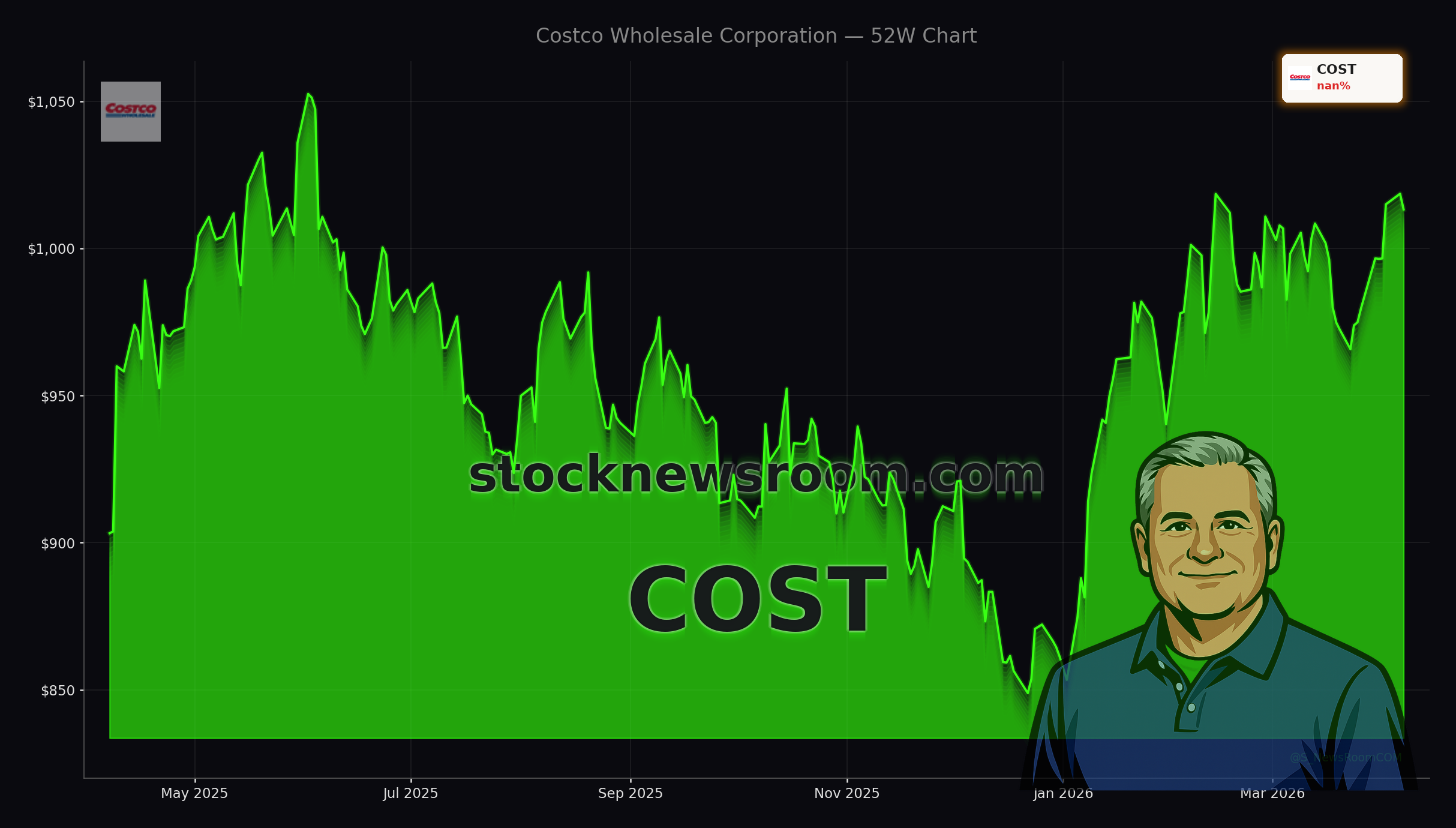
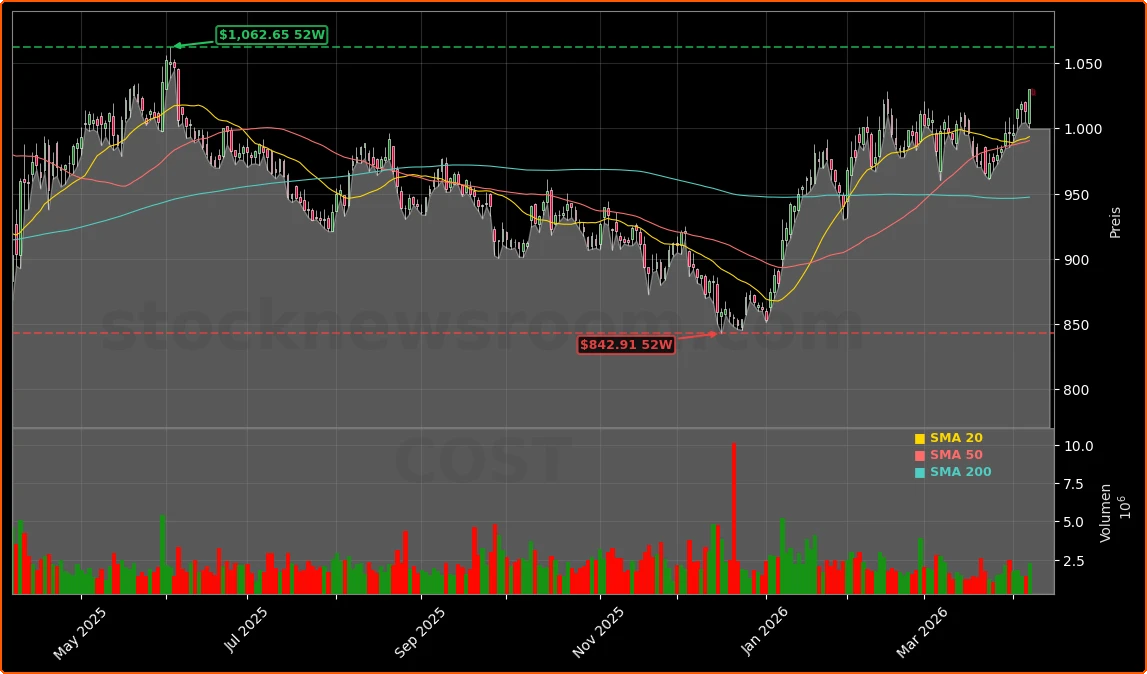
COST shares closed Wednesday at $1,030.27, up 1.68% on the day, with after‑hours trading modestly lower around $1,026. The stock remains about 3.5% below its 52‑week high, leaving little room for error given its premium multiple versus peers in the consumer staples space and the broader S&P 500.
Wall Street’s overall stance remains constructive. MarketBeat data show a “Moderate Buy” consensus rating and an average price target near $1,039, essentially in line with the current quote. Recent commentary has focused on execution strengths—such as rapid checkout times, private‑label innovation, and steady warehouse expansion—balanced against valuation risk if growth normalizes.
For U.S. investors comparing club and big‑box retailers, Costco’s March report stacks up favorably against names like Walmart and Target, as well as warehouse rival BJ’s. While those competitors are benefiting from trade‑down behavior, Costco’s combination of strong traffic, international expansion, and outsized digital growth keeps it positioned as a structural winner, albeit one that may already price in much of that success.
For portfolios, the Costco Sales Update underscores why many long‑term investors continue to hold the stock despite its rich valuation: the membership model, recurring high‑margin fee income, and consistent share gains in categories from groceries to fuel provide a defensive growth profile that can be attractive through economic cycles.