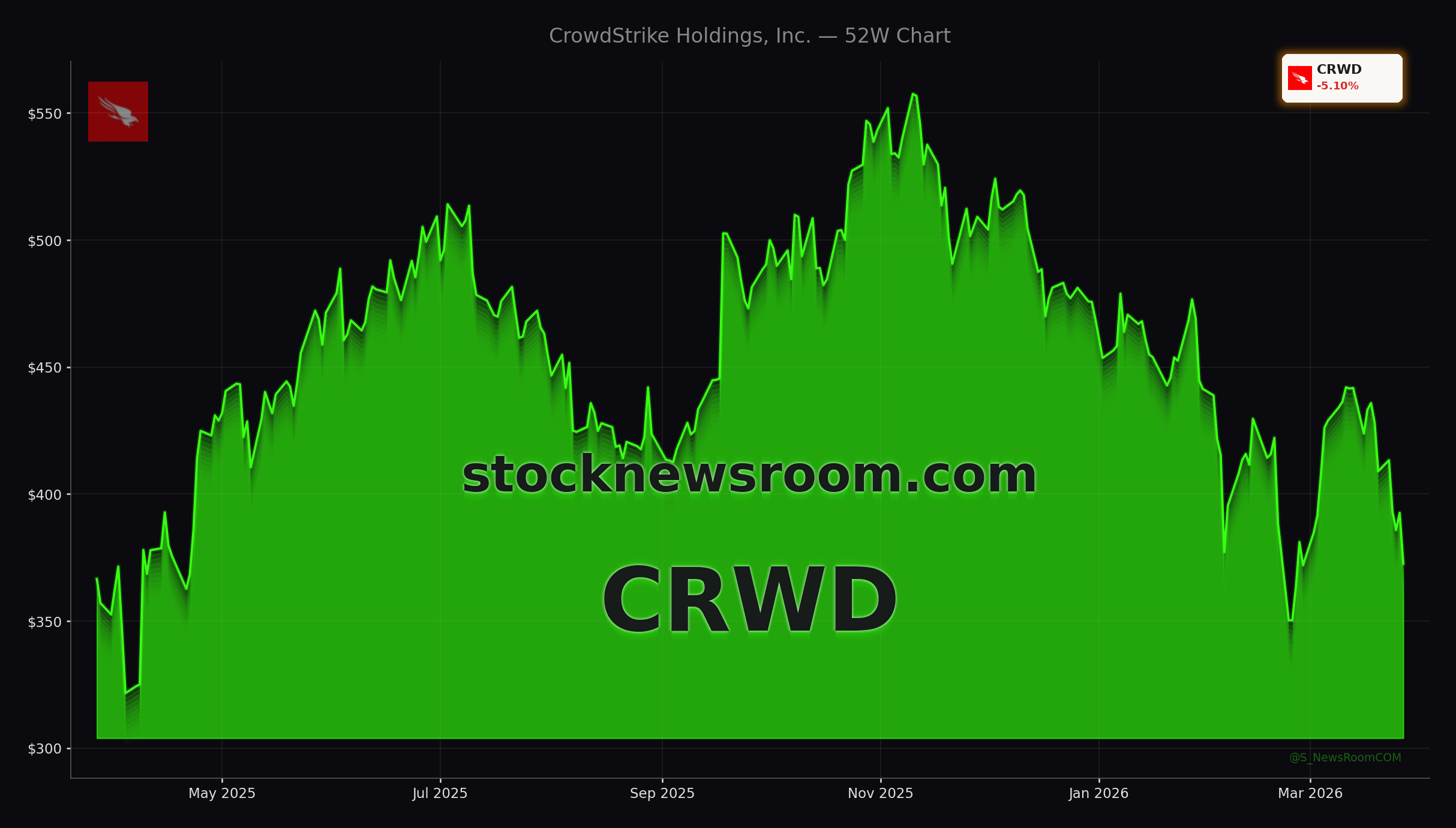

Is the latest Anthropic AI scare and softer long-term guidance a real threat to CrowdStrike’s premium growth story or just noise?

Why is CrowdStrike AI Risk hitting the stock now?
CrowdStrike plunged alongside peers after reports that Anthropic is testing its most powerful Claude Mythos model, featuring an advanced “Capybara” tier with offensive cyber capabilities that could help bad actors probe and exploit vulnerabilities. The news reignited fears that AI labs might outpace traditional security vendors, amplifying CrowdStrike AI Risk in the eyes of growth investors already nervous about software valuations on the NASDAQ.
Sector ETFs focused on cybersecurity fell roughly 3% as names like Palo Alto Networks, Zscaler and SentinelOne joined CrowdStrike in the red. The concern is less about AI replacing security platforms and more about whether adversaries armed with frontier models can out-innovate existing defenses, forcing vendors to spend heavily and pressuring margins.
How do earnings and guidance shape the CrowdStrike AI Risk debate?
Fundamentally, CrowdStrike’s latest quarter was strong but not spectacular enough to offset CrowdStrike AI Risk sentiment. Q4 revenue rose 23.3% year over year to $1.305 billion, only a modest beat versus consensus. The company delivered its first positive GAAP net income of about $38.7 million and non‑GAAP EPS of $1.12, while ending annual recurring revenue jumped 24% to $5.25 billion with a record $330.7 million in net new ARR, up 47%.
The issue is forward guidance. Management projected FY27 revenue of $5.867 billion to $5.928 billion and ending ARR of up to $6.516 billion, solid in absolute terms but below the “beat and raise” trajectory some high‑growth tech investors wanted. That gap, combined with escalating AI‑driven competition from both hyperscalers and specialized platforms, is fueling questions about whether CrowdStrike can maintain its premium multiple on the S&P 500 growth spectrum.
Can CrowdStrike turn AI from risk into opportunity?
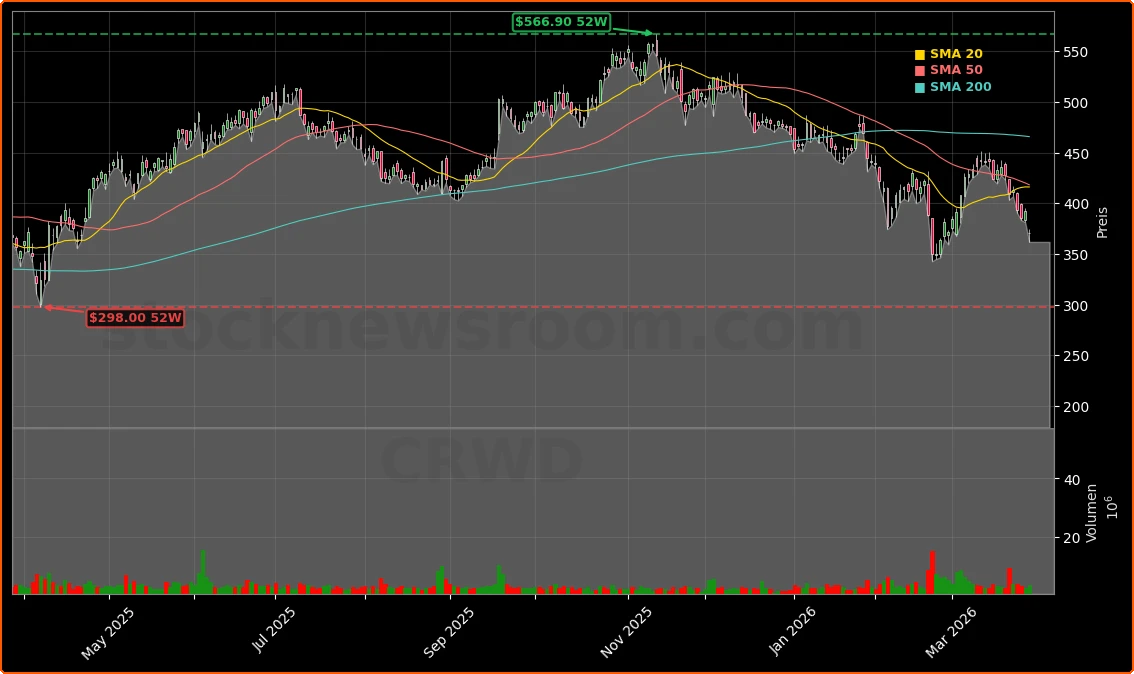
Despite short‑term volatility, several on Wall Street still see the CrowdStrike AI Risk narrative as overdone. RBC Capital analyst Matthew Hedberg recently reiterated an Outperform rating and a $550 price target, arguing that the company’s Falcon platform and AI‑native architecture position it well as attacks become more automated. CrowdStrike is leaning into this shift, expanding strategic collaborations with IBM and Intel to embed its Charlotte AI and Falcon technologies into autonomous SOC workflows and next‑gen AI PCs.
The company also launched the Charlotte AI AgentWorks Ecosystem alongside partners such as NVIDIA and Anthropic itself, aiming to help enterprises build secure, agentic security workflows rather than be disrupted by them. Insider activity supports that stance: CEO George Kurtz and CFO Burt Podbere bought shares in early March, even as later stock sales were tied to tax withholding rather than discretionary selling.
Related Coverage
Investors looking for more context on CrowdStrike’s positioning in the AI security race can revisit CrowdStrike AI Partnerships +23% Surge After Record Q4, which dives deeper into how new alliances and record ARR growth support the bull case despite today’s volatility. For a broader technology backdrop, Apple US manufacturing boom: $600B bet on risk, AI and record upside analyzes how Apple is reshoring production and investing in AI, highlighting how major platforms across tech are repositioning around the same forces driving CrowdStrike AI Risk headlines.
In the end, CrowdStrike AI Risk now reflects a tug of war between disruptive fears around Anthropic’s Mythos model and evidence that CrowdStrike remains a mission‑critical, fast‑growing security platform. For U.S. investors, the stock’s pullback offers a cleaner entry for those who believe AI will ultimately expand rather than erode demand for best‑of‑breed cyber defense. The next few quarters of execution and AI product rollout will be crucial in proving that thesis and determining whether CRWD can reclaim leadership on the NASDAQ.