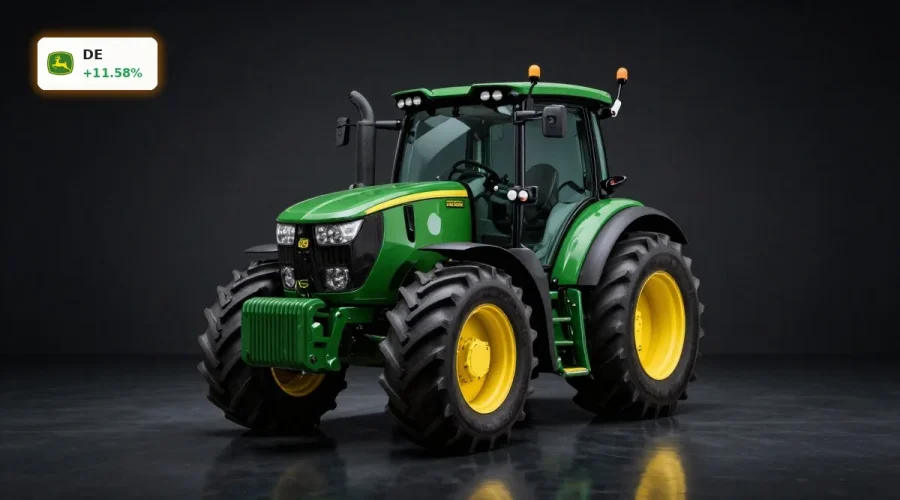
How does the current Deere quarter manage to trigger a double-digit stock rally despite cyclical lows and tariffs?
How strong was the Deere quarter really?
In the recently released Deere quarter, the world’s largest agricultural machinery manufacturer clearly exceeded expectations. Earnings per share (EPS) for the first quarter stood at $2.42, while analysts had only anticipated $2.05. The net profit reached $656 million, down from $869 million last year, which, although a decline, was significantly better than the market had feared.
In terms of revenue, Deere & Company showed particularly strong performance: Revenues increased by approximately 13% to $9.61 billion, exceeding consensus estimates by more than two billion dollars. The agricultural and construction equipment divisions benefited primarily from higher delivery volumes and positive currency effects. The fact that the Deere quarter delivered solid margins despite tariff burdens and weak large-scale agriculture is seen by investors as a clear vote of confidence in the business model.
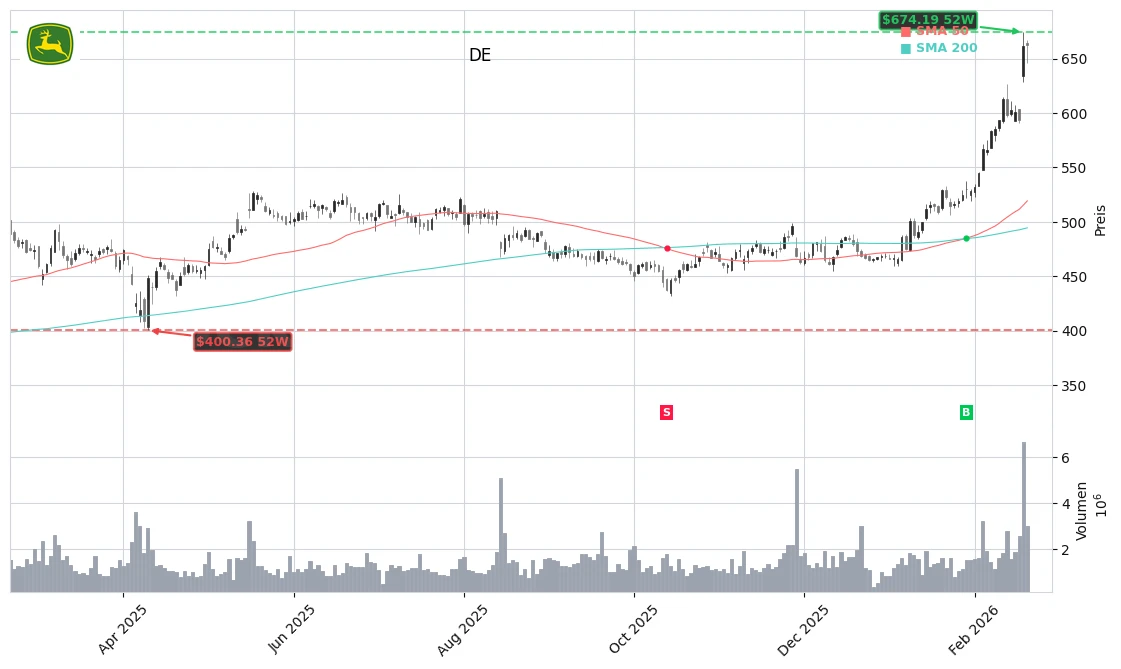
The stock rewarded the surprise in numbers with a price jump to $662.00 (previous day: $593.27; +11.58%). This continues the rally of recent weeks and confirms the series of new record highs observed by several technical analysts. After hours, the stock slightly declined to $658.25 but remains close to its peak.
Deere & Company: What lies behind the forecast upgrade?
Alongside the strong Deere quarter, management significantly raised its annual targets. For the current fiscal year, Deere & Company now projects net income of $4.5 to $5.0 billion, up from the previous forecast of $4.0 to $4.75 billion. The new outlook is above the average analyst estimate of around $4.45 billion and is regarded in the market as a classic “beat and raise”.
CEO John May describes 2026 as the likely low point of the current agricultural cycle and points to rising demand in the construction, forestry, and small agriculture and lawn care sectors. In these segments, Deere & Company now expects revenue growth of approximately 15% each, up from around 10% previously. In contrast, the large segment of Production & Precision Agriculture remains under pressure but shows, according to management, initial signs of stabilization.
Ongoing burdens from U.S. tariffs, which could amount to around $1.2 billion in 2026, continue to weigh on the company. Nevertheless, the company expects to remain largely cost-neutral through pricing and efficiency measures. The Deere quarter thus makes it clear that the company can compensate for tariff headwinds through higher unit volumes, product mix, and strict cost management.
Deere quarter: How do segments and the market react?
In detail, the Deere quarter presents a mixed but overall positive picture of the divisions. The core division Production & Precision Agriculture recorded only moderate revenue growth of about 3%, but the margin fell to 4.4%, impacted by higher tariffs, an unfavorable regional sales structure, and increased warranty expenses. In contrast, the Small Agriculture & Turf and Construction & Forestry sectors saw significant increases: Revenues rose by 24% and 34%, respectively, with operating profits rising sharply.
Particularly encouraging is the outlook for the order books. Orders in Small Ag & Turf and Construction have noticeably improved, with the order situation in the construction sector reaching its highest level since mid-2024. Concurrently, Deere & Company is advancing its strategic initiatives: The acquisition of telematics specialist Tenna strengthens its digital offering for mixed fleets, while AI-driven solutions for autonomous tractors and precision agriculture are gaining increasing importance.
„While global large-scale agriculture continues to face headwinds, we see a clear recovery in construction, forestry, and small agriculture – 2026 marks the bottom of the cycle from our perspective.”
— John May, CEO of Deere & Company
Bottom Line
On Wall Street, the stock is accordingly coming into focus. Several firms such as Goldman Sachs, Citi, and RBC Capital Markets had already highlighted the stock positively, pointing to its strong positioning at the intersection of traditional machinery manufacturing and software-driven services. The price jumps following the recent Deere quarter now reinforce this assessment and compel more skeptical analysts to revise their models.
Related Sources
- Deere Jumps as Tractor Maker Sees Upturn in Farm Economy (Yahoo Finance)
- Deere & Company Q1 FY26 Earnings Call Transcript (Benzinga)
- This Farm and Construction Machinery Maker’s Stock Keeps Hitting Record Highs (Investopedia)