Are Dell AI Servers quietly becoming Wall Street’s preferred way to play the next leg of the AI infrastructure boom?

Is Supermicro’s pain Dell’s AI opening?
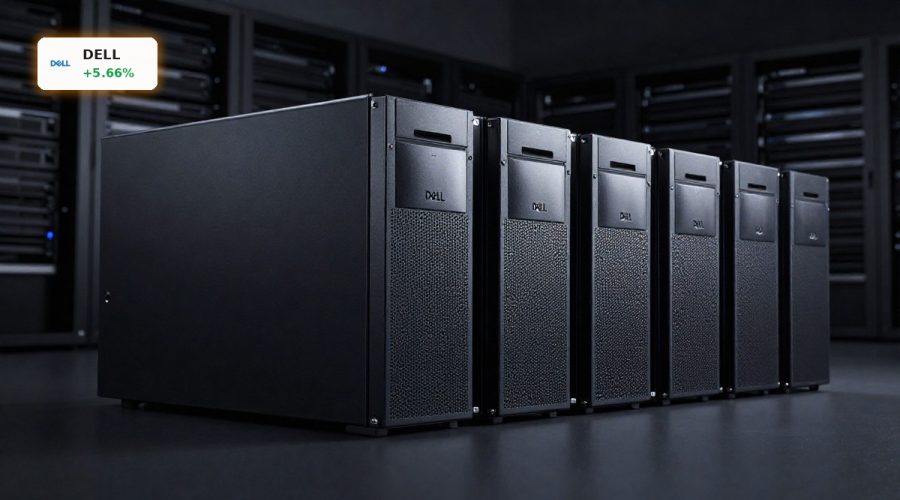
The immediate catalyst for the move in Dell Technologies Inc. is the collapse in Super Micro Computer (SMCI) after U.S. prosecutors charged several associates, including a co-founder, with illegally funneling Nvidia-powered servers to China. SMCI stock plunged more than 25% in early Friday trading, while Dell rallied, extending a month-long recovery that has already added more than 35% to its share price.
The market reaction underscores a straightforward narrative: large allocators looking for exposure to AI data-center hardware are rotating away from legal uncertainty and governance questions. Dell, with its long-standing enterprise relationships, established compliance culture and global service network, is emerging as the perceived “safe pair of hands” for large AI infrastructure deals.
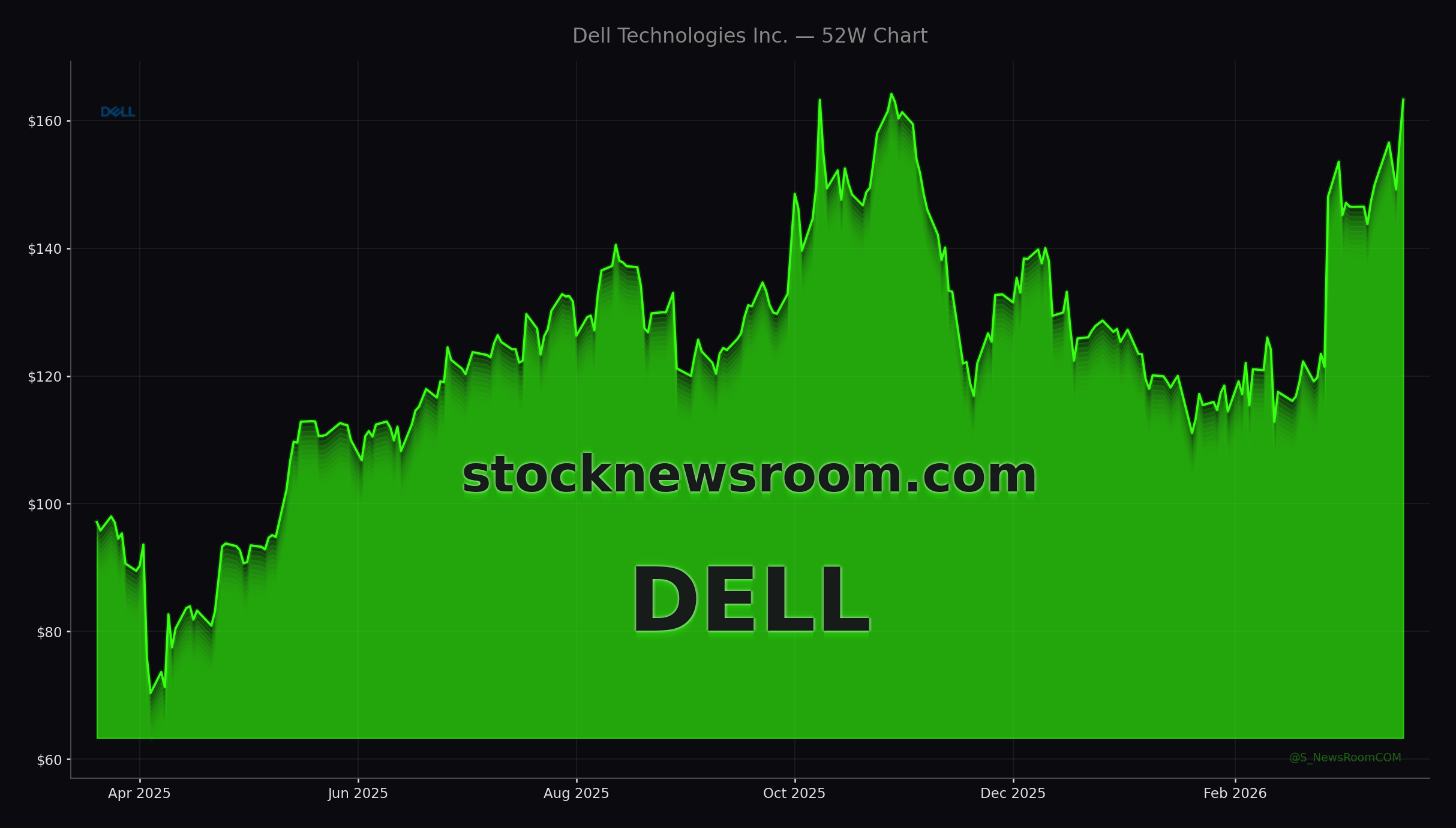
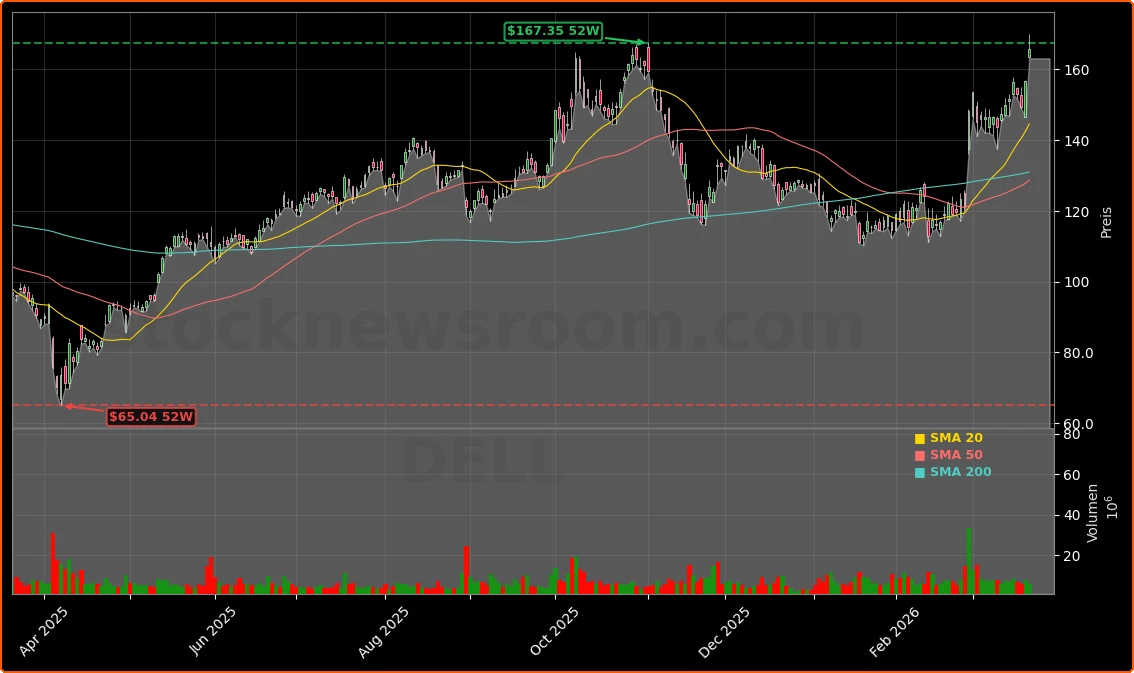
Today’s move builds on a sharp rebound from Dell’s recent correction, when the stock fell from around $168 to nearly $110 earlier this year before recovering. That selloff, which some commentators including Jim Cramer called irrational given the underlying fundamentals, now looks like a classic dislocation between business performance and sentiment.
Why Dell AI Servers now look like core AI infrastructure
The core of the bull case is simple: Dell AI Servers have become one of the main ways enterprises practically buy and deploy Nvidia GPUs at scale. In its most recent fiscal quarter, Dell reported approximately $8.95 billion in AI-optimized server revenue, up more than 300% year over year, with full-year AI server orders topping $64 billion. Critically, the company is entering its new fiscal year with a record AI server backlog of about $43 billion.
That backlog matters more than any one-day move in the stock. It signals that hyperscalers, large enterprises and government buyers are already locked into multi-quarter deployment plans with Dell AI Servers at the center. For U.S. and global investors trying to capture the AI infrastructure theme without picking individual GPU cycles at NVIDIA (NVDA), bundling exposure via Dell’s integrated systems and services is increasingly attractive.
On Wall Street, the fundamental story is being recognized. Bernstein SocGen has reiterated an Outperform rating on Dell, citing strong AI infrastructure momentum and healthy cash returns to shareholders. Consensus estimates still call for FY27 revenue in the $138–$142 billion range and non-GAAP EPS near $12.90 at the midpoint, showing that analysts largely see the recent volatility as technical rather than structural.
How balance sheet strength becomes a competitive weapon
Another underappreciated part of the Dell AI Servers story is financing. AI racks populated with Nvidia accelerators can cost tens of millions of dollars per project. Dell ended its last fiscal year with roughly $11.5 billion in cash and generated over $11 billion in operating cash flow, while returning a record $7.5 billion to shareholders through buybacks and dividends. That kind of balance sheet, coupled with its captive financing arm, allows Dell to structure vendor financing at a scale many rivals cannot match.
By contrast, key competitors such as Hewlett Packard Enterprise and Super Micro have more constrained balance sheets and less capacity to underwrite large, flexible financing packages around AI deployments. For CIOs trying to roll out generative AI clusters across multiple regions, the ability to bundle hardware, services and financing through a single vendor can be decisive. In practice, that can push deals toward Dell AI Servers even when pure hardware pricing is similar.
The shareholder base is also adjusting around the rally. Private equity firm Silver Lake, a long-time strategic investor in Dell, has been trimming its position in recent days, selling several small blocks of Class C shares worth tens of millions of dollars. However, regulatory filings show Silver Lake still holds more than 50 million shares and retains substantial voting power, suggesting portfolio rebalancing rather than a fundamental change in its view of the company.
Where does Dell sit in the broader AI trade?
Today’s move also fits into a wider re-rating of AI infrastructure names across the S&P 500 and NASDAQ. The first phase of the AI trade concentrated heavily in GPU vendors like NVIDIA, while mega-cap platforms such as Apple and Tesla captured multiple expansion on AI narratives in consumer and automotive markets. Dell’s resurgence highlights a second phase, where investors reassess the “picks and shovels” of enterprise AI: servers, storage and networking.
For portfolio managers already overweight high-multiple software and chip names, Dell offers something different: tangible hardware exposure, large existing cash flows and a still-reasonable earnings multiple relative to many AI peers. With the stock up about 62% over the past year and roughly 25% year-to-date, some profit-taking is inevitable, but the combination of a huge AI order book and the Supermicro overhang is keeping fresh money interested.
Risk factors remain. Any slowdown in data-center capex, changes in export controls around advanced chips or a shift in Nvidia’s channel strategy could impact growth in Dell AI Servers. In addition, continued insider selling by financial sponsors like Silver Lake may weigh on short-term sentiment even if fundamentals stay intact.
Related Coverage
For a deeper dive into Dell’s most recent numbers and how its massive AI backlog is changing Wall Street’s view of the company, readers can explore Dell Technologies Quartal Record: AI Server Boom Reshapes Wall Street, which analyzes whether Dell can fully transition from a legacy PC player to an AI infrastructure powerhouse. Investors interested in how AI themes play out beyond hardware should also look at the ad-tech side via AppLovin Forecast: 47% Upside Gap or Crash Warning Ahead, which examines if premium AI growth expectations in digital advertising are still justified.
In the end, Dell AI Servers now sit at the crossroads of legal turmoil for rivals, surging enterprise demand and a still-expanding AI capex cycle. For investors seeking diversified exposure to the infrastructure behind generative AI, Dell has reasserted itself as a central player to watch. The next few quarters of order trends and margin performance will show whether today’s rotation is a brief reaction to the Supermicro scandal or the beginning of a longer-lasting leadership phase for Dell in AI hardware.