Will the latest Disney Management Change finally unlock the company’s stalled stock story or just reset expectations yet again?

How is Disney trading after the CEO switch?
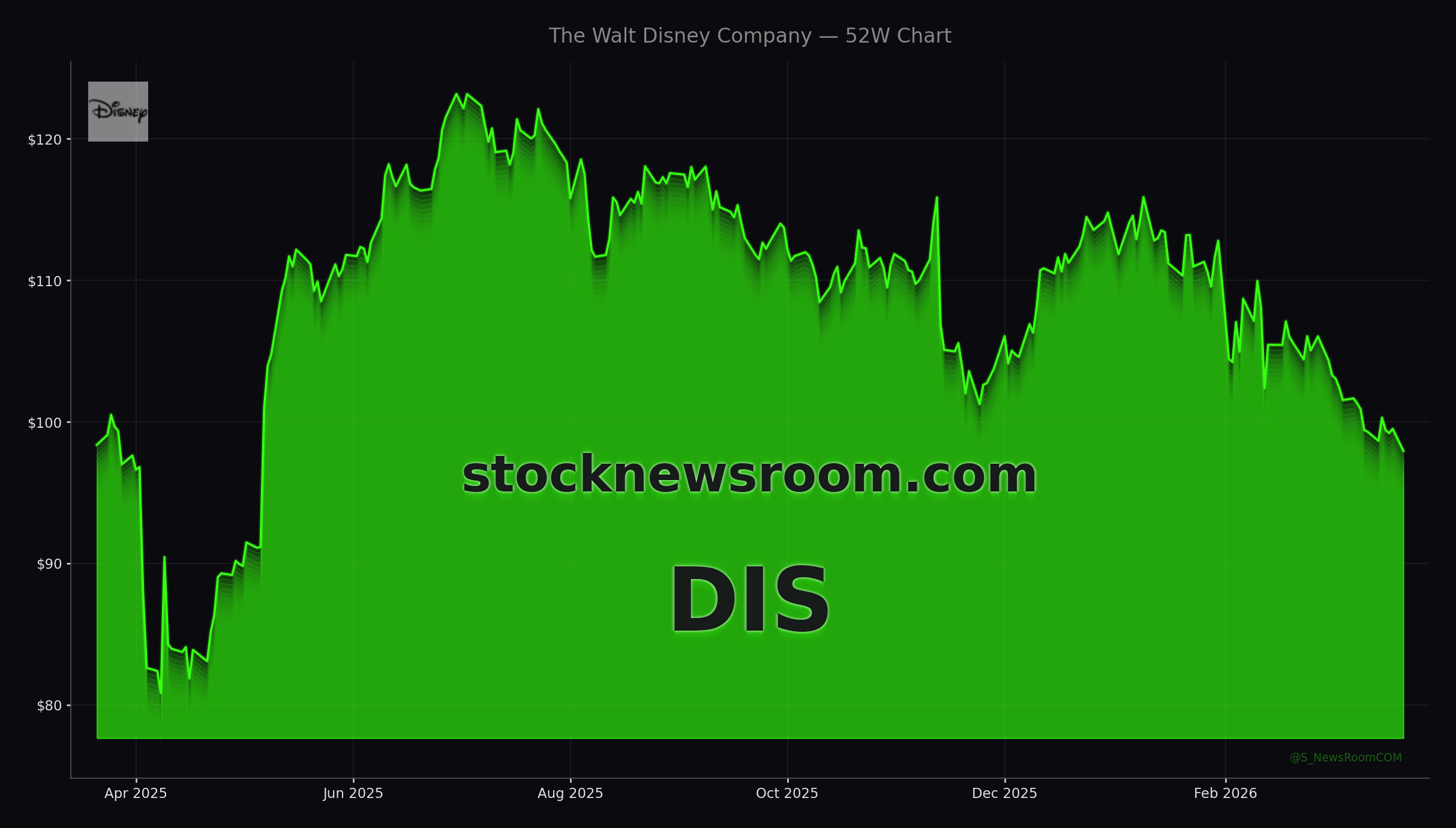
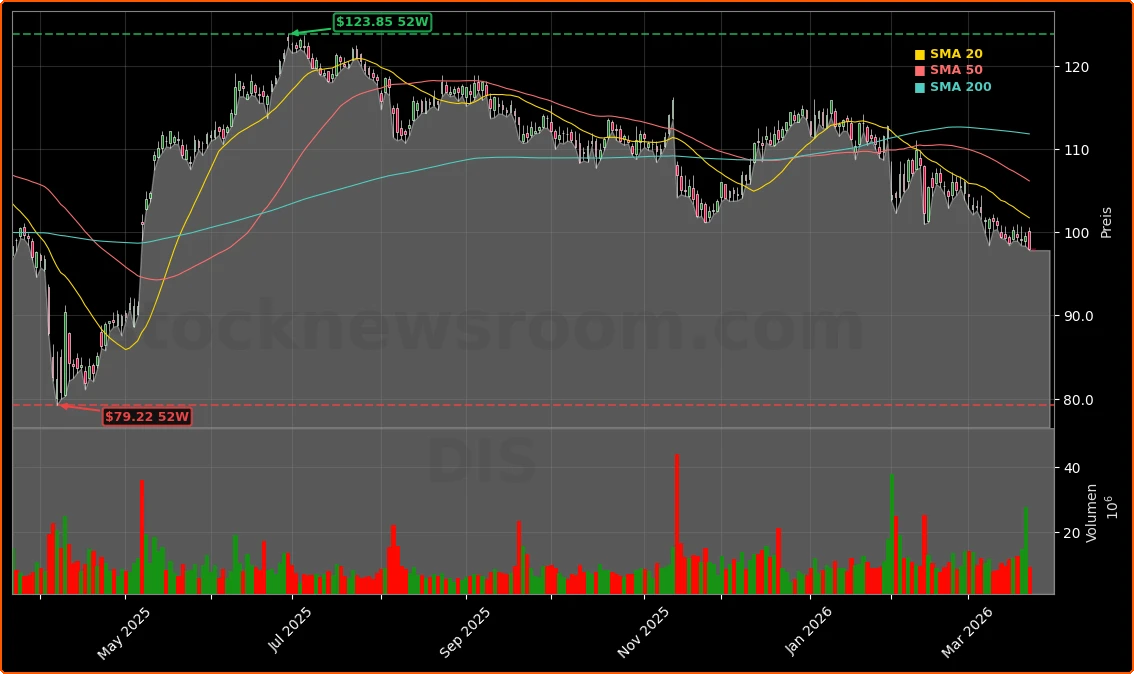
The Walt Disney Company (DIS) traded at about $97.95 on Tuesday morning, just below Monday’s close of $98.02, extending a modest pullback that has left the stock down roughly 12% year to date and about 2% over the last twelve months. The muted reaction underscores how the Disney Management Change is being viewed: not as a short-term catalyst, but as a long runway where execution will matter more than headlines.
Disney still commands a market cap near $176 billion and trades at a trailing P/E of about 14.7 and a forward P/E near 15, a valuation that reflects both skepticism and embedded faith in the brand’s long-term power. While the S&P 500 has more than tripled over the past decade, Disney’s stock is essentially flat, highlighting how little credit investors have given to acquisitions, Disney+, and prior turnaround promises under Bob Iger’s return.
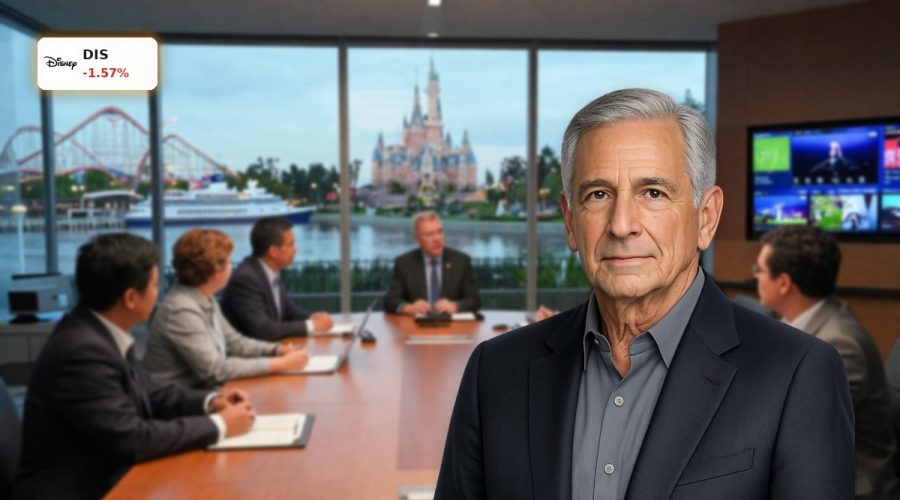
The divergence was obvious on Monday: cyclical and travel-sensitive stocks generally rallied on signs of de-escalation in Iran, yet Disney slipped 1.6%, suggesting traders aren’t willing to buy the stock purely on macro relief. Rising oil prices and higher airfares threaten discretionary travel budgets, precisely the spending that fuels Disney’s biggest profit engine: its global parks and experiences business.
Can Disney’s parks keep carrying the story?
As D’Amaro takes over, he does so from a position of operational strength in the very division he used to run. In fiscal 2025, Disney’s experiences segment — which bundles theme parks, cruises, and consumer products — grew 6% to $36.2 billion in revenue and delivered about $10 billion in operating profit, more than half of companywide operating income. That makes parks the financial backbone of the post-Iger era.
Yet that reliance is a double-edged sword. Tourism demand is sensitive to war headlines and household budgets. If geopolitical tensions in the Middle East keep oil prices elevated, air travel to Orlando, Anaheim, Paris, and Asia could soften. Investors clearly sense the risk: Monday’s underperformance relative to the broader “risk-on” rally implies that macro improvements alone won’t be enough to change the Disney narrative.
For long-term holders, though, the parks still represent a durable moat. Per-capita guest spending has risen on the back of dynamic pricing, premium experiences, and integration of blockbuster IP from Marvel, Star Wars, and Pixar. If D’Amaro can balance pricing power with guest satisfaction while layering new attractions and technology, the experiences division could remain the profit flywheel funding the broader transition.
What does the Disney Management Change mean for streaming and sports?
The Disney Management Change is not just about personality at the top; it’s about sharpening priorities in streaming and sports. Disney+ has grown into a global platform but has struggled with profitability while simultaneously cannibalizing linear TV and box office revenue. Management has emphasized tighter content spending, a focus on core franchises, and improved monetization across Disney+, Hulu, and ESPN’s digital offerings.
On the sports side, ESPN remains a cornerstone asset in a rapidly evolving live-sports ecosystem. Recent deals around NFL rights and deepening ties with Hulu Live TV and FuboTV position Disney to tap into what some analysts frame as a roughly $600 billion global sports and sports-betting opportunity. The challenge is executing that vision without overpaying for rights or diluting margins.
Recent quarterly results showed some progress: Disney beat earnings expectations with adjusted EPS of $1.63 on $25.98 billion in revenue, and the company is guiding to double-digit adjusted EPS growth for the current fiscal year. Several Wall Street firms, including Guggenheim, TD Cowen, and Wells Fargo, maintain bullish price targets — recent updates imply average upside of roughly 30% from current levels, with consensus targets in the low-to-mid $130s. That optimism comes with caveats, as analysts flag streaming competition from Netflix, rising content costs, and secular declines in linear TV.
How is Wall Street positioning around Disney now?
Despite the hesitations around the Disney Management Change, institutional investors have not abandoned the stock. Park Avenue Securities recently boosted its stake by more than 23%, and QP Wealth Management disclosed a fresh position, both moves reflecting continued interest from professional money managers who view Disney as a long-duration franchise asset.
Analyst sentiment sits at a “Moderate Buy” consensus, with MarketBeat data showing an average target near $134 and a high-water mark around $150 from Wells Fargo. On the more cautious side, firms such as Piper Sandler sit closer to the low $90s, signaling that not everyone is convinced D’Amaro can thread the needle between growth and discipline. For comparison, mega-cap peers like Apple and NVIDIA are priced as pure growth engines, while streamers like Netflix trade as focused digital plays; Disney straddles multiple categories, making valuation trickier but also giving D’Amaro more levers to pull.
Shareholders recently endorsed the new structure, re-electing all board nominees and formally adding Josh D’Amaro to the board alongside Robert A. Iger, while reiterating support for existing executive compensation plans. That vote effectively hands D’Amaro the mandate to pursue his vision of blending human creativity with advanced technology — including AI — across parks, film, and streaming, even as Hollywood labor groups remain wary of how automation could reshape jobs and compensation.
Related Coverage
For a deeper dive into how markets initially reacted to the leadership shift, “Disney CEO Transition +1.7%: Is This Rally Real?” explores whether the early bounce in DIS shares was the start of a new trend or just a relief rally. Investors interested in the broader streaming landscape can compare Disney’s turnaround narrative with “Netflix Forecast: Citi’s $115 Call Fuels Fresh Rally Hopes”, which analyzes how Citigroup’s bullish target shapes expectations for Netflix and its rivals.
These are unprecedented times, and we have to address existential issues like AI and labor now rather than waiting for the next contract cycle.— Hollywood labor negotiator speaking to young Disney performers
In the end, the Disney Management Change puts Josh D’Amaro in charge of a storied but pressured franchise that must prove it can grow earnings beyond the parks. For investors, Disney remains a complex blend of defensive brand power and cyclical exposure that will reward only disciplined execution. The next few quarters will show whether D’Amaro can translate strategic promises in streaming, sports, and experiences into the kind of consistent performance Wall Street has been waiting for.