Can the new Eli Lilly GLP-1 pill Foundayo justify the stock’s rich valuation and extend its obesity drug dominance?

Is Eli Lilly’s valuation ready for another leg up?
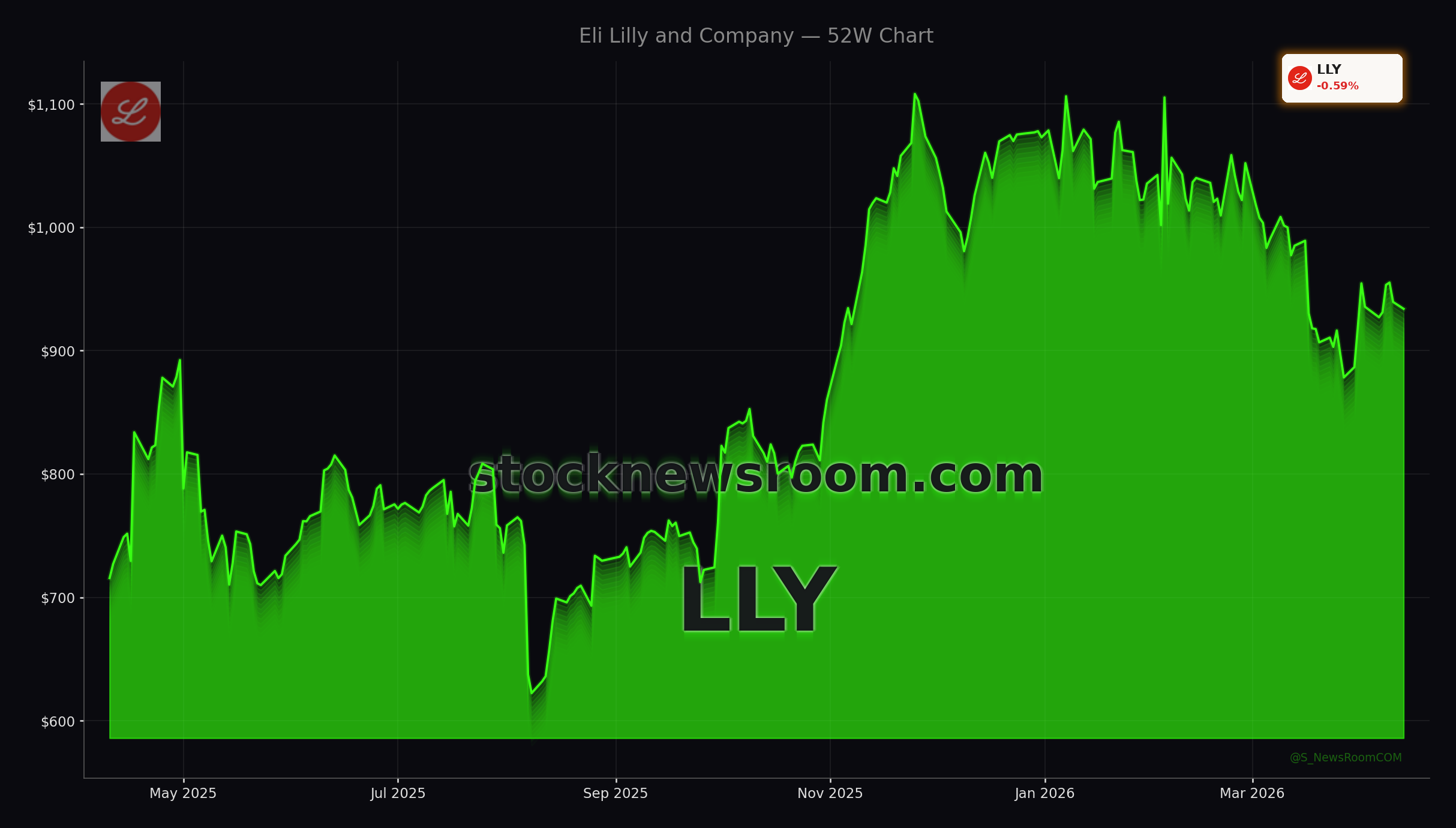
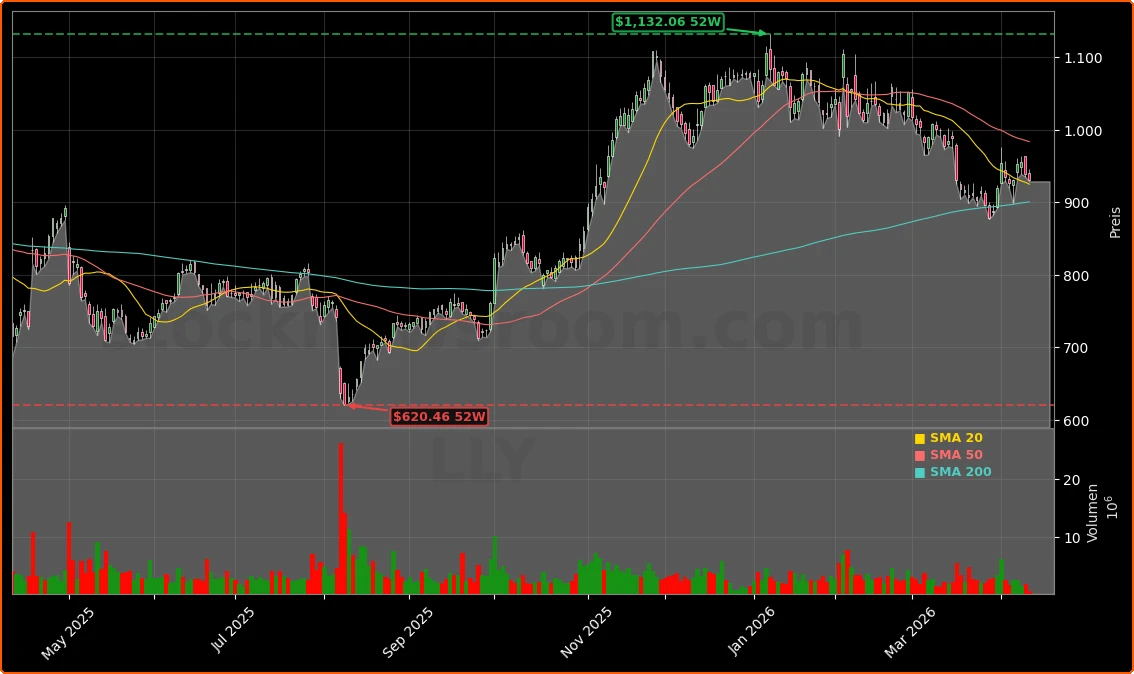
Eli Lilly (LLY) traded at $930.87 at the latest close, down about 0.9% on the day and roughly 13% below its recent peak, even after the Eli Lilly GLP-1 pill win. The stock still commands a trailing price-to-earnings multiple north of 40, well above the S&P 500 average near 24, reflecting investor confidence that GLP‑1 obesity and diabetes therapies can deliver multi-year compound growth. Over the past five years, Lilly shares have surged more than 400%, powered by Mounjaro and Zepbound, making it one of the standout performers in large-cap healthcare alongside megacaps like NVIDIA and Apple.
Some investors see the pullback in 2026 as a valuation reset rather than a fundamental problem. Growth-focused research from ChartMill recently framed Eli Lilly as a classic “growth at a reasonable price” story, arguing that strong earnings and revenue expansion make its premium PEG ratio defensible. The arrival of the Eli Lilly GLP-1 pill gives bulls fresh ammunition that the company’s GLP‑1 franchise is far from peaking.
How big could the Foundayo opportunity be for Eli Lilly?
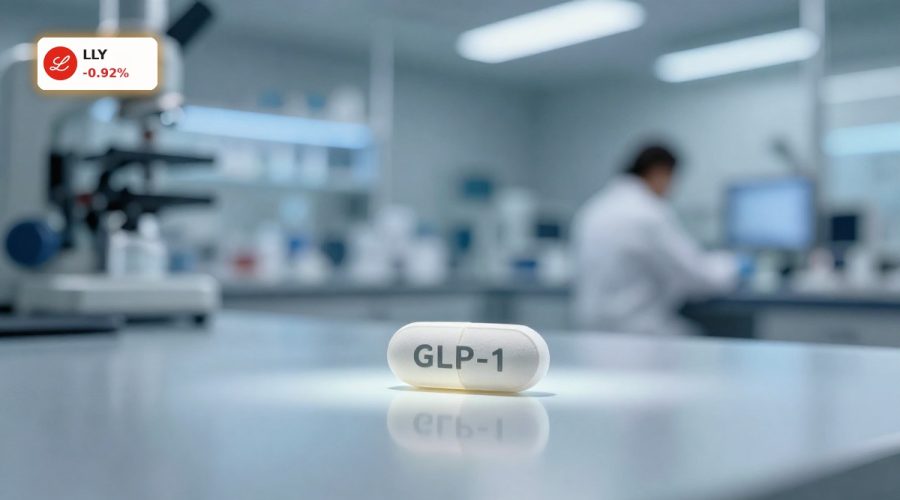
On April 1, 2026, the FDA approved Foundayo, the first once-daily oral weight-loss drug in Eli Lilly’s portfolio and its second GLP‑1 pill in the broader market. The drug targets chronic weight management, effectively taking Zepbound’s obesity positioning and putting it into tablet form. That may sound incremental, but it addresses a key behavioral barrier: millions of potential patients are averse to injections and have waited specifically for a pill-based GLP‑1 option.
Lilly’s recent numbers illustrate what is at stake. In 2025, company revenue jumped 45% to $65.2 billion. Mounjaro, initially approved for type 2 diabetes, generated just under $23 billion, while Zepbound reached $13.5 billion, up 175% year over year. Those two products ranked among the world’s best-selling drugs, with Mounjaro trailing only Merck’s Keytruda in global sales. If Foundayo can unlock a larger pool of obesity patients and improve adherence thanks to its oral format, analysts expect it to add a meaningful new revenue stream on top of already explosive GLP‑1 growth.
For investors, the Eli Lilly GLP-1 pill is also a strategic hedge. Patent protection for leading GLP‑1 brands like Ozempic and Wegovy runs roughly to 2032, while Mounjaro and Zepbound patents stretch to about 2036. By layering in oral options like Foundayo and advancing next‑generation candidates such as GLP‑3 agonist retatrutide, Lilly is working to extend its franchise durability well beyond those timelines.
How does Eli Lilly stack up against Novo Nordisk?
The obesity race between Eli Lilly and Novo Nordisk is increasingly about breadth of offerings rather than a single blockbuster. Novo Nordisk has injected therapies Ozempic and Wegovy, plus an oral GLP‑1 in Rybelsus, and is pushing higher-dose Wegovy strategies. In 2025, GLP‑1 revenue tables were led by Mounjaro, followed by Ozempic, Zepbound, and Wegovy, underlining a two-horse market that dwarfs most other pharma categories.
The Eli Lilly GLP-1 pill now directly challenges Novo’s oral GLP‑1 platform, giving physicians another tablet option to consider for patients who prefer not to inject. Price will be a key battleground: as payers push back on the exploding obesity drug bill, a more crowded oral field could accelerate discounts and formulary negotiations. Investors will be looking for signs that Foundayo can deliver not only volume but also acceptable margins, especially with a potential price war brewing in GLP‑1s.
At the same time, Eli Lilly is broadening its technological edge. A multiyear collaboration with NVIDIA aims to apply advanced AI to drug discovery and development, shortening R&D cycles and boosting productivity across the pipeline. If successful, this could reinforce Lilly’s leadership in metabolic disease while also strengthening its oncology and neuroscience efforts, where competitors from Tesla-like innovation stories in other sectors remind investors how quickly market leaders can emerge.
Are institutions and analysts backing Eli Lilly’s GLP‑1 strategy?
Institutional flows suggest long-term money remains committed despite the rich valuation. Jackson Square Capital recently boosted its Eli Lilly position by over 26% in Q4, bringing its stake to more than $19 million. Steadtrust LLC initiated a new position of roughly $1.3 million in the same period, signaling growing conviction among smaller but active institutional players that GLP‑1 growth is sustainable.
On the analyst side, Rothschild & Co Redburn just raised its Eli Lilly price target to $880 from $875 while maintaining a neutral rating, underscoring that some on Wall Street see upside but are wary of how much optimism is already priced in. Many portfolio managers now frame Eli Lilly as a core healthcare holding rather than a high-beta trade, similar to how they treat megacap compounders like Apple. That positioning could help dampen volatility as the Foundayo launch progresses and real-world safety and efficacy data accumulate, particularly given the class-wide boxed warnings for potential thyroid C‑cell tumors shared by many GLP‑1 drugs.
Related Coverage
For a deeper dive into how Foundayo fits into Lilly’s broader pricing and margin strategy, including the risk of an all-out obesity drug price war, read “Eli Lilly Weight Loss Drugs Boom: Can Foundayo Defend Margins?”. Investors comparing Lilly’s move into oral GLP‑1s with Novo Nordisk’s counteroffensive should also see “Novo Nordisk Wegovy Strategy Boom With HD Dose Push”, which analyzes how Wegovy’s high-dose rollout could shape the next phase of the obesity market.
Overall, the Eli Lilly GLP-1 pill Foundayo strengthens the company’s already formidable GLP‑1 ecosystem and offers a logical catalyst for renewed top-line acceleration. The stock’s near-term path will hinge on whether prescription trends and pricing hold up well enough to support its premium multiple. For long-term investors comfortable with valuation risk, Eli Lilly remains a central way to play the global shift toward pharmaceutical treatment of obesity.