Can Eli Lilly’s GLP-1 boom keep powering the stock as regulation, lawsuits and ETF concentration risks close in?

How central are GLP-1s to Eli Lilly and Company?
Eli Lilly and Company has captured surging demand for GLP-1 drugs with Mounjaro for type 2 diabetes and Zepbound for obesity, turning its Eli Lilly GLP-1 Strategy into the core of its growth engine. In 2025, the two medicines generated a combined 56% of total revenue, up from 36.7% in 2024, underscoring how quickly the franchise has become dominant. In Q4 2025 alone, Mounjaro delivered $7.41 billion in sales, up 110% year over year, while Zepbound added $4.26 billion, up 123%.
The company is also pushing GLP-1 use well beyond cosmetic weight loss. Trials and label expansions target cardiovascular risk reduction and broader metabolic disease, while next-generation delivery systems, including pill-based options, aim to move patients away from injections. That broadening of indications is a key pillar of the Eli Lilly GLP-1 Strategy, designed to support high volumes even if pricing comes under pressure.
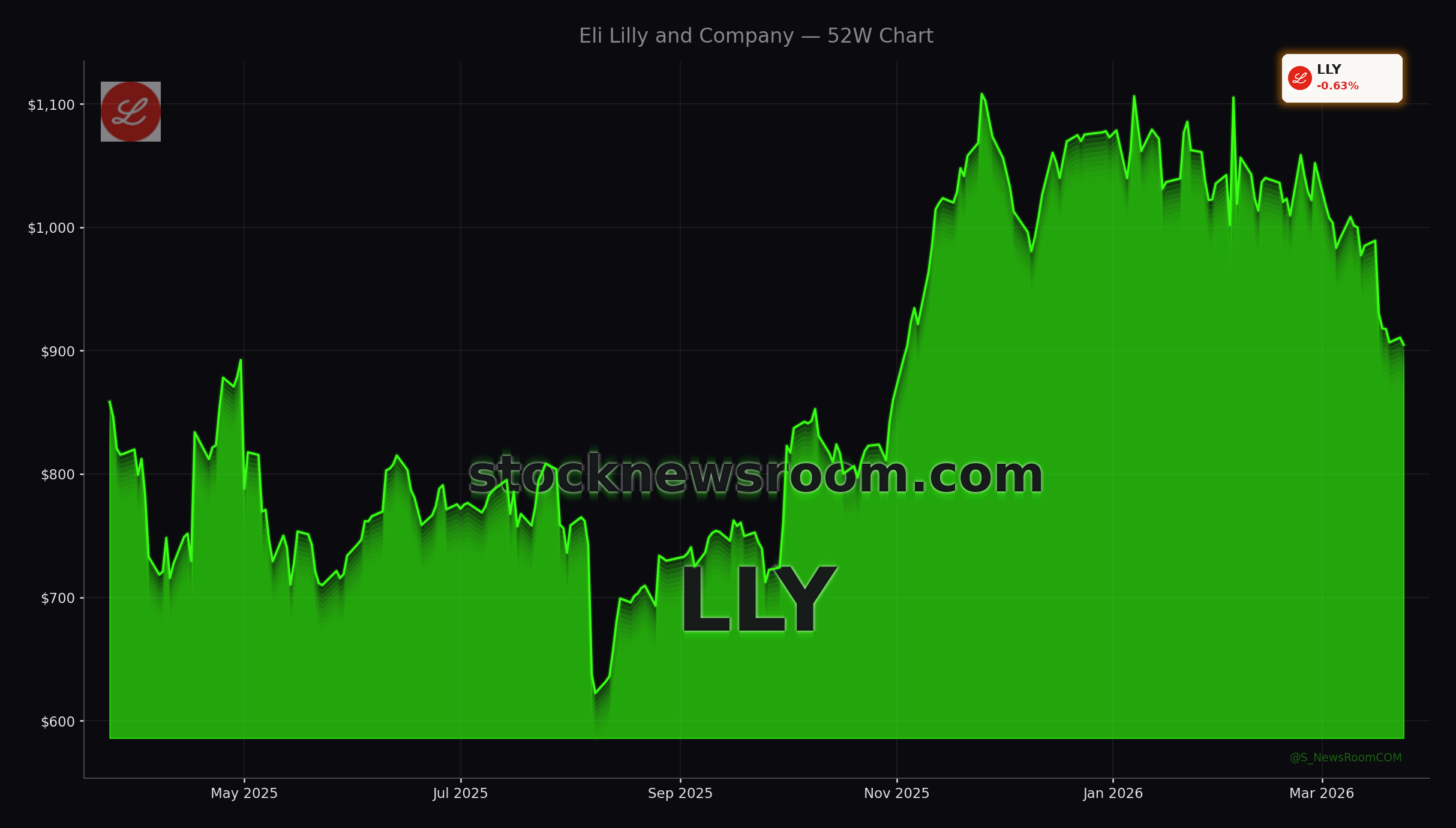
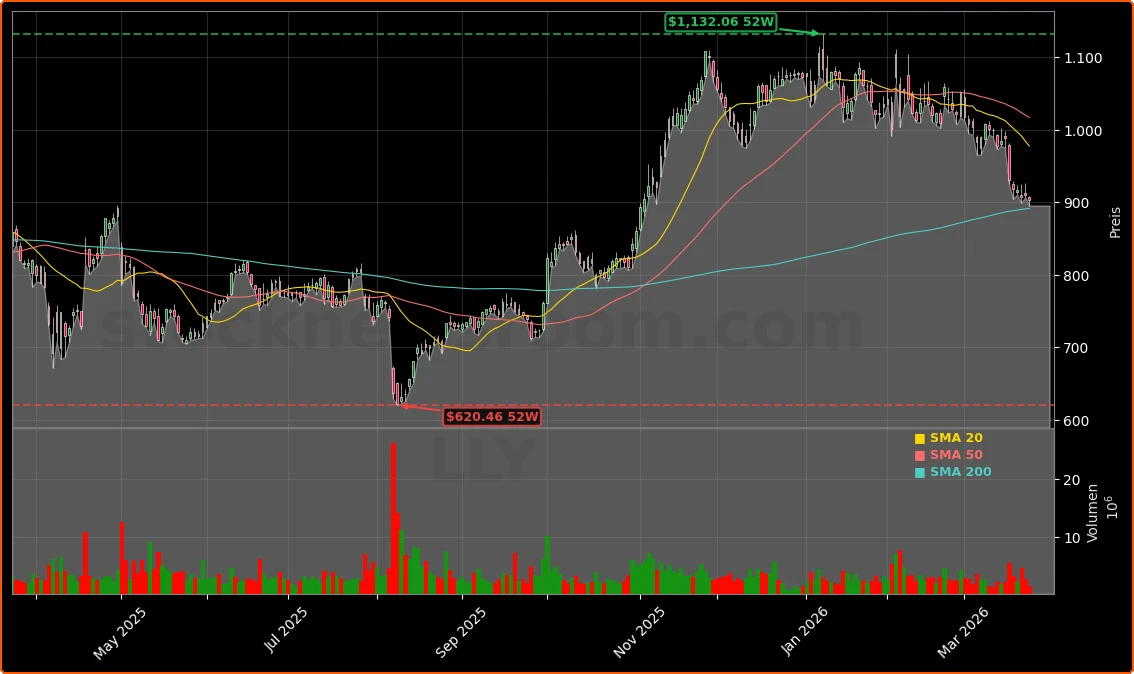
Yet the stock, once briefly above a $1 trillion market cap, is now down roughly 15% year-to-date and 0.88% today to about $902.60, as investors reassess how much of that growth is already embedded in a trailing P/E near 40 and a forward P/E around 26.
How are ETFs amplifying Eli Lilly exposure?
Lilly’s GLP-1 dominance now radiates through major funds, making the Eli Lilly GLP-1 Strategy a hidden macro bet in many diversified portfolios. The iShares U.S. Pharmaceuticals ETF (IHE) holds 50 positions, but Johnson & Johnson and Eli Lilly together account for roughly 46.8% of assets, with Lilly alone at 21.4%. With IHE flat year-to-date, down about 0.5%, the tug-of-war between Lilly’s slide and J&J’s gains largely dictates returns.
The Vanguard Healthcare ETF has taken a similar, though more diversified, stance. It holds more than 400 healthcare names yet still assigns its single largest weight of about 12.6% to Eli Lilly. Growth-oriented investors in the Vanguard Growth Index Fund ETF also hold Lilly alongside NVIDIA and Tesla, embedding obesity-drug risk alongside Big Tech momentum. In all three cases, the Eli Lilly GLP-1 Strategy means that a single therapeutic category can sway multi-sector products that many investors treat as core holdings.
Institutional flows underscore this conviction. Gradient Investments recently boosted its Lilly stake by over 2,300% in Q4 to more than $21 million, while other institutions such as Grove Bank & Trust have trimmed positions, citing valuation and headline risks. Sell-side firms including Morgan Stanley and Goldman Sachs still lean bullish with “Overweight” or “Buy” calls and price targets that cluster near or above $1,200, implying substantial upside from current levels if GLP-1 momentum persists.
Is regulatory and legal risk catching up with Eli Lilly and Company?
Regulation has become the biggest wild card for the Eli Lilly GLP-1 Strategy. HHS Secretary Robert F. Kennedy Jr.’s MAHA agenda is injecting new uncertainty into drug pricing and marketing. Proposed CMS rules known as GLOBE and GUARD would apply international reference pricing benchmarks to Medicare Part B and Part D drugs, a structural threat to high-margin franchises like GLP-1s. For Lilly, which already reports lower realized prices offsetting strong volume growth, a second consecutive quarter of accelerated price erosion could make its premium valuation harder for analysts at firms like Citigroup or RBC Capital Markets to defend.
Legal challenges add another layer. The U.S. Supreme Court has allowed a multibillion-dollar racketeering lawsuit over the diabetes drug Actos to proceed against Lilly and Takeda, alleging that they marketed the therapy without fully disclosing bladder cancer risks. While Actos is no longer a growth driver, the case raises the specter of large settlements and reputational damage just as politicians sharpen their focus on blockbuster obesity drugs.
Compounding these pressures is rising competition. Novo Nordisk is closing the efficacy gap with its high-dose Wegovy HD, which delivered average weight loss of 20.7% in trials, not far from Zepbound’s roughly 22.5%. Meanwhile, newer entrants such as Apogee Therapeutics are targeting adjacent indications like eczema, potentially chipping away at Lilly’s broader immunology portfolio.
Eli Lilly GLP-1 Strategy and the China growth angle
Despite the headwinds, management is doubling down on geographic expansion. Lilly plans to invest about $3 billion in China over the next decade, capitalizing on the inclusion of Mounjaro on the country’s state health insurance reimbursement list. That move could unlock a vast new patient base and help offset pricing pressure in the U.S. and Europe, reinforcing the global scope of the Eli Lilly GLP-1 Strategy.
Chinese market outreach is part of a broader U.S. corporate push into the world’s second-largest economy. Executives from Apple to Eli Lilly recently appeared at the China Development Forum in Beijing, signaling that, despite geopolitical friction, multinationals still see China as critical to long-term earnings growth. For Lilly, success there could validate bullish Wall Street models that assume durable double-digit revenue expansion through the end of the decade.
Related Coverage
Investors looking deeper into Lilly’s pipeline can explore how its next-generation triple-agonist is reshaping sentiment. The piece “Eli Lilly Retatrutide Boom: Triple-Agonist Trial Shock” examines whether powerful Phase 3 diabetes data from retatrutide can extend the GLP-1 super-cycle and diversify revenue beyond Mounjaro and Zepbound. For a broader industry lens, “Pfizer Lyme vaccine 70% efficacy Shock as PFE slips” looks at how strong vaccine data might revive sentiment around Pfizer and what that means for large-cap pharma valuations compared with Lilly.
The Eli Lilly GLP-1 Strategy has turned the company into a macro driver for healthcare ETFs, growth indices and even multi-asset portfolios, compressing a complex mix of regulatory, legal and competitive risks into a single stock. For investors, the key questions now are whether volumes can keep outpacing price erosion and how aggressively Washington will move on drug costs. The next few quarters of earnings and CMS rulemaking will show whether Lilly’s GLP-1 franchise justifies its premium or forces Wall Street to recalibrate expectations.