Can Eli Lilly maintain its lead in weight loss after the study shock for Novo Nordisk?
Eli Lilly and Company: Why the Stock is Rising Today
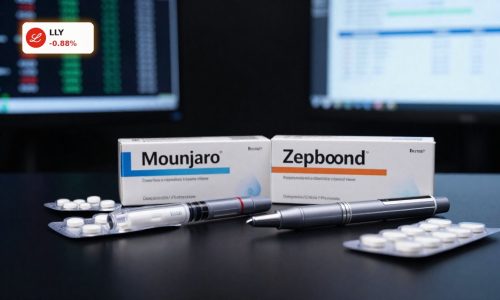
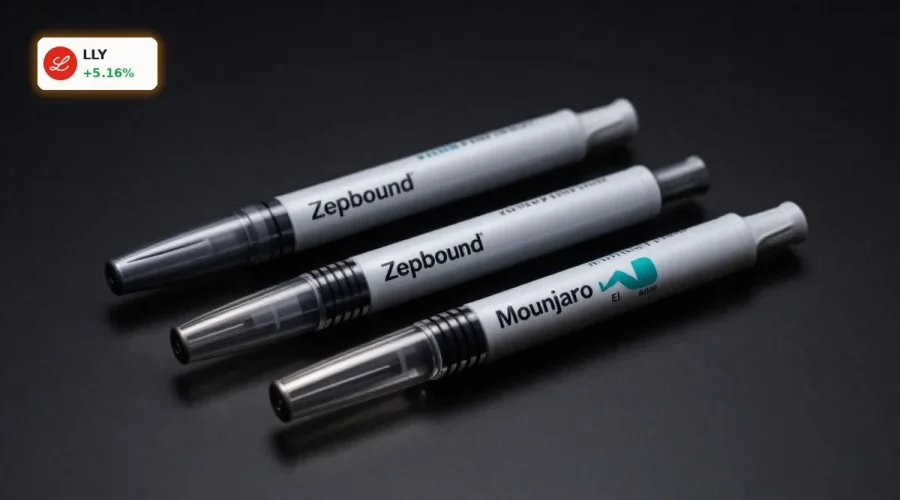
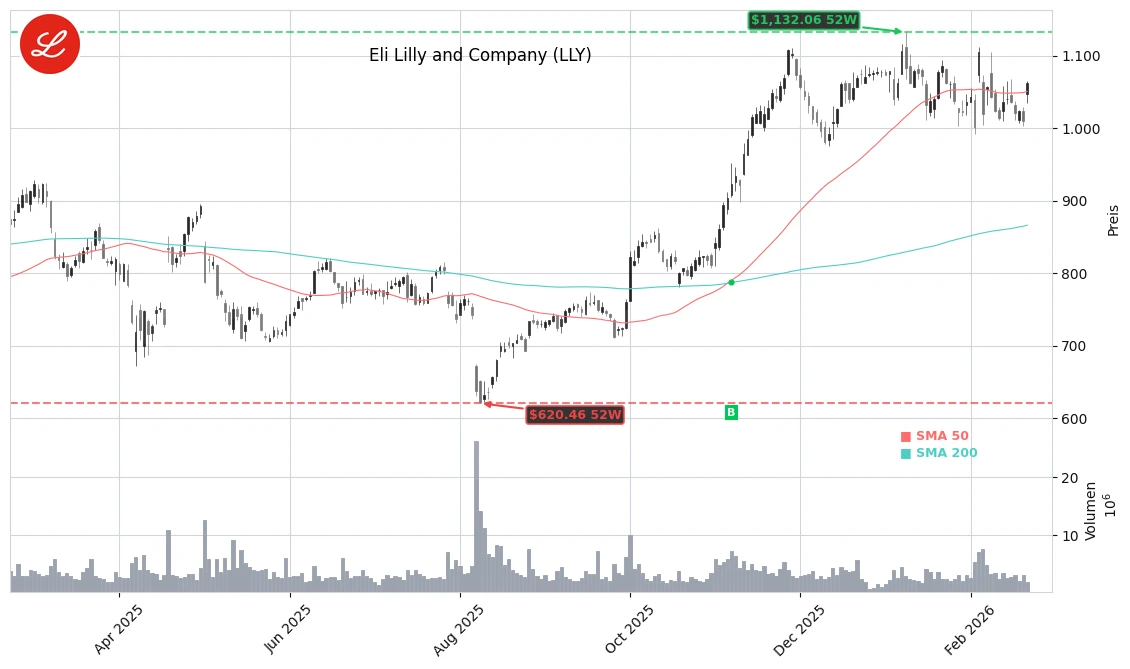
The shares of Eli Lilly and Company are significantly rising on Monday, trading at $1,061.57, approximately 5.16% higher than Friday’s close of $1,009.52. The stock is approaching recent highs, as the U.S. company has already benefited greatly from the global boom in obesity treatment drugs in recent quarters. Investors are reacting primarily to new study data from a direct competitor and the ongoing high demand for the products Zepbound and Mounjaro, both based on the active ingredient terzepatide.
The focus remains on the topic of Eli Lilly weight loss: Investors are evaluating which product has the best prospects in terms of efficacy, ease of use, and pricing in the mass market for weight loss therapies. Today’s price reaction suggests that the market currently sees Eli Lilly clearly in the lead.
Eli Lilly Weight Loss: How Big is the Lead Over Novo Nordisk?
The movement is triggered by a Phase 3 study of Novo Nordisk’s next-generation obesity drug CagriSema. In this study, patients lost an average of about 20% to 23% of their body weight—a figure that appears high but is below the reference data for Eli Lilly’s terzepatide. Depending on the evaluation, terzepatide reported weight loss of approximately 23.6% to 25.5% over 84 weeks. Crucially, the study missed the primary endpoint of non-inferiority compared to terzepatide.
This is an important signal for competition in the Eli Lilly weight loss segment. On one hand, it confirms that terzepatide currently sets the clinical benchmark for pharmacologically induced weight loss. On the other hand, it raises doubts about whether Novo Nordisk can seriously challenge the market power of Zepbound and Mounjaro with CagriSema in the medium term. Banks like JPMorgan therefore foresee sustainable market share gains for Eli Lilly and expect that the growth difference in earnings per share—currently projected at nearly 25% annual growth for Eli Lilly over the next five years, compared to only about 6.5% for Novo Nordisk—will remain for the time being.
Eli Lilly: Product Advantages with Zepbound and Mounjaro?
In addition to pure efficacy, the method of administration also plays a central role. While Novo Nordisk excels with oral formulations, Eli Lilly strengthens its injection platform. Zepbound will soon also be offered via the new multi-pen “KwikPen,” which consolidates four weekly injections into a single device. For patients, this means less packaging waste and easier handling, as only one pen per month is needed instead of multiple single-use syringes.
The pricing strategy further supports the narrative of competitive advantage in the Eli Lilly weight loss segment: The company maintains the entry price for Zepbound at $299 per month for the lowest dosage—regardless of whether patients choose the classic single dose or the new multi-pen variant. For margins, the KwikPen could even be slightly positive due to lower production and logistics costs, especially since Zepbound recently generated approximately $4.2 billion in quarterly revenue. This underscores Eli Lilly’s claim to remain the standard preparation in the global weight loss market.
What Does the Rally Mean for Investors in Eli Lilly?
The combination of strong efficacy data, increasing ease of use, and aggressive capacity and pricing strategies solidifies the investor narrative around Eli Lilly weight loss. While Novo Nordisk is under pressure after the study setback, losing some of its Wegovy gains in the stock market, Eli Lilly is viewed as a structural winner in the coming years. Analysts like Chris Schott from JPMorgan expect continued market share gains because many competitors have not yet leveraged the dual mechanism of action of terzepatide.
From a technical perspective, the stock is approaching significant resistance areas just a few dozen points above the current level. A breakout above could extend the upward trend, especially since the story behind the growth field of obesity remains intact, and additional indications—such as for diabetes—could represent further revenue drivers. While short-term pullbacks remain possible after the strong rally, Eli Lilly and Company remains closely linked to the structural trend toward pharmacological weight management in the long term.
Bottom Line
For investors, this means: As long as terzepatide sets the clinical and commercial benchmark and competitors like Novo Nordisk face setbacks, there are many arguments in favor of Eli Lilly defending its leadership position in the global market for weight loss therapies. Upcoming clinical data and capacity decisions will show whether the company can further expand this lead.
Related Sources
- Eli Lilly and Company (LLY) Stock Overview (Yahoo Finance)
- Novo Nordisk’s next obesity drug falls short of Lilly rival (Yahoo Finance)
- VIEW Novo’s CagriSema setback may shift investor focus to M&A strategy, analysts say (Reuters)
- Eli Lilly launches new form of obesity drug Zepbound with a month’s worth of doses in one pen (CNBC)
- Eli Lilly’s Zepbound Gets FDA OK for Multi-Dose Pen (Wall Street Journal)