
Is the Ethereum Treasury Strategy a smart liquidity plan or a quiet warning signal for long-term ETH holders?

Is the Ethereum Foundation sale a bearish signal?
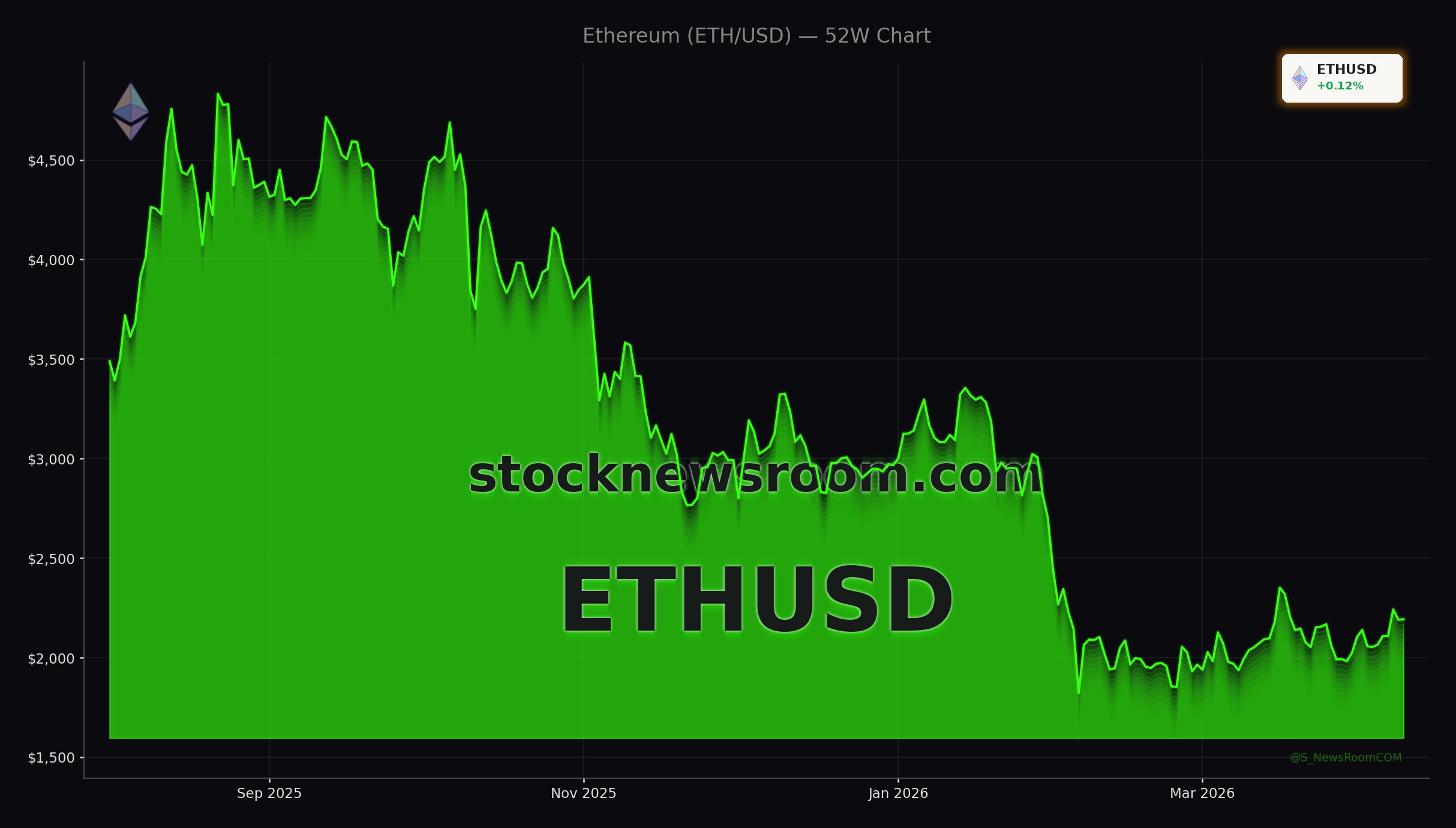
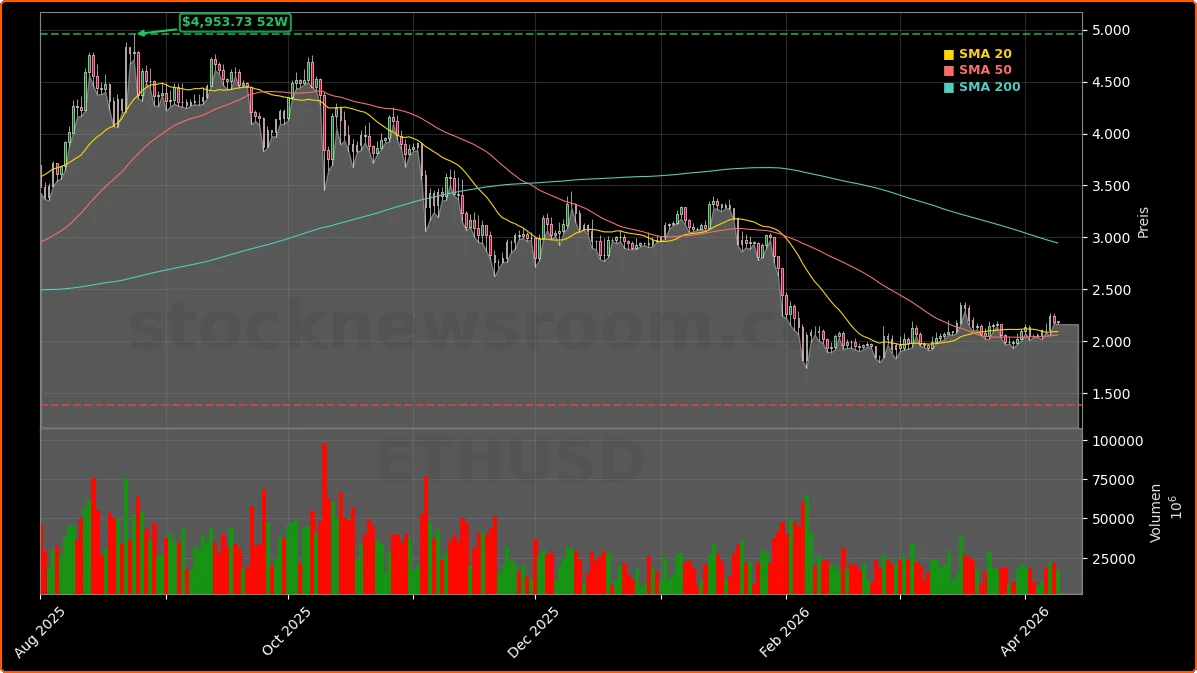
The Ethereum Netzwerk und Ethereum Foundation has confirmed a new 5,000 ETH conversion into stablecoins via CoWSwap’s TWAP execution, worth roughly $11.1 million at prices near $2,220. The stated purpose is to fund protocol research, ecosystem grants and donations, but the timing inevitably raises questions about supply overhang just as ETH pulls back from recent highs around $2,274. Ethereum currently trades near $2,192.37, slightly below the previous close of $2,190.18, leaving the token well off its 52‑week peak yet still firmly above key support near $2,120.
On-chain data show that Ethereum recently broke above $2,250 before sellers emerged, pushing the price back toward the $2,150–$2,200 band. Technically, traders are watching a declining channel with resistance around $2,220 and support levels near $2,165 and $2,120. The hourly MACD has slipped further into negative territory and the RSI is sitting below 50, signaling waning short-term momentum. A decisive break above $2,250 could reopen upside toward $2,320–$2,400, while a drop below $2,120 would risk a slide toward $2,080 and potentially $2,050.
How does the Ethereum Treasury Strategy actually work?
The June 2025 framework for the Ethereum Treasury Strategy ties monetization to a fiat-denominated operating buffer rather than a fixed number of coins. The Ethereum Foundation’s model assumes annual operating expenses of about 15% of treasury value and an operating runway of 2.5 years, implying a policy target of roughly 37.5% of total assets held in cash, stablecoins or other fiat-like instruments. Applied illustratively to the October 31, 2024 snapshot, the Foundation managed about $970.2 million in total treasury with $181.5 million already in non-crypto assets, suggesting room to grow its dollar buffer.
Over the last year, the organization has diversified away from pure spot holdings by deploying ETH into DeFi protocols such as Spark, Aave Prime, Aave Core and Compound, and borrowing against that collateral. In February 2025 it had 45,000 ETH deployed across these platforms and later borrowed $2 million in GHO against its Aave position, demonstrating that borrowing and staking are being layered on top of periodic sales rather than replacing them. The central idea of the Ethereum Treasury Strategy is not to stop selling ETH altogether, but to smooth the cadence and size of sales while maintaining a stable fiat runway.
Does staking revenue offset ongoing ETH sales?
In February 2025, the Foundation launched a dedicated staking sleeve targeting 70,000 ETH, with rewards returned to the treasury. By early April, roughly 69,500 ETH had been staked, close to the goal. With staking reference yields around 2.73%–3.00%, the program is expected to generate roughly 1,912–2,102 ETH per year, or about $4.25–$4.67 million at current prices. That is meaningful incremental yield, but the latest 5,000 ETH sale alone represents about 2.4–2.6 times the entire year’s staking income from the 70,000 ETH allocation.
This highlights a key point for Wall Street: the staking component of the Ethereum Treasury Strategy improves capital efficiency and lowers long-run funding needs, but it does not yet eliminate the need for direct ETH monetization. Yield from DeFi and staking allows the Foundation to sell fewer coins per quarter and potentially choose more market-friendly venues—such as OTC blocks, TWAP execution or conservative lending structures—but the treasury remains anchored to a fiat-denominated target. If ETH rallies sharply, fewer tokens need to be sold; if ETH weakens and opex rises, more may have to be monetized to preserve runway.
What does surging WETH activity signal for DeFi?
While the Foundation’s sales drew attention, the broader Ethereum network is also flashing unusual on-chain strength. Wrapped Ethereum (WETH), a core piece of DeFi plumbing, has seen one of the most aggressive activity spikes of the year, with 32,058 new wallets created in a single day—more than 16 times its typical daily average—and active wallets jumping to 46,650, over three times normal levels. Because WETH functions as infrastructure for decentralized exchanges, lending markets, and cross-chain bridges, such a surge often points to liquidity migration rather than retail speculation alone.
Several drivers look plausible. First, capital appears to be repositioning across DeFi, as traders and funds convert ETH to WETH to interact with smart contracts for yield farming, liquidity provision and arbitrage. Second, bridging flows between Ethereum mainnet and layer-2 networks have picked up, with WETH serving as the default asset for routing liquidity across ecosystems with lower fees and faster settlement. Third, the scale and speed of the WETH spike hint at institutional or algorithmic flows, not just retail wallets, even though that behavior is harder to confirm directly.
How should U.S. investors position around Ethereum?
For American investors holding ETH directly, via U.S.-listed crypto firms, or through diversified tech and AI plays like NVIDIA, Tesla and Apple, the evolving Ethereum Treasury Strategy matters as a macro driver of token supply and sentiment. The bull scenario is straightforward: higher ETH prices and a lower structural opex ratio allow the Foundation to maintain its fiat buffer while selling fewer coins, turning staking and DeFi yields into a larger share of its funding mix. The bear case runs the opposite way, with weaker prices and rising expenses forcing more aggressive monetization.
In the near term, the coexistence of staking, DeFi borrowing and periodic sales indicates a base case where ETH continues to see modest, predictable sell pressure from the Foundation but benefits from deeper, more sophisticated on-chain liquidity. The spike in WETH metrics underscores that capital is actively moving within the Ethereum ecosystem, even if that movement is neutral in terms of direction. For traders on Wall Street, these dynamics argue for watching both price levels around $2,120–$2,250 and treasury actions as leading indicators of volatility.
Ultimately, the Ethereum Netzwerk und Ethereum Foundation appears committed to a pragmatic Ethereum Treasury Strategy that balances fiat stability with crypto-native tools. That mix should help reduce execution risk, even if it cannot fully remove supply overhang. For long-term investors, the key will be whether rising network activity and maturing DeFi infrastructure translate into higher ETH prices, allowing the Foundation to sell fewer coins over time. The next round of treasury updates and on-chain data will show whether this strategy can support sustainable growth for the broader Ethereum ecosystem.