Is sticky Fed PCE Inflation quietly killing hopes for early rate cuts even as equity indices grind to fresh highs?
How did markets react to the PCE release?
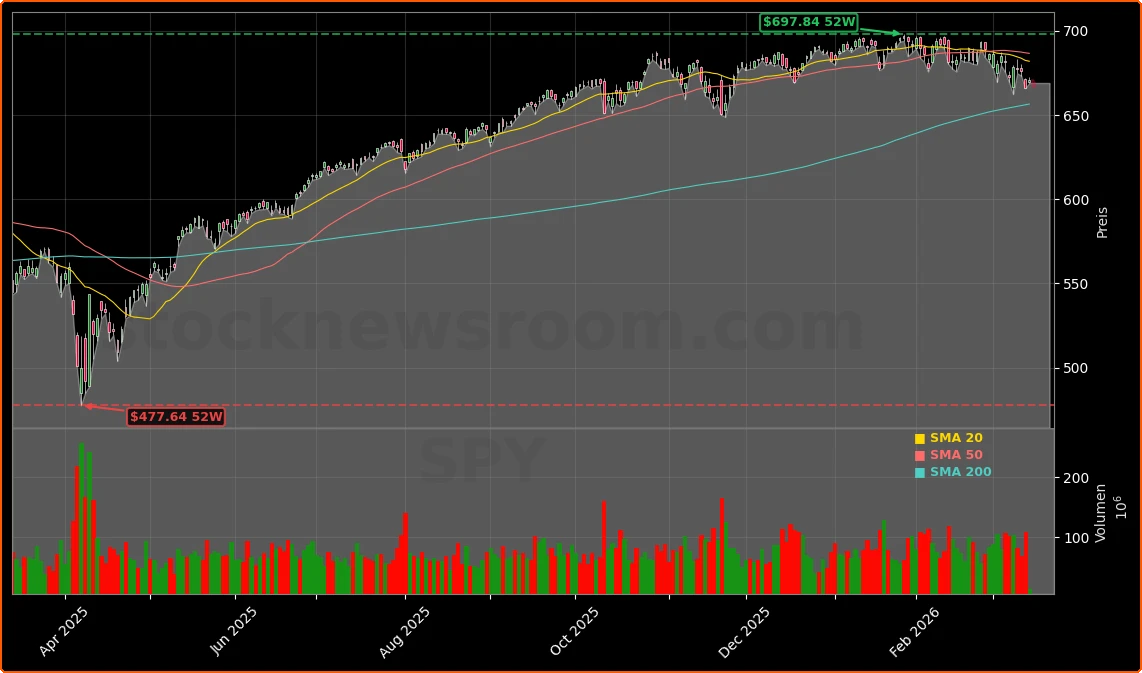
The key January core PCE reading, the Federal Reserve’s preferred inflation gauge, landed exactly in line with expectations at 3.1% year over year and 0.4% month over month (an unrounded 0.363%). That was enough to avoid a negative surprise, and equity futures initially moved higher. S&P 500 futures gained around 0.46% in pre-market trading, and by early afternoon in Europe the S&P 500 stood at roughly 6,697 points, up about 0.37% from the previous close of 6,671.81. The modest move reflects a market that is relieved Fed PCE Inflation did not reaccelerate but still wary of how long rates may stay elevated.
The headline PCE index, including food and energy, is estimated to have risen about 0.3% month on month and to be roughly stable near 2.9% year on year. However, Fed officials have repeatedly stressed that the core gauge is more informative for policy because it captures underlying services inflation and wage dynamics. With core PCE well above the 2% target, the latest numbers reinforce the narrative of a slow and uneven disinflation, rather than a clean glide path back to the Fed’s goal.
What does sticky core inflation mean for Fed policy?
For rate expectations, the January report is a mixed bag. On the one hand, Fed PCE Inflation did not surprise to the upside, which helps validate the central bank’s decision to pause after its aggressive hiking cycle. On the other hand, a 3.1% core rate confirms that inflation remains “sticky” and that progress toward 2% has stalled for now. The GDP price index for the last quarter came in at 0.7% versus earlier expectations of 1.4%, signaling some easing in broader price pressures, but not enough to declare victory.
Investors now largely expect the Federal Open Market Committee to leave rates unchanged at its meeting next week. Futures markets are increasingly pricing out early and aggressive rate cuts for 2026, shifting expectations toward a “higher for longer” regime. The Fed must also weigh the impact of the recent war-driven oil price shock in the Middle East, which is likely to filter into upcoming PCE readings with a delay. While energy and food are excluded from core PCE, higher fuel costs tend to spill over into transportation, logistics, and ultimately services inflation, complicating the fight against Fed PCE Inflation.
Fed officials have signaled they need “greater confidence” that inflation is moving sustainably toward 2% before cutting. With core PCE stuck above 3%, that confidence is still missing. The new data therefore keeps open the risk scenario that, if inflation re-accelerates in coming months as energy pass-through intensifies, renewed discussions about further hikes could re-emerge instead of the rate cuts investors are hoping for.
Which sectors and stocks are most exposed?
For US portfolios, the persistence of Fed PCE Inflation has clear sector implications. Rate-sensitive growth names in technology and communication services, including heavyweights like NVIDIA and Apple, remain sensitive to any repricing of the yield curve. A slower pace of cuts or even talk of additional hikes would support higher real yields, generally a headwind for long-duration assets. However, as long as inflation does not spike beyond expectations, mega-cap tech can still benefit from resilient demand and strong balance sheets.
On the cyclical side, consumer discretionary and travel-related names, such as Tesla in electric vehicles, must navigate the squeeze between elevated borrowing costs and potential pressure on real household incomes if inflation stays above wage growth. At the same time, financials could benefit from a prolonged period of elevated short-term rates, as net interest margins remain supported. Defensive sectors like health care and consumer staples may continue to appeal to investors looking for earnings stability while the Fed PCE Inflation path remains uncertain.
For fixed income, the in-line core PCE print may limit immediate upside in Treasury yields, but the 3.1% reading makes it harder to justify very low long-term yields in valuation models. Credit spreads have so far remained contained, reflecting expectations of a soft landing rather than a deep recession, yet any renewed inflation shock from energy could challenge that assumption.
How are strategists framing the risk ahead?
Wall Street strategists emphasize that the January data represent the prelude, not the full story, of this year’s inflation dynamics. Core PCE was already elevated before the latest oil price spike, and many economists expect additional “incremental inflation” from energy in the coming months. This raises the probability that Fed PCE Inflation will descend toward 2% more slowly than investors previously hoped. Some banks, including Goldman Sachs and Morgan Stanley, now highlight a wider range of potential policy paths for 2026, from a shallow cutting cycle to a renewed tightening debate if inflation fails to moderate further.
With core PCE stuck just above 3%, the Fed has little reason to rush into rate cuts, and markets will have to live with higher-for-longer policy for a while longer.
— Senior US rate strategist at a major Wall Street bank
Conclusion
Citigroup and RBC Capital Markets have both stressed in recent client notes that the Fed is unlikely to respond to a single data point, instead watching the trend over several months. For equity investors, this means that near-term volatility around each inflation release is likely to stay elevated. The key question is whether upcoming PCE and labor-market data can show a convincing downward trend in core inflation without triggering a sharp deterioration in growth.
Further Reading
- Personal Consumption Expenditures Price Index (Bureau of Economic Analysis)
- Summary of Economic Projections and inflation focus (Federal Reserve)
- Market reaction to latest US inflation data (Bloomberg)
- US PCE Inflation bei Yahoo Finance (Yahoo Finance)