Will the Iran oil shock merely delay the Federal Reserve Rate Path or force a complete rethink of the easing cycle?
Federal Reserve: Is the Iran Oil Shock a Game-Changer for Policy?
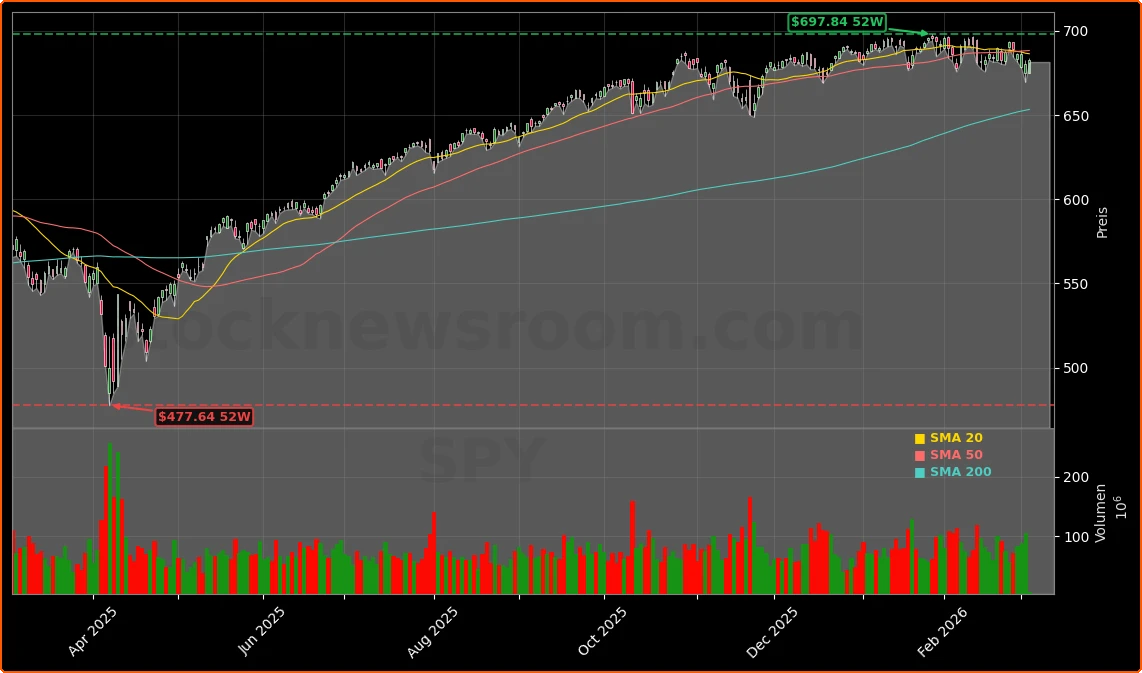
As the Iran conflict enters its second week and disrupts transit through the Strait of Hormuz, oil prices have surged and the macro narrative on Wall Street has shifted abruptly. The S&P 500, recently within about 5% of its record high, has pulled back as higher energy prices revive memories of 2022’s inflation shock. The index is currently down around 0.9% from the prior close, underscoring how quickly risk sentiment can flip when the macro backdrop changes.
For the Federal Reserve, the immediate question is whether this shock is large and persistent enough to derail disinflation and alter the Federal Reserve Rate Path that markets had priced in after three rate cuts in 2025. Before the conflict, Fed officials saw inflation moving toward a 2.5%–3% band, with core measures easing gradually. After aggressive hikes in 2022–2023 and subsequent cuts in late 2024 and 2025, policy was widely viewed as moving from “restrictive” toward “less restrictive,” paving the way for further gradual easing.
The new backdrop is different. Oil is trading materially higher, gasoline prices in the U.S. have jumped by more than 10 cents overnight in some regions, and the 10-year Treasury yield has pushed to roughly 4.07%–4.08%. Traders have responded by pushing out the expected start date of cuts to September and trimming the number of moves they expect this year to roughly two, versus three or more previously. Fed officials, for now, are emphasizing patience. Minneapolis Fed President Neil Kashkari has stressed that it is too early to judge the full inflation impact of the conflict, while Cleveland Fed President Beth Hammack argues that rates should stay at restrictive levels for “quite some time” to be sure inflation returns toward target.
That message fits with a broader hawkish bias on the Federal Reserve Rate Path: policymakers want clear, sustained evidence that inflation is headed back toward 2% before committing to additional easing. An oil-driven pop in headline CPI toward 3% would not automatically trigger hikes, but it could easily delay or reduce the scope of cuts markets still hope for in the second half of the year.
Goldman Sachs: Warflation Risks and the Federal Reserve Rate Path
Investment banks are rapidly revising their macro playbooks to account for a prolonged period of elevated oil prices. Goldman Sachs, in particular, has warned that the Iran conflict and a partial closure of the Strait of Hormuz could push crude toward $90–$100 per barrel if disruptions persist for several weeks. In its latest scenario work, Goldman estimates that a sustained $10 per barrel increase in oil prices would shave roughly 0.1 percentage point off 2026 U.S. GDP growth, mainly via a hit to real disposable income. That’s a modest drag on growth but more material for inflation.
On prices, Goldman expects a 10% oil price shock to add roughly 28 basis points to headline CPI and about 4 basis points to core CPI over time. In an extended high-oil scenario, year-over-year headline inflation could temporarily move back toward 3%. While that does not recreate the 2022 inflation spike, it would stall recent progress and complicate the Federal Reserve Rate Path. In other words, war remains inflationary: supply shocks to energy ripple through shipping costs, manufacturing input prices, and ultimately consumer goods.
This “warflation” channel is already visible in survey and market data. Measures of inflation expectations have nudged higher, and the short end of the Treasury curve is repricing: futures have started to remove some of the cuts that were baked in for 2026. Traders now assign non-negligible odds to a “no-cuts” scenario for this year if the conflict drags on and oil remains elevated. That repricing matters not only for Treasuries and mortgages but also for rate-sensitive sectors of the equity market, including high-growth technology names such as NVIDIA and Apple, which had benefited from falling yields through late 2025.
Goldman Sachs has not published a formal dots-like path for the Fed, but the bank’s messaging points to fewer cuts and a later start if oil-driven inflation fails to fade quickly. The upshot: the consensus glide path of steady, quarter-point cuts each meeting is no longer credible. Instead, investors must think in terms of a conditional Federal Reserve Rate Path: easing that happens only if oil shocks prove transitory and core inflation keeps grinding lower.
J.P. Morgan: Oil at $100 and the Fed’s Reaction Function?
J.P. Morgan has outlined a more severe scenario in which a three-week or longer effective closure of the Strait of Hormuz could push oil toward $100 per barrel. In that case, the inflation impact would be larger, and the Fed’s reaction function would come under intense scrutiny. Historically, central banks try to “look through” short-lived commodity shocks, but that becomes harder if they begin to shift inflation expectations or bleed into core categories such as transportation services and goods prices.
In J.P. Morgan’s view, a durable move in oil above $80, let alone $100, would clearly raise the risk that the Fed cannot cut as much as the market expects—and might even have to keep the policy rate flat or, in an extreme scenario, signal a willingness to hike again if core inflation re-accelerates. That’s not the base case today, but it explains why the front end of the curve has sold off and why volatility, as measured by the VIX, has spiked into the mid-20s, well above the prior “comfort zone.”
From a portfolio standpoint, this scenario introduces an uncomfortable trade-off. Higher oil prices hurt consumer discretionary names and rate-sensitive housing plays, but they support energy producers and some parts of industrials. At the same time, a shallower or delayed easing cycle raises discount rates, compressing the valuations of long-duration assets like AI leaders NVIDIA and electric-vehicle manufacturers like Tesla. The S&P 500’s heavy tilt toward mega-cap growth means that any hawkish adjustment to the Federal Reserve Rate Path can have an outsized impact on index-level performance, even if broader economic damage from oil remains contained.
J.P. Morgan’s macro desk has not yet called for a change in the fed funds target range, but its commentary underscores the conditionality that now defines the Fed outlook. Under a benign scenario where oil settles back below $80 and the conflict de-escalates, two cuts in the second half of the year remain plausible. Under a more adverse scenario, those cuts could shrink to one—or disappear entirely.
Stephen Myron: How Fed Doves See the Federal Reserve Rate Path Now
Within the Fed itself, the spectrum of views helps investors map the most likely policy corridor. Fed Governor Stephen Myron, often viewed as one of the more dovish voices, recently described current policy as “moderately restrictive,” roughly one percentage point above his estimate of the neutral rate. He has argued for lowering rates in 25 basis point steps toward neutral as long as inflation does not fall below target, effectively endorsing a slow normalization path.
Crucially, Myron emphasizes that the central bank traditionally looks past temporary spikes in headline inflation driven by commodity prices, focusing instead on core PCE and underlying wage trends. He notes that today’s situation is not a repeat of 2022, when loose fiscal policy and post-pandemic reopening demand amplified supply shocks. In 2026, fiscal policy is less stimulative, and supply is being expanded more aggressively in sectors like energy and data centers. That, in his view, reduces the odds that an oil shock morphs into a broad, entrenched inflation spiral.
Still, even Myron’s relatively dovish stance does not guarantee rapid easing. He and other officials have stressed that additional cuts will be considered only if inflation continues to move credibly toward 2% and the labor market shows clearer signs of cooling. Recent data suggest the U.S. economy remains resilient, with GDP growth supported in part by massive data center investment and AI-related capex. That resilience gives the Fed cover to keep rates higher for longer if necessary.
For investors, the message is nuanced but important: the Federal Reserve Rate Path is still biased toward gradual cuts, not hikes, but that bias is weaker than it was before the Iran conflict and the oil spike. The Fed’s “doves” now look more like cautious pragmatists, and the hurdle for faster easing has risen.
Portfolio Impact: From Bonds and Banks to Tech and Crypto
The evolving rate narrative is already shaping cross-asset performance. Treasury yields across the curve have climbed as markets reassess inflation risk. The 10-year at about 4.07%–4.08% and the persistent term premium are pressuring long-duration assets and supporting the dollar, at least temporarily. Mortgage and corporate borrowing costs, which are anchored to Treasury yields and the fed funds rate, remain elevated relative to 2021–2022 levels, keeping a lid on housing activity and leveraged corporate balance sheets.
In fixed income, parts of the market that were expected to benefit from a smooth easing cycle are seeing renewed selling pressure instead of acting as safe havens. Geopolitical risk is increasingly driving asset allocation, with investors weighing security risk, sanctions, and energy disruption alongside traditional macro variables. A flatter, more uncertain Federal Reserve Rate Path means investors may want to shorten duration, favor higher-quality credit, and selectively add exposure to sectors that benefit from higher energy prices.
In equities, the path of policy will be central for sectors that discount cash flows far into the future. Mega-cap tech and AI beneficiaries such as NVIDIA and Apple have been priced on the assumption of structurally lower real yields. If the Fed delivers fewer cuts, the equity risk premium for these names needs to do more work, or valuations may compress. Conversely, financials—particularly large U.S. banks—could benefit from a steeper curve and still-elevated short rates if credit quality holds.
On the alternative asset side, Bitcoin and other cryptocurrencies had begun trading as partial “rate-cut proxies,” with investors betting that easier policy and a more crypto-friendly Fed chair later this year could be a tailwind. The combination of conflict-driven risk appetite and expectations of eventual cuts may still support the space, but a slower or smaller easing cycle tempers the most optimistic scenarios. Gold, which had previously pulled back on rising real yields, could regain its safe-haven bid if Iran-related risks broaden—even as higher nominal yields pose a headwind.
Fact box: Macro and Market Snapshot
What matters for markets now is not just the size of the oil shock, but how it alters the Federal Reserve Rate Path over the next 12–18 months.
— StockNewsroom Macro Strategy Desk
Conclusion
Fazit folgt.
Further Reading
- Fed’s Hammack says it is too early to judge impact of Iran war (Reuters)
- Oil surge revives inflation worries and complicates Fed path (Yahoo Finance)
- CME FedWatch Tool – Fed target rate probabilities (CME Group)