Will Federal Reserve Rate Policy stay hawkish as the Iran war drives an oil shock and rekindles stagflation fears?
How will Federal Reserve Rate Policy react to the oil shock?
The fed begins its two-day policy meeting on Tuesday against an unusually toxic backdrop: a major Middle East conflict, disrupted shipping through the Strait of Hormuz and one of the sharpest jumps in oil prices in years. Brent crude has climbed above $103 per barrel, while West Texas Intermediate trades just under $100, raising the prospect of higher fuel, food and transport costs rippling through the economy.
Inflation is already running above the central bank’s 2% target. The headline Personal Consumption Expenditures price index stands at 2.8% year over year, with core PCE at 3.1% and accelerating on a monthly basis. At the same time, US real GDP growth was revised down to just 0.7% in Q4, and forward-looking indicators point to cooling labor demand. This combination of sticky inflation and weakening growth is precisely what investors fear most: stagflation.
Despite these pressures, futures markets assign roughly a 99% probability that the fed will leave its benchmark rate unchanged in a 3.50%–3.75% range at Wednesday’s decision and a similarly high probability of no move at the April 29 meeting. Traders have largely priced out the idea of early cuts, now expecting at most one or two rate reductions in the second half of 2026 as part of a very gradual easing of Federal Reserve Rate Policy.
Can Jerome Powell resist Trump’s rate-cut push?
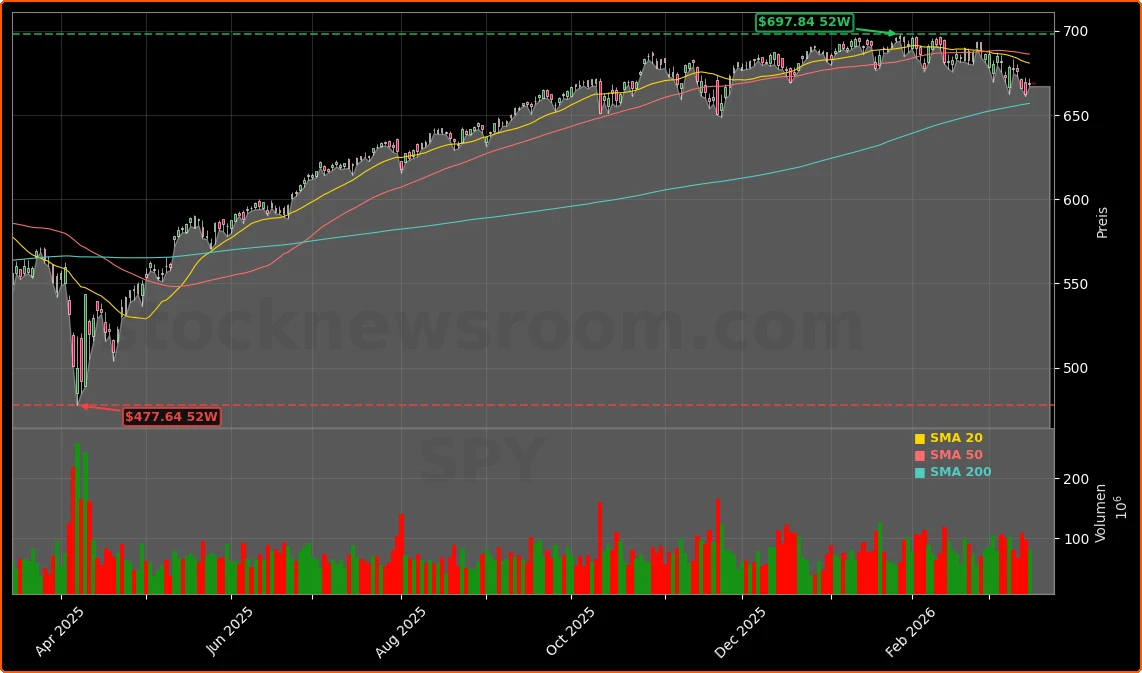
Adding to the uncertainty is open political pressure from President Donald Trump, who has repeatedly demanded immediate and “substantially lower” interest rates, arguing the US should have “the lowest in the world.” Trump contends that high rates hurt national security, raise the cost of servicing the roughly $39 trillion US national debt and weigh on housing and the stock market. Lower borrowing costs would likely boost liquidity for risk assets, including megacap tech names like NVIDIA, Apple and Tesla, and could further support the S&P 500, which trades around 1% higher today at 6699.38.
For now, Powell is expected to hold the line. CME-derived probabilities show markets discounting only about a 1% chance of a surprise 25-basis-point cut this week. Traders are instead focused on the press conference and the new policy statement for any nuance around Federal Reserve Rate Policy — in particular, whether the central bank emphasizes inflation risks from oil or downside threats to growth and employment.
Complicating matters further, Powell’s term as Fed chair ends in May, though he is expected to remain on the Board of Governors. Trump’s preferred successor, former Fed governor Kevin Warsh, is seen as more open to rate cuts in a downturn, but investors doubt he would launch his tenure with a hike or an emergency cut in the middle of an escalating conflict with Iran.
What signals are other central banks sending?
Global peers are already reacting to the energy shock. The Reserve Bank of Australia surprised markets with a 25-basis-point hike to 4.1% in a narrow 5–4 vote, explicitly prioritizing inflation risks from the Iran war over domestic growth concerns. That move has been read in New York as a warning that other central banks could also lean hawkish if second-round inflation effects intensify.
In Asia, the Philippine central bank has signaled that it may raise rates if inflation breaches the top of its 2%–4% target band, especially if oil stays above $80 for an extended period and the peso weakens beyond 60 per dollar. Meanwhile, investors are watching the European Central Bank and Bank of Japan meetings later in the week for confirmation that global policy will stay tighter for longer.
On Wall Street, higher long-term Treasury yields underline the tension. The 10-year note is trading above 4.2%, while 30-year yields hover near 4.88%. Historically, sustained moves above 5% on the long bond have pressured equities, especially high-duration growth stocks and richly valued sectors such as technology. If Federal Reserve Rate Policy remains restrictive into 2026, stretched multiples could face renewed scrutiny even as energy and defense shares benefit from the geopolitical backdrop.
What’s at stake for portfolios if stagflation takes hold?
The biggest risk from here is that oil prices keep climbing toward the $120–$130 range flagged by JPMorgan as a potential trigger for renewed tightening. A rule of thumb on Wall Street is that a $10 sustained rise in crude can shave 10–20 basis points off real GDP growth. With growth already below 1%, a prolonged energy shock could tip the US into recession even as inflation re-accelerates.
The combination of an Iran-driven oil shock and already elevated core inflation means the Fed will likely talk tough on prices while quietly hoping growth does not roll over.
— Independent macro strategist in New York
Conclusion
For investors, this would be the worst-case scenario. Stagflation would limit the fed’s ability to cut aggressively while still forcing households and companies to absorb higher costs, compressing earnings margins. Rate-sensitive assets such as long-duration Treasuries and high-growth tech could underperform, while commodities, energy producers and select value stocks might offer relative resilience. Crypto assets could see less downward pressure than previously feared, as traders now expect fewer or later Fed cuts, but volatility would likely remain elevated.
Further Reading
- FedWatch Tool – Target Rate Probabilities (CME Group)
- US PCE Price Index and Core PCE Data (Bureau of Economic Analysis)
- Global Oil Price Benchmarks (Brent and WTI) (Reuters)