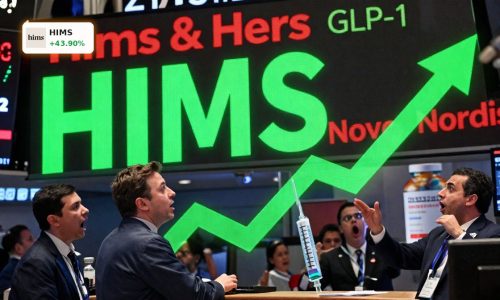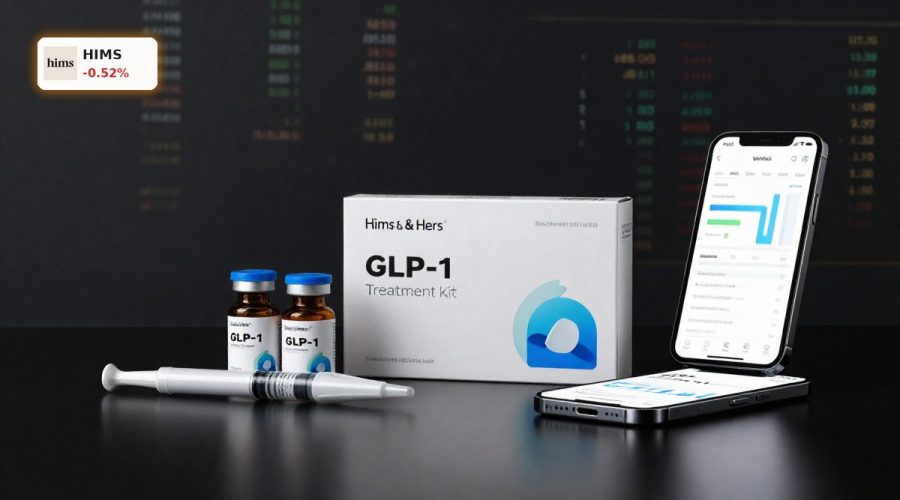
Are Hims & Hers insider transactions hinting at caution just as the company doubles down on its high-stakes GLP-1 obesity strategy?
[fxmag_hero_image]
Are Hims & Hers insider transactions flashing a signal?
The latest Hims & Hers insider transactions show a cluster of large moves dated March 13, 2026, reported to the SEC on Form 4 and followed by fresh Form 144 sale intentions on March 17. Chairman Andrew Dudum reported a vesting of 164,369 shares and the surrender of 526,486 shares at an average price of $24.77, resulting in a net disposal of 362,117 shares. Even after that, he still directly owns more than 1.3 million shares and indirectly controls over 8.2 million, underscoring that he remains heavily aligned with shareholder outcomes despite monetizing part of his stake.
Chief Financial Officer Oluyemi Okupe disclosed vesting of 105,200 shares and a surrender of 283,990 shares at $24.77, for a net disposal of 178,790 shares. Officer Soleil Boughton surrendered 168,750 shares after 41,421 vested, leading to a net disposal of 127,329 shares, while Chief Operating Officer Michael Chi reported a net disposal of 165,648 shares after surrendering 237,756 shares tied to vesting. These transactions were largely described as surrenders to cover tax and option-related obligations, a common practice at fast-growing tech-enabled firms such as Apple and Tesla.
Alongside these Form 4s, Form 144 filings on March 17 show Chi registering 97,289 restricted shares for potential sale, Vice President Irene Becklund registering 5,529 shares, and Boughton registering 4,812 shares. While Form 144 only reflects an intention to sell within a 90-day window, the concentration of Hims & Hers insider transactions around the current price range will be closely watched by traders after the stock’s recent 57% weekly jump highlighted by broader market summaries.
How do Hims & Hers and obesity drugs intersect now?
The insider activity lands as Hims & Hers Health, Inc. is rapidly reshaping its presence in the obesity-drug arena. The company has negotiated a deal with Novo Nordisk that will allow its platform to offer branded GLP-1 products Ozempic and Wegovy, resolving prior legal disputes and positioning Hims as a direct distribution partner for one of the most in-demand drug classes on Wall Street. This partnership could help Novo Nordisk manage pricing dynamics in the fiercely competitive GLP-1 race against Eli Lilly, while giving Hims access to a high-margin, high-demand category that has energized health and pharma stocks across the NASDAQ and S&P 500.
At the same time, Hims is facing a class action lawsuit alleging that its compounded semaglutide GLP-1 products were falsely advertised as equivalent to branded drugs, and a separate securities-focused investigation by the Portnoy Law Firm tied to potential misstatements around its weight-loss offerings. Those legal challenges introduce headline risk that investors must balance against the growth runway in GLP-1 subscriptions, international expansion, and new service lines, including labs tracking and multi-cancer screening that expand the digital care platform beyond hair loss and mental health.
For context, Hims has also been building out a broader subscription ecosystem, including a new “Benefits” program that bundles discounted access to diagnostics and advanced health services, and the planned acquisition of Australian digital health player Eucalyptus to accelerate global reach. In this sense, the obesity-drug story is only one pillar of a platform strategy that aims to resemble scaled consumer-health models seen at larger innovation players like NVIDIA-driven AI health initiatives in diagnostics or digital ecosystems developed by Apple in wellness.
What should investors make of these moves?
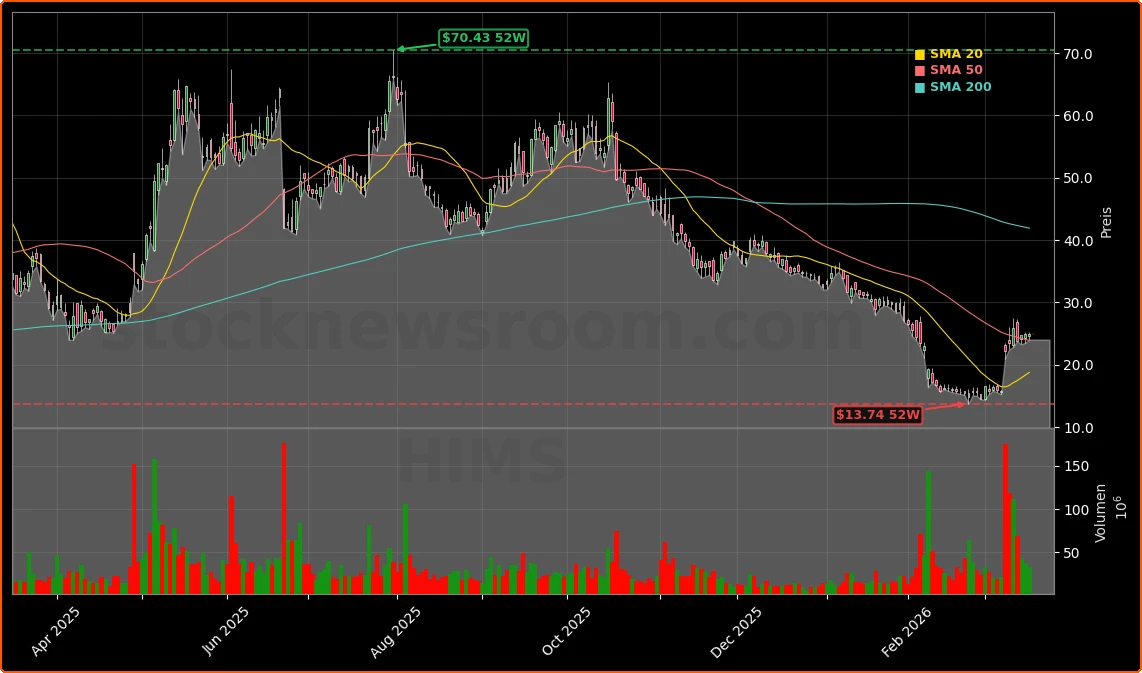
From an investor perspective, the pattern of Hims & Hers insider transactions over the past year shows repeated programmed selling by senior leaders, often under Rule 10b5-1 trading plans and in connection with vesting events. Recent history includes substantial disposals by Dudum, Okupe, Chi, and Boughton at much higher prices last fall, with multiple sales in the $50–$60 range before the stock’s sharp correction and subsequent rebound. That history can cut both ways for sentiment: on one hand, consistent selling may raise questions about valuation; on the other, insiders still retain sizable stakes and continue to receive equity-based compensation, suggesting they see long-term upside in the business model.
Valuation remains a key debate. Some fundamental analysts model Hims as a high-growth digital health platform and arrive at fair values far above current trading levels, while also flagging the elevated P/E multiple versus the broader U.S. healthcare sector. No major Wall Street bank has publicly updated a rating in direct response to this specific cluster of Hims & Hers insider transactions, but the combination of GLP-1 exposure, legal uncertainty, and rapid product expansion is likely to keep firms such as Goldman Sachs, Morgan Stanley, and Citigroup focused on execution risk, regulatory developments, and customer retention metrics in upcoming quarters.
With the stock up more than 50% in a week yet still well below last year’s highs, short-term traders may interpret the latest filings as an opportunity to lock in gains, while long-term investors will be more focused on whether Hims can translate its Novo Nordisk partnership, Eucalyptus deal, and expanded benefits ecosystem into durable, high-margin recurring revenue.
In conclusion, the current wave of Hims & Hers insider transactions highlights both profit-taking and routine tax-related share surrenders at a moment when the company is redefining its role in the obesity-drug market and digital health more broadly. For U.S. investors, the interaction between insider behavior, GLP-1 growth prospects, and mounting legal scrutiny will likely drive volatility around HIMS in the near term. The next catalysts will be how quickly Hims scales branded GLP-1 offerings, integrates new services, and reassures Wall Street that these Hims & Hers insider transactions reflect portfolio diversification rather than a lack of confidence in the long-term story.