Is Intel’s aggressive AI-driven CPU pricing strategy the start of a durable turnaround or just a late-cycle squeeze on demand?

How is Intel using AI demand to raise CPU prices?
Intel Corporation and Advanced Micro Devices have warned OEM customers of yet another round of CPU price increases, pushing year-to-date hikes to roughly 15%. Industry reports indicate Intel has lifted some chip prices by 15% to 20% as supply constraints spread from memory into mainstream PC and server processors. The move underscores how Intel AI CPU Strategy is increasingly about rationing scarce manufacturing capacity toward AI‑linked products and the customers willing to pay most, notably hyperscale cloud players and large enterprises.
The rise of so‑called agentic AI systems – software agents that operate autonomously on behalf of users – is adding to the strain. These workloads not only need GPU accelerators from players like NVIDIA, they also depend on high‑core‑count CPUs for orchestration, inference scheduling, and traditional compute. That dynamic is giving Intel unusual pricing leverage at a time when many consumer PC buyers remain price sensitive. Instead of chasing unit volume, Intel is allowing prices to do the rationing, redirecting wafer capacity toward higher‑margin AI data center and premium PC segments.
Why Intel AI CPU Strategy matters for data centers
On the data center side, Intel AI CPU Strategy is tightly tied to its Xeon 6 lineup (Granite Rapids and Sierra Forest) and its Gaudi AI accelerators. Recent quarterly results showed the Datacenter and AI Group delivering $4.74 billion in Q4 2025 revenue, up about 15% sequentially, helped by solid demand for traditional servers and storage compute built on Xeon 6 processors. That suggests that, despite fierce competition from NVIDIA GPUs and AMD EPYC, Intel can still tap a large base of enterprise and cloud customers standardizing around its x86 ecosystem.
At the same time, Intel is widening its AI reach via ecosystem deals. A new collaboration with ControlUp integrates Intel Device IQ and validates ControlUp ONE as an Intel vPro Certified Application, enabling silicon‑level telemetry and AI-driven analytics right on enterprise endpoints. Separately, ESET’s security suite has also secured Intel vPro Certified App status, highlighting how Intel AI CPU Strategy extends beyond the server room into secure, AI‑enhanced endpoint management for corporate fleets. These partnerships reinforce the idea that Intel’s AI push is as much about platform stickiness as raw chip speeds.
Can Intel hold its ground as Arm and AMD attack?
Competitive pressure is intensifying just as Intel flexes its pricing power. Arm has announced it will design and sell its own AI data center CPUs, targeting the same lucrative server market long dominated by Intel and AMD. The move sent Arm’s stock sharply higher and initially raised fears of margin compression for incumbent x86 vendors. Yet Intel and AMD shares also climbed on the news, reflecting a broader investor thesis that the AI compute pie is expanding fast enough for multiple architectures to thrive.
For now, Arm’s new AGI CPU chip is projected to chase a massive revenue opportunity over the next five years, but Intel’s incumbency in data centers and its deep software and tools ecosystem remain formidable moats. AMD continues to gain share with its EPYC CPUs and Instinct MI accelerators, but Intel AI CPU Strategy is responding on multiple fronts: next‑gen Xeon for AI‑heavy cloud and enterprise workloads, Gaudi accelerators to compete with NVIDIA in training and inference, and an ambitious Intel Foundry Services build‑out aiming to challenge TSMC over the long term. The company is effectively betting that a vertically integrated model – CPU, accelerator, and foundry – can capture more of the AI value chain.
What does this mean for Intel’s valuation on Wall Street?
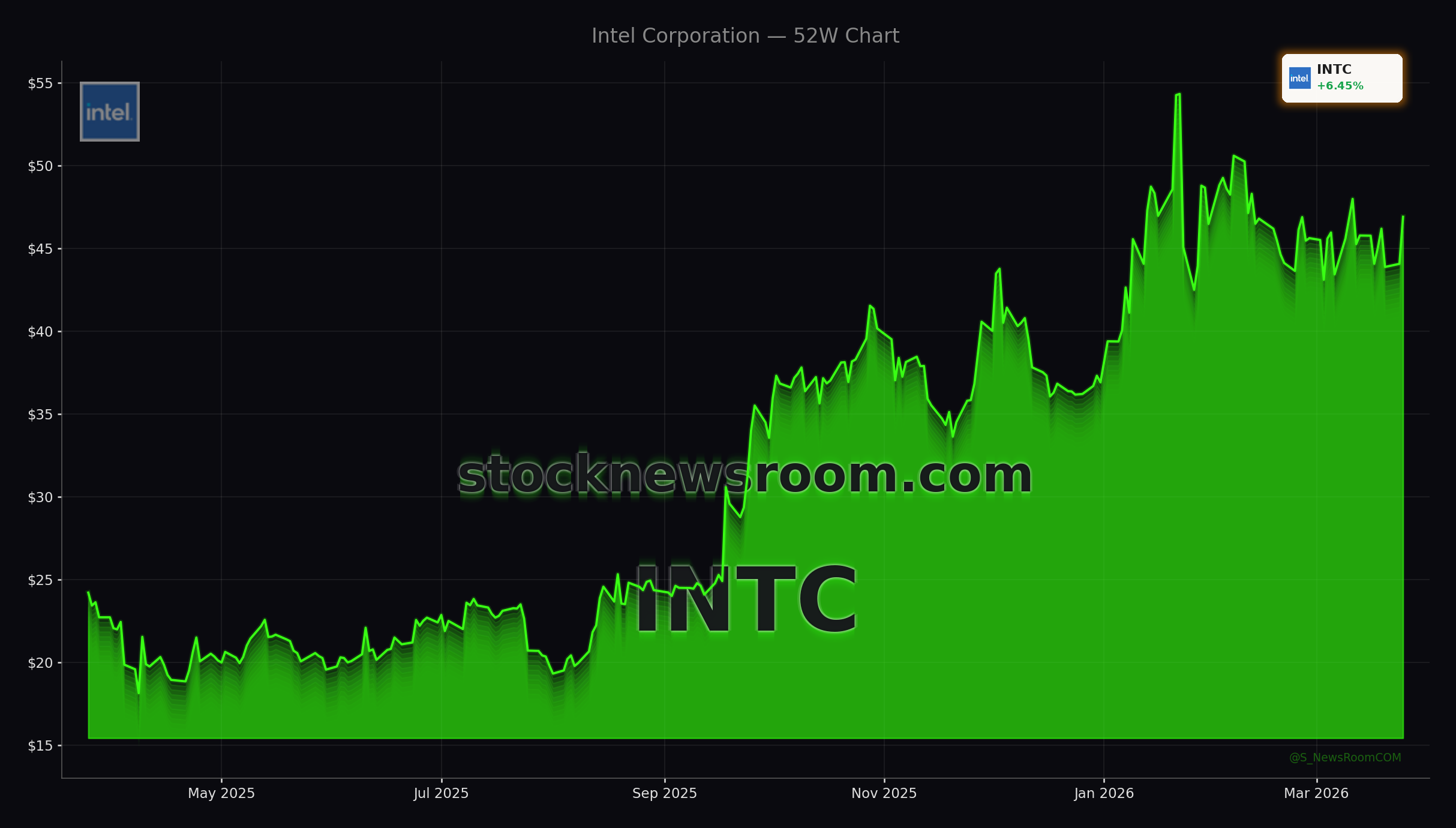
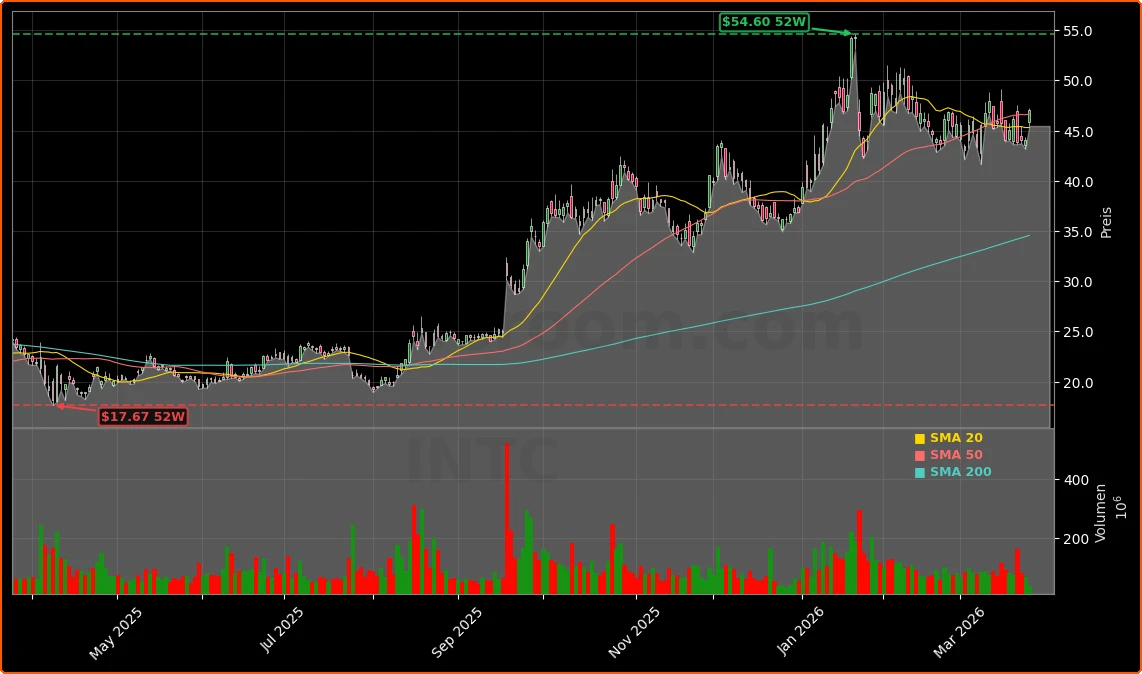
With Intel trading around $47 and up nearly 7% on the day, the stock sits below many long‑term bull targets but above several cautious near‑term views. MarketBeat data shows an average analyst rating of “Reduce” with a consensus target price near $45.74, implying that much of the Street remains skeptical about execution risk in both AI accelerators and the foundry ramp. Some firms like Zacks Investment Research highlight the momentum in the Datacenter and AI Group but still frame the key question as sustainability once early Xeon 6 and Gaudi ramps normalize.
Valuation optics reflect the tension. On forward earnings multiples, Arm trades at a far richer premium than Intel or AMD, suggesting investors are still treating Intel more like a cyclical PC and server name than a full‑blown AI platform leader. Successful delivery on Intel AI CPU Strategy – consistent Xeon 6 share stabilization, Gaudi design wins, and credible foundry customer traction – could gradually close that gap. Until then, Wall Street is likely to reward execution milestones and penalize any roadmap slips harshly.
How are AI PCs and partners reinforcing Intel’s position?
On the client side, the next leg of Intel AI CPU Strategy is the AI PC. OEMs such as HP are rolling out AI‑enhanced laptops and workstations that pair Intel silicon with on‑device intelligence, new collaboration features, and hardware‑level security. HP’s latest EliteBook and Z Workstation refresh, for example, leans on dedicated AI capabilities and advanced protections that dovetail with Intel vPro and device telemetry, helping position AI PCs as a premium upgrade cycle for corporate buyers.
This approach plays directly into Intel’s historical strength with large enterprise PC deployments and remote management. As agentic AI filters down into everyday productivity and security tools, Intel’s silicon hooks – from CPU instructions to telemetry engines – give partners a deeper toolkit to differentiate their offerings versus rival platforms from Apple and others. For U.S. investors, that raises the possibility that AI PCs could supplement, not just replace, traditional PC demand over the next upgrade cycle.
Related Coverage
Investors looking for a deeper dive into Intel’s upside scenarios can read “Intel Forecast +5.7%: Can the AI Rally Hold Up to $55?”, which analyzes how far the current recovery could extend and what milestones the company must hit to justify a move toward the mid‑$50s. For a broader sector view, “Advanced Micro Devices AI Chips +6.6% Rally as Arm Steps In” explores how AMD and Arm are reshaping the competitive landscape in AI data center compute and what that means for chip allocation across hyperscale data centers.
In the end, Intel AI CPU Strategy is about using AI‑driven scarcity and ecosystem partnerships to upgrade the company’s earnings power across data centers and PCs. For U.S. portfolios, the stock offers a leveraged play on AI compute demand but with meaningful execution and competitive risk attached. The next few quarters of Xeon 6, Gaudi, and AI PC adoption will show whether Intel can turn today’s pricing power into a durable AI‑centric growth story.