Can the Intel Terafab alliance with Elon Musk’s empire really reboot Intel’s AI ambitions and rewrite the chip foundry race?

Why does Intel Terafab move the stock now?
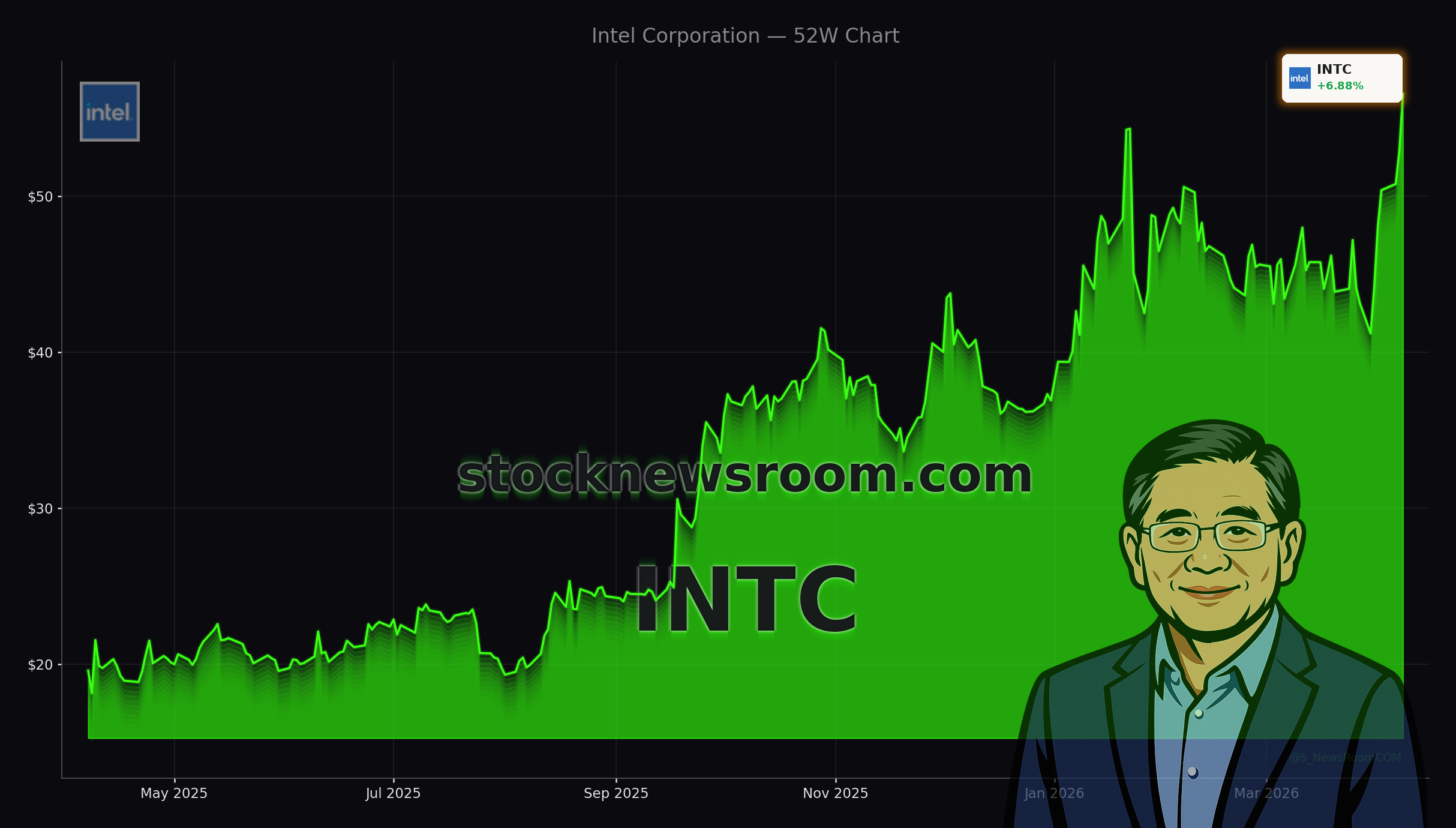
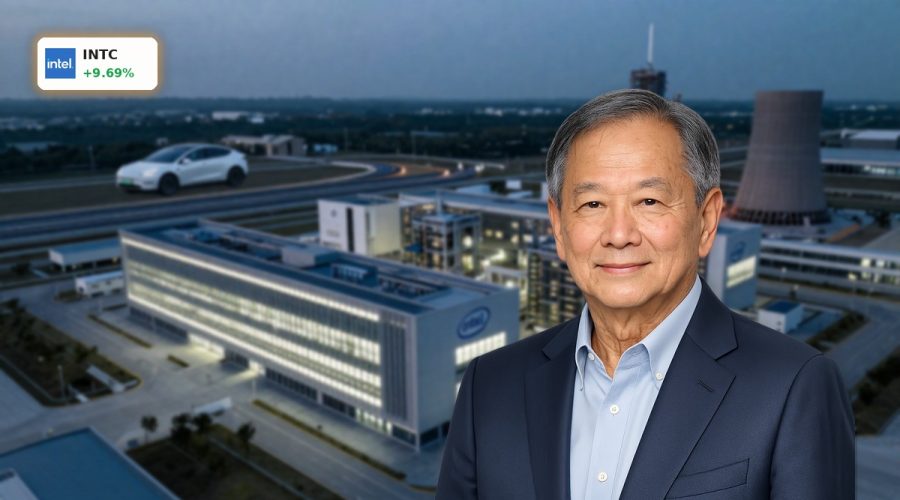
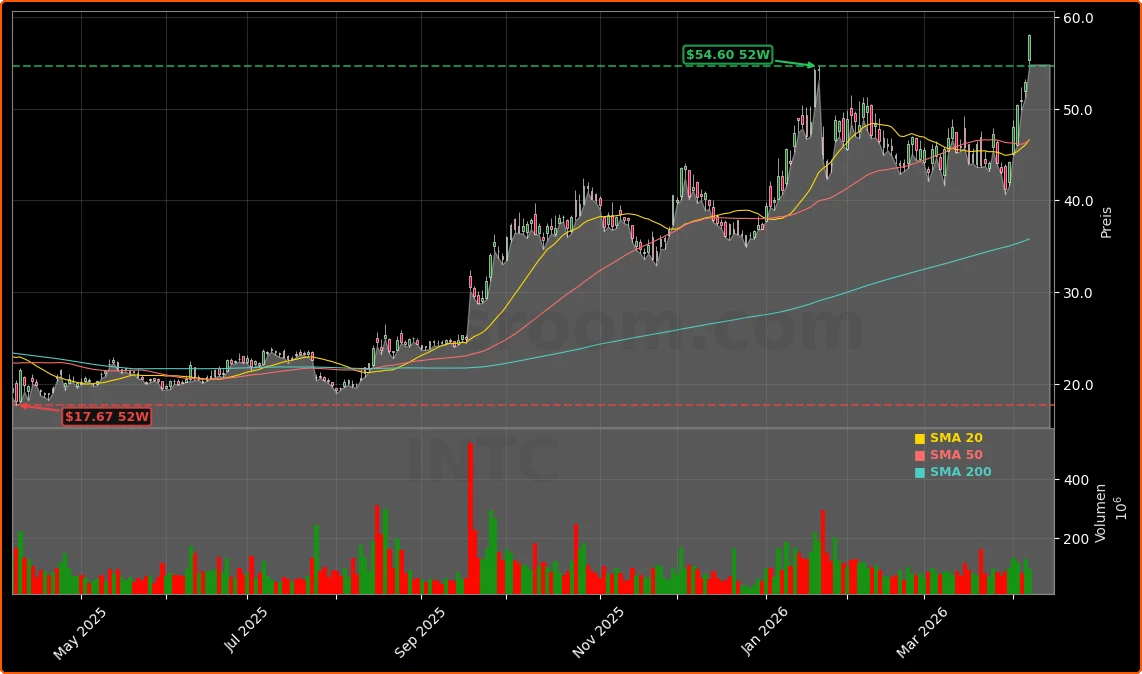
The timing of the Intel Terafab announcement matters for investors. Intel shares have already climbed roughly 40% year to date and more than 150% over the last 12 months, helped by improving sentiment around its 18A process node, U.S. government backing and rising demand for domestic chip capacity. Wednesday’s 9%+ jump to about $58 comes as traders rotate back into large-cap semiconductors on the NASDAQ, with Intel outpacing peers amid a wave of AI-related headlines.
Under the deal, Intel will work with Tesla, SpaceX and xAI to design, fabricate and package ultra‑high‑performance chips for autonomous driving, humanoid robots and orbital AI data centers. Musk’s plan is to build a single Terafab campus near Austin that can ultimately deliver about 1 terawatt of compute per year, compressing the traditional chip design–manufacturing cycle into one vertically integrated site. For Intel, that means recurring, high‑value volumes in exactly the segments where it has lagged NVIDIA and AMD: AI accelerators and custom silicon.
Wall Street is reading the news as a validation of Intel’s turnaround under CEO Lip‑Bu Tan, who has pushed cost cuts while sticking to the multi‑node technology roadmap launched under Pat Gelsinger. With Washington already holding an equity stake of roughly 8.4% to support domestic capacity, the Musk alliance strengthens the narrative of Intel as both an AI winner and a piece of U.S. critical infrastructure.
How does this reshape Intel, Tesla and SpaceX?
The Intel Terafab collaboration is strategically important for all sides. Musk’s companies already buy chips from NVIDIA, Samsung and TSMC, but he has warned that demand for AI compute will far outstrip supply from existing partners. Terafab is his answer: a dedicated mega‑fab for physical AI — chips that power robotaxis, the Optimus humanoid robot and satellite‑based AI workloads.
Intel brings three assets Musk needs: cutting‑edge process technology, advanced packaging and large‑scale manufacturing know‑how in the U.S. Its EMIB and Foveros packaging platforms are already attracting hyperscaler interest, and Intel has publicly highlighted agreements with cloud players like Amazon and Cisco. Industry reports suggest even NVIDIA is exploring Intel packaging for future GPU generations, part of a broader $5 billion collaboration. The Terafab deal could combine those capabilities with Musk’s custom designs, making Intel both a foundry and a packaging partner.
For Tesla, the ability to iterate in-house on AI chips for robotaxis and Optimus could be as significant as past breakthroughs in battery design. Terafab’s planned edge processors for vehicles and orbital data-center chips for SpaceX would reduce reliance on overseas fabs and ease long‑term capacity bottlenecks. SpaceX gains tailored, radiation‑hardened AI chips for massive satellite constellations that can run inference in orbit, an essential step if Musk wants space‑based data centers to offload work from terrestrial facilities.
Critically, the partnership also deepens ties between Intel and Musk’s xAI unit, potentially positioning Intel as a preferred hardware platform for next‑generation large language models and robotics AI that must operate in the physical world, not just in the cloud.
What it means for Intel versus NVIDIA and TSMC
Investors are asking whether Intel Terafab is big enough to change the AI chip pecking order. NVIDIA still dominates data‑center training workloads, but its dependence on Taiwan Semiconductor’s facilities raises long‑term geopolitical and energy‑supply risks. Analysts have warned that any disruption to Taiwan’s LNG‑dependent power grid could hit global GPU output, a vulnerability that strengthens the investment case for on‑shore alternatives such as Intel.
Intel, by contrast, is racing to complete new fabs in Arizona, Ohio and Europe, backed by U.S. and EU subsidies. It has struggled to land a true flagship external foundry customer for its 18A node, even as its packaging pipeline fills. Terafab could be that breakthrough: a high‑profile, multi‑billion‑dollar program that runs on Intel process technology and uses EMIB and Foveros Direct 3D stacking to stitch together logic, memory and accelerators in one package.
Citigroup and Morgan Stanley have both highlighted Intel’s foundry execution and potential for AI upside in recent months, even while cautioning that margins will remain under pressure as new fabs ramp. The Musk deal does not instantly solve those profitability issues, but it signals that some of the world’s most demanding chip buyers are willing to bet critical roadmaps on Intel’s tech stack. That makes it easier to justify Washington’s $8.9 billion manufacturing grant and the company’s decision to buy back Apollo Global Management’s 49% stake in its Fab 34 facility for $14.2 billion.
Related Coverage
For a deeper dive into how Intel wants to turn packaging from a cost center into a profit engine, see Intel Advanced Packaging Boom: Billion-Dollar AI Shock, which explains why EMIB and Foveros deals with hyperscalers could be the key to fixing its struggling foundry business. In the wider AI chip landscape, Broadcom is also making moves: Broadcom TPU partnership +3% Surge as Google, Anthropic Lock In looks at how its work with Google and Anthropic might reshape the market for custom AI accelerators.
Terafab represents a step change in how silicon logic, memory and packaging will get built in the future.— Lip-Bu Tan, Intel CEO
The Intel Terafab partnership gives Intel exactly what investors have been waiting for — a marquee external customer that validates its technology and U.S. manufacturing push. For U.S. portfolios seeking exposure to AI, robotics and secure domestic supply chains, Intel now offers a more compelling narrative alongside high‑flyers like Tesla and Apple. The next test will be execution: as Terafab ramps from concept to concrete, quarterly updates on design wins, capacity and margins will show whether this bold bet can cement Intel’s comeback.