Can Lululemon Governance navigate slowing growth and a founder-led board fight without breaking the brand’s premium story?
[fxmag_hero_image]
Is Lululemon Athletica losing its premium momentum?
Lululemon Athletica Inc. delivered another quarter of revenue growth, but at a much slower pace that underlines the market’s concerns. Q4 net revenue rose just 1% to $3.6 billion, with the Americas down 4% while international sales jumped 17%. Net income dropped 22% to $587 million as heavier discounting eroded margins and diluted EPS fell to $5.01 from $6.14 a year earlier.
For the full fiscal year ending Feb. 1, 2026, net revenue climbed 5% to $11.1 billion, but operating margin compressed 380 basis points to 19.9% and EPS slipped to $13.26 from $14.64. The guidance spooked Wall Street: management now expects fiscal 2026 sales of $11.35–$11.50 billion, implying just 2%–4% growth, and EPS of $12.10–$12.30, both below many prior expectations.
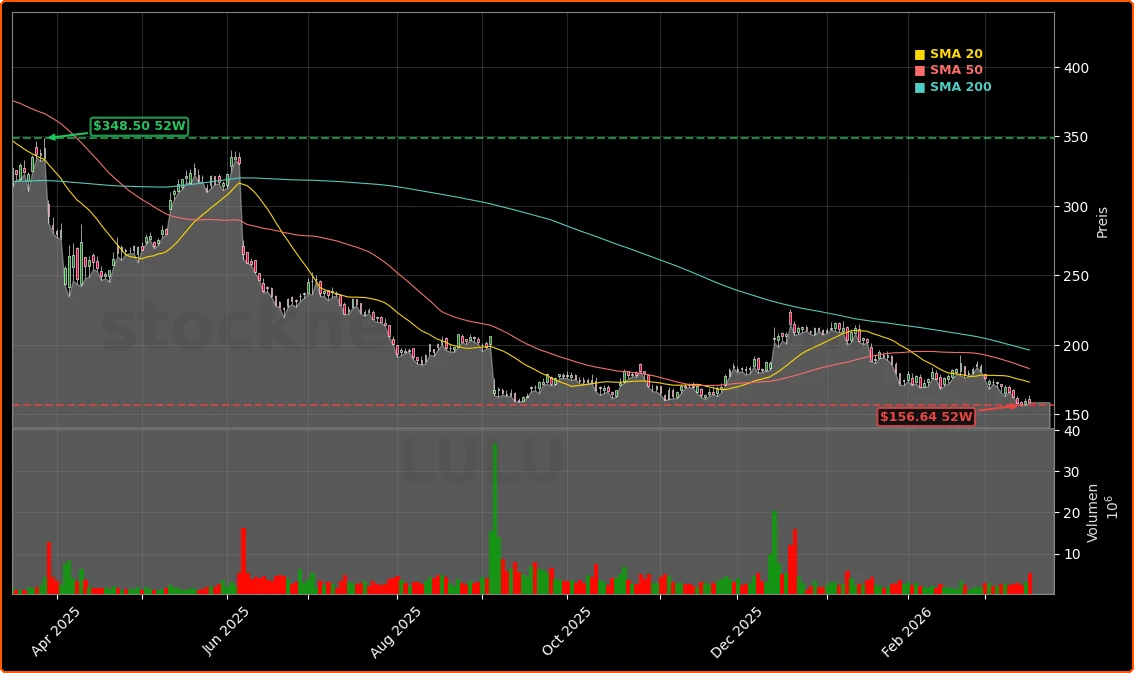
The stock is down roughly 50% from its 52‑week high, reflecting what some analysts at firms such as Simply Wall Street have called a “brutal” valuation reset as North American demand normalizes and leadership turnover weighs on sentiment. With LULU no longer trading like a hyper‑growth name, investors are focusing more keenly on execution, capital allocation, and the quality of Lululemon Governance.
How does Lululemon Governance shape the board battle?
The company’s slowing U.S. trajectory has become the core argument in founder Chip Wilson’s activist campaign. Wilson, who still owns nearly 9% of the stock and is Lululemon’s largest individual shareholder, argues that weak Lululemon Governance has allowed the brand to lose its edge through excessive discounting and “stale” product design, while comparable sales in the Americas have been flat or negative for eight consecutive quarters.
This week, long‑tenured lead director David Mussafer said he will not seek re‑election, a move Wilson called “a step in the right direction” but far from enough. He is pushing to reconstitute the board, criticizing the presence of three directors tied to Mussafer’s private‑equity firm, which currently discloses no ownership stake in LULU. Wilson wants all directors elected annually starting with the 2026 annual meeting and is preparing a proxy fight with his own slate of three independent nominees focused on brand and marketing expertise.
Lululemon, for its part, announced that former Levi Strauss CEO Chip Bergh will join the board immediately, the fifth new director in five years. Wilson dismissed the appointment as “underwhelming” and says no new CEO should be hired until a refreshed board is in place—a sequencing that keeps Lululemon Governance in the headlines and adds uncertainty to an already delicate CEO search.
Can new products and global reach offset U.S. weakness?
Interim co‑CEO and CFO Meghan Frank and interim co‑CEO André Maestrini emphasize that the company is not standing still. International revenue grew 22% in fiscal 2025, with strong traction in markets like China, even as the Americas slipped 1%. Lululemon opened 44 net new company‑operated stores to end the year with 811 locations, and is leaning on product innovation to restore its premium positioning and reduce markdowns.
New creative director Jonathan Cheung is rolling out lines such as Unrestricted Power, focused on support and mobility, and ShowZero, designed to conceal sweat while remaining breathable. Management expects new products to represent about 35% of the assortment this quarter versus 23% a year ago, while stores are being re‑merchandised to highlight full‑price product and cleaner visuals. Business Insider recently highlighted Lululemon’s renewed “obsession” with full price and minimal discounting as key to rebuilding gross margin durability.
Analyst reaction has been mixed. Benzinga reports that several Wall Street firms have trimmed price targets and maintained Hold‑type stances as they wait to see if U.S. demand stabilizes. Others point to Lululemon’s strong balance sheet, high historical returns on capital and robust international growth as reasons the brand could resemble a resilient compounder alongside peers like Apple or NVIDIA once the governance overhang clears.
What’s next for investors watching Lululemon Governance?
For U.S. investors accustomed to cleaner stories at mega‑cap consumer names such as Tesla or Apple, the LULU setup is more complicated. On one side, the company still generates over $2 billion in annual operating income, is expanding globally and has a clear path to product‑driven recovery in North America. On the other, a contested CEO transition, a looming proxy fight, and unresolved questions around Lululemon Governance could keep the stock volatile well into the 2026 annual meeting.
The core issue at Lululemon is a disconnect between the company’s creative engine and the board’s understanding of how brand power and product excellence drive long‑term shareholder value.— Chip Wilson, Lululemon founder
In the near term, the market will be watching whether early signs of product refresh translate into improving U.S. comps and whether the board and Wilson can reach any settlement that stabilizes leadership. Until then, Lululemon remains a high‑quality but controversial growth name where governance headlines may move the share price as much as quarterly earnings.