Can the Merck dividend strategy cushion the impending Keytruda patent expiration, or is the payout facing a break?
Merck & Co., Inc.: How Solid is the Dividend?
The Merck dividend strategy is built on an attractive yield profile. Currently, the dividend yield stands at around 2.8%, significantly above the S&P 500 average of about 1.1%. In comparison to its industry peers, Merck & Co., Inc. also stands out: the average pharmaceutical stock yields about 1.7%, placing Merck more than 60% above that level. However, the yield alone is not the only advantage – the combination of payout and growth is crucial.
Over the past ten years, Merck has increased its dividend by nearly 94%. Although there have been periods without increases, the management focuses on sustainability rather than aggressive hikes at any cost. A central component of the Merck dividend strategy is the relatively moderate payout ratio of about 45% of earnings compared to industry standards. This range allows sufficient room to both reward shareholders with dividends and invest billions in research, development, and acquisitions.
Recently, the board confirmed a quarterly dividend of $0.85 per share. Given the recent price levels, this still corresponds to a yield of around 2.8%. For long-term income investors, this means a steady cash flow with the prospect of further increases – provided Merck can navigate the upcoming patent cliff.
Merck & Co., Inc.: Does Keytruda Support the Merck Dividend Strategy?
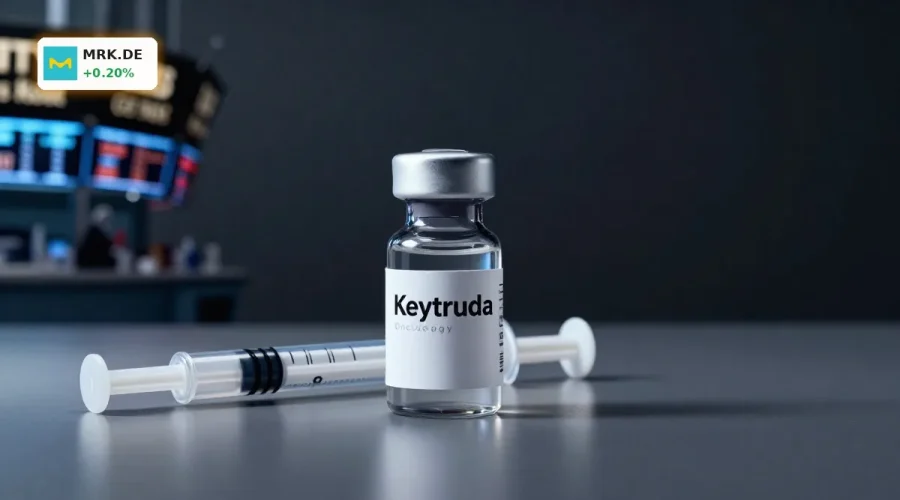
The cornerstone of the revenue base, and thus indirectly the Merck dividend strategy, is the immuno-oncology blockbuster Keytruda (active ingredient Pembrolizumab). The drug is one of the highest-grossing cancer treatments worldwide and is approved for numerous indications, including non-small cell lung cancer. In the fourth quarter, the Keytruda franchise recorded a revenue increase of about 6.8% to $8.37B, remaining the most significant profit driver.
The major challenge: In the U.S., the patent protection for Keytruda expires in 2028. Accordingly, there are significant concerns about a revenue drop due to biosimilars and new competitive products, such as Ivonescimab from Summit Therapeutics, which has outperformed Keytruda in a study involving certain lung cancer patients. Merck is attempting to counter this: additional indications, a subcutaneous formulation with a shorter administration time, and the development of oral variants aim to extend the franchise’s lifespan and smooth the revenue base.
Analysts also point out that international patents for Keytruda extend into the 2030s, making a gradual decline more likely than an abrupt drop. Deutsche Bank, for example, sees a “clear path beyond the Keytruda patent cliff” and has upgraded Merck from “Hold” to “Buy,” raising the price target to $150. This assessment supports the expectation that the Merck dividend strategy will remain viable even after 2028.
Merck & Co., Inc.: A Broad Pipeline as a Dividend Buffer?
In addition to Keytruda, Merck & Co., Inc. is systematically expanding its portfolio to reduce dependence on a single blockbuster. New products like Winrevair for pulmonary arterial hypertension and the pneumococcal vaccine Capvaxive are already contributing significantly; for instance, Winrevair has developed a revenue run-rate of over $1B. Additional projects in the pipeline target cardiometabolic diseases, infectious diseases, and potentially disruptive flu vaccines.
This diversification is a core argument for institutional investors, who have recently significantly increased their positions. For example, Tredje AP fonden and AMG National Trust Bank have raised their stakes, while some addresses like Smead Capital Management have taken profits. On the analyst side, firms like Barclays, with its upgrade to “Strong-Buy,” and the average consensus rating of “Moderate Buy” underscore the positive assessment of cash flow strength and growth prospects.
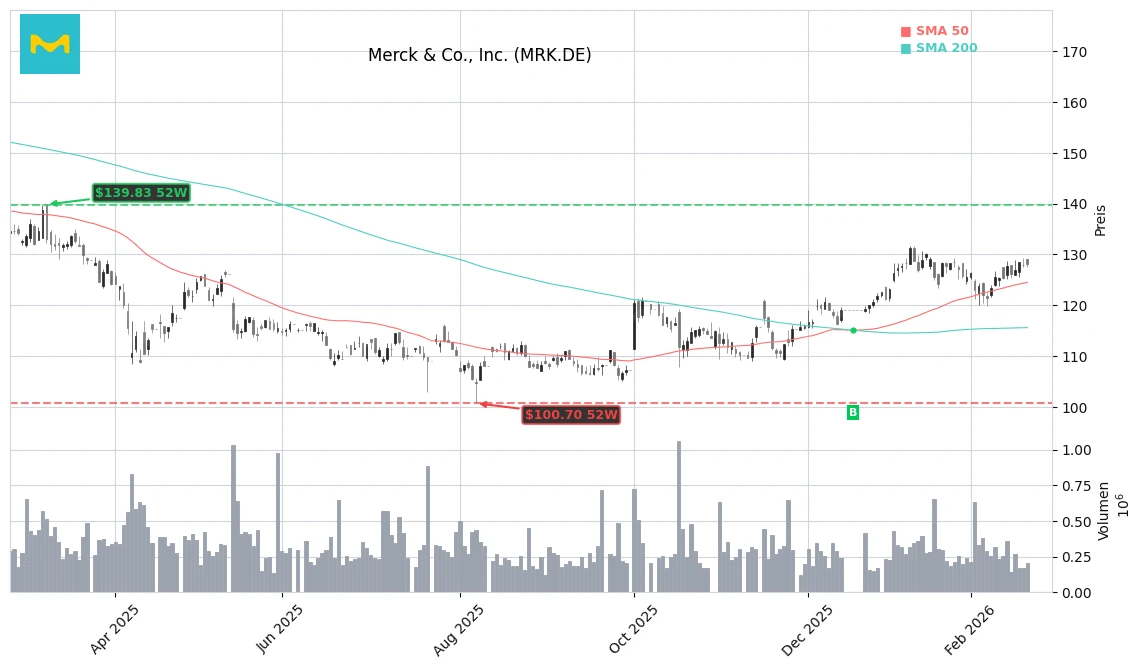
With the recent price range around $128, Merck is close to its 52-week high of just over $123, reflecting the strong performance over the past twelve months. For dividend investors, the investment case remains twofold: a well-secured payout today and the opportunity for further growth as pipeline projects and acquisitions fill the gap following the Keytruda peak. In this environment, the Merck dividend strategy acts as a stable anchor in a sector characterized by innovation cycles.
Bottom Line
In summary, the Merck dividend strategy rests on a strong combination of solid cash generation, a moderate payout ratio, and a broad, growth-oriented product portfolio. Despite the impending Keytruda patent cliff, portfolio diversification, pipeline, and positive analyst ratings suggest that payouts will remain secure in the long term. For investors focused on steady returns and predictable wealth accumulation, Merck remains a promising candidate for the dividend corner of their portfolio.
Related Sources
- Merck & Co., Inc. (MRK) Stock Price and Financial Data (Yahoo Finance)
- Merck: This Cancer-Drug Powerhouse Could Be a Core Dividend Holding for Decades (The Motley Fool)
- Could Merck Stock Quietly Help Turn Steady Dividends Into a Millionaire Retirement? (The Motley Fool)
- Merck: Why Investors Should Remain Bullish Despite Patent Risks (Seeking Alpha)
- Deutsche Bank Upgrades Merck (MRK) to Buy, Sees “Clear Path” Beyond Keytruda Patent Cliff (Finviz)