
Can Meta’s AI spending spree and $9 trillion valuation target really pay off for investors by 2031?

Is Meta’s $9 Trillion AI Goal Realistic?
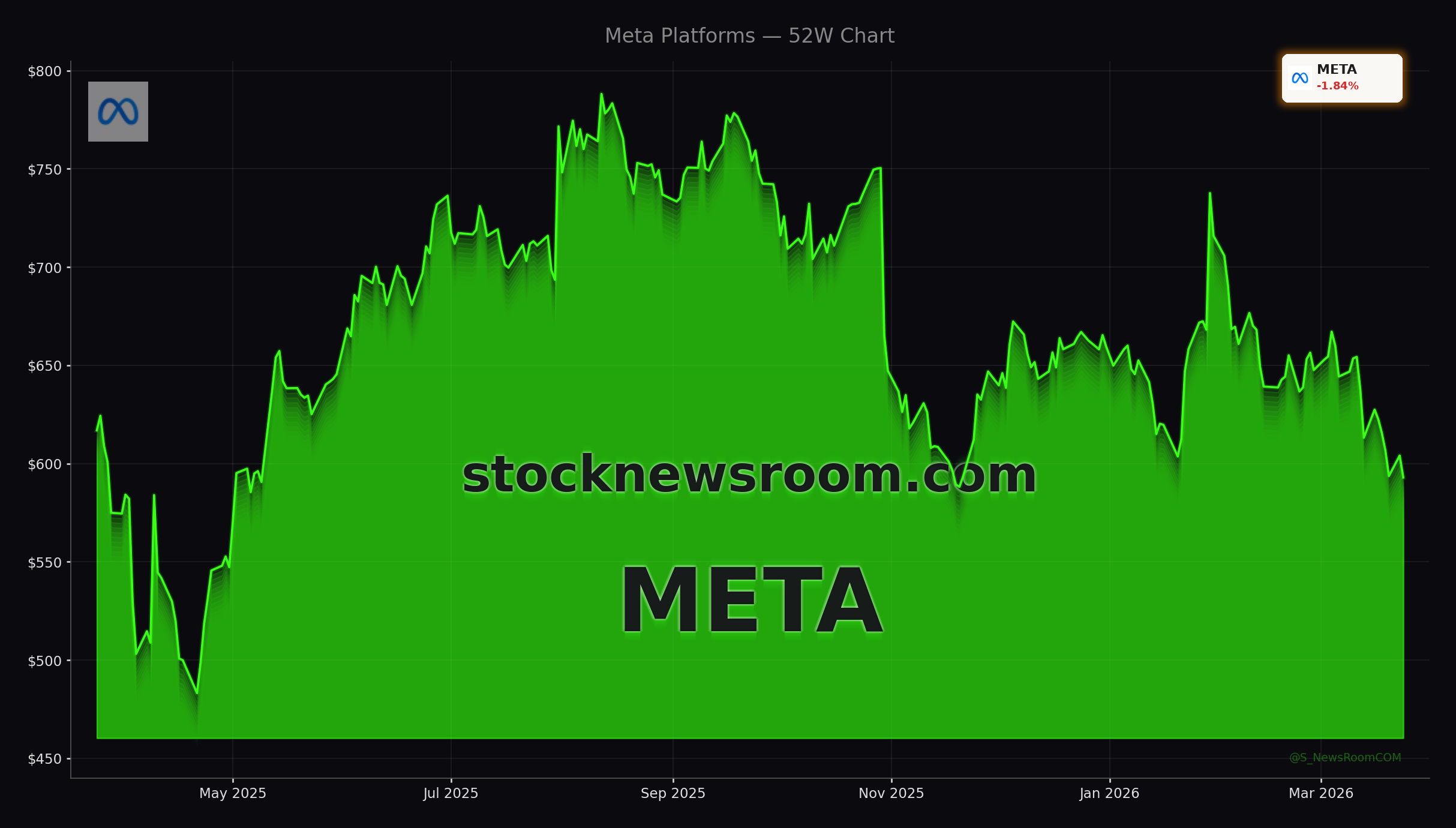
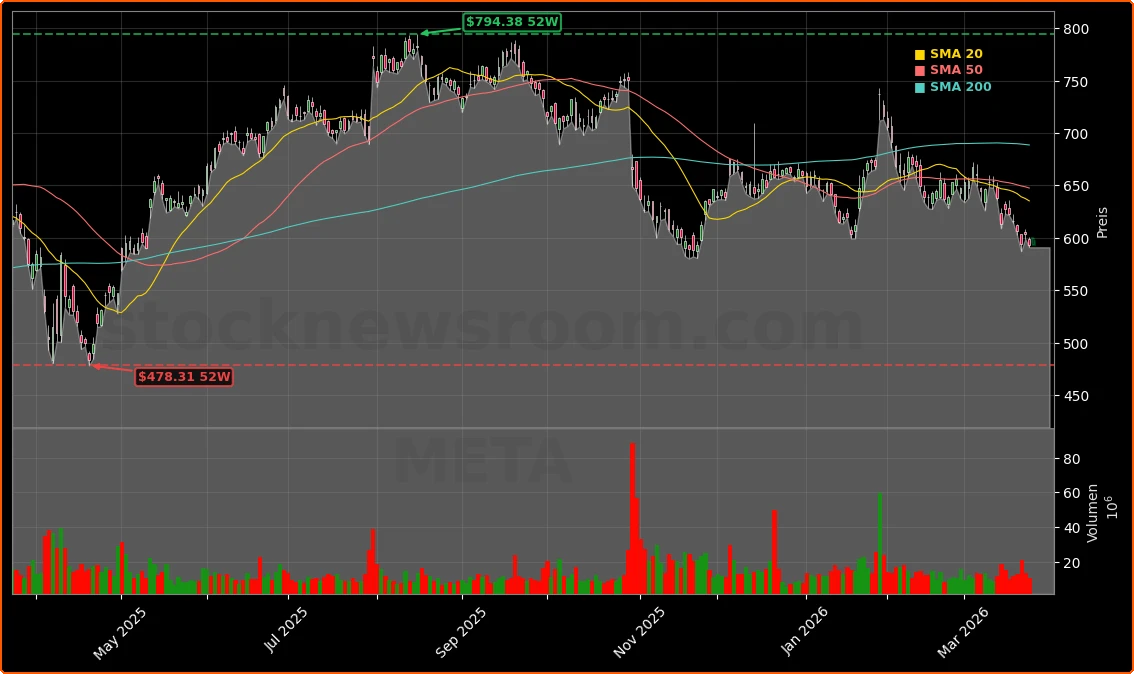
Meta shares closed Tuesday at $592.92, down 1.90% on the day, with a market cap near $1.5 trillion and pre‑market indications around $600 on Wednesday. The newly approved stock‑option program for seven senior executives only fully pays out if Meta’s valuation exceeds $9 trillion by 2031, implying more than 500% upside from current levels. The lowest tranche requires a share price of $1,116.08 by February 14, 2028, roughly an 88% gain, while the top tranche demands $3,727.12 per share.
These are the first large option grants for Meta’s top brass and sit on top of boosted restricted stock unit (RSU) awards for CFO Susan Li, CTO Andrew Bosworth, Chief Product Officer Chris Cox and COO Javier Olivan. The Meta AI Strategy is therefore directly embedded in leadership incentives: unless AI‑driven growth and profitability re‑rate the stock dramatically, most of these options expire worthless by 2031. Investors will inevitably compare this with Tesla’s controversial package for Elon Musk, which targets an $8.5 trillion valuation over a longer ten‑year horizon.
How Does the Meta AI Strategy Change the Cost Profile?
Behind the headline pay packages sits a structural shift in Meta’s financial model. Revenue momentum is strong: fourth‑quarter revenue reached $59.9 billion, up 24% year over year, with guidance for Q1 2026 implying growth close to 30% at the midpoint. Daily active people across its app family hit 3.58 billion, supporting Meta’s powerful ad pricing and impression engine.
Yet the Meta AI Strategy is driving a huge step‑up in spending. Q4 total expenses jumped 40% to $35.1 billion, squeezing operating margin from 48% a year ago to 41% and slowing EPS growth to 11%. Management now expects 2026 expenses of $162–$169 billion, up sharply from about $118 billion in 2025, with “the majority of expense growth” tied to AI infrastructure: third‑party cloud, higher depreciation and data‑center operations.
Even more striking, 2026 capital expenditures are projected at $115–$135 billion. The midpoint would roughly triple 2024 capex, largely to support AI compute, data centers and networking. As these investments roll into depreciation, GAAP earnings will face persistent headwinds even if cash flow stays robust. On roughly a 25x trailing P/E and high‑teens to low‑20s forward multiples, Wall Street may decide that a more capital‑intensive Meta deserves a lower premium if AI returns on capital disappoint.
Why Custom Chips and Hardware Now for Meta?
A less appreciated pillar of the Meta AI Strategy is hardware. Meta is the lead launch partner and first major customer for Arm’s new AGI CPU, the British chip designer’s first in‑house data‑center processor aimed at AI workloads. Meta reportedly pushed Arm to co‑develop the chip and will begin receiving material volumes later this year, a key part of Arm’s own plan to build a multibillion‑dollar silicon business.
For Meta, this partnership is about securing and optimizing AI compute at scale, potentially reducing reliance on graphics processors from NVIDIA while complementing its existing data‑center roadmap. It dovetails with Meta’s broader “Meta Compute” effort and its ambitions in general‑purpose and frontier models like Llama and the internally codenamed “Avocado.” In hardware‑driven AI infrastructure, Meta is increasingly being mentioned in the same breath as Apple and other ecosystem players pursuing vertical integration.
How Is Meta Rewiring Its Workforce Around AI?
Internally, the Meta AI Strategy is reshaping how 78,000 employees work. CTO Andrew Bosworth is now in charge of the “AI For Work” initiative, tasked with embedding AI tools across the company to compress hierarchies, accelerate execution and make teams “AI native from day one.” Early pilots include personal AI agents like “MyClaw,” which can access internal chat logs and documents and interface with colleagues on an employee’s behalf, as well as an AI assistant being developed to help CEO Mark Zuckerberg manage his own workload.
At the same time, Meta is trimming elsewhere. After cutting 10–15% of Reality Labs staff earlier this year and signaling further job reductions in wearables and ads, management is freeing up resources to redeploy into AI research, infrastructure and smart‑glasses initiatives. Rosenblatt analyst Barton Crockett remains bullish, keeping a Buy rating and a $1,117 price target, arguing that heavy AI capex, nuclear‑powered data‑center plans and AR glasses could ultimately support faster top‑line and profit growth.
What Risks Shadow the Meta AI Strategy?
Meta’s AI ambitions are unfolding under growing legal and geopolitical pressure. A New Mexico jury recently ordered Meta to pay $375 million in civil penalties for failing to adequately protect minors from sexual exploitation and harmful content on Facebook and Instagram. Meta plans to appeal and points to extensive investments in safety tools, but dozens of similar lawsuits are pending in U.S. courts, including a large multidistrict litigation in California. Any mandated product changes around recommendation algorithms or encryption could indirectly hit ad engagement and monetization.
Regulatory complexity is not limited to the U.S. Chinese authorities have restricted the travel of two co‑founders of AI startup Manus, which Meta acquired for $2.5 billion, while they review the cross‑border transfer of AI technology and data. In Europe, the rollout of Meta’s Ray‑Ban smart glasses is constrained by battery and AI rules, and Meta is lobbying for exemptions ahead of 2027 removable‑battery requirements. For the Meta AI Strategy, these frictions underscore that scaling AI globally will require not only compute and code, but also sustained regulatory navigation.
Related Coverage
For a deeper dive into how Meta’s massive capex plan and Arm partnership could reshape its balance sheet and competitive position, see Meta Platforms AI infrastructure Shock: $135B CapEx Bet, which unpacks whether today’s spending shock can become tomorrow’s profit engine. Investors interested in capital‑allocation contrasts within high‑growth tech can also read Robinhood Buyback Program $1.5B: Stock’s -4.7% Plunge Shock, which examines how a very different fintech player is leaning on repurchases instead of megascale AI investment.
These pay packages will not be realized unless Meta achieves massive future success, benefiting all of our shareholders.— Meta spokesperson
Overall, the Meta AI Strategy is a high‑stakes wager that fuses extreme executive incentives, unprecedented AI capex and an aggressive internal transformation. For long‑term investors in the S&P 500 and NASDAQ, Meta offers a rare combination of dominant ad assets and outsized AI optionality, but with amplified volatility from costs, regulation and execution risk. The next few quarters of margin trends, AI product traction and regulatory outcomes will determine whether this Meta AI Strategy justifies the $9 trillion dream or forces a reset in expectations.