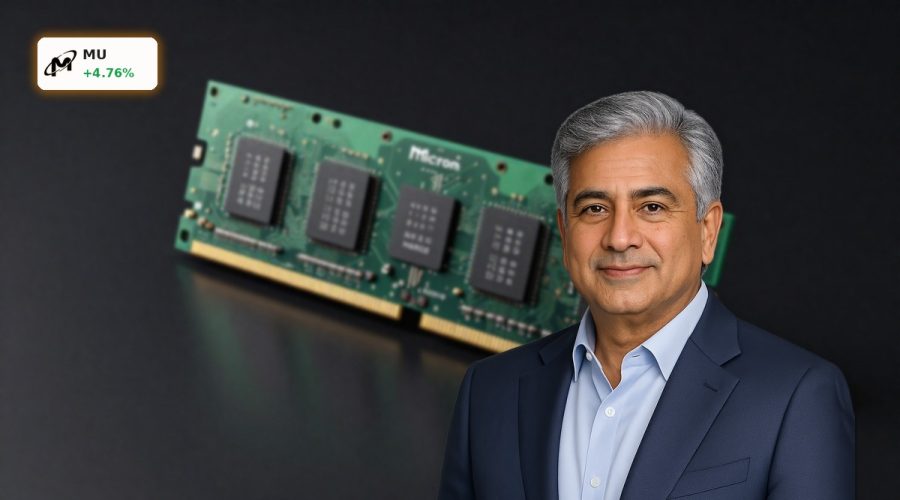
Is Micron AI Memory quietly becoming one of the most important bottlenecks in the entire AI infrastructure stack?
Is Micron AI Memory now a core AI infrastructure play?
Micron shares continue to behave less like a traditional cyclical memory name and more like a pure AI infrastructure proxy. The company sits at the center of the so‑called “great memory crunch” as hyperscalers and GPU makers scramble to secure high‑performance DRAM and HBM for training and inference clusters built around chips from NVIDIA, AMD and others.
In its latest reported quarter, Micron delivered revenue of roughly $13.64 billion, up 56.6% year over year, with record DRAM sales of $10.8 billion. NAND revenue also climbed to $2.7 billion, rising more than 20% sequentially and annually. Management guided the current quarter to about $18.7 billion in revenue and signaled that it expects further strengthening through fiscal 2026 as AI workloads scale.
The rally has been dramatic, but valuation remains surprisingly restrained for a stock so tightly tied to the AI build‑out. Based on current estimates, Micron trades at around 11–12 times forward earnings, a discount to many AI hardware leaders and well below multiple levels often seen in high‑growth semiconductor names.
How tight is the high‑bandwidth memory market?
AI accelerators depend on HBM packages that sit right alongside GPUs and custom AI chips, enabling massive memory bandwidth to feed parallel compute engines. Micron, along with Samsung and SK Hynix, is one of only three major DRAM and HBM suppliers globally. The company’s HBM3E products are fully sold out for 2026 under multi‑year contracts, giving Micron unusually strong visibility into future cash flows.
Micron estimates that the total addressable market for HBM will grow around 40% annually through 2028, reaching roughly $100 billion. Because HBM consumes up to three times the wafer capacity of standard DRAM, the ramp is tightening supply even further and pushing pricing higher across the broader memory stack.
A recent wrinkle is that the upcoming Rubin platform from NVIDIA reportedly leans on Samsung and SK Hynix for early HBM4 volumes. Yet Micron remains deeply embedded in NVIDIA’s ecosystem, including Rubin CPX GPUs targeted at massive‑context inference. With 2026 capacity already committed and a broader AI customer base that includes cloud and enterprise buyers, Micron looks unlikely to be stuck with unsold inventory even as competition intensifies.
What does the Applied Materials partnership change?
The newest catalyst for the Micron AI Memory narrative is a high‑profile collaboration with Applied Materials to co‑develop next‑generation DRAM, HBM and NAND specifically for AI systems. The companies will leverage Applied Materials’ $5 billion EPIC Center in Silicon Valley alongside Micron’s R&D hub in Boise, focusing on materials engineering, process innovation and advanced packaging for high‑performance, low‑power memory.
Applied Materials expects its semiconductor equipment business to grow more than 20% in calendar 2026, underscoring the scale of investment flowing into AI‑oriented fabs. Morgan Stanley recently highlighted Applied Materials as a “Top Pick” and raised its price target to $432, while that same optimism is spilling over to Micron as a key beneficiary of the new tooling and process nodes this partnership will enable.
For investors, the takeaway is that Micron is not just riding spot pricing in a tight market. It is co‑designing the next generations of Micron AI Memory products together with one of the industry’s most important equipment suppliers, potentially reinforcing both technology leadership and cost competitiveness versus Korean rivals.
How does Micron stack up against other AI chip winners?
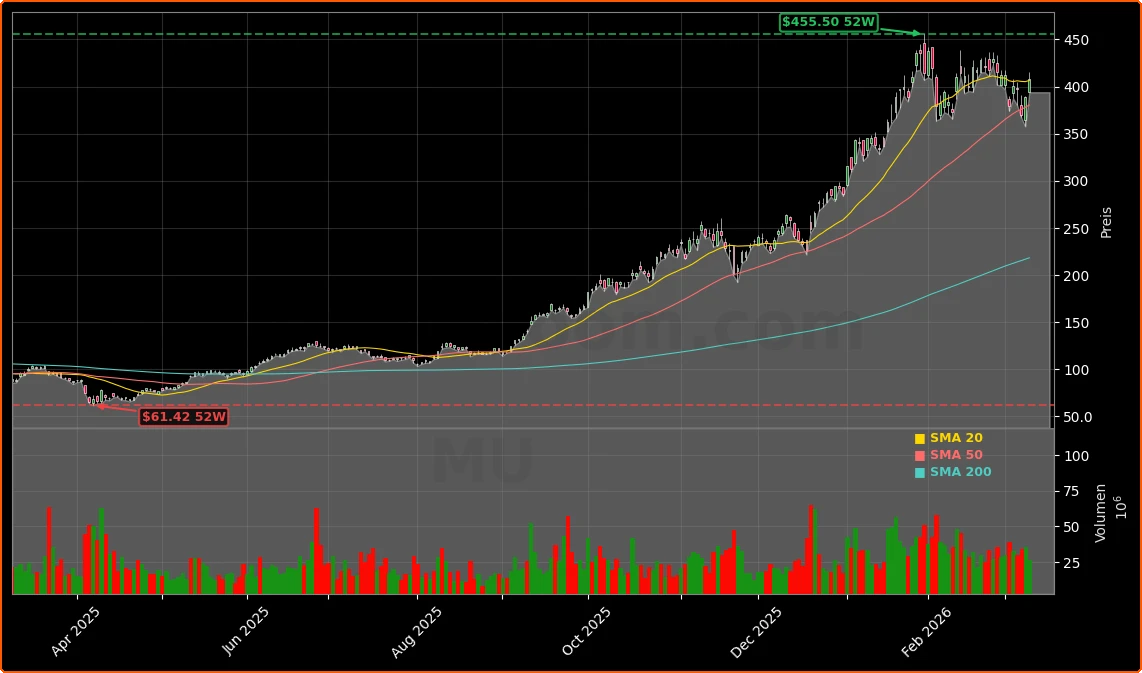
Within the S&P 500 and NASDAQ, the AI trade has been dominated by GPU and accelerator makers such as NVIDIA and software‑driven platform players like Apple and Microsoft. Yet Micron has outpaced many of these household names over the past 12 months, with the stock climbing well over 300% as memory moved from a commodity afterthought to a central bottleneck in AI data centers.
Wall Street is starting to reflect that shift. Multiple brokerages have boosted estimates and targets following Micron’s strong Q1 and bullish Q2 outlook. Citigroup recently raised its expectations for the upcoming March 18 earnings release, signaling confidence that pricing and volumes in DRAM and HBM will remain robust. GF Securities has argued that Micron is positioned to reiterate a “robust” memory cycle for Q2 and beyond, including higher DRAM contract prices.
Options markets reflect elevated uncertainty, with premiums pricing in the possibility of big swings around earnings. Some strategists see the current trading range near $400 as a consolidation phase following the parabolic move, with technical patterns such as pennants hinting at a potential continuation higher if the AI story remains intact.
For U.S. investors balancing AI exposure between compute and memory, Micron offers a differentiated way to participate in the same structural trend driving demand at NVIDIA and the hyperscalers, but at a lower earnings multiple and with clearer visibility into supply‑driven pricing power.
Our outlook reflects substantial records across revenue, gross margin, EPS and free cash flow, and we anticipate our business performance to continue strengthening through fiscal 2026.
— Sanjay Mehrotra, CEO of Micron Technology, Inc.
Conclusion
In sum, the Micron AI Memory theme has evolved from a cyclical bet into a multi‑year infrastructure thesis. Record DRAM and HBM demand, sold‑out capacity, and the Applied Materials partnership are strengthening Micron’s strategic position just as AI data center build‑outs accelerate globally. With the next earnings report on March 18 poised to update the outlook, the trajectory of Micron AI Memory products will remain a key barometer for how far the current AI investment cycle can run.
Further Reading
- Micron Technology, Inc. (MU) Stock Price, Quote & News (Yahoo Finance)
- Why Micron Technology Stock Is Rising Today (The Motley Fool)
- Applied Materials partners with Micron to develop next-gen AI memory products in US (Seeking Alpha)
- Forget Nvidia, This Chip Stock Has Exploded 533% — And Wall Street Says That Was Just The Warmup (Benzinga)