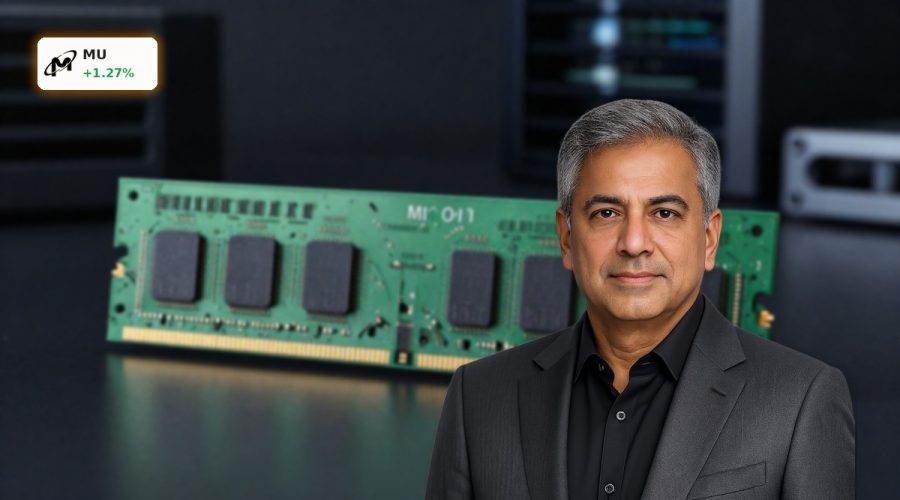
Can Micron’s explosive earnings and AI-fueled outlook really sustain its meteoric stock run, or is the bar now impossibly high?

How big was the Micron Earnings beat?
Micron Technology, Inc. delivered one of the most dramatic upside surprises of this earnings season. Adjusted earnings per share came in at $12.20, crushing consensus estimates of around $9.00–$9.30. Revenue surged to $23.86 billion, well ahead of the roughly $20 billion Wall Street was expecting and almost triple the $8.05 billion reported a year earlier.
The magnitude of this Micron Earnings beat highlights how tight the global memory market has become as cloud giants and AI leaders race to deploy next‑generation data centers. Gross margin and profitability were propelled by both higher volumes and sharply higher pricing for DRAM, NAND and especially high‑bandwidth memory (HBM) tied to AI accelerators from partners like NVIDIA.
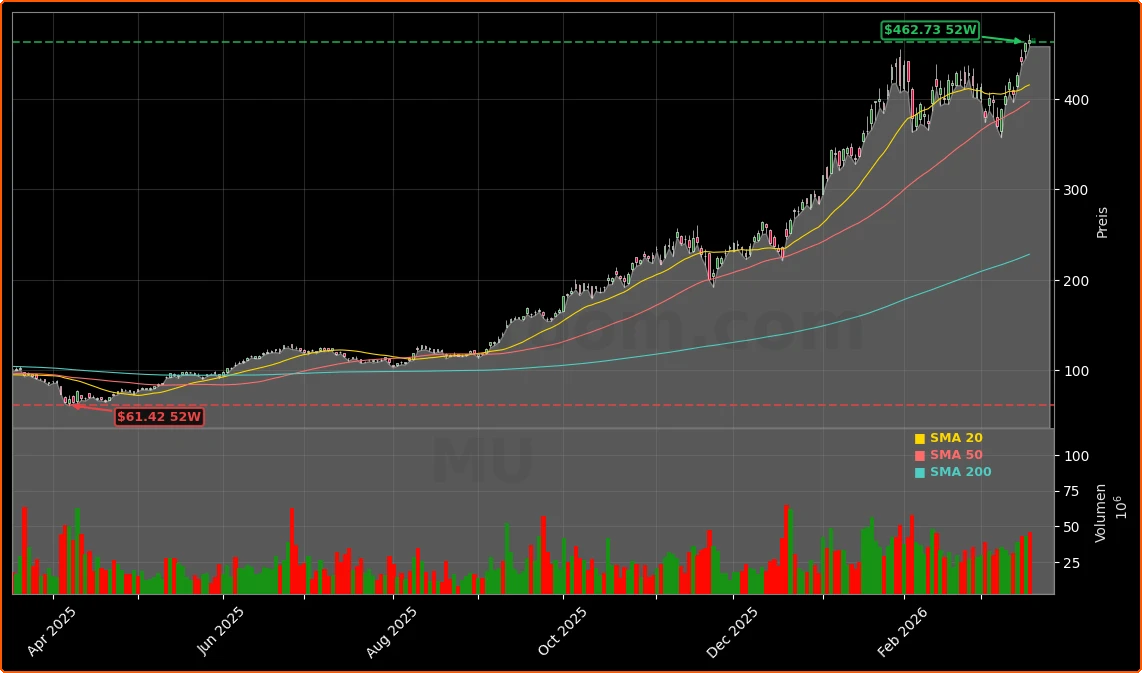
Micron shares, which closed the regular session at $461.73 on the Nasdaq—up more than 60% year to date—ticked higher in after‑hours trading, recently changing hands around $467.61. The stock is hovering near record levels after adding more than 300% over the past 12 months, and these Micron Earnings give the bull case fresh fuel.
What does Micron’s new outlook signal?
If the reported numbers were eye‑popping, the guidance was even more consequential for Wall Street. For the current quarter, Micron now expects about $33.5 billion in revenue, up from just $9.3 billion in the prior‑year period—implying growth north of 200%. Adjusted EPS is projected around $19.15, far above analyst expectations that clustered near $12 per share.
This powerful forward view confirms that AI‑driven demand is not just a one‑quarter phenomenon. Management indicated that HBM capacity is effectively sold out into 2026, with Micron acting as a key supplier into next‑gen accelerator platforms that require dramatically more memory content per GPU. That tightness is also spilling over into more conventional DRAM and NAND, keeping pricing power firmly in Micron’s hands.
Micron backed its confidence with cash. Capital expenditures in Q2 ran at about $5.0 billion, and the company generated roughly $6.9 billion in adjusted free cash flow. The board approved a 25% dividend increase, lifting the quarterly payout from $0.12 to $0.15 per share, a move aimed squarely at long‑term income‑oriented investors allocating to the AI infrastructure theme.
How does this reshape the AI chip landscape?
The latest Micron Earnings also reframe the hierarchy inside the broader AI trade. While GPU designer NVIDIA has been the poster child for AI hardware, memory suppliers like Micron, Samsung and SK Hynix are increasingly setting the pace for profitability as each GPU generation packs in far more HBM.
Deutsche Bank has argued that structural tightness in DRAM could persist through 2027, with the silicon intensity of HBM driving sustained undersupply. That thesis looks stronger after this report. RBC Capital recently hiked its Micron price target to $525 and highlighted the potential of NVIDIA’s Rubin platform—which requires several times the memory of previous architectures—as a major tailwind. Wedbush has likewise raised estimates as contract pricing climbs faster than Micron’s own prior assumptions.
For U.S. investors already heavy in AI leaders like Apple and Tesla, Micron now stands out as a pure‑play beneficiary of the data‑center buildout rather than consumer devices or EV demand. Its market value has vaulted above $500 billion, putting it alongside the largest technology names in the S&P 500 and NASDAQ 100, and prompting debate over whether it could eventually join the $1 trillion‑club if the memory upcycle endures.
What risks should investors watch after Micron Earnings?
Despite the stellar Micron Earnings, the bar for future quarters is now extremely high. The stock trades near all‑time highs and has already priced in years of strong AI‑driven growth. Any sign that hyperscale spending might slow, that competitors are adding capacity faster than expected, or that memory pricing is peaking could trigger sharp volatility.
There are also macro and geopolitical risks. More than half of Micron’s DRAM output is tied to Taiwan, and ongoing tariff regimes on Taiwan‑made chips could squeeze margins if not offset by pricing. At the same time, Micron is committing tens of billions of dollars to new fabs in the U.S. and Asia to expand HBM capacity, a capital‑intensive bet that assumes AI demand remains robust well into the next decade.
This kind of growth from a $500 billion-plus chipmaker shows that memory, not just compute, is at the heart of the AI investment wave.— James Demmert, Chief Investment Officer at a U.S. wealth firm
Still, with this Micron Earnings release showing revenue, EPS and guidance all massively ahead of consensus, many on Wall Street are likely to treat any pullbacks as opportunities within the AI infrastructure trade rather than the end of the cycle.